Enterprise Social Media Strategy Guide: Fixing Scattered Approvals, Unifying Global Teams, and Proving ROI with the Right Roles and AI Governance.

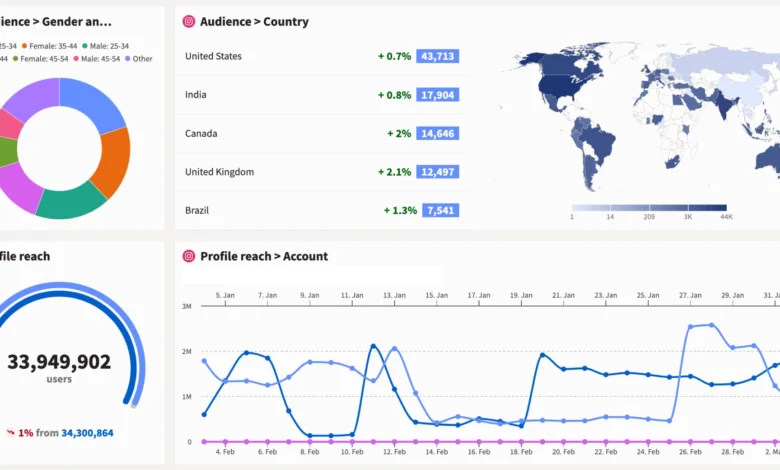
In an increasingly digitized global marketplace, the strategic deployment of social media has transcended simple marketing, becoming a core operational pillar for large organizations. Enterprise social media is defined as the systematic and scaled utilization of social platforms by major corporations to orchestrate brand communications, foster customer engagement, and extract vital business intelligence. An enterprise social media strategy, therefore, serves as the overarching blueprint, meticulously detailing how an organization navigates each platform, the technological infrastructure it employs, and the rigorous processes instituted to ensure unwavering consistency and compliance across diverse markets and departments.
The Evolving Landscape of Enterprise Social Media

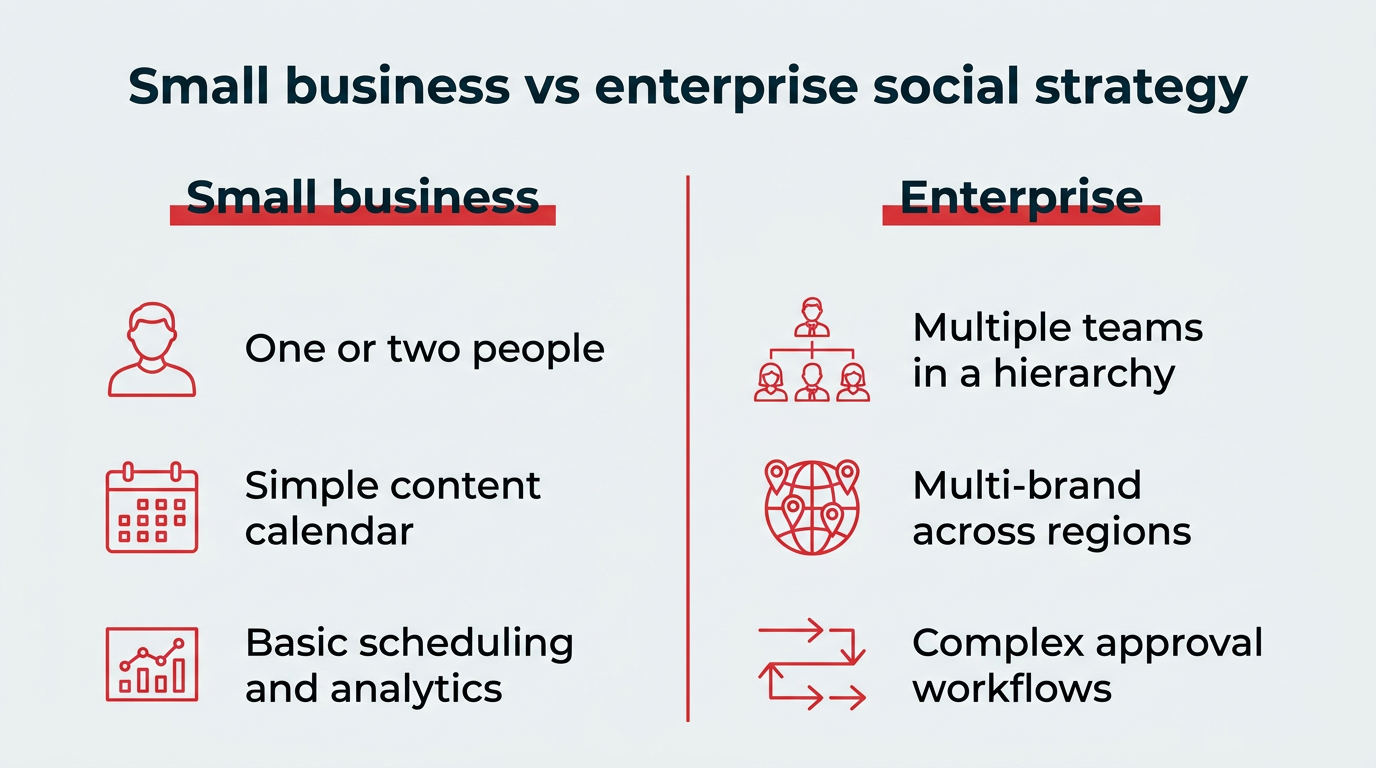
The journey of social media from a nascent personal communication tool to an indispensable business channel has been rapid and transformative. For enterprises, this evolution presents both immense opportunities and complex challenges. Unlike the relatively straightforward social media efforts of small businesses, which might rely on a single content creator or social manager, enterprise-level social media management is characterized by its sheer scale and intricate dependencies.
A small business might thrive with a basic content calendar and a scheduling/analytics tool. However, an enterprise strategy typically encompasses a multifaceted approach involving dedicated teams, advanced analytics, real-time crisis management protocols, employee advocacy programs, and robust compliance frameworks. The objectives extend beyond mere visibility and engagement to critical areas like governance, scalability, and comprehensive risk management. As Savannah Wiles, Staff Marketing Manager, Social & Influencer at Intuit Mailchimp, aptly notes, "A strong enterprise social strategy comes down to three things: your audience, your brand, and your goals. For the audience, remember they’re real people, not just job titles." This underscores the need for deep audience understanding and the cultivation of a unique, human brand persona even within a large corporate structure.
Crucially, enterprise social media must be distinguished from an enterprise social network. While often confused, the former is externally focused, driving marketing and public relations efforts on platforms like LinkedIn, Instagram, and TikTok. Its metrics center on engagement, reach, and public sentiment. Conversely, an enterprise social network (e.g., Yammer, Viva Engage, Slack) is an internal collaboration tool designed to facilitate employee communication, knowledge sharing, and foster a connected corporate culture, with success measured by adoption and participation rates. This distinction is paramount for strategic clarity.

The Imperative of a Unified Global Strategy
For large, multinational corporations, a unified social media strategy is not merely advantageous; it is an absolute necessity. Without a cohesive plan, the social presence of a large organization can quickly become fragmented, inconsistent, and ultimately ineffective. Consider a global brand like Nike, which manages hundreds of secondary Instagram accounts, each targeting distinct audiences and regions. While each account may have its own team and specific goals, these individual objectives must meticulously align with Nike’s overarching business goals and meticulously adhere to the core Nike brand identity.
This complexity is further amplified by product-specific messaging, varied legal compliance requirements across jurisdictions, and numerous external collaborations. A unified strategy provides the essential focus, transforming social media from a disparate set of activities into a powerful growth engine. It ensures a consistent brand voice, a shared vision, and a synchronized pursuit of marketing objectives across all teams and territories.
Core Components of a Robust Enterprise Social Strategy
An effective enterprise social media strategy is built upon several foundational components:
- Strategic Goals and Key Performance Indicators (KPIs): Clearly defined objectives, whether brand awareness, customer acquisition, or reputation management, must be tied to measurable KPIs such as share of voice, sentiment score, response time, social-attributed leads, and content engagement rates.
- Roles, Responsibilities, and Governance: A clear organizational chart, delineating who owns which channel, who approves content, and how teams collaborate, is crucial. This involves establishing a Center of Excellence (CoE) for global strategy and governance, regional teams for localized execution, and cross-functional partners (PR, HR, legal) for integrated support. Employee advocacy programs, leveraging internal talent to amplify content, are also integral.
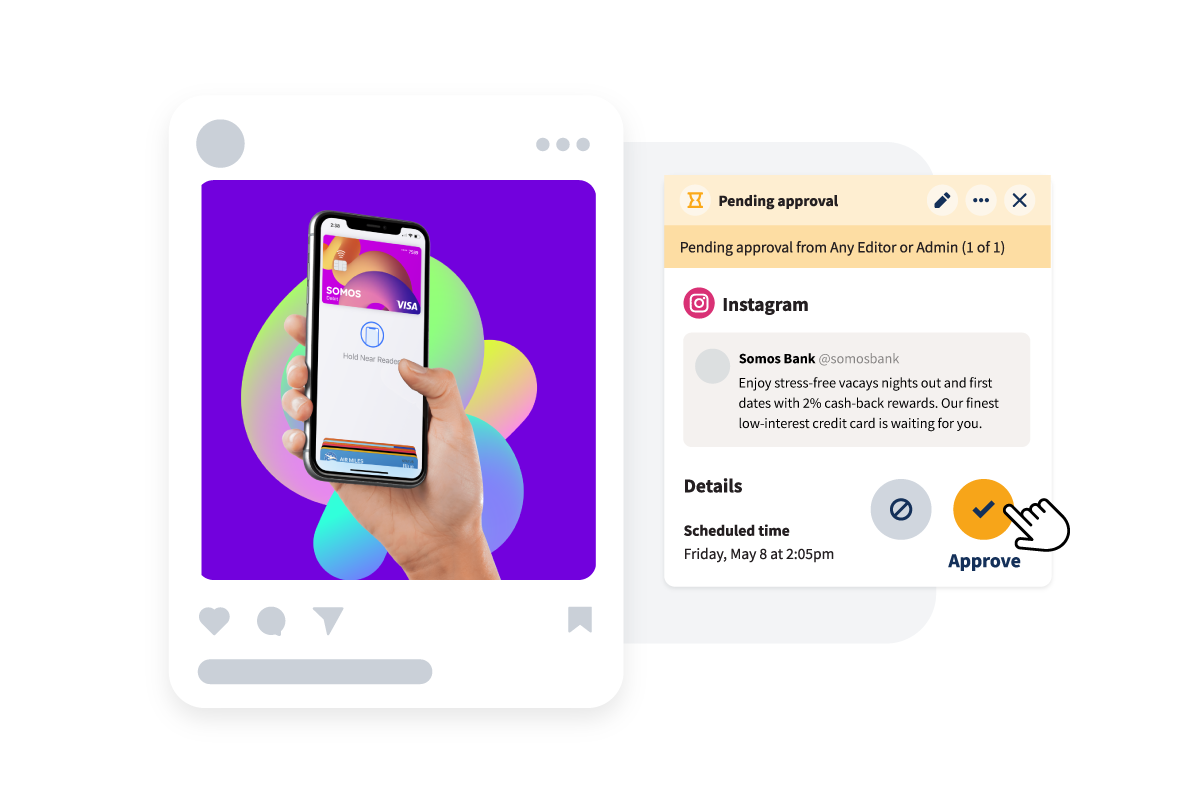
- Workflows for Approvals and Publishing: Standardized processes for content creation, review, and sign-off are essential to maintain brand consistency and regulatory compliance, especially across multiple time zones and departments. Automation tools within social management platforms are key here.
- Brand and Content Standards: Comprehensive guidelines for brand voice, visual identity, and values must be translated into specific social media usage rules. Shared asset libraries and templates ensure high-quality, on-brand messaging globally.
- Platform and Publishing Rules: Detailed rules for each platform regarding content types, posting cadence, and engagement protocols, including specific compliance requirements that vary by region (e.g., data privacy laws).
- Integrated Tools and Data Systems: Centralized platforms that unify publishing, approvals, analytics, and listening are vital. These platforms must integrate seamlessly with CRM, BI, and AI tools to ensure a cohesive data flow and contextual intelligence.
- Training and Empowerment: Continuous training for all teams on strategy, compliance, accessibility, and platform best practices empowers employees to operate effectively and confidently.
- Measurement, Iteration, and Adaptation: Regular analysis of performance data, sharing insights, and refining strategy based on what works (and what doesn’t) is critical for ongoing optimization. The strategy must remain agile, capable of adapting to budget shifts, evolving trends, and unexpected challenges.
Navigating the Challenges of Scale and Risk
The inherent scale of enterprise operations presents unique challenges for social media management. Juggling multiple brands, regions, and target audiences across different time zones and languages necessitates sophisticated coordination. This includes streamlining approval processes when teams are geographically dispersed, navigating a labyrinth of regulatory rules that vary by market, and mitigating tool fragmentation that often arises when individual teams procure their own software solutions. A centralized strategy is the bulwark against these challenges, ensuring consistency, compliance, and competitive agility.
Moreover, protecting brand trust in complex environments is paramount. For large organizations, every social media post carries significant weight. A single misstep – a poorly worded reply, an off-brand post from a regional account – can rapidly escalate into a major reputation crisis, spreading across platforms within hours. This makes brand consistency and early detection mechanisms non-negotiable. A robust strategy incorporates clear brand guidelines, real-time social listening for sentiment analysis and crisis detection, and predefined crisis response plans.
Beyond risk mitigation, social media serves as a potent growth engine. With the U.S. social commerce market projected to exceed $100 billion in 2026, and the global social advertising market reaching $276 billion, social platforms are integral to the external ecosystem of any modern brand. Enterprises leverage social media not just for brand building, but for lead generation, customer support, driving traffic, fostering community, and competitive intelligence. It allows for direct customer engagement, facilitates targeted advertising, and provides invaluable data for product development and market positioning.
AI’s Transformative Role in Enterprise Social
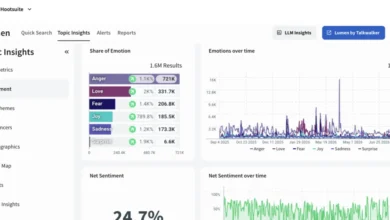
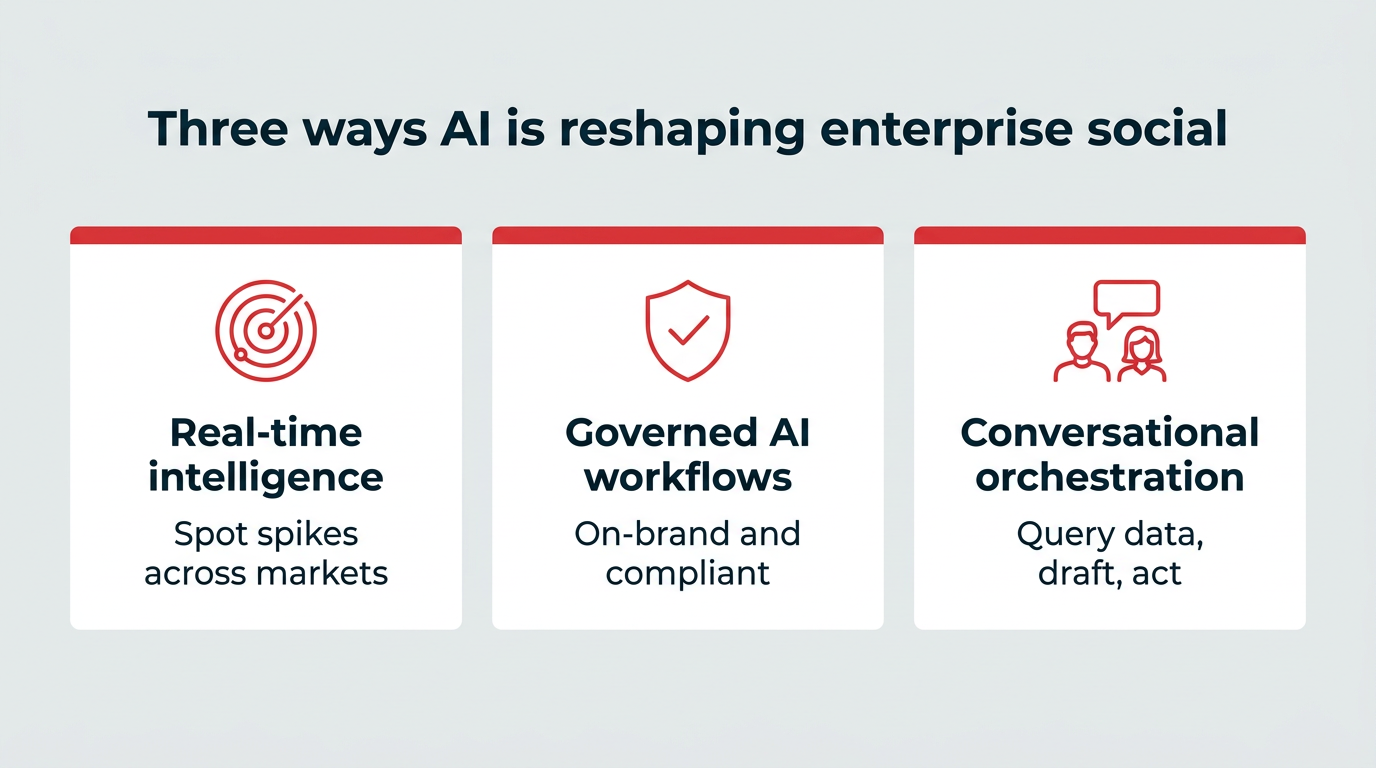
Artificial intelligence has rapidly evolved from a novelty in content generation to a sophisticated operational intelligence layer within enterprise social media. In 2026, AI’s capabilities extend far beyond drafting captions. It powers real-time sentiment analysis, intelligently routes customer service inquiries to the appropriate teams, and connects actionable insights across diverse teams and regions.
Three key shifts define AI’s impact:

- Contextual Intelligence: AI now deeply understands content, audience, and intent, moving beyond keyword matching to provide nuanced insights.
- Automated Workflows: AI streamlines repetitive tasks, from content scheduling to initial response drafting, freeing human teams for strategic work.
- Predictive Analytics: AI can forecast trends, identify potential crises, and optimize campaign performance by analyzing vast datasets.
Crucially, AI integrates seamlessly with an organization’s existing technology stack through connectors, ensuring that its outputs are grounded in real-time, accurate business data rather than speculative algorithms.
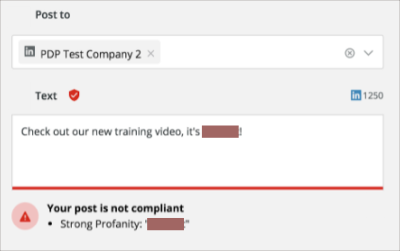
However, the proliferation of AI in enterprise social media underscores the critical importance of governance. Ungoverned AI poses significant risks at an enterprise scale, potentially generating off-brand content, disseminating unverified claims, or violating industry regulations. In highly regulated sectors like healthcare or finance, such missteps can lead to substantial fines, legal action, and irreparable reputational damage. Therefore, a robust governance layer, like Hootsuite’s Vigil, is essential to ensure AI-assisted work adheres to corporate policies, with every output traceable and every approval documented. This combination of speed and control is what makes AI truly usable and beneficial for regulated enterprise teams.
Measuring Success and Proving ROI
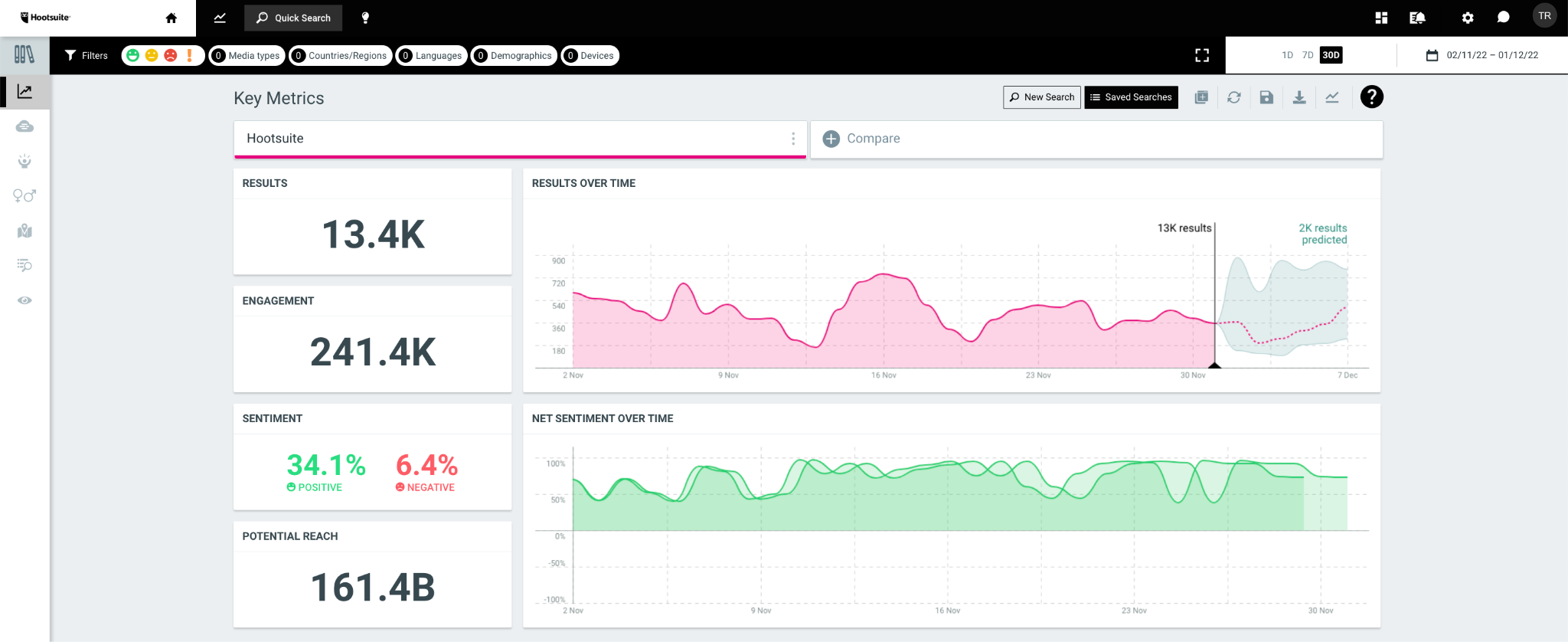
For enterprises, demonstrating the return on investment (ROI) of social media initiatives requires a standardized, aligned approach supported by robust tools. Key performance indicators (KPIs) must be consistently tracked across all markets and business units.
Common enterprise KPIs include:
- Share of Voice: Your brand’s proportion of overall conversation relative to competitors, signaling market position and awareness.
- Sentiment Score: The overall positive, neutral, or negative tone of brand mentions, flagging brand health and emerging risks.
- Response Time: The speed at which customer inquiries and messages are addressed, directly impacting customer satisfaction and retention.
- Social-Attributed Leads: Qualified leads directly sourced from social channels, linking social efforts to sales pipelines and revenue.
- Employee Advocacy Reach: The extended organic reach generated by employees sharing brand content, reducing acquisition costs.
- Content Engagement Rate: Interactions relative to reach or impressions, indicating which content resonates most effectively in specific markets.
Standardizing these metrics across regions allows for apple-to-apples comparisons while allowing for localized KPIs where relevant, such as regional campaign conversions. The ultimate goal is to connect social data to broader business metrics, moving beyond vanity metrics to demonstrate tangible impact. This involves tracking website traffic and conversions originating from social media, correlating social sentiment with customer churn, analyzing social listening data for product development insights, and measuring the lifetime value of customers acquired through social channels.
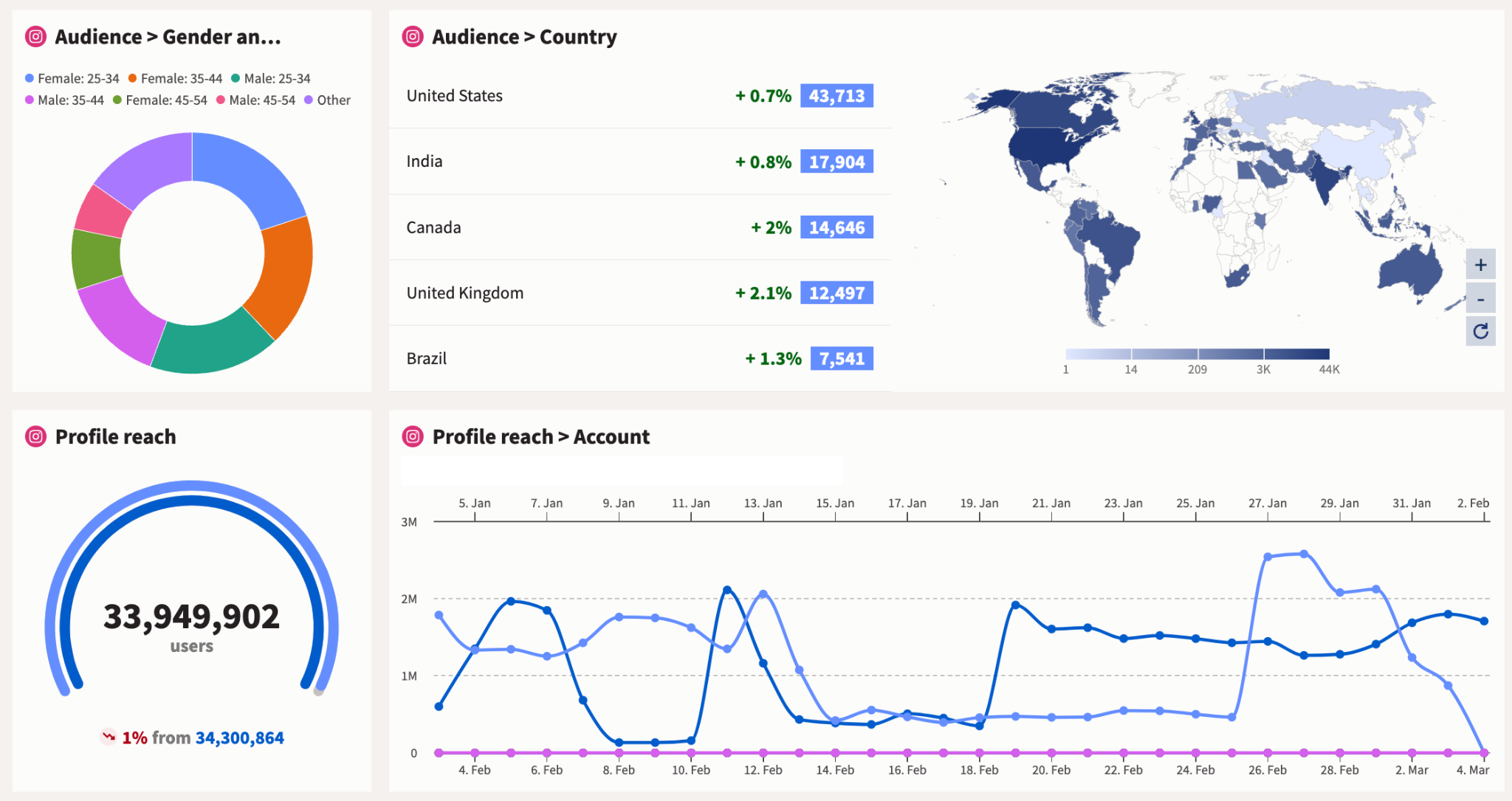
Communicating this impact to stakeholders requires clarity, realism, and a data-driven narrative. As Wiles advises, "The first step is to be honest about your capabilities and flexible with your goals depending on the support you have or don’t have." Presenting a clear picture of social media’s contribution to immediate KPIs, along with learnings that inform future strategies, is crucial for securing continued investment and support.
Strategic Implementation: An Eight-Step Framework
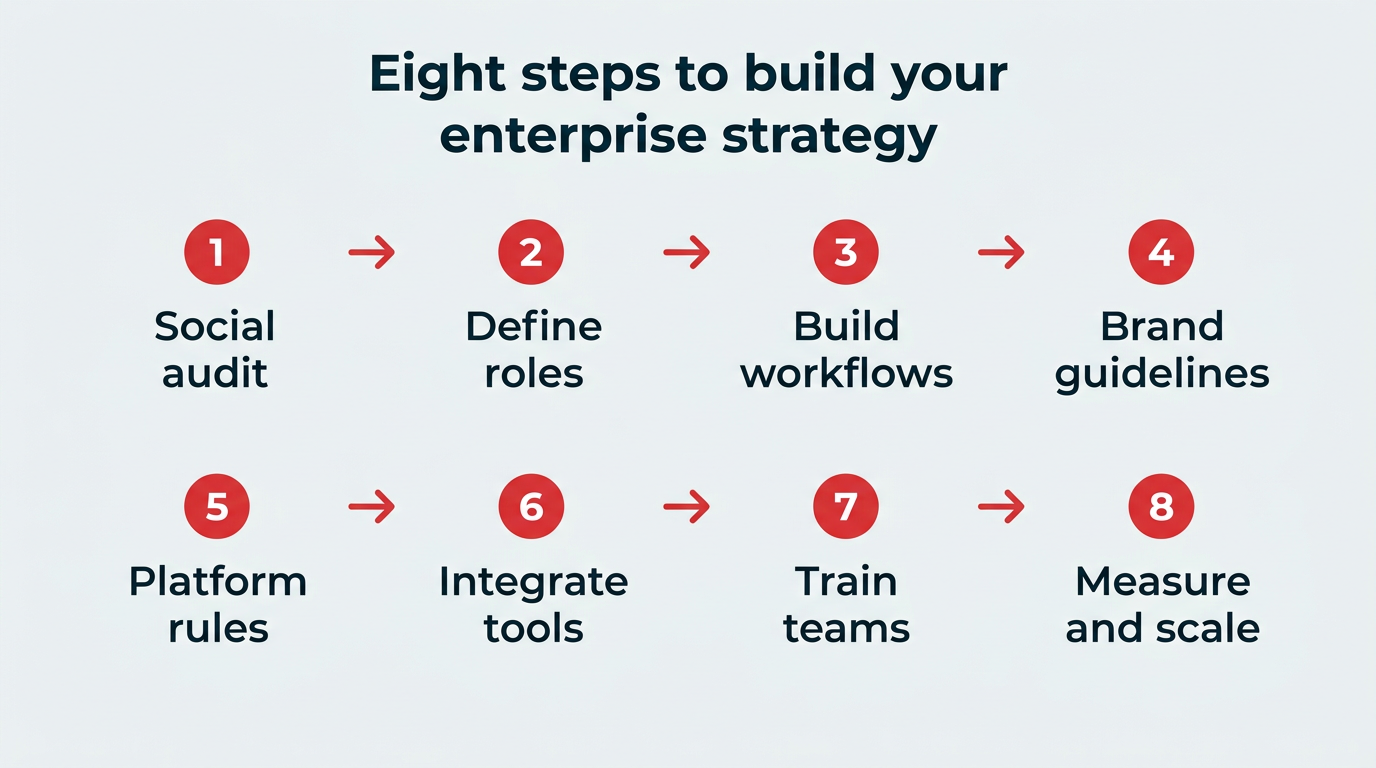
Building an enterprise social media strategy is a methodical process:
- Conduct a Comprehensive Social Audit: Catalog all existing social accounts, campaigns, and owners to identify gaps, redundancies, and off-brand activities. This reveals audience engagement hotspots and inefficient budget allocations.
- Define Clear Roles and Responsibilities: Establish an organizational chart, detailing the functions of a central Center of Excellence (CoE), regional or business unit teams, cross-functional partners (marketing, PR, customer service, HR, compliance), and employee advocates.
- Create Streamlined Workflows for Approvals and Publishing: Implement standard operating procedures for content creation, review, and sign-off, leveraging social management platforms to automate processes and ensure transparency.
- Integrate Brand and Content Guidelines: Translate the corporate brand voice and visual identity into specific social media usage rules, including localized examples for international teams.
- Establish Platform and Publishing Rules: Document content types, posting cadences, and engagement guidelines for each platform, ensuring compliance with platform-specific and regional regulatory requirements.
- Integrate the Right Tools and Data Systems: Select and integrate centralized platforms that offer unified dashboards, real-time analytics, and seamless connectivity with existing CRM, BI, and AI tools.
- Train and Empower Teams: Conduct comprehensive training sessions for all stakeholders, covering strategy, compliance, platform best practices, and the use of integrated tools.
- Measure, Iterate, and Scale: Implement regular review cycles to analyze performance data, share insights, and refine the strategy. An effective enterprise social program is dynamic, evolving with business needs and market shifts, driven by data rather than guesswork.
Selecting the Right Technology Partner
Choosing an enterprise social media platform is a critical decision, demanding careful consideration of scale, governance needs, and existing technological infrastructure. The wrong choice can lead to fragmented tools and inefficient workflows, while the right one consolidates operations and enhances strategic capabilities. A four-step framework guides this selection: assess current needs, evaluate platform capabilities, consider integration with existing systems, and prioritize vendor support and scalability.
Essential platform capabilities for an enterprise-ready solution include:
- Unified content planning, scheduling, and publishing across all accounts.
- Advanced analytics and reporting for comprehensive performance insights.
- Robust compliance features, including content moderation and audit trails.
- Real-time social listening and sentiment analysis.
- Workflow automation for approvals and task management.
- Employee advocacy tools to amplify reach.
- AI integration for content assistance, insights, and customer care.
- Scalability to accommodate growth in accounts, teams, and regions.
- Comprehensive security features.
Platforms like Hootsuite Social OS are engineered for complex organizations, providing the structure, formats, and visibility necessary for effective collaboration, brand protection, and data-driven decision-making. Moreover, the chosen social platform must not operate in isolation but integrate with a broader ecosystem of business tools, including CRM, customer service platforms, business intelligence tools, digital asset management systems, and marketing automation platforms. This integration, often facilitated by MCP connectors, transforms the social operating system into a central hub, preventing data silos and fostering holistic business intelligence.
Conclusion
In an era defined by digital connectivity and rapid information flow, a well-articulated, adaptable, and technologically supported enterprise social media strategy is no longer optional. It is a fundamental requirement for sustained competitive advantage and growth. By addressing the complexities of scale, ensuring robust governance, leveraging the power of AI, and meticulously measuring impact, large organizations can transform their social media presence from a collection of disparate accounts into a powerful, unified force that drives brand loyalty, fuels customer acquisition, and ultimately, contributes significantly to the bottom line. The future of enterprise social media lies in its intelligent integration into the core fabric of business operations, creating a cohesive, responsive, and resilient digital presence ready to navigate the challenges and seize the opportunities of the modern world.