Exploring the Globe Through Sound: How Farwave is Redefining Indie Audio Apps on iOS

The landscape of audio streaming and media consumption on mobile devices has long been dominated by monolithic platforms such as Spotify, Apple Music, and specialized podcast aggregators. These platforms rely on algorithmic recommendations, massive server-side databases, and rigid user interfaces that prioritize commercial engagement over exploratory joy. However, the indie application ecosystem has consistently challenged these conventions by introducing novel ways for users to interact with media. The latest entrant to capture the attention of the Apple ecosystem is Farwave, an innovative audio player that reimagines how listeners discover global radio stations, podcasts, and personal music collections by anchoring the experience to a virtual 3D planetary interface.
Main Facts of the Farwave Release
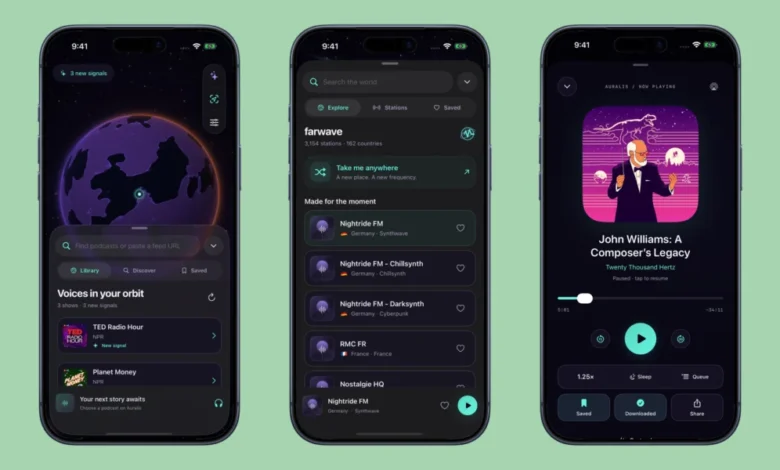
Developed as a fresh conceptual approach to the traditional media player, Farwave is designed specifically for iPhone and iPad users running iOS 18 and later. Available via the App Store, the application departs from standard list-based navigation menus. Instead, it invites users to interact with a tactile, three-dimensional digital globe to unearth live radio broadcasts originating from virtually any region across the planet.
Beyond live global radio, the application extends its spatial paradigm to other forms of audio entertainment. Podcasts and local music collections are integrated into the ecosystem through distinct visual spheres—effectively turning the app into a solar system of personal and global audio. While the core application is available as a free download, advanced capabilities such as podcast management, offline downloading, and local music file importing are locked behind a subscription model known as Farwave Pro, priced at $2.99 per month or $14.99 annually.
The Chronology of Indie Audio Innovation

To understand the significance of Farwave’s market entry, one must examine the evolution of audio discovery on mobile operating systems. In the early days of the App Store, internet radio applications were rudimentary streaming directories. Developers relied heavily on static lists categorized by genre or geography, which offered limited interactivity and little visual engagement.
As hardware capabilities advanced—particularly with the integration of powerful graphics processors and Metal APIs on Apple silicon—independent developers began experimenting with spatial computing and immersive UI designs long before the advent of mixed-reality headsets. Over the past five years, a niche segment of developers has focused on gamifying or visualizing data through interactive globes, weather maps, and node-based networks.
Farwave represents the culmination of this design philosophy. Conceptualized during a period when users are increasingly fatigued by algorithmic homogeneity, the app’s development cycle prioritized user agency over automated curation. Rather than waiting for an algorithm to suggest a localized broadcast, the user is cast in the role of an explorer. The inclusion of features like the "Take me anywhere" button further emphasizes serendipity, harkening back to the early days of terrestrial radio surfing, where listeners would stumble upon unfamiliar content by chance.
Supporting Data and Technical Architecture
Farwave’s architecture is tailored to modern iOS frameworks, requiring iOS 18 or newer to leverage the latest performance optimizations, memory management protocols, and graphics rendering engines. The application’s core technical achievement lies in its smooth rendering of multiple 3D celestial bodies—representing radio, podcasts, and music—without introducing significant battery drain or thermal throttling on supported iPad and iPhone models.
In terms of functional data handling, the app categorizes its offerings into three distinct pillars:

- Global Radio Broadcasting: Users can manipulate the 3D globe to pinpoint specific countries, cities, or coordinates, tapping directly onto active broadcast signals. A built-in history log ensures that users can retrace their listening steps to bookmark hard-to-find international stations.
- Podcast Integration: Farwave supports comprehensive podcast exploration through searchable directories and direct RSS feed integration. Power users are catered to with standard podcasting necessities, including customizable playback speeds, support for complex playback queues, and robust offline downloading capabilities for remote listening.
- Local Music Management: Departing from streaming integration, the music component focuses entirely on user-owned assets. While native Apple Music subscription streaming is omitted, users can seamlessly import audio files directly from desktop computers or the native iOS Files application. Each imported artist is visualized as an individual signal on its respective planetary interface, and all files remain strictly on-device to guarantee offline availability.
Official Responses and Developer Insights
While independent developers often operate outside the traditional press release cycles of major tech conglomerates, the reception of Farwave within the indie developer community has highlighted a growing demand for bespoke, tactile software design. Industry analysts note that applications like Farwave succeed by capitalizing on emotional resonance and nostalgia. In an era where digital minimalism and utilitarian flat design have dominated user interfaces for over a decade, users are increasingly drawn to skeuomorphic elements and playful, immersive interactions that make software feel alive.
Although major streaming entities have not issued formal responses to niche competitors like Farwave, the continuous evolution of independent audio apps underscores a persistent market gap. Major platforms optimize for retention and automated listening habits, whereas indie tools cater to intentional exploration, digital ownership, and aesthetic pleasure.
Broader Impact and Market Implications
The launch of Farwave carries several broader implications for the future of iOS app development, particularly within the audio utility sector.
First, it demonstrates the viability of tiered monetization models for hyper-niche utilities. By offering a baseline free tier that showcases the app’s primary visual novelty—exploring global radio—developer outreach is maximized. Meanwhile, the $2.99 monthly or $14.99 annual Farwave Pro tier targets dedicated enthusiasts who require robust podcast management and local file support. This dual approach helps mitigate the high acquisition costs typically associated with subscription-only indie apps.

Second, Farwave highlights the changing expectations of consumer privacy and data autonomy. By deliberately choosing to omit cloud-dependent streaming services in favor of local file imports for music, the app aligns with a growing consumer preference for offline-capable, locally stored media libraries that do not track listening habits or rely on constant internet connectivity.
Finally, the application serves as a case study in effective user interface design for iOS 18. By pushing the boundaries of what a media player can look like, Farwave encourages other independent developers to break away from standard UIKit and SwiftUI templates. As spatial and interactive design principles continue to bleed into traditional flat-screen mobile operating systems, apps that offer tactile, exploratory experiences are poised to capture disproportionate user attention and critical acclaim.
As Farwave establishes its footing on the App Store, it stands as a testament to the creativity thriving in the indie development scene. By turning the act of listening to audio into a planetary journey, it challenges the industry standard and offers a compelling glimpse into alternative futures for digital media consumption.