Future Apple Watches Could Measure Your Core Body Temperature And Make Your Thermometer Useless
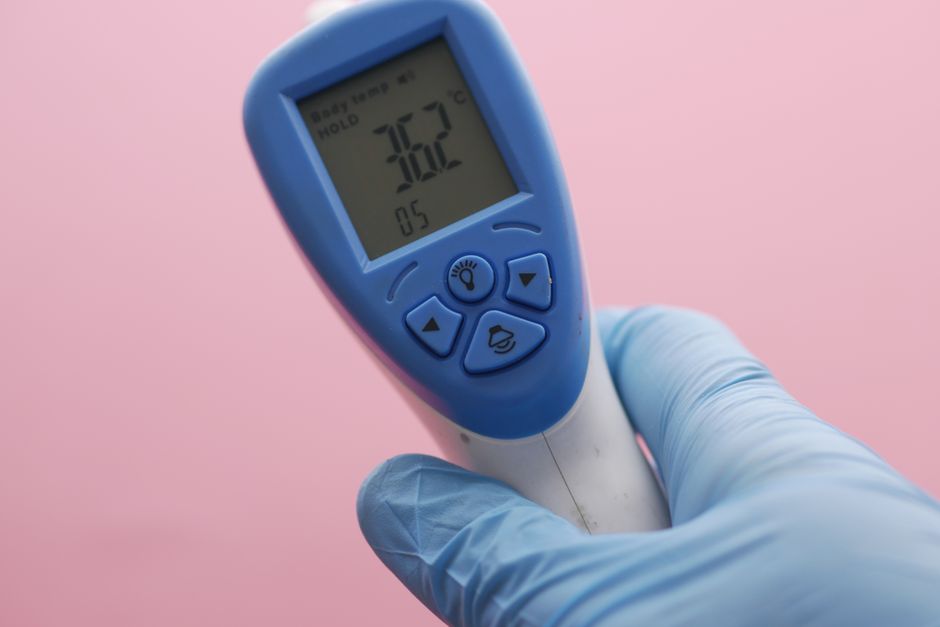
Apple Watch: The Future Thermometer Killer
The Apple Watch, a device that has already revolutionized wearable technology, is poised to become the ultimate arbiter of our internal temperature, potentially rendering traditional thermometers obsolete. While current models offer advanced health tracking features, the integration of accurate core body temperature sensing represents a significant leap forward, promising a future where a simple glance at your wrist provides crucial health insights. This evolution isn’t just about convenience; it’s about democratizing health monitoring, providing continuous, unobtrusive data that can empower individuals and healthcare professionals alike. The implications of this technology are vast, impacting everything from early disease detection and fever management to athletic performance optimization and even personalized sleep tracking. The journey towards this future is already underway, with Apple meticulously refining its sensor technology and data analysis capabilities to deliver a truly integrated and indispensable health tool.
Current Apple Watch models already incorporate a suite of sophisticated sensors, including an optical heart sensor, electrical heart sensor, blood oxygen sensor, accelerometer, gyroscope, and ambient light sensor. These components work in concert to gather a wealth of physiological data. However, the precise measurement of core body temperature, the temperature of the internal organs and blood, has remained a frontier yet to be fully conquered by consumer wearables. Unlike surface temperature, which is heavily influenced by environmental factors, core body temperature offers a more accurate reflection of systemic health. Existing smartwatches often employ skin temperature sensors, which can detect variations and trends, particularly useful for cycle tracking and sleep analysis. These sensors, typically thermistors or infrared sensors, are placed against the skin. While they can infer changes in core body temperature by accounting for ambient conditions and metabolic rates, they are not direct measurements of the internal core. The challenge lies in isolating the internal thermal signal from external noise. Apple’s approach is likely to involve a multi-pronged strategy, combining improved sensor hardware with sophisticated algorithms that can compensate for environmental fluctuations and accurately extrapolate core temperature from peripheral measurements. This could involve leveraging the existing suite of sensors, analyzing heart rate variability, respiration rate (which can be inferred from breathing patterns detected by motion sensors), and even galvanic skin response to build a more comprehensive thermal profile.
The pursuit of accurate core body temperature sensing in a wearable device faces significant engineering hurdles. Unlike a clinical thermometer inserted orally, rectally, or under the armpit, a device worn on the wrist is constantly exposed to ambient temperature variations, skin perfusion changes, and physical activity. This necessitates a complex interplay between hardware and software. On the hardware front, advancements in miniaturized, high-precision thermistors or infrared sensors are crucial. These sensors need to be sensitive enough to detect subtle temperature shifts within the body while being robust enough to withstand daily wear and tear. Furthermore, the thermal conductivity of the watch casing and its placement on the wrist will play a role in how accurately external measurements can be translated to internal body temperature. Apple’s deep bench of material scientists and engineers are undoubtedly exploring innovative materials and designs that can optimize heat transfer and minimize external interference.
The software and algorithmic side is equally critical. Machine learning and artificial intelligence will be indispensable in decoding the complex signals from the watch’s sensors. Algorithms will need to be trained on vast datasets to learn the intricate relationships between peripheral skin temperature, heart rate, activity levels, and actual core body temperature across diverse physiological states and environmental conditions. This involves developing predictive models that can continuously estimate core body temperature with a high degree of accuracy. For instance, during periods of intense physical activity, skin temperature can rise significantly due to increased blood flow to the extremities. A sophisticated algorithm would need to differentiate this from a true internal fever. Similarly, changes in ambient temperature and humidity will need to be accounted for to prevent inaccurate readings. The integration of data from other sensors, such as the blood oxygen sensor and electrical heart sensor, could further refine these estimations, providing a more holistic view of the body’s thermal regulation.
The implications of an Apple Watch capable of accurately measuring core body temperature are profound and far-reaching, fundamentally altering how we approach personal health management and even clinical diagnostics. For individuals, the most immediate benefit will be the elimination of the need for traditional thermometers. No more searching for a thermometer in the medicine cabinet, no more awkward placement, and no more waiting for a reading. A quick glance at the wrist will suffice, providing instant, actionable data. This continuous, passive monitoring will be invaluable for detecting fevers early, allowing for prompt intervention and potentially preventing the escalation of illness. Parents of young children, who are particularly susceptible to rapid temperature changes, will find immense peace of mind in having this capability readily available.
Beyond fever detection, the ability to track core body temperature trends will unlock new levels of personalized health insights. For individuals managing chronic conditions, such as diabetes or autoimmune diseases, subtle deviations in core temperature could serve as early warning signs of exacerbations or infections, enabling proactive management and reducing hospitalizations. Athletes and fitness enthusiasts will benefit from a deeper understanding of their thermoregulation, optimizing training regimens, preventing heatstroke, and monitoring recovery. The impact on sleep tracking will be significant. Core body temperature naturally fluctuates throughout the sleep-wake cycle, playing a crucial role in sleep quality. By accurately measuring this, the Apple Watch can provide more precise data on sleep stages and offer personalized recommendations for improving sleep hygiene.
From a public health perspective, the widespread adoption of such a device could transform disease surveillance. Aggregated, anonymized data from millions of Apple Watch users could provide real-time insights into the prevalence and spread of infectious diseases, allowing health authorities to respond more effectively to outbreaks. This could offer a powerful tool for early detection and containment of pandemics, complementing traditional surveillance methods. Furthermore, this technology could democratize access to health data, particularly in remote or underserved areas where access to healthcare professionals and diagnostic tools is limited. A simple Apple Watch could empower individuals to take a more active role in managing their health.
The regulatory landscape for such a device will be a critical consideration. As a medical-grade health monitoring tool, a core body temperature sensor will likely require clearance from regulatory bodies like the FDA in the United States and similar organizations globally. This process involves rigorous testing and validation to ensure accuracy, reliability, and safety. Apple’s experience with its ECG and blood oxygen sensors suggests they are well-equipped to navigate these complexities. The data generated by these sensors will be subject to stringent privacy regulations, with Apple’s established commitment to user privacy being a cornerstone of its strategy. Secure storage, encrypted transmission, and granular user control over data sharing will be paramount.
The integration of core body temperature sensing into the Apple Watch ecosystem will not be a singular event but rather an evolutionary process. Early iterations might focus on providing trend data and estimations, gradually improving accuracy and reliability over time through software updates and user feedback. The potential for future integration with other health devices and platforms is also immense. Imagine a future where your Apple Watch seamlessly communicates with your smart thermostat to optimize your home’s temperature for better sleep, or with your continuous glucose monitor to identify thermal influences on blood sugar levels. The data could be shared with healthcare providers, with explicit user consent, to facilitate more informed and personalized medical care.
The journey to a thermometer-less future, powered by the Apple Watch, is not without its challenges. Ensuring equitable access to this technology will be important, as the cost of an Apple Watch can be a barrier for some. Furthermore, the interpretability of the data is crucial. While the device can provide accurate readings, understanding what those readings mean in the context of individual health will require effective communication and education for users and potentially integration with user-friendly health platforms. The potential for over-reliance on the data and the need for continued professional medical advice must also be emphasized.
However, the trajectory of technological innovation, coupled with Apple’s relentless pursuit of enhancing the user experience and expanding the health capabilities of its devices, strongly suggests that an Apple Watch capable of accurately measuring core body temperature is not a question of if, but when. This advancement promises to usher in a new era of proactive, personalized, and accessible health monitoring, making the traditional thermometer a relic of the past, as redundant as a landline phone in a world of smartphones. The implications for preventative medicine, chronic disease management, and overall public health are simply too significant to ignore. The Apple Watch is not just a timepiece; it is rapidly evolving into an indispensable extension of our own biology, providing insights that were once confined to clinical settings, now accessible with a flick of the wrist. This evolution marks a paradigm shift, where health is not just managed, but continuously and intuitively understood.


