Google Pixel Watch 5 Leaks Reveal Iterative Hardware Strategy with Core Processor Retention and Significant RAM Upgrade

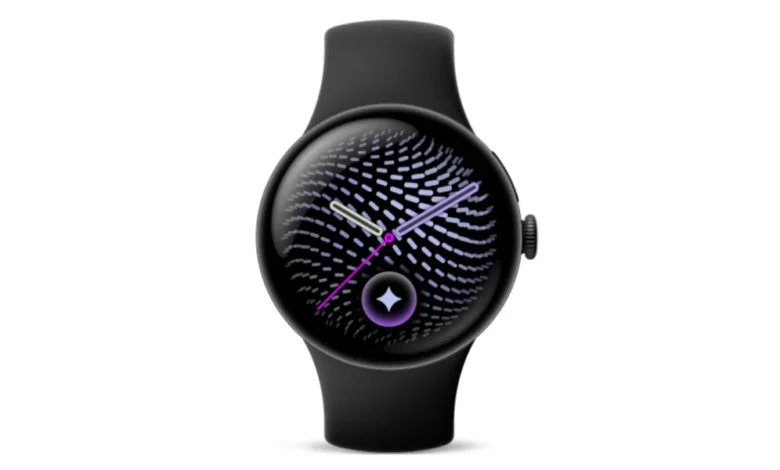
The forthcoming Google Pixel Watch 5, codenamed "godric" according to recent entries in the Google Play Console, is poised to maintain a familiar aesthetic, appearing largely identical to its immediate predecessor. However, new information suggests that this design consistency might extend to its internal specifications, particularly its core processing unit, while simultaneously introducing a notable upgrade in system memory, signaling Google’s evolving strategy in the highly competitive smartwatch market. This approach, focusing on refinement and software enhancement rather than a complete hardware overhaul, provides a glimpse into Google’s vision for the future of Wear OS and its integrated AI capabilities.
Processor Continuity: The Qualcomm SW5100 Platform Returns
At the heart of the Pixel Watch 5, Google appears to be leveraging the "Qualcomm SW5100" platform, a designation that encompasses the Snapdragon W5 series of chipsets. Crucially, the CPU and GPU components are indicated as unchanged from the previous year’s model, the Pixel Watch 4. This revelation suggests that the Pixel Watch 5 will likely continue to utilize a variant of the Snapdragon W5 Gen 2, the same advanced 4nm chip that powered its predecessor. While Google has yet to officially confirm these specifications, the Google Play Console has historically proven to be a reliable source for pre-release device information.
To contextualize this decision, it is imperative to trace Google’s journey with its Pixel Watch line and the underlying silicon. The inaugural Pixel Watch, launched in October 2022, notably employed the aging Samsung Exynos 9110 processor, a 10nm chip that first debuted in 2018. This choice, while allowing Google to enter the smartwatch arena, was met with some criticism regarding performance and battery efficiency compared to contemporary rivals. Recognizing this, Google made a significant leap with the Pixel Watch 2, introduced in October 2023, by adopting the 4nm Snapdragon W5 Gen 1. This represented a substantial upgrade, bringing improved power efficiency and performance to the Wear OS experience.
The Pixel Watch 3, following in October 2024, continued this trajectory, likely with minor optimizations to the W5 Gen 1 or a subtle variant. Then, with the Pixel Watch 4 in October 2025, Google introduced the Snapdragon W5 Gen 2. This iteration brought specific enhancements, most notably enabling Satellite SOS capabilities and upgrading the low-power co-processor from an ARM Cortex-M33 to a more efficient Cortex-M55. The Cortex-M55, designed for ultra-low-power applications, significantly aids in offloading tasks like continuous health monitoring and sensor data processing, thereby conserving battery life and allowing the main application processor to focus on more demanding tasks.
The current leak for the Pixel Watch 5, indicating a continued reliance on the SW5100 platform with an unchanged CPU and GPU from "last year," strongly implies the retention of the Snapdragon W5 Gen 2. While the Google Play Console entry does not explicitly detail the co-processor, it is plausible that the M55, or even a newer, more efficient variant, could be maintained or upgraded to further refine power management and enhance always-on sensing capabilities. This strategic choice by Google suggests a focus on optimizing the existing hardware platform rather than investing in an entirely new chip architecture for this generation. It could be driven by a desire for platform stability, cost efficiency, or a belief that the W5 Gen 2 still offers sufficient performance for the current Wear OS ecosystem and planned software features.
A Significant RAM Boost: Fueling Future Capabilities

Perhaps the most impactful hardware upgrade revealed in the leak is the increase in RAM from 2GB to 3GB. This marks the first time Google has augmented the system memory in its Pixel Watch series since its inception into the wearables market. For smartwatches, much like smartphones, increased RAM directly translates to improved multitasking capabilities, faster application loading times, and a smoother overall user experience. With more RAM, the watch can keep more applications open in the background, switch between tasks with less latency, and handle more complex operations without slowdowns.
This upgrade is particularly pertinent given the growing sophistication of Wear OS and the increasing demands placed on smartwatch hardware. Modern smartwatches are no longer merely notification mirrors; they are powerful miniature computers capable of running complex applications, processing health data in real-time, and interacting with advanced AI functionalities. The additional gigabyte of RAM is anticipated to play a crucial role in "unlocking Gemini Intelligence capabilities," as suggested by the leak.
Google’s Gemini AI, its most advanced and capable AI model, requires substantial computational resources to operate efficiently, especially for on-device processing. While a smartwatch processor cannot handle the full scope of Gemini’s cloud-based operations, increased RAM facilitates the running of more sophisticated on-device machine learning models. This could manifest in faster and more accurate voice commands, more intelligent contextual suggestions, enhanced proactive assistance, and more fluid interactions with AI-powered watch faces or applications. For instance, real-time language translation, more nuanced fitness coaching based on historical data, or even advanced anomaly detection in health metrics could benefit significantly from increased memory.
In a direct comparison, the upcoming Samsung Galaxy Watch 9, a primary competitor in the Android smartwatch space, is reportedly sticking with 2GB of RAM, despite featuring a new and more powerful 3nm Snapdragon Wear Elite processor. This difference highlights Google’s distinct strategic emphasis: while Samsung prioritizes raw processing power with a new-generation chip, Google appears to be betting on increased memory to enhance the user experience and drive its AI agenda within its established hardware framework. The decision to boost RAM, even with a reused processor, underscores Google’s commitment to delivering a responsive and intelligent Wear OS experience, especially as AI integration becomes a central pillar of its product ecosystem.
Design Continuity and the Gemini Aesthetic Integration
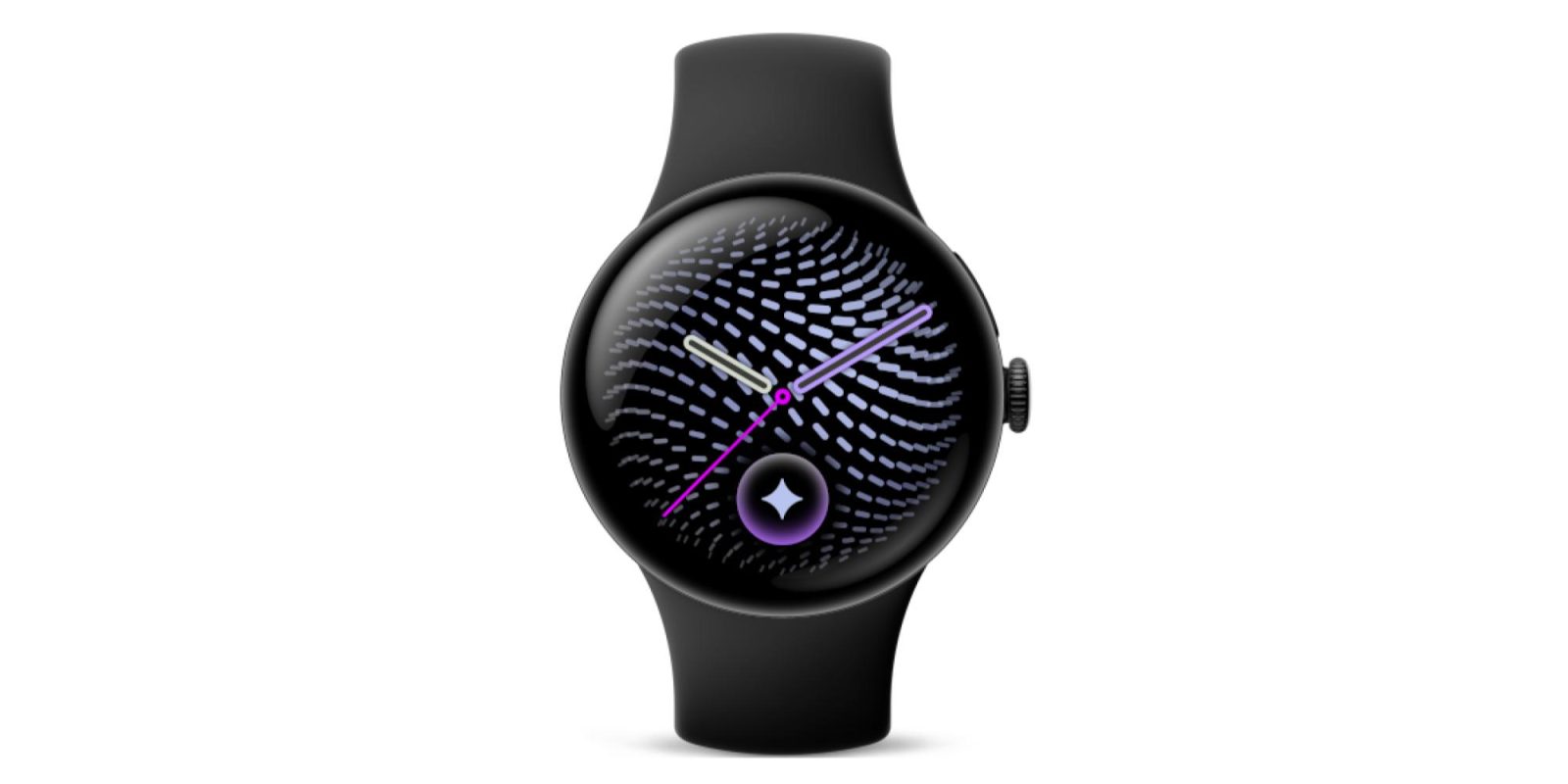
Visually, the Pixel Watch 5 is expected to maintain the distinct, pebble-like design that has characterized the series since its debut. The leaked image, consistent with earlier renders, shows a device that looks outwardly identical to its predecessors. This design philosophy, prioritizing sleek minimalism and a comfortable, ergonomic form factor, has been a hallmark of the Pixel Watch line. The smooth, domed glass, seamless integration with the watch casing, and signature haptic crown are all likely to remain unchanged.
While some users might hope for a refreshed design or new material options, Google’s decision to maintain the existing form factor could indicate several things. Firstly, it suggests that Google believes the current design is aesthetically pleasing and functionally sound, having achieved a level of iconic recognition. Secondly, it could be a cost-saving measure, allowing Google to streamline manufacturing processes and focus resources on internal hardware upgrades and software development. Thirdly, it might align with an Apple-esque strategy of iterative design, where significant external changes are reserved for major generational leaps, while interim models focus on internal refinements.
However, despite the physical similarity, the leak points to a significant aesthetic update on the software front: a new analog watch face that incorporates Gemini’s "Neural Expressive design language." This is a crucial element in Google’s overarching strategy to integrate AI seamlessly into its user interfaces. The "Neural Expressive" design likely implies watch faces that are not only visually appealing but also dynamic and contextually aware. For instance, the watch face might subtly change colors or patterns based on the time of day, current weather, or even the user’s activity levels. It could present information in a more intuitive and personalized manner, driven by Gemini’s understanding of user preferences and routines. This integration ensures that even if the hardware looks familiar, the user’s interaction with the device feels fresh and intelligent, serving as a constant reminder of Google’s AI advancements.
The Competitive Landscape: A Shifting Battlefield
The detailed leaks surrounding the Pixel Watch 5 offer a compelling comparison point against its primary Android rival, the Samsung Galaxy Watch 9, and the market leader, the Apple Watch. Each player is adopting distinct strategies that reflect their respective strengths and market positions.
Samsung Galaxy Watch 9 and Ultra 2: Samsung’s upcoming wearables are expected to feature the brand-new 3nm Snapdragon Wear Elite processor. This chip represents a significant generational leap, boasting a configuration of 1x Cortex-A78 and 4x Cortex-A55 cores. The Cortex-A78 is a high-performance core designed for demanding tasks, while the Cortex-A55 cores offer a balance of efficiency and performance for everyday operations. Fabricated on a 3nm process, the Snapdragon Wear Elite promises superior power efficiency and raw computational power compared to the 4nm Snapdragon W5 Gen 2 found in the Pixel Watch 5. However, Samsung is reportedly sticking with 2GB of RAM, contrasting Google’s 3GB offering. This suggests Samsung is prioritizing peak CPU performance for application execution, while Google is emphasizing overall system fluidity and AI capabilities through increased memory. The performance difference could mean the Galaxy Watch 9 excels in benchmarks and intensive app usage, while the Pixel Watch 5 might offer a smoother, more responsive experience in daily multitasking and AI interactions.
Apple Watch: As the undisputed market leader, Apple’s approach involves custom-designed S-series silicon, which offers unparalleled integration between hardware and software. Apple’s chips are often at the forefront of power efficiency and performance in the wearable space, enabling advanced features like ECG, blood oxygen monitoring, and comprehensive fitness tracking with exceptional battery life. While direct comparisons are challenging due to different operating systems and ecosystems, the Apple Watch sets a high bar for user experience, health capabilities, and seamless integration with the iPhone. The Pixel Watch 5, by focusing on Wear OS and deep Google service integration, aims to carve out its niche by offering a compelling alternative for Android users, particularly those within the Pixel ecosystem. Its increased RAM and Gemini AI integration are key differentiators designed to stand out against both Samsung’s raw power play and Apple’s established dominance.
Wear OS and the Future of Smartwatches: An Analytical Perspective
Google’s strategy with the Pixel Watch 5 underscores its commitment to the Wear OS platform and its evolution. The decision to retain the Snapdragon W5 Gen 2 while boosting RAM indicates a belief that the existing processor offers sufficient raw power for current and near-future Wear OS functionalities. Instead, Google is investing in memory to enhance the experience of using Wear OS, particularly in the context of advanced AI.
The success of a smartwatch heavily relies on the synergy between its hardware and software. Wear OS has undergone significant transformations, particularly with the introduction of Wear OS 3, a collaborative effort between Google and Samsung. This partnership brought substantial improvements in performance, battery life, and app availability. The Pixel Watch 5, likely launching with Wear OS 5 (given the typical yearly increments), will benefit from further optimizations, new features, and a more refined user interface. The 3GB RAM will ensure that these software advancements run smoothly, preventing the watch from feeling sluggish or outdated prematurely.
Beyond raw performance, the smartwatch market is increasingly defined by health and fitness tracking capabilities. The M55 co-processor, if retained or upgraded, is crucial for continuous, low-power monitoring of vital signs, sleep patterns, and activity levels. This enables features like improved heart rate accuracy, more detailed sleep stage analysis, and proactive health alerts without significantly draining the main battery. The integration of Gemini AI could further enhance these health features, offering personalized coaching, identifying subtle health trends, and providing more intelligent insights based on the user’s data.

The broader impact of the Pixel Watch 5’s specifications suggests a strategic choice by Google to refine its core offering. By not overhauling the design or the main processor, Google can focus on delivering a highly optimized software experience, leveraging its strengths in AI and ecosystem integration. This approach might appeal to users who value a polished, intelligent, and seamless Google experience over cutting-edge processing power or a radical new design. It also allows Google to compete effectively by offering a distinct value proposition that centers on the smarts of its software and the fluidity of its user interface.
Anticipated Industry Reactions and Implications
Industry analysts are likely to view Google’s iterative hardware strategy for the Pixel Watch 5 with a nuanced perspective. On one hand, the retention of the Snapdragon W5 Gen 2 processor might be seen as a conservative move, potentially raising questions about long-term performance headroom compared to Samsung’s more powerful new chip. Some may argue that a truly flagship device should feature the latest available silicon.
However, the significant RAM upgrade and the explicit mention of "Gemini Intelligence capabilities" are likely to be highlighted as key differentiators. This move positions the Pixel Watch 5 as a device that prioritizes a responsive, AI-powered user experience, aligning with Google’s broader corporate focus on artificial intelligence. Analysts might commend Google for focusing on practical user benefits—smoother multitasking and enhanced AI—rather than simply chasing benchmark scores with a new chip whose full potential might not be realized in a smartwatch form factor.
From a consumer perspective, the identical design might be a point of contention for those hoping for a visual refresh. However, users who appreciate the existing aesthetic or prioritize internal improvements and software fluidity may find the Pixel Watch 5 a compelling upgrade. The promise of advanced Gemini integration could be a strong selling point for early adopters and Google ecosystem enthusiasts. The absence of a radical hardware change also allows Google to maintain competitive pricing, potentially making the Pixel Watch 5 an attractive option in its segment.
In conclusion, the leaked specifications for the Google Pixel Watch 5 paint a picture of a device that prioritizes intelligent refinement over revolutionary change. By sticking with a proven processor platform and significantly boosting RAM, Google is signaling its intent to deliver a highly optimized, AI-enhanced Wear OS experience. This strategy, coupled with a consistent design language and deep integration of Gemini AI, positions the Pixel Watch 5 as a strong contender in the Android smartwatch market, appealing to users who value a seamless, smart, and responsive wearable that truly embodies Google’s vision for the future of ambient computing. The official launch is eagerly awaited to confirm these details and reveal the full scope of Google’s latest smartwatch offering.