Maintaining a unified brand identity across digital platforms has become increasingly complex as marketing teams decentralize and artificial intelligence tools reshape content creation. To combat brand fragmentation, modern enterprises are turning to comprehensive social media style guides—internal blueprints designed to standardize everything from visual presentation to tone of voice. Industry research consistently underscores the financial stakes of this uniformity; recent data compiled by market researchers indicates that strict brand consistency can contribute up to 10% or more to a company’s overall revenue growth by solidifying consumer trust and recognition.

Historically, branding documents were static PDF files restricted to overarching corporate logos, primary color palettes, and typography rules for print and web design. However, the proliferation of real-time communication channels, localized regional teams, external agency partnerships, and AI-generated drafts has necessitated a new tier of operational governance. Today’s social media style guides act as living documents that remove micro-decision-making fatigue for content creators, ensuring that whether a post originates from a senior communications director in a corporate headquarters or an automated copywriting script, the resulting output feels authentically human and reliably on-brand.
The Anatomy of a Comprehensive Social Media Style Guide

Effective social media style guides generally incorporate ten distinct structural elements to bridge high-level corporate strategy with daily tactical execution. The foundation typically begins with a comprehensive inventory of all active corporate social media accounts paired with detailed audience personas. Without a precise understanding of who is reading the content across platforms such as LinkedIn, Instagram, TikTok, and X (formerly Twitter), subsequent editorial choices lack context.
The second core component focuses heavily on brand voice and tone. While voice represents the immutable personality of the organization—its core character and values—tone shifts dynamically depending on the situation, varying appropriately between a celebratory product launch and a serious customer service inquiry. Organizations frequently employ "this, not that" comparative tables to visually demonstrate acceptable phrasing versus off-brand terminology, offering concrete guidance that abstract adjectives fail to provide.
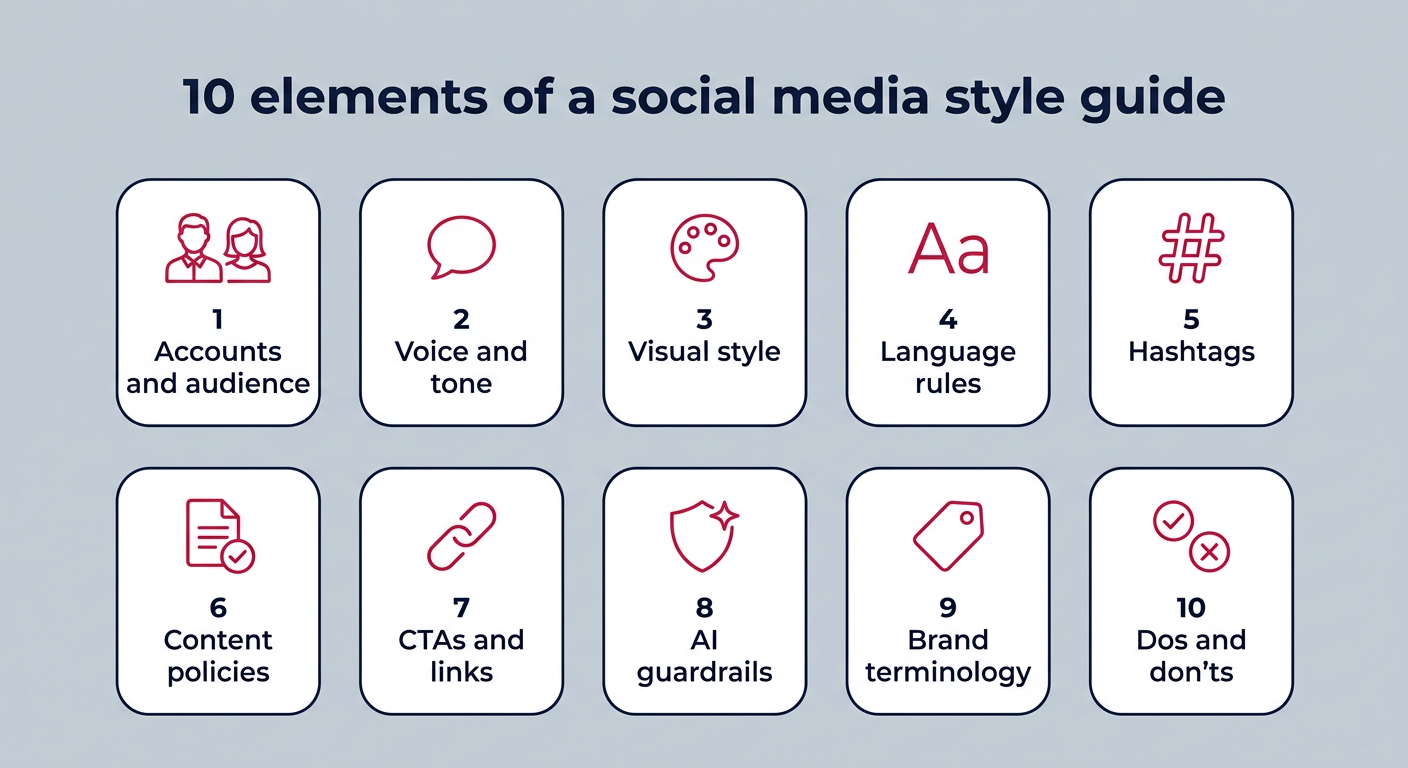
Visual identity standards and language rules form the third and fourth pillars of the document. By establishing clear parameters for aspect ratios, filter usage, graphic templates, and grammar conventions—often anchored by established stylebooks such as the Associated Press (AP) Stylebook or the Chicago Manual of Style—brands eliminate erratic punctuation, inconsistent capitalization, and clashing visual aesthetics. Subsequent sections address hashtag architecture, third-party content curation policies, user-generated content (UGC) protocols, and cross-platform repurposing frameworks.
Navigating AI Integration and Platform Diversification

As generative artificial intelligence becomes deeply embedded within digital marketing workflows, forward-thinking organizations are incorporating explicit AI guardrails into their style guides. These governance measures outline approved AI applications, specify acceptable boundaries for draft generation, and mandate human editorial oversight to prevent generic outputs or factual inaccuracies from reaching the public domain.
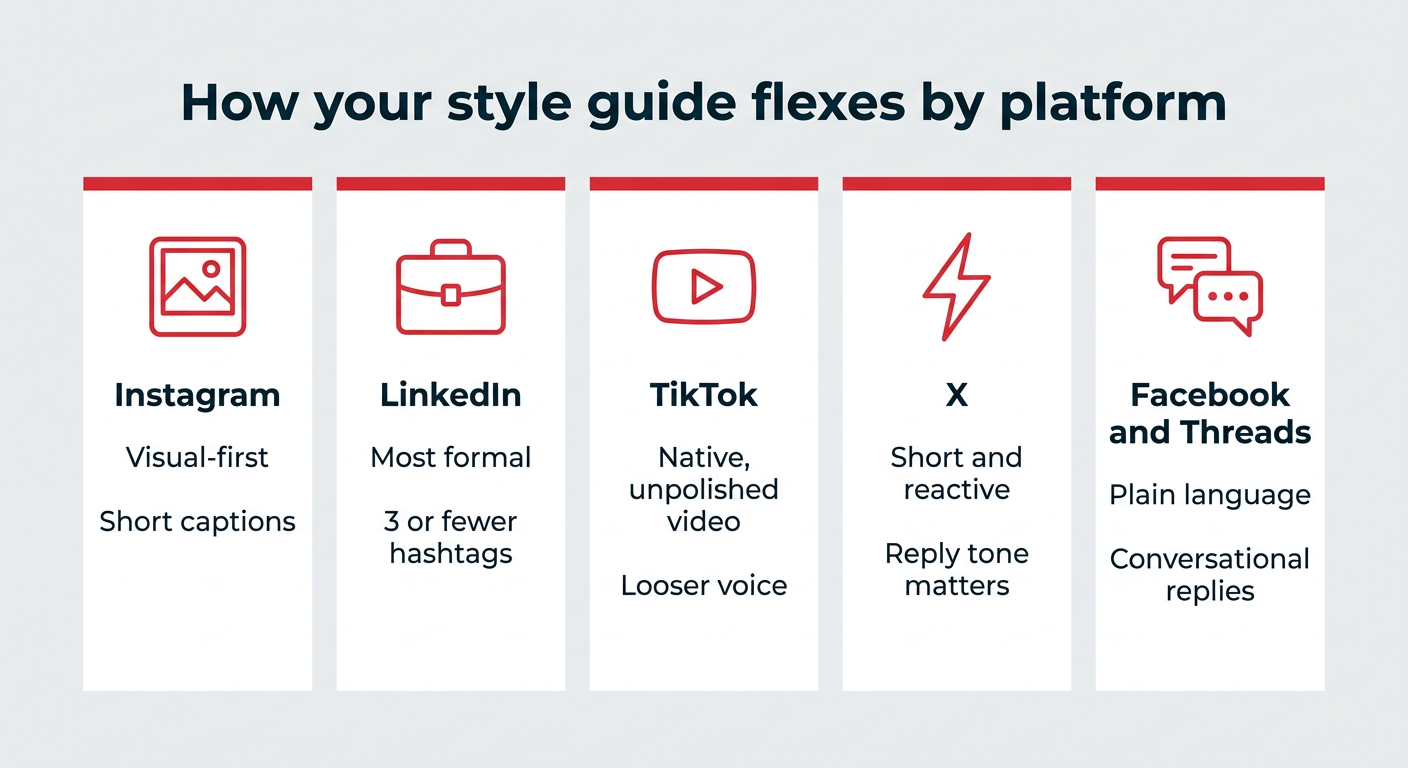
Furthermore, style guides must address the unique nuances of individual social platforms. Because a professional, data-dense update suitable for LinkedIn will inevitably fall flat on a fast-paced, visual-first platform like TikTok or Instagram, modern style guides establish a single core brand baseline while layering platform-specific adaptability rules on top. This approach allows brands to maintain instant recognizability while respecting the native user experience and technical constraints of each distinct digital ecosystem.
Community Management and Crisis Protocol Integration
Publishing guidelines alone govern only a fraction of a brand’s digital footprint. The remaining portion unfolds dynamically within comment sections and direct messages, where response time and crisis management protocols are critical. Comprehensive style guides increasingly mandate specific community management standards, detailing response timelines, escalation pathways for public relations threats, and strict moderation rules to safeguard corporate reputation during volatile online events.
Prominent Industry Standards and Maintenance Frameworks
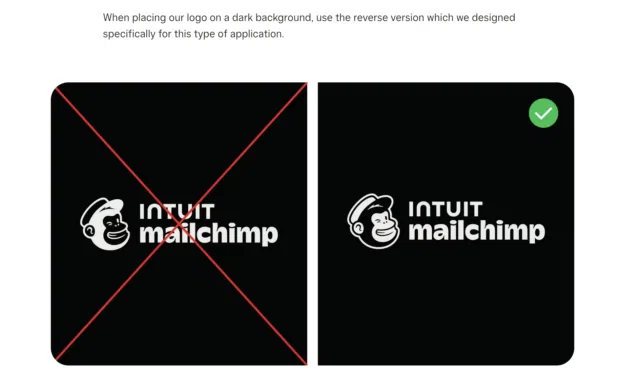
Several global organizations have established benchmarks for public-facing and internal style documentation. Mailchimp, widely recognized for its approachable yet authoritative voice, maintains a celebrated public style guide that meticulously details content intent, account naming conventions, and tagging protocols. Similarly, institutions such as Events DC and the Society of Women Engineers integrate platform-specific social guidelines into broader organizational brand books, ensuring seamless coherence across physical venues, digital publications, and virtual spaces.
To ensure these documents remain relevant, industry experts recommend treating style guides as evolving frameworks rather than one-off projects. Marketing teams typically schedule quarterly reviews to audit past content performance against shifting digital trends, while implementing off-cycle updates immediately following major corporate rebranding initiatives, structural reorganizations, or the adoption of new software tools. By establishing a single source of truth, organizations protect their brand equity, streamline onboarding for new personnel and external agencies, and foster long-term audience trust in an increasingly crowded digital marketplace.
Related posts: