Navigating Facebook Analytics in 2026: A Comprehensive Guide to Top Tools, Metrics, and Strategic Reporting

The landscape of social media management has undergone a profound transformation, placing immense pressure on brands to optimize their digital strategies across both paid and organic channels. With statistics showing that approximately 71% of U.S. adults actively utilize social media platforms, the sheer volume of consumer interactions generates an unprecedented amount of data. For organizations seeking to cut through the noise, leveraging robust analytics tools is no longer optional; it is a critical component of digital survival and growth.

Understanding the mechanics of performance tracking requires looking back at how the industry has evolved. In 2021, Meta made the strategic decision to retire its standalone Facebook Analytics product, integrating core reporting features directly into Meta Business Suite. While this consolidation streamlined basic metrics for everyday page managers, it also exposed a significant gap for marketing teams operating at scale. Native dashboards, while functional for simple engagement checks and direct Ads Manager integrations, often fall short when organizations require cross-platform visibility, historical data preservation, competitive benchmarking, and advanced stakeholder reporting.
To address these limitations, a diverse ecosystem of third-party analytics solutions has emerged to meet the demands of modern enterprises and small businesses alike. This comprehensive evaluation explores the top nine Facebook analytics tools available in 2026, analyzes the key performance indicators (KPIs) driving business results, and outlines actionable frameworks to improve overall marketing strategies.

The Evolution of Facebook Reporting and the Rise of Third-Party Platforms
When marketers refer to Facebook Insights today, they are typically pointing to the integrated reporting tab within Meta Business Suite. Serving as the primary free entry point for digital marketers, Meta Business Suite allows users to monitor post engagement, review basic audience demographics, and track advertising campaigns via direct integration with Ads Manager. For single-page operators with minimal reporting requirements, these native insights provide a reliable baseline.
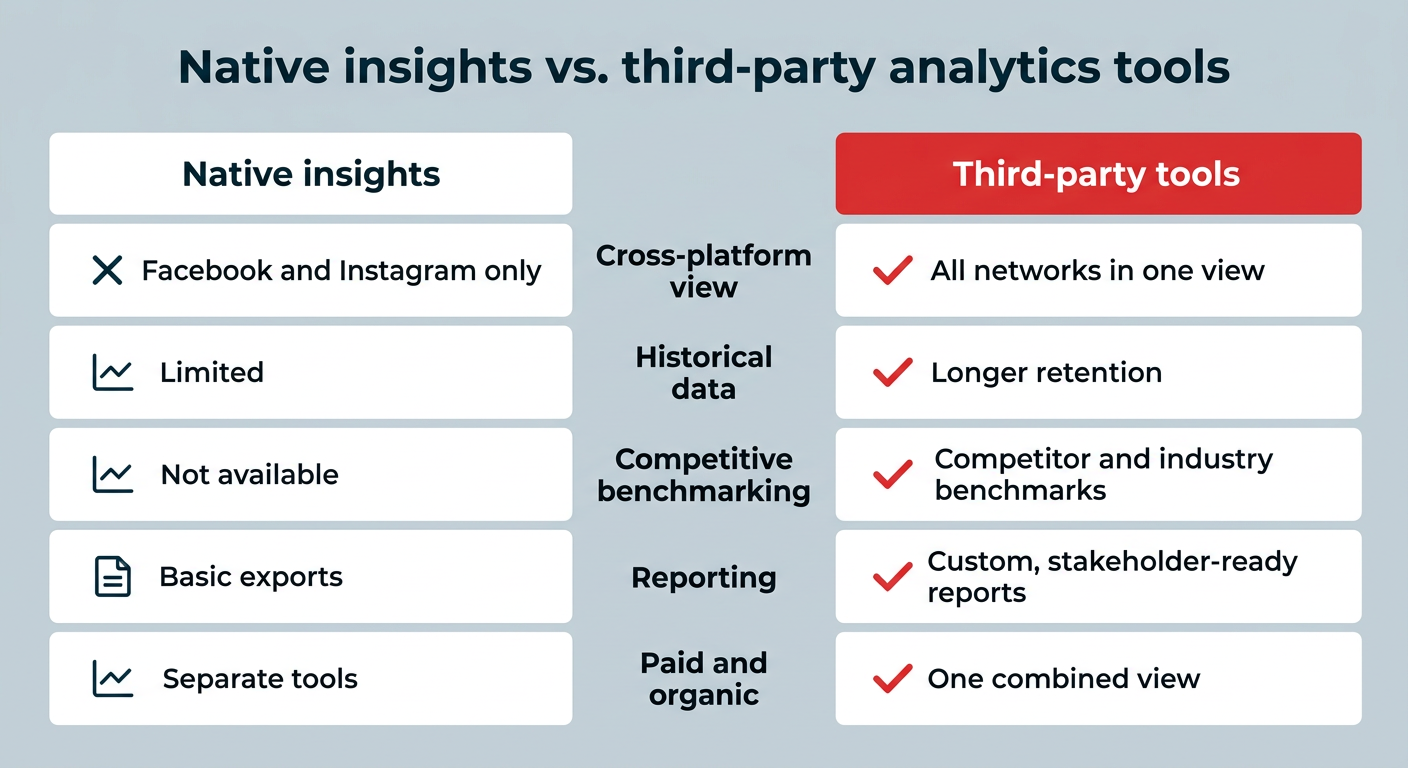
However, as social media programs mature, marketing departments frequently encounter the ceilings of native infrastructure. Managing multiple accounts across disparate platforms—such as Instagram, LinkedIn, TikTok, and YouTube—quickly turns native reporting into a fragmented chore. Furthermore, Meta’s native tools restrict historical data access, lack industry-specific benchmarking capabilities, and do not incorporate advanced social listening or customer sentiment tracking.
To bridge these operational gaps, third-party analytics platforms have stepped in to offer unified dashboards, customizable reporting templates, predictive scheduling, and deep competitive intelligence. Selecting the appropriate software depends entirely on an organization’s analytics depth, budgetary constraints, and internal reporting hierarchy.
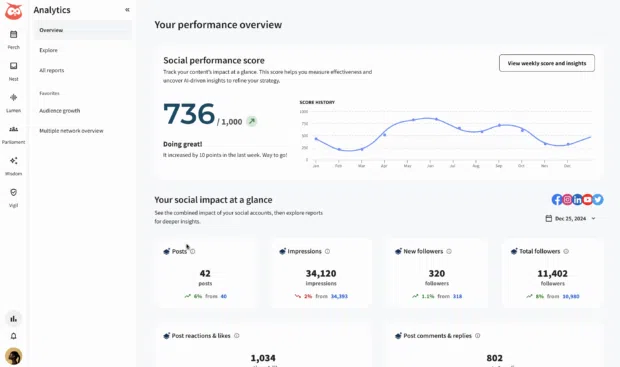
Top Nine Facebook Analytics Tools Compared for 2026
The marketplace for social media management and analytics software features options tailored to every level of organizational complexity, ranging from lightweight trackers to enterprise-grade operating systems.
-
Perch by Hootsuite: Best for Cross-Platform Reporting and Enterprise Teams
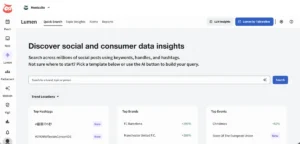
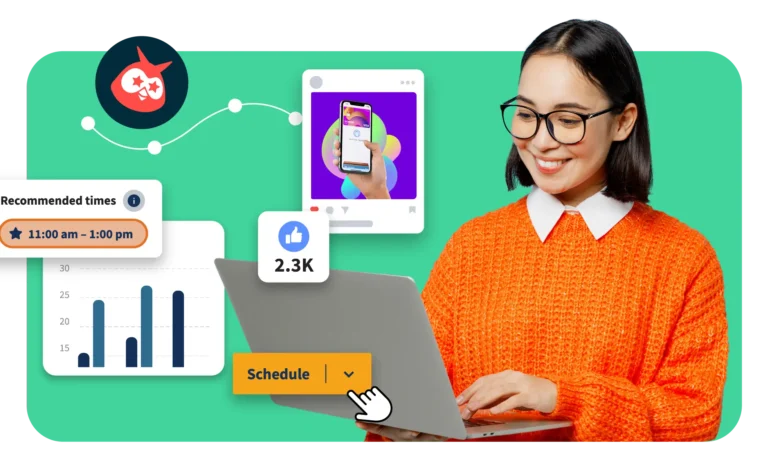
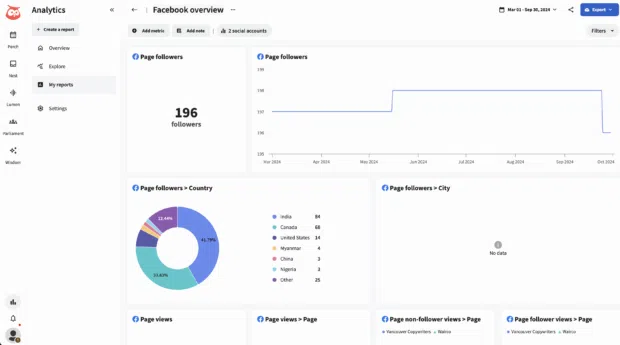
Designed for comprehensive social media management, Perch by Hootsuite enables marketing teams to schedule content, monitor post performance, and analyze Facebook results alongside every major social network in a single interface. Featuring customizable reporting templates, intuitive benchmarking capabilities, and advanced audience analysis, Perch empowers professionals to generate stakeholder-ready insights effortlessly. Because the platform connects to Instagram, X, TikTok, Pinterest, LinkedIn, and YouTube, organizations gain a holistic view of overarching digital trends. Furthermore, teams operating on Hootsuite Social OS can integrate Lumen, an application dedicated to brand context and social listening, to further enrich their data. Pricing starts at $99 per user per month for the Standard plan, moving to $249 for Advanced tiers, with custom enterprise options available. -
Meta Business Suite: Best Free Starting Point
As the official successor to Facebook’s retired standalone analytics tool, Meta Business Suite remains an indispensable asset for foundational tracking. Completely free to use, it centralizes content management, advertising, messaging, and basic insights for Facebook and Instagram. While it lacks the advanced customization and benchmarking features of paid alternatives, it provides direct Ads Manager integration and a clean, high-level overview of content performance for lean teams.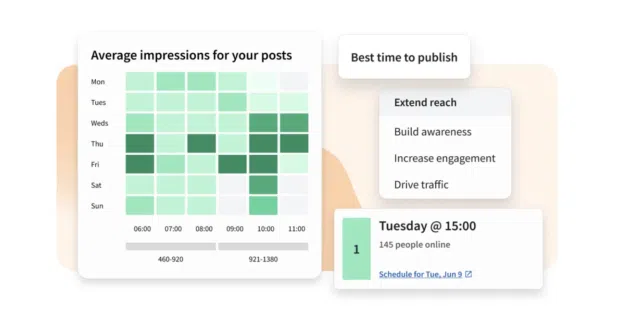
-
Buffer: Best for Small Teams and Simple Tracking
Buffer appeals to small businesses and marketing professionals seeking a straightforward, no-fuss approach to social media management. Connecting seamlessly with Facebook, Instagram, X, TikTok, LinkedIn, YouTube, and Mastodon, Buffer provides a clean dashboard focused on core performance metrics. Although it lacks advanced functionalities like social listening, paid campaign tracking, and competitor benchmarking, its simplicity makes it a favorite for lean teams. Buffer offers a free basic plan, with paid tiers ranging from $5 to $10 per channel per month when billed annually. -
Rival IQ: Best for Competitive Intelligence
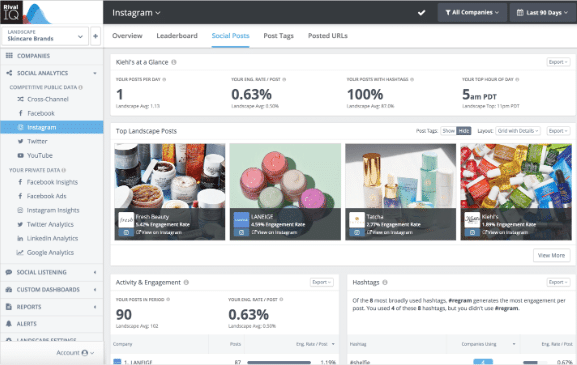
For organizations where market positioning is paramount, Rival IQ delivers specialized social analytics centered on competitive analysis. Beyond standard Facebook engagement metrics and audience demographics, the platform allows users to rigorously track competitor activity, measure share of voice, and evaluate industry benchmarks. Plans for Rival IQ start at $239 per month.
-
Social Status: Best for Ad Analytics and Influencer Tracking
Social Status provides robust capabilities for tracking organic and paid content performance across Facebook and other major networks. Its standout features include dedicated ad analytics, competitor benchmarking, and influencer campaign evaluation, making it an all-around performer for brands managing multifaceted digital budgets. Social Status offers a limited free tier, with paid plans beginning at $29 per month. -
Facelift Data Studio: Best for Advanced Metric Customization
Formerly known as Quintly, Facelift Data Studio is an enterprise-grade analytics platform providing access to approximately 350 distinct performance metrics. Designed for highly data-driven teams, the platform allows users to build layered, highly customized insights and benchmark their performance against strict industry standards or aspirational competitors. Pricing starts at approximately €300 per month.
-
Social Insider: Best for Benchmarking and Content Pillars
Social Insider focuses heavily on competitive intelligence and strategic content evaluation. By leveraging built-in industry benchmarks and AI-driven content analysis, the platform helps marketers identify successful competitor tactics and translate those lessons into optimized content pillars for their own brands. Pricing is available via custom quotes. -
Sotrender: Best for Sentiment and Campaign Tracking
Sotrender delivers comprehensive visibility into Facebook performance, campaign effectiveness, and competitive positioning. Beyond standard reach and engagement statistics, Sotrender specializes in sentiment tracking, evaluating whether audience reactions to paid and organic campaigns trend positive, neutral, or negative over time. Pricing requires a custom quote.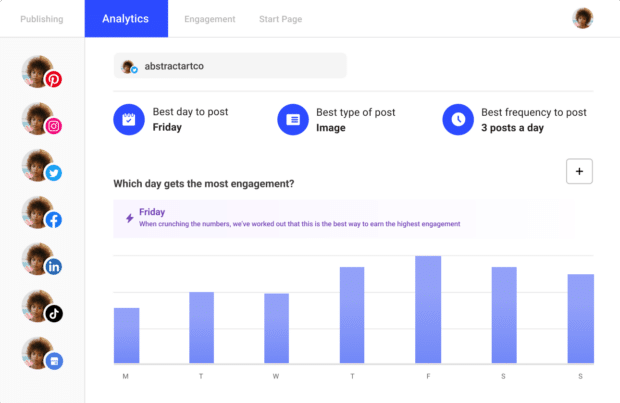
-
NapoleonCat: Best for Social Inbox and Publishing Combo
NapoleonCat combines social media publishing, analytics, and an integrated customer service inbox into a single workspace. By collecting performance data across Facebook, Instagram, LinkedIn, and YouTube, it allows community management and marketing teams to monitor engagement and response times simultaneously. Plans begin at $79 per month for two users and five profiles.
Essential Metrics to Track Across Facebook Campaigns
To extract actionable intelligence from Facebook analytics, marketers must categorize metrics according to campaign objectives. Evaluating brand awareness initiatives using lead generation metrics—or vice versa—leads to distorted strategic decisions.
- Awareness Goals: Focus on reach, impressions, follower growth, and video views to determine how widely content travels and whether the target audience is expanding.
- Engagement Goals: Monitor engagement rates, reactions, comments, shares, and saves to gauge whether content resonates sufficiently to prompt active user participation.
- Conversion Goals: Analyze link clicks, click-through rates (CTR), generated leads, completed purchases, and cost per result to evaluate direct business outcomes.
- Audience Demographics: Track age, gender, geographic location, primary language, and active online times to ensure content reaches the intended demographic segments.
- Health and Sentiment: Evaluate negative feedback rates, customer response times, and sentiment tracking to identify potential friction points in brand perception or customer service.
Methodology for Improving Results Through Analytics

Maximizing the value of Facebook analytics requires a disciplined, repeatable operational loop. Organizations should establish clear campaign goals, schedule regular data reviews, identify behavioral patterns across top-performing posts, and systematically test adjustments. By documenting baseline performance and continuously refining content strategies based on empirical data, brands can sustainably enhance their return on investment and build deeper connections with their digital audiences.