Instagram Expands Collaboration Features by Allowing Users to Display Tagged Posts Directly on Their Profile Grids

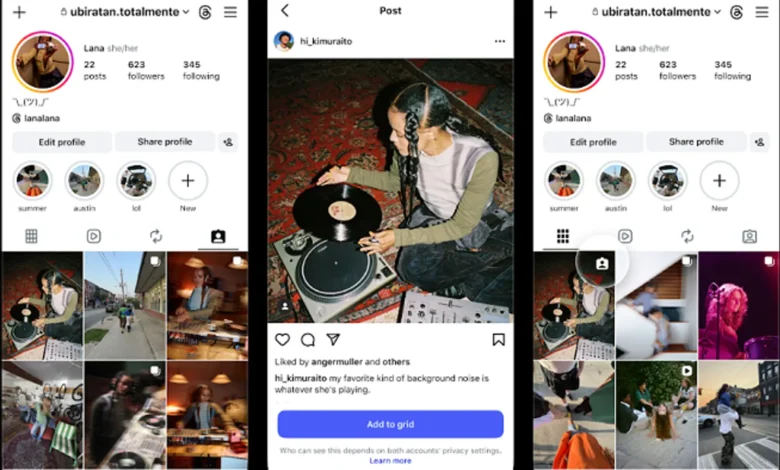
Instagram is rolling out a significant update designed to strengthen digital community building and expand creative collaboration across its platform. Users are now able to display posts in which they have been tagged directly on their main profile grids in-stream. This structural shift moves beyond the traditional dedicated tagged-photo tab, offering creators, brands, and everyday users a seamless way to curate their personal profiles and spotlight collaborative content for their entire follower base.
The update addresses long-standing user requests for greater control over profile aesthetics and shared media visibility. Previously, when a user was tagged in a photograph, reel, or video, that piece of content was relegated exclusively to the separate tagged-posts tab on their profile page. While accessible, this tab often received significantly less organic traffic than the primary profile grid. With the newly introduced functionality, when a user views a tagged post in-stream, they are presented with a streamlined “Add to grid” option. Once selected, the content appears seamlessly on their main profile grid, distinguished by a subtle tag icon located in the top-right corner of the thumbnail.
This enhancement alters how creators approach joint ventures, influencer partnerships, and community highlights. By bridging the gap between individual profiles and collaborative posts, Instagram is providing a more integrated presentation model that keeps pace with evolving digital media consumption habits.
Background and Evolution of Instagram Collaboration Tools
The introduction of the grid-tagging feature represents the latest step in a multi-year effort by Meta—Instagram’s parent company—to cultivate deeper interactive capabilities within the application. Over the past several years, the platform has systematically introduced and refined various tools aimed at blurring the lines between solo content creation and collaborative storytelling.
In June 2023, Instagram rolled out the ability to add up to three co-authors or collaborators to a single feed post or Reel. This feature allowed multiple accounts to share the same piece of content, pooling their respective audiences into a single, unified engagement pool. The metrics, comments, and likes were consolidated across all participating accounts, providing an unprecedented boost to reach and discoverability. Prior to this, collaborative capabilities were largely restricted to standard dual-author tags, limiting the scope of group projects and multi-brand campaigns.
Beyond traditional feed posts and Reels, Instagram has continuously experimented with group-oriented storytelling mechanics. The platform has explored collaborative Stories—enabling groups of users to contribute to a shared narrative thread—and integrated expansive remixing tools. These remixing functions allow users to build upon publicly shared photos and videos, transforming static imagery into dynamic video responses or side-by-side creative interpretations. Although Meta briefly tested and subsequently removed artificial intelligence-driven remixing options due to evolving safety and content moderation considerations, the overarching trajectory toward community-driven, interactive media remains unmistakable.

The strategic motivation behind these continuous updates is clear: Instagram is striving to reinforce its identity as a social networking ecosystem rather than a passive broadcasting channel. While platforms like TikTok and YouTube have transformed the digital landscape into entertainment-first video hubs, Instagram has historically relied on reciprocal social graphs—the connections between friends, family, creators, and niche communities—to maintain user retention.
Shifting User Habits and the Rise of Video Consumption
To fully understand the context of Instagram’s latest feature rollout, one must examine the profound transformation the platform has undergone over the last half-decade. The introduction and aggressive promotion of Reels—Instagram’s short-form video format designed to compete directly with TikTok—have completely reshaped user engagement patterns.
Industry analyses and metrics shared by Meta indicate that approximately 50 percent of overall user time spent on Instagram is now dedicated strictly to the consumption of Reels. Furthermore, nearly all recent engagement growth across both Facebook and Instagram has been directly attributed to the expansion of video consumption. This rapid pivot toward algorithmic video feeds has been a double-edged sword for platform leadership.
On one hand, the heavy focus on short-form video has successfully captured younger demographics, driven advertising revenues, and kept daily active user counts robust in an intensely competitive market. On the other hand, it has pushed Instagram into direct competition with a formidable array of entertainment giants. When users open Instagram primarily to consume endless streams of algorithmic video, the platform is no longer merely competing against social media peers; it is locked in a battle for attention with dedicated video platforms, streaming services like Netflix, and the broader digital entertainment web.
This realization presents a strategic vulnerability. If Instagram attempts to compete solely on the strength of its video recommendation algorithms, it risks losing its core differentiator: genuine interpersonal connection and community interaction. Users do not flock to Instagram merely to watch professional entertainment; they use it to interact with peers, track cultural movements within their personal networks, and engage in reciprocal digital socialization.
Maintaining Differentiation Through Community Interaction
By introducing features like the in-stream grid-tagging option, Instagram is intentionally leaning into its roots as a community-first platform. Allowing users to curate collaborative content directly onto their primary grids validates shared experiences and incentivizes meaningful partnerships.

From a marketing and creator economy perspective, the implications are substantial. For independent creators, photographers, and micro-influencers, visibility is currency. In the past, being tagged in a brand’s campaign post meant relying on the brand’s audience to drive engagement, while the creator’s own profile visitors had to actively navigate away from the primary grid to discover the collaboration. Now, creators can prominently feature these joint projects directly alongside their native content, signaling their professional partnerships and portfolio highlights to every visitor who lands on their profile.
Brands and businesses likewise stand to benefit. Influencer marketing campaigns often suffer from fragmentation, where promotional content is buried under a sea of daily stories or hidden within secondary tabs. By enabling collaborators to pin or display shared posts directly on their main grids, brands can amplify their reach organically through the trusted networks of individual creators. This creates a multi-pronged distribution model where a single piece of content radiates simultaneously across multiple high-traffic profile grids.
Industry Analysis and Future Implications
Digital media analysts point out that platform design choices are rarely arbitrary; they are carefully calculated responses to shifting user psychology and competitive pressures. As social media saturation reaches an all-time high, platforms are forced to continuously evaluate what keeps users engaged over the long term.
When users invest time in curating a personal profile grid, they are psychologically tethered to that platform in a way that passive viewers are not. A profile grid functions as a digital identity card, a visual resume, and a scrapbook of memories and professional achievements. By granting users greater flexibility over what appears on that canvas—particularly content created in tandem with others—Instagram deepens user investment in the platform’s infrastructure.
Furthermore, the introduction of friction-reducing design elements, such as the direct “Add to grid” prompt during in-stream viewing, demonstrates a sophisticated understanding of user behavior. In modern user experience design, even minor navigational barriers can drastically reduce feature adoption. By placing the collaboration action precisely where the user is already engaging with the content—within the stream—Instagram ensures that participation rates will remain high.
Looking ahead, industry observers anticipate that Meta will continue refining its suite of collaborative tools, potentially introducing more granular privacy controls, expanded multi-author capabilities for different content formats, and advanced analytics for shared posts. As the boundary between individual expression and collective media creation continues to blur, features that facilitate seamless cooperation will likely become standard expectations for modern social networks.
Ultimately, Instagram’s latest update is a calculated move to reinforce its foundational strengths. By empowering users to weave collaborative content into the very fabric of their primary profile grids, the platform is reinforcing the social bonds that separate a thriving community from a conventional entertainment feed.