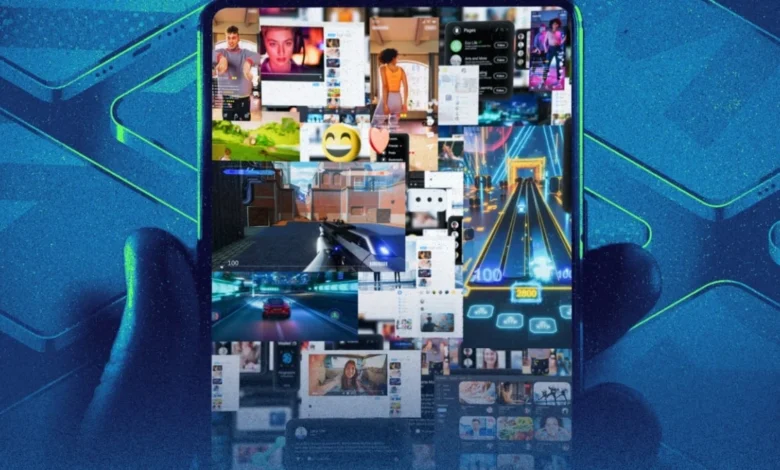
In an era defined by the rapid-fire consumption of digital content, a new linguistic phenomenon has emerged in Japan that captures the psychological toll of the modern attention economy. The term "dopagaki"—a portmanteau of "dopamine" and "gaki," the latter being a derogatory Japanese slang for a child or "brat"—has gained significant cultural traction as a label for individuals who exhibit a relentless, almost frantic, need for instant gratification through short-form media. While the term originated as a critique of specific pop-culture consumption habits, it has evolved into a broader sociological descriptor for a generation grappling with the physiological impacts of hyper-stimulated digital environments.
The Linguistic Origins and Cultural Context
The etymology of "dopagaki" is rooted in the phrase dopamin chūdoku no gaki, or "dopamine-addicted brat." In the Japanese social lexicon, the suffix "gaki" carries a weight of immaturity and lack of self-control, suggesting that the behavior in question is both childish and potentially detrimental.
The term first surfaced in the public consciousness around December 2024. It was popularized on social media platform X (formerly Twitter) in response to the musical structure of the popular Japanese rock band Mrs. GREEN APPLE. A user analyzed the song "Lilac," noting that its composition was designed to deliver immediate, high-intensity musical "payoffs" every few seconds, leaving no room for the listener to experience a moment of stillness. This observation struck a nerve, as it mirrored the structure of the platforms the song was being consumed on: TikTok, Instagram Reels, and YouTube Shorts.
By mid-2026, the term had migrated from niche music commentary into mainstream youth slang. Research conducted by the Joshikosei Lab, an organization specializing in teenage consumer trends in Japan, officially identified "dopagaki" as a rising buzzword during the summer of 2026. Data from a survey of 60 high school girls indicated that the term was being used as a self-deprecating badge of honor, describing the common, almost involuntary habit of scrolling through short-form video content while performing mundane tasks like bathing or grooming.
Chronology of a Digital Phenomenon
The rise of "dopagaki" tracks alongside the global evolution of short-form video architecture.
- Late 2024: The term emerges on social media in Japan to critique the "constant-payoff" structure of contemporary pop music.
- Early 2025: The term begins to appear in threads discussing the "hook-based" design of viral videos, where creators are incentivized to pack as much visual and auditory stimulation as possible into the first three seconds of a clip.
- June 2026: The Joshikosei Lab officially lists "dopagaki" as a top trending expression, signaling its entry into the wider Japanese vernacular.
- October 2026: A secondary survey of 94 high school students reveals that 16% of respondents consider it their most-used piece of slang, while a further 17% report consistent exposure to the term, confirming its status as a fixture of the 2026 cultural landscape.
The Science of the "Dopamine Brat"
While "dopagaki" is not a formal medical diagnosis, it points to a very real neurological feedback loop. Dopamine is the neurotransmitter responsible for reward-motivated behavior. In a traditional environment, dopamine is released in response to significant achievements or satisfying experiences. However, the architecture of modern social media—specifically the "infinite scroll" and the algorithmic recommendation engine—is engineered to provide a "variable reward schedule."

This mechanism is essentially a digital slot machine. Every time a user swipes, there is a chance for a high-intensity, emotionally resonant, or humorous video. This constant, unpredictable reinforcement creates a cycle of dependency. When the brain is accustomed to receiving these spikes of stimulation every 15 to 30 seconds, the capacity for sustained focus on "slower" content—such as long-form documentaries, traditional literature, or even an entire pop song without skipping—diminishes. This is the "dopagaki" state: a physiological intolerance for boredom.
Comparative Analysis: Global Equivalents
The anxiety surrounding screen time is not unique to Japan. In the United States and Europe, similar concepts have permeated the discourse, though often with different cultural nuances.
The American concept of the "iPad kid" focuses on the developmental consequences of early, heavy screen exposure, often implying a lack of social grace or patience in children. Conversely, "brainrot" is a broader term used to describe the degradation of cultural literacy caused by consuming nonsensical or hyper-niche internet content.
"Dopagaki" distinguishes itself by being both a critique and a self-aware admission. Where "iPad kid" is almost always used to point fingers at someone else—usually a younger sibling or the next generation—"dopagaki" is frequently used by Gen Z and Alpha users to describe their own struggle. It is a linguistic acknowledgement of a shared, systemic struggle rather than a purely generational insult.
Data on Modern Media Consumption
The pervasiveness of this trend is backed by significant data. According to the DataReportal Digital 2027 Global Overview Report, adults globally spent an average of 19 hours and 18 minutes per week on social media and video platforms in 2026. This equates to nearly three hours every day dedicated to curated, algorithmic feeds.
The report further highlights that the average length of video content being consumed is trending downward. In 2024, the median "engagement window"—the time a user spends before scrolling—was approximately 8 seconds. By late 2026, that window had compressed to roughly 5 seconds. This shift has forced creators and corporations to pivot. Platforms like YouTube have introduced "chapters," and streaming services have begun experimenting with "micro-dramas," acknowledging that the audience is less likely to commit to a 40-minute episode if they can consume a narrative arc in two-minute increments.
Implications for the Creator Economy
The rise of the "dopagaki" consumer has fundamentally altered the professional landscape for creators and advertisers. To remain relevant, content must now pass the "three-second test"—the ability to grab attention instantly before the user swipes.

This has led to a visual language characterized by rapid cuts, high-contrast captions, and background music that changes tempo frequently. While these tactics are highly effective at retaining engagement, they are also accused of exacerbating the very symptoms they serve. It is a symbiotic cycle: the platform provides the dopamine, the user becomes a "dopagaki," the creator produces content to satisfy the "dopagaki," and the platform rewards the creator, closing the loop.
Societal Responses and Future Outlook
Sociologists and psychologists have weighed in on whether this trend signals a long-term shift in human cognition. While some argue that the human brain has always adapted to its environment—much as the invention of the printing press changed how we read—others are concerned about the loss of "deep work" capabilities.
The self-aware use of the term "dopagaki" by young people might be the first step in a broader societal pushback. By naming the phenomenon, users are creating a distance between their identity and their habits. It is a form of digital mindfulness that, while humorous, allows for a critical evaluation of their relationship with technology.
However, the challenge remains structural. As long as the digital economy relies on ad revenue generated by "time-on-site" metrics, the design of these platforms will continue to favor the "dopagaki" model. Unless there is a fundamental shift in how digital services are monetized, or a widespread cultural movement toward "digital minimalism," the "dopagaki" phenomenon is likely to persist as a defining feature of the late 2020s.
Ultimately, "dopagaki" serves as a mirror for a society that has built its entertainment infrastructure on the back of human biology. Whether this leads to a permanent alteration of the human attention span or merely a new era of high-speed media consumption remains to be seen. What is clear is that in 2026, the term provides a common language for the discomfort of feeling, as one might put it, "always on" and "never satisfied."
Related posts: