Mastering Brand Consistency: Why Every Enterprise Needs a Social Media Style Guide in the Age of AI

In the modern digital economy, maintaining a coherent brand identity across an expanding array of digital platforms has evolved from a routine marketing task into a high-stakes corporate necessity. As companies increasingly distribute content through decentralized internal teams, external creative agencies, regional branches, and automated artificial intelligence tools, the potential for brand fragmentation has grown exponentially. To combat this operational vulnerability, leading organizations are increasingly turning to a comprehensive internal instrument: the social media style guide.
Industry data underscores the financial imperative of maintaining uniform messaging across all digital touchpoints. Recent comprehensive research conducted by Marq and Demand Metric indicates that strict brand consistency directly contributes to significant revenue growth, with approximately 68 percent of surveyed organizations reporting that cohesive branding boosts their bottom line by at least 10 percent. In an era where consumer trust is hard-earned and easily compromised by erratic messaging, establishing a single source of truth for digital communication is no longer optional for competitive brands.

Defining the Modern Social Media Style Guide
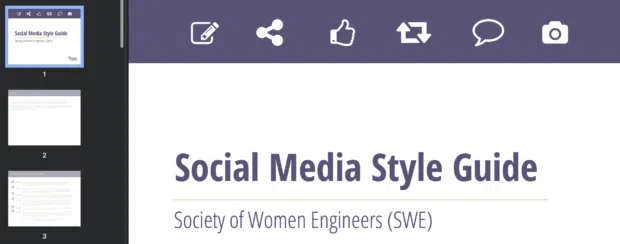
A social media style guide functions as a definitive corporate manual that dictates how a brand looks, sounds, and behaves across every online channel. While traditional corporate brand guidelines typically govern broad assets such as stationary, physical packaging, and overarching web design, a social media style guide zeroes in on the dynamic, fast-paced environment of digital platforms. It spans visual identities—including logos, color codes, and multimedia framing—as well as linguistic parameters, tone modulation, emoji usage, and hashtag deployment.
Rather than serving merely as a restrictive set of rules designed to stifle creativity, an effective style guide acts as a decision-making filter. By pre-approving terminology, formatting standards, and visual aesthetics, organizations remove the burden of micro-decisions from content creators. This ensures that whether a post is crafted by a seasoned senior copywriter, an external contractor, or a regional marketing lead, the final output reads and looks as though it originates from a single, unified voice.

Core Elements of a Comprehensive Digital Style Guide
Industry experts and marketing strategists emphasize that a robust social media style guide must address ten foundational pillars to be fully effective in a modern enterprise environment. These core elements form a comprehensive blueprint that guides both human creators and automated technologies.
-
Social Accounts and Target Audience Definitions
The foundation of any effective style guide begins with a transparent inventory of every official corporate social account, paired with detailed buyer personas. Documenting account handles, platform-specific purposes, and regional variations ensures that administrative oversight remains intact even as staff turnover occurs. Furthermore, aligning these accounts with meticulously researched audience personas ensures that communication strategies remain anchored to the demographic and psychographic realities of the target market.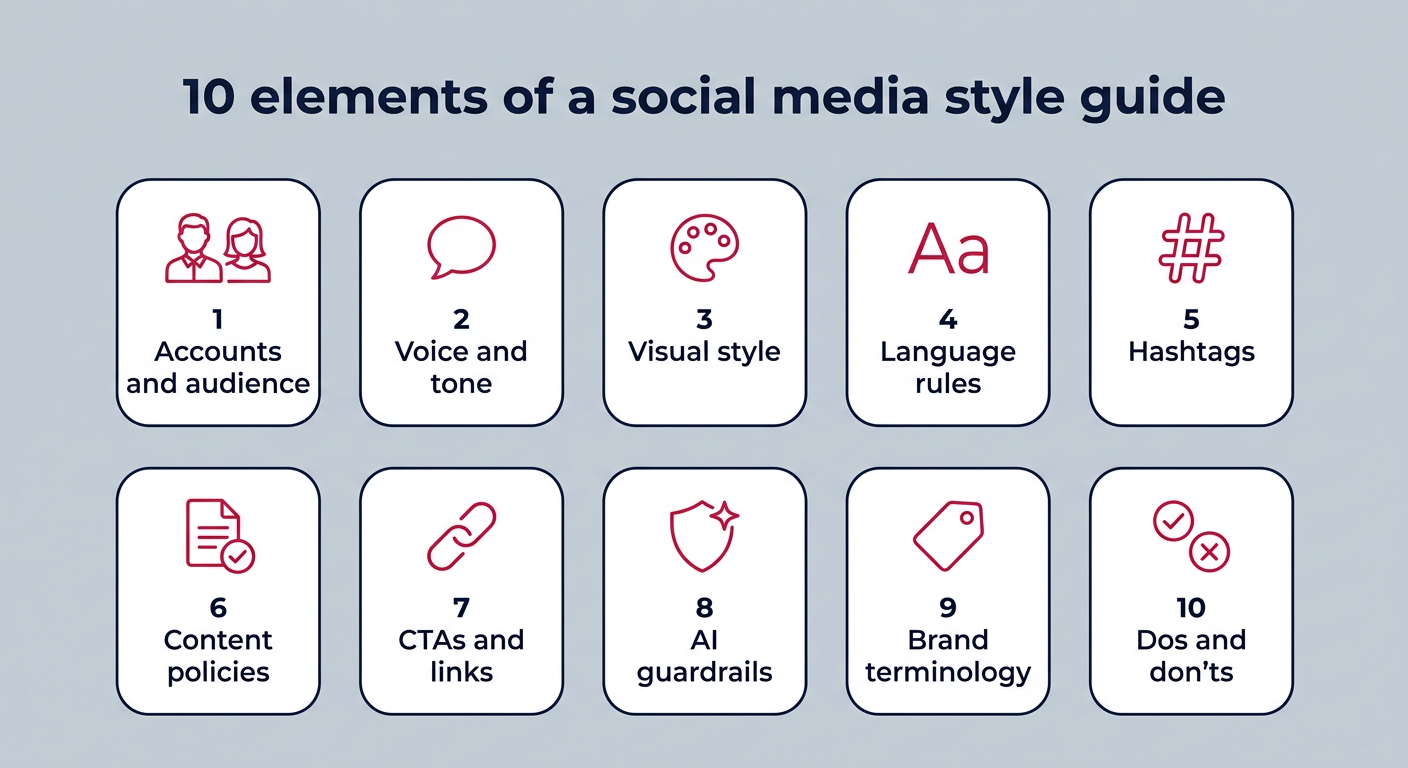
-
Voice, Tone, and Linguistic Nuances
While brand voice represents a company’s steady, unchanging personality, tone is the flexible modulation of that personality based on context, such as responding to a customer service inquiry versus celebrating a major product launch. To eliminate ambiguity, style guides frequently utilize "this, not that" comparative matrices. By presenting real-world examples of on-brand phrasing alongside off-brand equivalents, editorial teams can instantly grasp the nuances of corporate communication without wading through dense lists of abstract adjectives. -
Visual Style and Asset Management
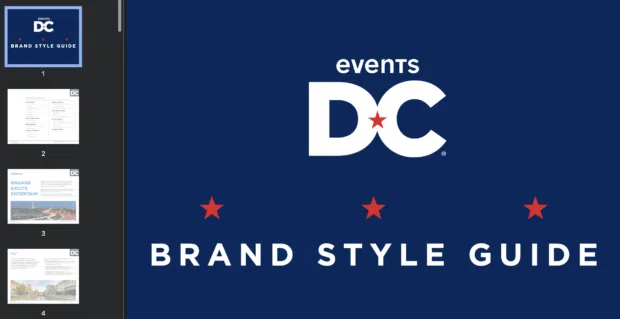
Visual predictability is critical for brand recognition in crowded social feeds. Style guides must establish precise parameters regarding color palettes, typography, photographic styles, video aspect ratios, and graphic templates. Integrating these visual standards with centralized digital asset management platforms—such as integrated content libraries—allows creative teams to access pre-approved imagery and video assets seamlessly, thereby eliminating unauthorized or off-brand visual variations. -
Language, Grammar, and Formatting Rules
To prevent minor stylistic inconsistencies from eroding brand credibility, style guides establish definitive rules regarding capitalization, punctuation, date formatting, and numerical representation. Many enterprises adopt an established standard reference, such as the Associated Press Stylebook or the Chicago Manual of Style, and build a localized appendix to handle industry-specific terminology and preferred corporate acronyms.
-
Hashtag Conventions and Discoverability Frameworks
Because hashtags directly impact content discoverability, campaign tracking, and community engagement, they require explicit governance. A well-constructed style guide dictates the maximum number of hashtags permitted per platform, the distinction between permanent brand tags and campaign-specific tags, and the grammatical integration of hashtags within standard caption text. -
Content Curation, UGC, and Cross-Posting Policies
Managing outside content requires strict adherence to ethical, legal, and operational boundaries. Corporate style guides outline exact protocols for content curation—sharing material from external industry sources—as well as user-generated content (UGC), which serves as valuable social proof but necessitates explicit creator consent and proper attribution. Additionally, the guide must dictate how original content is repurposed across multiple platforms, ensuring that posts are properly formatted for the distinct algorithmic and cultural norms of each network. -
Call-to-Action (CTA) and Link Conventions
Calls-to-action represent some of the highest-converting text within any digital post. Style guides standardize the phrasing, placement, and urgency level of CTAs. For platforms where direct hyperlink insertion is limited—such as Instagram or TikTok—the guide must enforce uniform terminology for directing users to profile links, avoiding fragmented language across different marketing campaigns.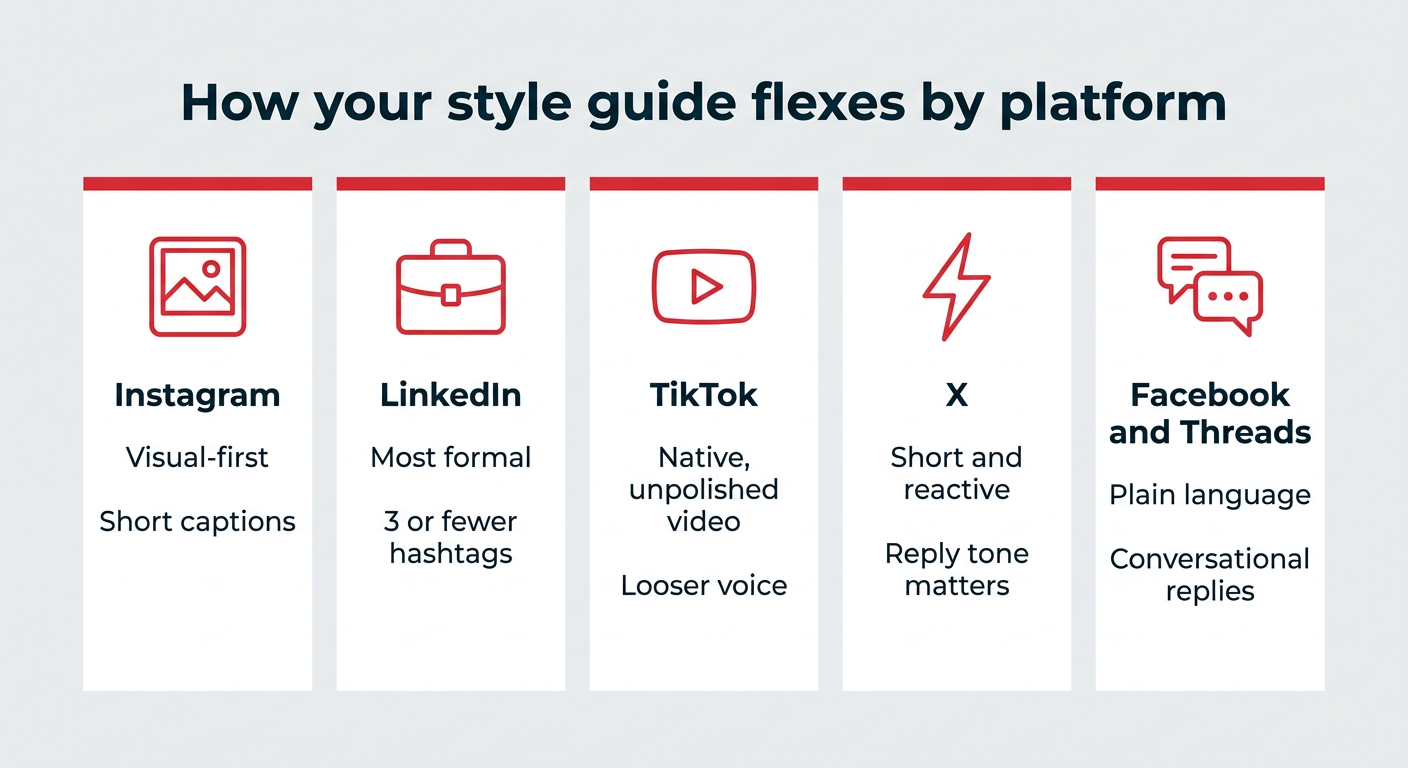
-
Artificial Intelligence Guardrails
As generative artificial intelligence tools become deeply embedded in corporate content workflows, establishing clear AI guardrails is paramount. A contemporary style guide specifies which AI applications are approved for use, designates acceptable tasks for automation (such as initial ideation or rough drafting), and mandates human editorial review before publication. In highly regulated sectors, these guardrails also dictate compliance tracking and archival procedures for AI-assisted content. -
Brand Terminology and Proprietary Trademarks
Every enterprise utilizes unique nomenclature, including proprietary product names, internal project nicknames, and technical industry jargon. Consolidating these terms into a centralized glossary ensures that marketing teams, public relations departments, and customer support representatives utilize correct terminology consistently, protecting corporate trademarks and avoiding consumer confusion. -
Actionable Dos and Don’ts
Concluding with a concise, highly scannable list of operational dos and don’ts provides content creators with an immediate reference checklist. This final section reinforces critical behavioral boundaries, summarizing high-priority stylistic requirements that team members must observe during high-frequency publishing schedules.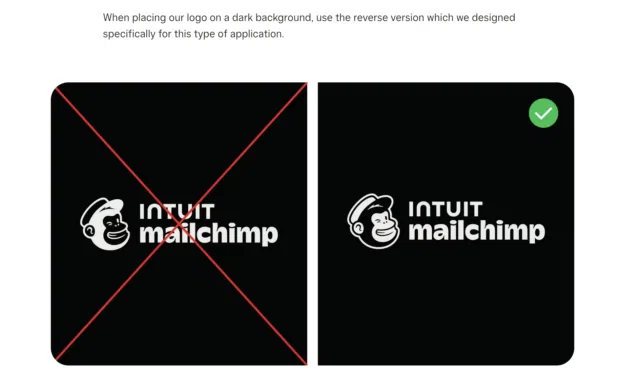
Adapting Guidelines Across Diverse Digital Ecosystems
A persistent challenge for multi-platform enterprises is balancing brand uniformity with platform-native authenticity. Audiences on professional networks like LinkedIn expect a vastly different conversational register and visual format than users on visually driven platforms like Instagram or fast-moving networks like X.
To resolve this tension, effective style guides employ a layered architecture. The core brand voice and visual identity remain constant across all channels, while platform-specific addendums dictate tactical adjustments. For instance, caption length, emoji density, narrative pacing, and interactive formats are tailored to match user expectations on each specific network, ensuring the brand remains instantly recognizable while feeling completely native to its digital environment.
Community Management and Crisis Protocols
Publishing guidelines govern only a fraction of a brand’s total digital footprint. The remainder occurs in the dynamic, unpredictable environment of direct messages, comment sections, and public interactive threads. Consequently, comprehensive style guides incorporate detailed community management and engagement protocols.
These sections establish mandatory response timeframes, define the approved escalation paths for complex customer service issues, and outline rigid moderation policies for addressing abusive or spam content. Crucially, they include crisis communication protocols—pre-approved procedures that guide community managers on when to halt scheduled publishing, how to route sensitive inquiries, and how to maintain brand stability during unexpected public relations events.
Evolution and Maintenance of Living Documents
The creation of a social media style guide is not a finite administrative project, but rather the establishment of a living corporate document. As digital platforms evolve, consumer preferences shift, and corporate strategies pivot, style guides must adapt concurrently.
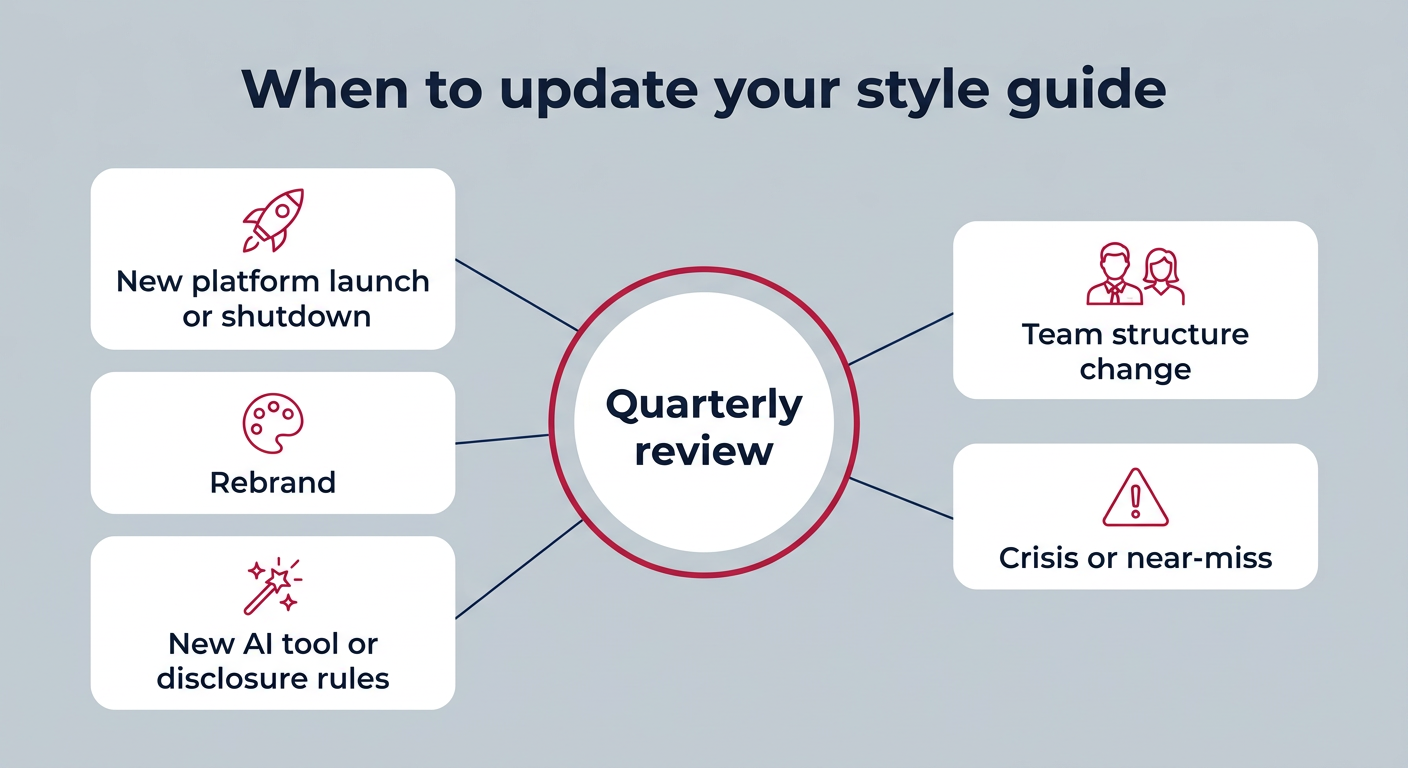
Industry best practices recommend conducting formal quarterly reviews of the style guide. During these reviews, marketing leadership should evaluate the preceding three months of published content against emerging digital trends, pruning outdated practices and codifying successful new formats. Furthermore, off-cycle updates should be triggered immediately by major corporate events, such as comprehensive rebrands, the launch of new product lines, corporate restructuring, or the adoption of transformative technologies.
By treating the social media style guide as an evolving operational asset rather than a static document, modern enterprises can successfully safeguard their brand reputation, accelerate team onboarding, maximize operational efficiency, and build enduring trust with digital audiences worldwide.