Jennifer Hudson’s "Star-Spangled Banner" Performance Sparks Debate Ahead of World Cup Final

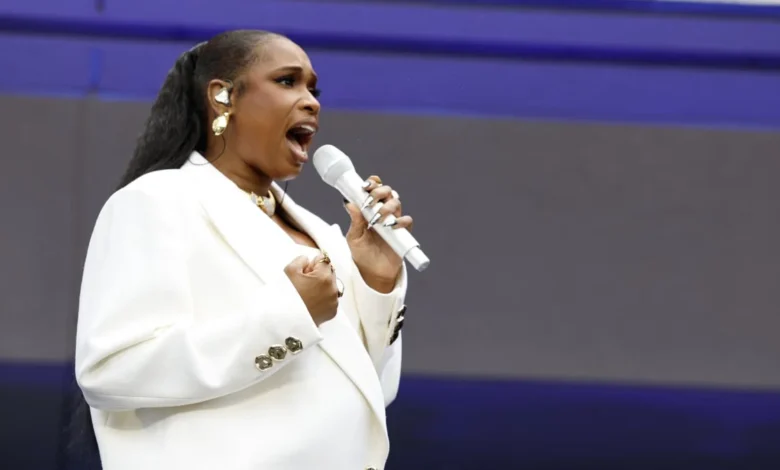
The U.S. national anthem, "The Star-Spangled Banner," unexpectedly took center stage at the World Cup final, despite the United States national team not qualifying for the championship match. On July 14, FIFA announced that Grammy Award-winning singer and talk show host Jennifer Hudson would perform a "special rendition" of the anthem before the tournament’s culminating game on Sunday, July 19, at New York New Jersey Stadium, more commonly known as MetLife Stadium. This revelation immediately ignited a flurry of questions and widespread discussion among global soccer fans: Why would the American anthem be performed at a game where the United States is not competing?
The decision, as explained by FIFA, is rooted less in the competing nations—Spain and Argentina—and more in the geographical location of the final match itself. The performance is an integral part of FIFA’s elaborate pre-game ceremony, a distinct event preceding the actual kickoff, which aims to celebrate the global tournament’s journey across its three host countries: Canada, Mexico, and the United States. With the final being held on American soil, Hudson’s rendition is intended to honor the host nation, underscoring its pivotal role in staging this monumental event.
Understanding FIFA’s Rationale: Honoring the Host Nation
Jennifer Hudson’s performance of "The Star-Spangled Banner" is scheduled for 1:30 p.m. ET, 90 minutes before the match begins. This pre-game spectacle is designed as a global celebration, reflecting the collective effort of the tripartite hosting arrangement for this edition of the World Cup. While the United States shares these hosting duties with Canada and Mexico, the selection of the U.S. anthem for the final, held within American borders, aligns with a tradition of host nation recognition in major international sporting events.
However, this explanation has not entirely quelled the disquiet among a segment of the global soccer community. Many fans have voiced their bewilderment online, questioning why the anthems of co-hosts Canada and Mexico are not also being featured in a similar capacity, especially given the shared responsibility and collaborative spirit often emphasized by FIFA. This disparity has fueled perceptions of an "American-centric" approach, particularly concerning an event that prides itself on its global appeal and inclusive representation.
A Precedent from 1994 and Evolving Ceremonies
While uncommon, the performance of the host nation’s anthem at a World Cup final without its team participating is not entirely unprecedented. When the United States last hosted the men’s World Cup in 1994, saxophonist Kenny G performed "The Star-Spangled Banner" during the closing ceremony before Brazil and Italy faced off for the trophy. This historical context provides a reference point for FIFA’s current decision, suggesting a continuity in acknowledging the host country’s significance, especially when the final takes place on its territory.
Nevertheless, the contemporary online discourse reflects a heightened scrutiny of FIFA’s choices, particularly concerning the elaborate productions that now surround the final match. Modern World Cup ceremonies, both opening and closing, have evolved into grand spectacles, blending sports with high-profile entertainment. This shift is part of a broader trend in major sporting events to maximize global viewership and commercial opportunities, often leading to more extensive and star-studded pre-match and halftime shows.
The Unprecedented Halftime Extravaganza and "Americanization" Concerns
Beyond the pre-game anthem, the World Cup final is set to feature an unprecedented 11-minute halftime show, curated by Coldplay frontman Chris Martin. The star-studded lineup includes global music icons such as Madonna, Shakira, BTS, and Justin Bieber. Additional performers include Burna Boy, conductor Gustavo Dudamel, the PS22 Chorus featuring Coldplay, and beloved characters from Sesame Street and The Muppets. Adding to the intrigue, Tom Cruise is slated to make a special, yet unspecified, appearance.
This elaborate halftime production supports the FIFA Global Citizen Education Fund, an initiative aimed at expanding access to education and soccer programs for children worldwide. While the charitable aspect is commendable, the sheer scale and commercialized nature of the halftime show have drawn considerable criticism from traditional soccer fans. Many view this as a deliberate attempt to "Americanize" the World Cup, importing the entertainment-heavy structure characteristic of American sports leagues, particularly the NFL’s Super Bowl. Critics argue that such extensive entertainment spectacles detract from the purity of the sport and interrupt the natural flow of the game, a sentiment echoed by concerns regarding entertainment-heavy opening ceremonies and "hydration breaks" throughout the tournament, which some perceive as thinly veiled opportunities for additional television advertising.
FIFA’s Commercial Imperative: Tapping into the American Market
The strategic push towards enhanced entertainment and broader appeal becomes clearer when examining FIFA’s overarching financial objectives, particularly concerning the lucrative American market. FIFA anticipates generating a record $13 billion during the current World Cup cycle, a significant portion of which is expected to come from the United States. The North American market, with its vast consumer base and high disposable income, represents an unparalleled opportunity for revenue growth through broadcasting rights, sponsorships, and merchandise sales.
Securing and expanding viewership in the U.S., including attracting individuals who may not typically follow soccer, is paramount to achieving these ambitious financial targets. Data from recent broadcasts underscores the success of this strategy. Fox’s group-stage broadcasts for the current tournament averaged over 5 million viewers, nearly doubling the audience for the same stage in 2022. Similarly, matches involving the U.S. team garnered substantially larger Spanish-language audiences on Telemundo and Peacock compared to the previous World Cup. These figures demonstrate a significant upward trend in engagement, validating FIFA’s investment in a more entertainment-driven approach.
In this context, Jennifer Hudson singing "The Star-Spangled Banner" transcends a mere ceremonial gesture. It serves as a powerful marketing tool, a nod to the host nation that is simultaneously a crucial commercial partner. The American team may no longer be in contention for the trophy, but the American audience, and the immense financial potential it represents, remains very much at the heart of FIFA’s strategic playbook. The decision reflects a calculated effort to blend global sporting tradition with elements designed to resonate with and capture the attention of a critical demographic.
Broader Implications for Global Football Culture
The integration of such extensive entertainment elements and the perceived "Americanization" of the World Cup final raise broader questions about the future trajectory of global football. Traditionalists express concern that the essence of the sport, often celebrated for its raw passion and unadulterated competition, is being diluted by increasingly commercialized spectacles. They argue that these elaborate shows, while generating revenue, risk alienating long-standing fans who value the game above all else.
Conversely, proponents of FIFA’s strategy contend that such innovations are necessary to expand football’s global reach, attract new audiences, and ensure its continued economic viability. By appealing to a wider demographic, particularly in markets with high growth potential like the United States, FIFA aims to secure the sport’s future, investing proceeds into grassroots development and infrastructure worldwide. This delicate balance between preserving tradition and embracing commercial innovation will likely continue to be a central theme as football seeks to maintain its status as the world’s most popular sport. The upcoming World Cup in 2026, which will be co-hosted by the United States, Canada, and Mexico, is expected to further intensify these discussions as FIFA continues to refine its approach to global sports entertainment.
How to Watch the World Cup Final and Closing Ceremony
The highly anticipated World Cup final, featuring Spain and Argentina, is scheduled for Sunday, July 19, at New York-New Jersey Stadium in East Rutherford, New Jersey. The closing ceremony, which includes Jennifer Hudson’s performance and other pre-game festivities, is set to begin at 1:30 p.m. ET. Kickoff for the match itself is scheduled for 3 p.m. ET.
For English-language viewers in the United States, comprehensive coverage will be available on Fox, with streaming options through Fox One and the Fox Sports app. Spanish-language audiences can tune in to Telemundo, and all 104 matches, including the final, are confirmed to be streaming live in Spanish on Peacock. This broad accessibility ensures that fans across the nation can witness both the spectacle of the pre-game and halftime shows, and the thrilling culmination of the tournament itself.