Yope Secures $12.3 Million to Pioneer Algorithm-Free, Private Social Networking for the Next Generation

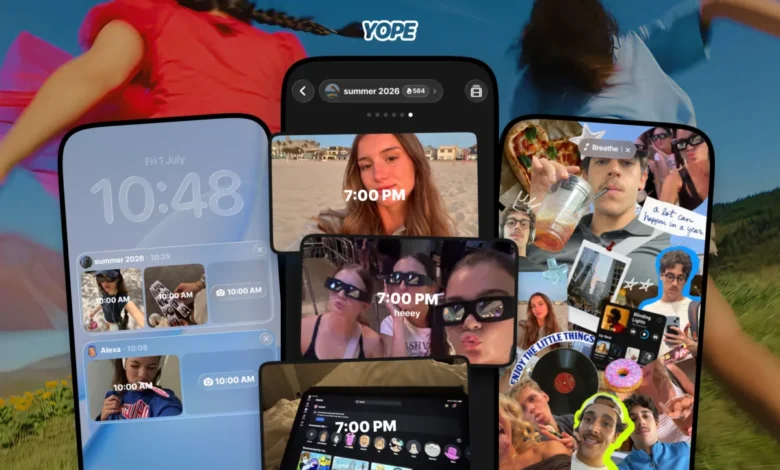
As the digital landscape of social media has fundamentally shifted from intimate spaces for connecting with friends into vast, algorithm-driven entertainment platforms, a new challenger, Yope, is emerging with a bold vision for the future of online interaction: a social network entirely devoid of algorithms, advertisements, and public content. This London-based startup recently announced a significant $12.3 million funding round, spearheaded by Northzone, bringing its total funding to $20 million, as it prepares to redefine how young people connect online.
A Return to Roots: Redefining Social Connection in the Digital Age
Yope’s app, currently in a mature phase of development and backed by substantial investor confidence, is directly challenging the established behemoths of the social media world, including Facebook, TikTok, Snapchat, and Instagram. Its foundational premise revolves around what it terms "micro-communities" – small, private groups where friends and family can interact authentically. In these curated spaces, users are encouraged to share photos, videos, and messages, with future plans to integrate interactive games, fostering deeper, more meaningful connections away from the pressures of public scrutiny and performance.
The concept of private, algorithm-free social media is not entirely novel. Over the past decade, various platforms have attempted to carve out niches by prioritizing privacy and genuine connection. However, many have struggled to achieve significant scale without resorting to the engagement-driving mechanisms of creator content and algorithmic feeds. Yope aims to disrupt this pattern by focusing intently on strengthening real-world friendships, positioning itself as much as a vital communication tool as a platform for sharing personal moments and life updates.
On Yope, privacy is paramount and deeply ingrained into the platform’s architecture. Accounts are private by default, and crucially, there is no algorithmic feed dictating content consumption or manipulating user engagement. Furthermore, the platform explicitly rejects an advertising-based revenue model, instead opting for a premium, subscription-based experience designed to cater to its most engaged "power users." This strategic pivot away from ad revenue aligns with a growing user desire for platforms that prioritize their experience over data monetization.

The Genesis of Yope: Understanding Gen Z’s Evolving Needs
The vision for Yope stems from extensive research into the digital habits and preferences of younger generations. Bahram Ismailau, Yope’s London-based co-founder and CEO, revealed in an interview that the team undertook an ambitious research initiative, conducting over 100,000 interviews – significantly aided by AI tools – to gain a granular understanding of how young people worldwide engage with social networks. Their findings illuminated a significant trend: approximately 30% of young users were utilizing "photo dump" or "spam" accounts. These secondary, more private accounts served as sanctuaries for sharing candid, unpolished photos and videos with a select, smaller circle of real-life friends, starkly contrasting with their curated public profiles.
Moreover, a substantial segment of the younger demographic avoids public sharing altogether, preferring to rely on direct messaging applications to maintain connections with their social circles. Ismailau highlighted a critical insight derived from this research: "[Young people] don’t have any place to self-express if they are not ready to be an influencer." This observation underscores a fundamental disconnect in the current social media landscape, where platforms increasingly push users towards content creation and public performance. Yet, despite this trend, teens and young adults still harbor a strong desire for self-expression, albeit within a more private and secure environment.
"We found this big opportunity to create a new space for young people to be social," Ismailau stated. "We called it Yope, and it’s an AI-native social platform for young people and the next generation." This naming reflects not just a brand, but a commitment to leveraging advanced technology in a user-centric way.
AI as an Enhancer of Connection, Not Content

A crucial distinction in Yope’s philosophy regarding artificial intelligence is its role. Ismailau clarified that the team does not envision AI as a tool for generating content. Instead, Yope leverages AI to enhance genuine connections and facilitate real-world interactions. This includes the development of mini-games designed for friends to play together, a feature slated for launch within the coming month. Beyond entertainment, AI is also being developed to assist users in coordinating real-life meetups, such as purchasing event tickets, or finding suitable restaurants or bars to watch a sports game together, bridging the gap between digital interaction and physical camaraderie.
A Personalized Digital Canvas: The Yope User Experience
The user experience on Yope harks back to an earlier era of online personalization, reminiscent of platforms like Myspace, where users had unprecedented freedom to customize their digital spaces. On Yope, users construct unique profiles by sharing photos, which can be ingeniously transformed into cut-out stickers. Rather than being confined to traditional albums, these photos are dynamically displayed in a collage-like, almost fluid arrangement across each user’s "wall." This design choice imbues profiles with a sense of spontaneity and personal expression. Future updates will allow Yope users to further personalize their spaces by adding their interests, favorite music, and selected mini-games, alongside customizing the aesthetic with a choice of colors and wallpapers. This emphasis on customization empowers users to truly make their digital space a reflection of their personality, moving away from standardized, templated profiles.
While innovative in its core philosophy, Yope also thoughtfully incorporates popular and now-standard features found across contemporary social platforms. These include intuitive in-app messaging, AI-generated "recaps" of top shared moments, and practical lock screen widgets that showcase friends’ photos for immediate connection. The onboarding process is meticulously designed to guide new users through setting up the various features, granting necessary permissions for photo access and friend discovery, and encouraging the initiation of private chats from the outset. This blend of familiarity and novelty aims to ease user adoption while introducing a fresh paradigm.
Market Validation and Impressive Growth Metrics

The combination of Yope’s unique features and user-centric approach appears to be resonating strongly with its target demographic. The platform has rapidly amassed nearly 15 million registered users, a significant milestone for a startup challenging entrenched giants. These users are not merely signing up; they are actively engaging. The platform records between 10 million and 20 million pieces of content – including individual photos, videos, or stickers – shared weekly. These metrics are indicative of robust and regular use. Ismailau proudly states that over 50% of Yope’s users open the app at least five days per week, solidifying their status as highly engaged "power users."
Perhaps even more compelling is the intergenerational appeal Yope is demonstrating. Ismailau notes that approximately 20% of active users have invited an older family member to join them on the app. This organic expansion beyond the primary youth demographic suggests a broader appeal for private, authentic connection that transcends age groups, potentially addressing a universal desire for more meaningful digital interactions.
This impressive growth and strong user engagement naturally captured the attention of investors. Northzone, a venture capital firm with a notable track record in backing successful consumer apps like Spotify and Klarna, proactively approached Yope, recognizing its potential. This unsolicited interest culminated in Northzone leading the $12.3 million funding round, with additional participation from Inovo, Redseed, and Geek Ventures. The infusion of capital elevates Yope’s total funding to $20 million. It’s worth noting that the current iteration of Yope represents the culmination of two prior strategic pivots, with the current version having been in development for roughly two years. TechCrunch had previously covered an earlier version of the company, highlighting its evolution and persistent pursuit of a differentiated social experience.
Pär-Jörgen Pärson, a partner at Northzone, articulated the investment firm’s enthusiasm in a statement: "Yope is a fresh, empowering and safe take on social media where the users are in full control of their experience in contrast to the predatory practices of Meta, TikTok or X. We are very excited to partner with Bahram, Paul [Rudkouski, co-founder] and their team to build the service far beyond the current millions of users and half a billion moments shared." This statement clearly positions Yope as a counter-narrative to the dominant, often criticized, models of major tech companies.
Strategic Funding and Future Trajectory

The newly secured funding is earmarked for several critical areas of expansion and development. A significant portion will be allocated to further product innovation, enhancing existing features, and rolling out new functionalities like the AI-powered mini-games and real-world meetup facilitators. The investment will also support the growth of Yope’s team, which currently stands at around 35 individuals, bringing in additional talent to accelerate its ambitious roadmap. Furthermore, Yope plans to establish a physical office in the United States, signaling a strategic move to solidify its presence and expand its reach within a key global market.
Broader Implications for the Social Media Landscape
Yope’s emergence and rapid growth carry significant implications for the broader social media industry. For years, the prevailing model has been characterized by an insatiable drive for engagement, fueled by complex algorithms, vast public content, and an advertising-based revenue stream. This model, while wildly successful in attracting billions of users, has also faced increasing scrutiny over issues of privacy, data security, mental health impacts, the spread of misinformation, and the creation of "filter bubbles."
The success of Yope suggests a potential shift in user preferences, particularly among younger generations who are growing increasingly weary of the performance culture, data harvesting, and algorithmic manipulation inherent in mainstream platforms. The appetite for "spam accounts" or "finstas" on existing platforms already indicated a desire for more private, authentic spaces. Yope is attempting to build an entire platform around this core user need, rather than it being a workaround on a public platform.
However, Yope faces its own set of challenges. Competing with the network effects of established giants, which boast billions of users, is a monumental task. Convincing users to pay for a social media experience, even a premium one, requires a compelling value proposition and sustained high engagement. While its current growth is impressive, maintaining that momentum and scaling a subscription model globally will test Yope’s resilience and innovation.

Despite these hurdles, Yope represents a crucial experiment in the evolution of social networking. It posits that a return to basics – genuine connection, privacy, and user control – coupled with intelligent, non-intrusive AI, can carve out a meaningful and sustainable path forward. Should Yope continue its upward trajectory, it could inspire a broader industry shift, prompting larger platforms to re-evaluate their strategies and potentially ushering in an era where quality, privacy, and authentic connection take precedence over pure scale and advertising revenue.
Yope is currently available for free download on both iOS and Android platforms, inviting users to experience a different kind of social connection.
Correction: Earlier reports indicated users were exchanging 10 to 20 million pieces of content daily; this was a misstatement by the founder. The corrected figure is 10 to 20 million pieces of content weekly. The article has been updated to reflect this correction.