HiFiMan HE1000 Stealth Review: Bold Tuning Defies Industry Trends in High-End Audiophile Audio


The personal audio landscape is currently undergoing a significant shift toward uncolored, neutral frequency tuning, particularly within the budget and mid-range tiers. While foundational psychoacoustic research—such as the landmark Harman audio studies published in 2012—established that a neutral sound profile aligns closely with mainstream consumer preferences for audio fidelity, legacy manufacturers have historically been slow to adopt these standards. For years, the market favored the allure of "V-shaped" sound signatures, which emphasize exaggerated bass and treble frequencies. However, the recent democratization of precision acoustic engineering has allowed affordable offerings, such as the Sennheiser HD 480 Pro Plus and the Crinear Reference IEMs, to deliver balanced, studio-accurate sound profiles around the $400 mark.

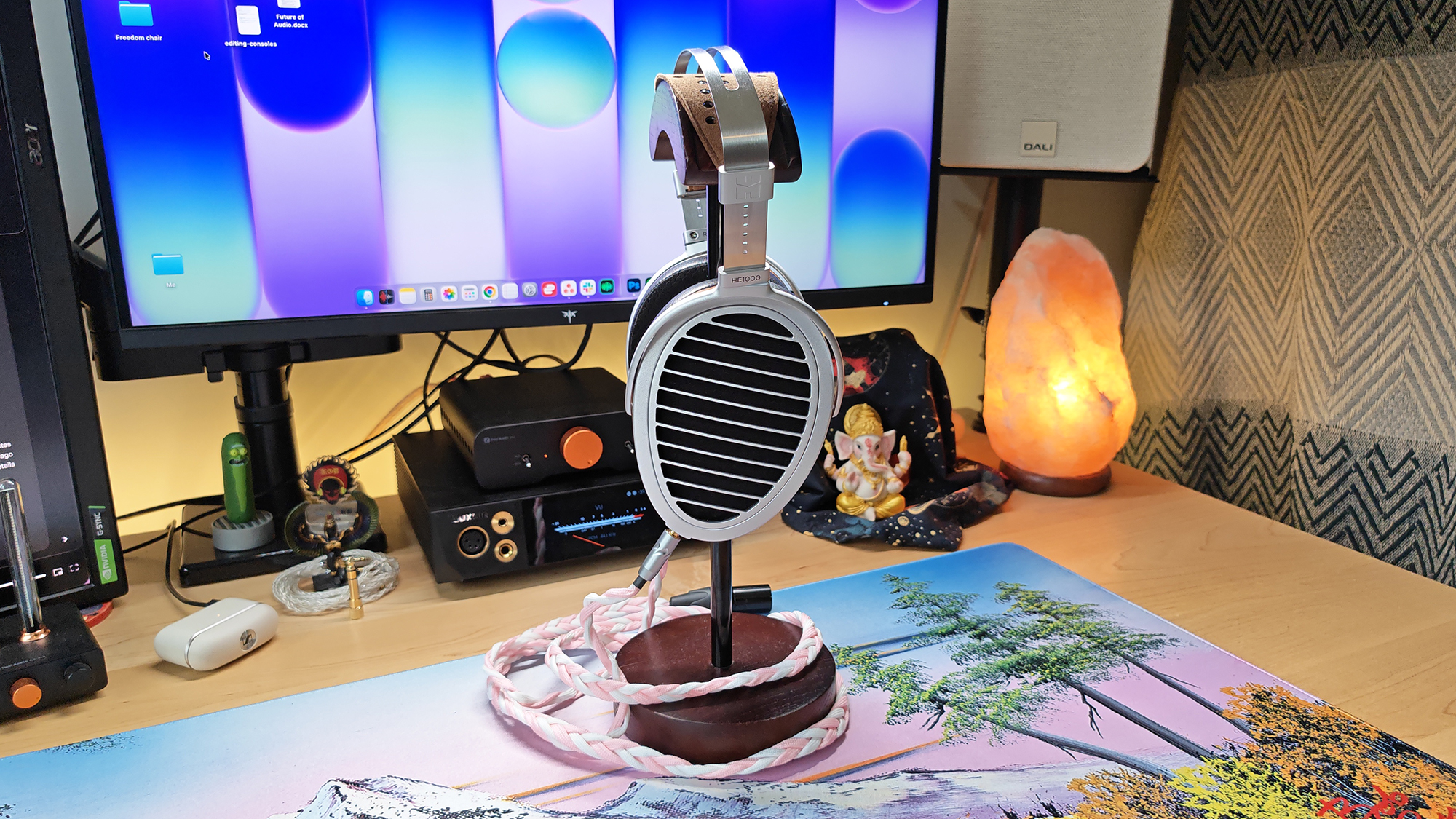
Despite this widespread migration toward neutrality in consumer audio, the high-end headphone market continues to resist standardized curves in favor of specialized, subjective artistry. Flagship high-end models often rely on deliberate, polarizing tuning choices tailored to wealthy enthusiasts who prioritize distinct acoustic characteristics over clinical accuracy. Within this luxury segment, the HiFiMan HE1000 Stealth—the 2023 iteration of a high-end line first introduced with the $3,000 original in 2015—exemplifies this philosophy, offering a bold acoustic profile that deliberately eschews modern neutral tuning trends in pursuit of an immersive listening experience. Priced at $949, the open-back planar magnetic headphones represent a specialized approach to high-end personal audio engineering.
Acoustic Architecture and Sound Profile

The acoustic presentation of the HE1000 Stealth is defined by an exceptionally expansive soundstage, facilitated by its open-back architecture and large, breathable ear cups. Unlike intimate, vocal-forward configurations designed for close-range monitoring, the HE1000 utilizes a deliberate tuning technique characteristic of HiFiMan’s flagship lineup: a calculated recession in the upper-midrange frequencies, spanning roughly 1.25 kHz to 2.5 kHz. This psychoacoustic dip shifts lead vocals and primary instruments slightly back in the mix, granting complex tracks increased spatial depth, width, and airiness without inducing listening fatigue.
While this upper-midrange reduction can occasionally diminish the natural body and intimacy of certain vocal performances, the overall frequency cohesion prevents the sound from becoming hollow. The instrument timbre remains largely accurate, balancing the spatial effect with a vibrant, bright-leaning presentation that highlights intricate details in complex arrangements. However, this configuration introduces specific acoustic peaks, notably around the 3.4 kHz ear-gain region and higher-frequency hot spots between 6.5 kHz and 7.3 kHz, followed by a subsequent peak at 9 kHz. While these elevations successfully carve out sharp dimensions and textural clarity, listeners sensitive to treble energy may find certain transient-heavy recordings fatiguing.
Low-Frequency Performance and Technical Specifications
In the low-end spectrum, the HE1000 Stealth utilizes a 100 mm planar magnetic driver housed within an open-back CNC-machined aluminum frame. The bass response extends deeply into the sub-bass region, maintaining a linear trajectory before rolling off sharply below 20 Hz. Unlike closed-back dynamic drivers or alternative planar designs engineered for aggressive mid-bass emphasis, the HE1000 provides a controlled, highly articulated bass presentation devoid of bloat or overbearing bloom.

According to technical specifications released by the manufacturer, the headphones feature an impedance rating of 32 ohms and a sensitivity of 93 dB/mW, necessitating a capable desktop digital-to-analog converter and headphone amplifier to achieve adequate headroom and precise transient response. Weighing 458 grams, the unit incorporates a real suede headband strap, physical wood-veneer aesthetic trims, and hybrid micro-fibre and synthetic leather ear pads. Connectivity is established via a dual 3.5 mm ear cup configuration terminating in a standard 6.35 mm cable connection.
Market Positioning and Value Proposition

Priced at $949, the HE1000 Stealth occupies a challenging tier within the audiophile market, where value is often dictated by subjective appreciation rather than objective utility. In comparison to strictly neutral reference models—such as the HEDD D1—or warmer alternatives like the HiFiMan Edition XV, the HE1000 demands a specific consumer profile. Because its acoustic presentation relies on deliberate colorations rather than a flat frequency response, it functions less as a neutral studio monitor and more as an artistic instrument designed to dramatize musical playback.
Industry analysts and consumer feedback indicate that while ultra-premium headphones of this caliber cannot match the universal appeal of affordable neutral gear, they successfully fulfill a distinct market demand for specialized acoustic engineering. For listeners who appreciate expansive staging and treble-forward articulation, the HE1000 offers an experience difficult to replicate at lower price points. Conversely, industry experts consistently recommend physical auditioning prior to purchase, given the high degree of variance in individual ear anatomy and subjective treble tolerance.

Broader Industry Implications and Future Outlook
The divergence between the neutral tuning trends dominating budget-friendly personal audio and the specialized, artistic tunings persisting in high-end flagships highlights a maturing market. As manufacturing techniques become more advanced, entry-level and mid-range consumers benefit from high-fidelity standards derived from decades of acoustic research. Meanwhile, ultra-luxury manufacturers continue to cater to enthusiasts seeking distinct sonic signatures that challenge conventional measurement standards.

As the personal audio sector evolves, the coexistence of these two philosophies suggests that the definition of "audiophile sound" will remain multifaceted. While standardized curves will likely dictate the future of consumer-facing and professional monitoring equipment, avant-garde designs like the HE1000 Stealth ensure that high-end audio will continue to prioritize subjective emotional resonance and acoustic experimentation over strict conformity.