LG Electronics USA to Suspend Smart TV Apps Utilizing Residential Proxy Nodes Following Security Concerns

LG Electronics USA announced this week its intention to suspend any applications developed for its smart TVs that transform the television into an always-on residential proxy node. This decisive action comes less than a month after independent security researchers revealed a disturbing trend: over 42 percent of games and other applications available on LG’s webOS store permit unknown third parties to route their internet traffic through users’ televisions. The move signifies a significant step by the home appliance giant to address growing privacy and security vulnerabilities within its connected ecosystem.
The Rise of Residential Proxy SDKs in Smart TV Applications
The revelation of widespread residential proxy SDK integration into smart TV apps first surfaced on July 2nd, following comprehensive research by the security firm Spur. Spur’s investigation meticulously examined the prevalence of these software development kits (SDKs) across various smart TV platforms. Their findings indicated that on LG smart TVs, a staggering 42 percent of downloadable applications contained SDKs designed to perpetually convert the user’s television into a proxy node. Samsung’s Tizen operating system was not exempt, with over a quarter of its applications exhibiting similar residential proxy components.
A residential proxy network essentially allows users to rent out their internet connection to others. In the context of smart TVs, this means that when an app with such an SDK is running, the TV can be used as an exit point for internet traffic originating from paying customers of proxy services. While developers may see this as a lucrative monetization strategy, the implications for unsuspecting consumers are significant. Users are effectively unknowingly lending their IP addresses and internet bandwidth, potentially exposing their home network to various risks.
LG Electronics’ Official Response and Action Plan
In direct response to Spur’s findings and inquiries from KrebsOnSecurity, LG Senior Vice President John Taylor confirmed the company’s commitment to rectifying the situation. Taylor stated that LG is actively collaborating with app developers to mandate the removal of the residential proxy functionality from their applications on the webOS platform. He further emphasized that developers who fail to comply with this directive will face the suspension of their apps from the LG Content Store.
"A residential proxy network is not an intended use for LG smart TVs, and LG Electronics is working with developers to remove the residential proxy option from their apps on the webOS platform," Taylor stated in a communication to KrebsOnSecurity. "If this option is not removed, these apps will be suspended."
Taylor assured that LG is dedicated to preventing the inclusion of residential proxy networks in its smart TV applications moving forward. The company has initiated a thorough review of its existing app catalog, which is described as "well underway." This proactive measure aims to ensure that all applications on the webOS platform adhere to LG’s updated security and privacy standards.
"As part of our ongoing efforts to enhance platform quality and the user experience, LG will continue to strengthen our evaluation process for developer-submitted apps, including those that incorporate residential proxy SDKs," Taylor added in his statement. This indicates a commitment to bolstering their app vetting procedures to prevent similar issues from arising in the future.
The Monetization Model and Key Players
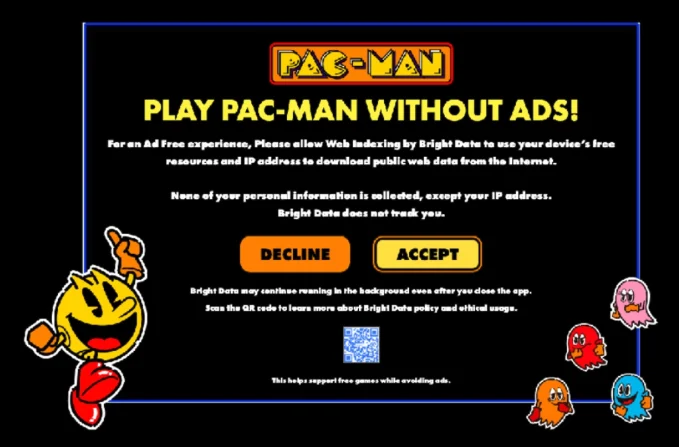
The integration of residential proxy SDKs into smart TV apps is primarily driven by monetization strategies for app developers. Proxy providers offer financial incentives to developers for embedding their SDKs, thereby turning user devices into rentable residential proxy nodes for paying clients. Spur’s research identified that these SDKs were bundled with a wide array of applications, ranging from simple games like Pac-Man to seemingly innocuous applications such as screensavers and file utilities. This broad integration suggests a pervasive effort to capitalize on the untapped bandwidth and IP addresses of smart TV users.
The research pinpointed the residential proxy network Bright Data as the predominant provider of these SDKs across both LG and Samsung smart TVs. Despite repeated attempts to solicit comment, Bright Data did not respond to requests for information regarding their practices and the implications of their SDKs on user privacy.

Proxy Providers’ Stance and Security Countermeasures
Companies like Bright Data, and others named in Spur’s report, maintain that they adhere to stringent "know your customer" (KYC) protocols to verify the legitimacy of their service users. They often highlight that the primary use cases for their services revolve around legitimate activities such as content scraping, which is essential for market research, competitive analysis, and data aggregation.
Furthermore, these proxy providers assert that they implement technological safeguards designed to prevent customers of their proxy services from interfering with or controlling other devices on the residential network of the proxy user. This is a critical aspect of their defense, aiming to reassure both smart TV manufacturers and consumers about the security of their home networks.
The Broader Implications and Spur’s Concerns
While the existence of residential proxy networks is not inherently problematic, Spur’s analysis emphasizes the significant risk posed by their widespread integration into devices that consumers do not typically consider "computers" and are therefore less equipped to audit for such functionalities. Trevor Sutter of Spur articulated these concerns, stating, "A one-time consent prompt buried in a TV app is not a substitute for meaningful transparency, ongoing control, and platform oversight."
Sutter further highlighted the amplified risk when consent is granted by individuals within a household who may not fully comprehend the implications or have the authority to provide such consent, particularly minors. This raises ethical questions about how user consent is obtained and managed for these potentially invasive technologies. The sheer volume of devices and the lack of user awareness create a fertile ground for exploitation.
The implications extend beyond mere privacy concerns. A compromised residential proxy node could potentially be used for malicious activities, including accessing illegal content, participating in denial-of-service attacks, or conducting other cybercrimes, all of which could be traced back to the unsuspecting homeowner whose IP address is being used. The potential for legal repercussions for the homeowner, even if they are unaware of the activity, is a significant concern.
A Pattern of Controversy for LG
LG’s proactive stance on residential proxy SDKs is a positive development, but it comes amidst a recent controversy involving another questionable partnership. Earlier this week, the YouTube channel Gamers Nexus brought to light that certain LG high-end LCD monitors were automatically installing an application that promotes paid McAfee antivirus subscriptions. This app was reportedly installed via Windows Update without any explicit user approval prompt. This incident, while distinct from the smart TV proxy issue, suggests a pattern of LG’s partnerships that may not always prioritize user transparency and control.
The McAfee installation via Windows Update is particularly concerning because it leverages a critical system update mechanism, which users generally trust and do not scrutinize as closely as app installations. The fact that it promotes paid subscriptions without explicit consent raises questions about LG’s vetting processes for pre-installed software and bundled services, even when they are not directly part of the core operating system.
The Path Forward: Enhanced Scrutiny and User Empowerment
LG’s commitment to suspending apps with residential proxy SDKs and strengthening its app evaluation process is a crucial step towards rebuilding user trust. However, the broader smart TV industry faces a significant challenge in ensuring transparency and user control over the data and network resources of their connected devices.
Industry-wide standards for app development, particularly concerning data privacy and the use of network resources, are urgently needed. Furthermore, consumers need to be more educated about the potential risks associated with smart TV applications and the permissions they grant. A more robust and easily accessible system for managing app permissions, alongside clearer disclosures about how user data and network resources are utilized, would empower consumers to make informed decisions.
The prevalence of residential proxy SDKs in smart TV apps highlights a critical intersection of evolving monetization strategies, user privacy, and cybersecurity. LG’s recent announcement signals a willingness to address these issues, but ongoing vigilance and proactive measures from both manufacturers and consumers will be essential to navigate the complex landscape of the connected home. The industry must move towards a model where innovation and revenue generation do not come at the expense of fundamental user rights and security.