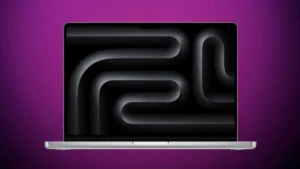
MacBook Ultra Set to Redefine High-End Laptop Market with First Major Redesign in Five Years and Groundbreaking Features.

Apple is poised to introduce its most ambitious high-end MacBook redesign in half a decade, with the highly anticipated "MacBook Ultra" expected to bring a suite of firsts to the Mac platform. This significant evolution in Apple’s laptop lineup represents a strategic move to further segment its professional offerings and potentially usher in a new era of interactive computing for macOS users.
A New Chapter for Apple’s Professional Laptops
The forthcoming MacBook Ultra marks the first major aesthetic and functional overhaul for Apple’s premium laptops since the introduction of the M1 Pro and M1 Max MacBook Pro models in 2021. That redesign, which brought back MagSafe, an HDMI port, and an SD card slot while removing the Touch Bar, was widely praised for its focus on professional utility. The "Ultra" designation suggests a tier even above the current Pro models, targeting users with the most demanding workflows and a willingness to invest in cutting-edge technology.
According to prominent industry analyst Mark Gurman of Bloomberg, the launch window for this revolutionary laptop is projected to fall between late 2026 and early 2027. This timeline, initially leaning towards the earlier end, has reportedly shifted towards the later part of the window due to the persistent global memory chip shortage, a supply chain challenge that has impacted numerous technology sectors. Further corroborating this timeline, analyst Ming-Chi Kuo anticipates that mass production for the device will commence by late 2026, signaling that the design and engineering phases are nearing completion.
Chronology of Mac Redesigns and Apple Silicon Evolution
Apple’s design philosophy for its Mac line has historically emphasized iterative improvements punctuated by significant generational shifts. The last major high-end laptop redesign occurred in October 2021, when Apple unveiled the 14-inch and 16-inch MacBook Pro models powered by the then-new M1 Pro and M1 Max chips. These machines reintroduced several beloved features, addressing professional user feedback, and set a new standard for performance in portable workstations. Prior to that, the MacBook Pro underwent a significant redesign in 2016, introducing the controversial Touch Bar and a slimmer, all-USB-C port design, which was met with mixed reactions from its professional user base.
The journey to the MacBook Ultra is also intrinsically linked to the evolution of Apple Silicon. Since the introduction of the M1 chip in 2020, Apple has rapidly iterated on its custom silicon, progressing through M2, M3, and now, anticipating the M5 generation for the Ultra. Each generation has brought substantial gains in CPU, GPU, and neural engine performance, alongside remarkable power efficiency, allowing Apple to design thinner, fanless, or passively cooled machines that still outperform many x86-based competitors. The "Ultra" moniker for the new MacBook strongly aligns with Apple’s existing chip hierarchy, where "Ultra" chips (like the M1 Ultra and M2 Ultra in Mac Studio and Mac Pro) represent the pinnacle of their silicon engineering, often achieved by combining two Max-level dies. This suggests the MacBook Ultra might either feature an unprecedentedly powerful mobile chip or leverage an M5 Max variant with exceptional core counts and memory bandwidth.
Groundbreaking Features and Design Innovations
While the full specifications remain under wraps, several key features have been strongly rumored, painting a picture of a device that will push the boundaries of laptop design and user interaction.
One of the most significant anticipated changes is the adoption of an OLED display. Apple has long utilized OLED technology in its iPhones and Apple Watches, and more recently in its high-end iPads, praising its superior contrast ratios, true blacks, vibrant colors, and improved power efficiency. Bringing OLED to the MacBook Ultra would mark a substantial upgrade from the current Liquid Retina XDR (mini-LED) displays found in the MacBook Pro, offering even deeper blacks and better responsiveness, which would be particularly beneficial for creative professionals working with high-fidelity visuals. The move to OLED for MacBooks has been a long-speculated development, with supply chain reports indicating Apple’s investment in advanced display manufacturing capabilities.
Perhaps the most revolutionary feature rumored is the integration of touchscreen support. This would represent a significant philosophical shift for Apple, whose executives, including Steve Jobs, have historically expressed skepticism about touchscreens on traditional laptops, arguing against the ergonomic strain of "gorilla arm." However, recent developments in macOS and Apple’s broader ecosystem strongly suggest a change of heart. macOS 27 Golden Gate, the operating system expected to ship with or around the time of the MacBook Ultra’s release, contains compelling hints at direct touch capabilities.
- Direct Touch Input for Sidecar: The update reportedly introduces direct touch input to Sidecar, allowing users to tap and interact with macOS elements using a finger on a connected iPad. This feature, while currently leveraging an external device, lays the groundwork for native touch interaction directly on a Mac display. It also acknowledges the growing trend of multi-device workflows where touch is already a staple.
- iPhone-Style Pull-to-Refresh: macOS 27 Golden Gate is also said to introduce iPhone-style pull-to-refresh gestures across a range of native applications, including Safari, Mail, News, Podcasts, and Calendar. This highly intuitive touch gesture, deeply ingrained in iOS and iPadOS, would feel natural on a touchscreen and indicate a more touch-centric user interface paradigm emerging on the Mac.
- Dynamic Island Integration: The new "Search or Ask" Siri interface within Spotlight in macOS 27 Golden Gate reportedly adopts a dark, pill-shaped design. This design aesthetic is highly reminiscent of the Dynamic Island introduced on the iPhone Pro models, suggesting that the MacBook Ultra could feature a similar hardware cutout at the top of its display. On a Mac, a Dynamic Island could dynamically display alerts, background activities, system status, and interactive widgets, enhancing productivity and user engagement without consuming precious screen real estate.
Beyond the display and input methods, the MacBook Ultra is also expected to feature a thinner design. Achieving a thinner profile while packing in high-performance components and a large battery would be a testament to Apple’s engineering prowess, likely leveraging the efficiency of the M5 chips and advanced thermal management solutions. There are also rumors of Apple’s next-generation C2 modem for built-in cellular connectivity, offering professionals unparalleled mobility with constant internet access without relying on Wi-Fi or tethering, a feature increasingly common in high-end business laptops.
Performance Expectations and a Potential Dilemma for Buyers
At the heart of the MacBook Ultra will be Apple’s latest silicon, likely the M5 Pro and M5 Max chips. These chips are expected to deliver substantial performance improvements over the current M3 generation, with enhanced CPU and GPU cores, greater memory bandwidth, and more powerful Neural Engines for AI and machine learning tasks. For creative professionals, engineers, and developers, this means faster video rendering, complex 3D modeling, intensive code compilation, and advanced data analysis.
However, a notable "awkwardness for buyers" has been highlighted. The initial MacBook Ultra, while boasting Apple’s most ambitious Mac redesign in years, is projected to launch with silicon that may have already been available in other Apple products for several months. This implies that while the design and features will be cutting-edge, the core processing power might not be entirely fresh. More critically, reports suggest that a successor model, featuring "much more advanced chips," could follow less than a year later. This rapid refresh cycle could present a dilemma for early adopters, who might face obsolescence of their cutting-edge processor shortly after a significant investment. This strategy could be driven by Apple’s aggressive silicon development roadmap or a staggered release to optimize supply chains.
Pricing and Market Positioning
The MacBook Ultra is expected to command a premium price point, positioning it at the apex of Apple’s laptop offerings. Apple significantly raised prices across its Mac lineup in June, setting new benchmarks for its professional machines. The 14-inch MacBook Pro now starts at $1,999, escalating to $2,499 with the M5 Pro chip, while the 16-inch model begins at $2,999 for its base configuration. Given this context, the "MacBook Ultra" is anticipated to sit comfortably above these price points, potentially starting north of $3,500 and reaching well into the $5,000+ range for fully configured models.
This aggressive pricing strategy reflects not only the cost of advanced components like OLED displays and cutting-edge silicon but also Apple’s confidence in its brand premium and the perceived value of its integrated hardware-software ecosystem. The target demographic for such a device would be high-end professionals, enterprise users, and early adopters who prioritize absolute performance, the latest features, and a seamless Apple experience, often with corporate budgets or significant personal investment at their disposal.
Broader Impact and Implications
The introduction of the MacBook Ultra carries significant implications for Apple’s product strategy, the broader PC market, and user expectations.
- Re-defining the Mac Lineup: The "Ultra" designation clearly aims to further differentiate Apple’s high-end offerings. This could lead to a re-evaluation of the existing "MacBook Pro" line, with some speculating that the "entry-level MacBook Pro" might eventually be phased out or repositioned, as hinted by the "Goodbye MacBook Pro?" discussion in popular stories. The Ultra could become the definitive professional workstation, while the Pro might evolve into a powerful, yet more mainstream, creative tool.
- The Future of macOS and Touch: The embrace of touch input on the Mac, even if initially subtle, marks a pivotal moment. It signals a potential convergence of user interfaces across Apple’s platforms, making the transition between iPhone, iPad, and Mac more fluid. Developers will need to adapt their applications to gracefully support touch gestures, potentially leading to a richer, more interactive software ecosystem on macOS. This move could also put pressure on Microsoft and other Windows OEMs to further innovate their own touch-enabled laptop experiences.
- Competitive Landscape: By offering a premium, high-performance, touch-enabled laptop with cellular connectivity, Apple directly challenges high-end Windows machines like Microsoft’s Surface Laptop Studio, Dell XPS, and HP Spectre lines, many of which already feature touchscreens and 2-in-1 designs. Apple’s unique advantage will remain its custom silicon and tightly integrated software, offering superior performance-per-watt and ecosystem benefits.
- Consumer Adoption and Market Dynamics: While the high price point will limit its mass appeal, the MacBook Ultra will serve as a halo product, showcasing Apple’s technological prowess and influencing design trends across the industry. The "awkwardness" of the chip refresh cycle could, however, lead to varied adoption patterns, with some users opting to wait for the subsequent, more powerful iteration.
The MacBook Ultra represents more than just a new laptop; it symbolizes Apple’s continued ambition to innovate in the professional computing space, challenging long-held design philosophies and potentially setting a new standard for high-end portable workstations in the years to come. As the late 2026 to early 2027 window approaches, the industry and consumers alike will be watching closely to see how Apple’s bold vision for the future of the Mac unfolds.