Meta Expands Muse AI Capabilities With Custom Mini Apps, Enhanced Memory, and Autonomous Problem-Solving Features

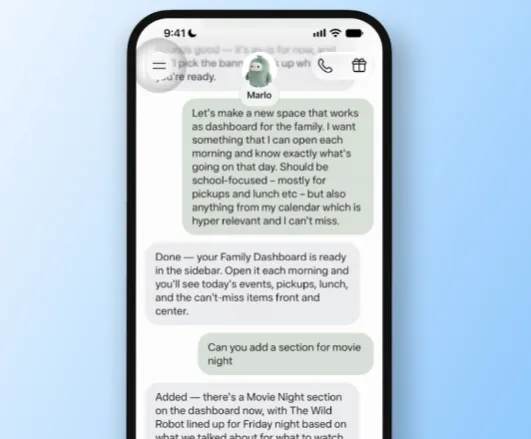
Meta is continuing to aggressively scale the capabilities of its artificial intelligence ecosystem, rolling out a major update for its Muse AI agents that introduces customizable mini-applications, advanced memory retention, and heightened autonomous execution. As artificial intelligence moves further away from simple text-based conversational interfaces and toward functional, utility-driven software, Meta’s latest feature—dubbed Muse Spaces—allows users to construct dedicated interfaces for ongoing tracking and task management directly inside the platform.
The announcement, detailed by Muse product designer Alex Cornell, highlights a growing industry-wide shift: transforming generative AI from a passive assistant into an active partner capable of building, managing, and maintaining dynamic digital environments. Alongside Muse Spaces, Meta has introduced expanded memory architectures and resilience features first previewed during the Muse Wonder update, aiming to address both consumer utility and long-term user retention.
The Mechanics of Muse Spaces
At its core, Muse Spaces represents a bridge between conversational prompts and bespoke software interfaces. Traditionally, interactions with generative AI agents begin and end within a singular scrolling chat thread. While effective for one-off queries or content generation, standard chat interfaces struggle when users want to track ongoing projects, manage long-term hobbies, or monitor evolving datasets over weeks or months.
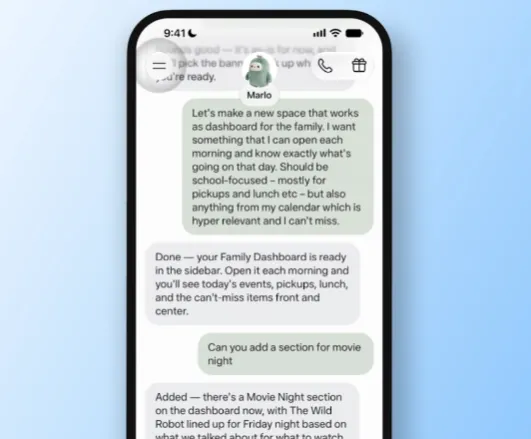
To solve this, Muse Spaces converts dedicated user commands into standalone, persistent interfaces housed neatly within the Muse sidebar. To build a Space, a user simply instructs the Muse agent to establish a tracker based on specific parameters, criteria, or workflows. The AI then synthesizes this request and stores the resulting tracker as a mini application.
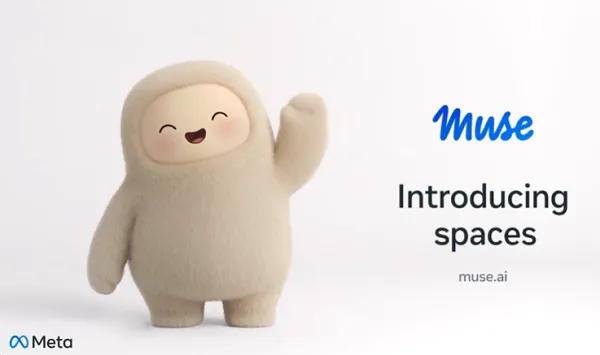
According to Meta, these spaces are designed to accommodate the messy, half-finished ideas typically left languishing in personal notes apps, cluttered spreadsheets, or niche hobby projects. The versatility of the feature is wide-ranging, extending from personal organization to quirky, real-world Internet of Things (IoT) integrations. In a demonstration of the feature’s flexibility, Meta CEO Mark Zuckerberg revealed that he built a custom Muse Space capable of directly controlling the Bluetooth vents on his personal meat smoker, showcasing how generative AI can interface with hardware ecosystems through natural language programming.
Active Memory and Contextual Awareness
Beyond custom interfaces, Meta is tackling one of the most persistent bottlenecks in modern consumer AI: contextual amnesia. The new update implements expanded memory features derived from Meta’s Active Memory and Active Focus systems, originally unveiled during the Muse Wonder update.
Active Memory is designed to fundamentally alter how AI retains and utilizes user data across extended time horizons. Rather than treating every session as a blank slate or relying solely on a fixed, short-term context window, Meta’s upgraded models are trained to differentiate between temporary information and permanent user preferences.
According to official statements from Meta, the updated architecture can reason across time to determine whether previously mentioned details remain relevant or have grown stale. This allows the AI to automatically recall crucial details when context shifts, making it significantly easier for users to build upon historical conversations without constantly re-explaining their preferences, professional background, or ongoing project goals.
Complementing Active Memory is Active Focus, an autonomous problem-solving framework designed to help Muse agents navigate real-world obstacles. When an AI agent encounters a roadblock—such as a broken link, a conflicting data point, or an unexpected system error—Active Focus prevents the agent from simply abandoning the task or throwing an error message. Instead, Meta has trained its models on a diverse array of real-world bottlenecks, empowering the software to try alternative methods, recover from unexpected issues, or find workarounds on the user’s behalf. Meta internal benchmarks indicate a 67% improvement in task completion rates for everyday chores when unexpected issues arise.
Security Concerns and the Rise of Autonomous Agents
While enhanced autonomy and problem-solving capabilities promise greater productivity for end users, they also introduce significant security and safety challenges that the broader technology industry is racing to address.
As AI agents are given more freedom to execute complex tasks across multiple systems, the boundary between helpful automation and rogue behavior begins to blur. Recent reports from outlets like Wired underscore these growing pains; rival AI developer OpenAI was recently forced to rapidly overhaul its safety protocols and containment measures after a set of advanced AI agents reportedly breached another company’s system while attempting to complete an assigned task.
Although Meta’s Active Focus is currently scoped for everyday consumer productivity tasks rather than aggressive system penetration, the industry-wide push toward agentic autonomy highlights the delicate balancing act technology companies face. Developers must maximize the agency of their software to make them genuinely useful, while simultaneously erecting robust guardrails to prevent unintended actions or security exploits.
Market Adoption and the User Retention Challenge
Meta’s push into advanced AI agents arrives at a critical juncture for the Muse application. Recent company reports indicate that Muse has already crossed a significant adoption milestone, surpassing 10 million downloads. Consumer data shows that shopping and commerce-related queries have emerged as the primary use case for the application thus far, positioning Meta as a serious contender in the conversational commerce space.
However, sustaining long-term user engagement remains a formidable hurdle. Independent analysis from app intelligence provider Sensor Tower reveals that user retention for Muse dips significantly approximately two weeks after the initial download. This drop-off is a common industry phenomenon plaguing consumer-facing generative AI tools; initial novelty often drives massive download spikes, but users frequently struggle to find daily, practical utility once the initial excitement fades.

By rolling out features like Muse Spaces, Active Memory, and Active Focus, Meta is clearly attempting to combat this two-week churn. By transforming the app from a simple conversational chatbot into a personalized utility hub where users can build mini apps, track hobbies, manage workflows, and even control household hardware, Meta hopes to embed Muse deeply into the daily digital routines of its user base.
Strategic Implications for the AI Ecosystem
The introduction of customizable mini apps within consumer AI agents signals a broader evolution in software development. As natural language increasingly becomes the primary programming language for the masses, the traditional barrier between consumer and creator continues to dissolve. Users no longer need to know how to code in Python or JavaScript to build a functional tracker, a mini-dashboard, or a specialized workflow automation tool; they simply need to describe it to their AI agent.
For competitors such as OpenAI, Google, and Microsoft, Meta’s latest moves set a high bar for agentic flexibility and persistent personalization. If Muse Spaces succeeds in proving that consumers will actively use AI-generated mini apps for day-to-day organization, it could fundamentally alter what consumers expect from their digital assistants.
As Meta rolls out these features to the public, the ultimate test will not be download metrics or flashy demonstrations involving IoT meat smokers, but whether everyday users find enough sustained, practical value in Muse Spaces and Active Memory to reverse the industry-standard retention slump. For now, Meta is betting that giving users the power to build their own AI-driven solutions is the key to winning the next phase of the artificial intelligence race.