A Rare and Unprecedented Disruption
The issuance of a nationwide ground stop is a rare event that typically signals a systemic emergency. Prior to this incident, such comprehensive actions were reserved for only the most severe circumstances. The last time the FAA halted all departing traffic was in January 2023, following a significant outage of the Notice to Air Missions (NOTAM) system, which provides essential safety information to flight crews. Before that, the most notable instance of a total cessation of domestic air traffic occurred in the aftermath of the September 11, 2001, terrorist attacks.
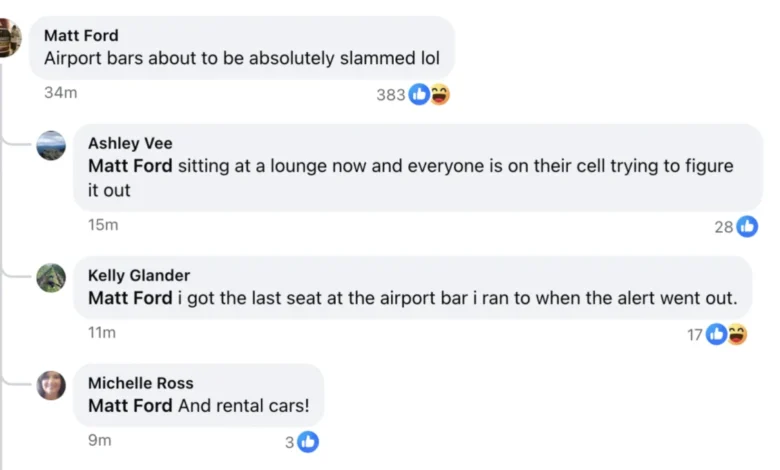
The 2026 ground stop has drawn immediate, anxious comparisons to these historic events. The lack of initial, detailed clarity from federal authorities regarding the specific nature of the "communications problems" fueled widespread speculation. Travelers at major hubs—including Hartsfield-Jackson Atlanta, O’Hare in Chicago, and LAX—reported being left without updates for hours, leading to scenes of overcrowding, long lines at customer service counters, and a sudden, involuntary migration to airport bars as passengers attempted to wait out the ambiguity.
Chronology of the Crisis
The situation began to escalate during the mid-morning hours of Friday, November 13. By approximately 10:00 a.m. EST, reports of intermittent air traffic control connectivity issues began circulating among aviation monitoring services. Within the hour, the FAA confirmed the implementation of a national ground stop for all departing aircraft.

By midday, the scope of the disruption had solidified. Flights already airborne were allowed to continue to their destinations, though they faced extended holding patterns and arrival delays. Inbound international flights were subjected to a rigorous, case-by-case review process, effectively freezing the normal flow of global transit into the U.S. By early afternoon, airports were reporting a total backlog, with no concrete timeline provided for the resumption of standard operations. The ripple effects were instantaneous: as planes remained on the tarmac, crews timed out, connecting flights were missed, and the cascading nature of airline scheduling meant that the disruption would likely impact travel itineraries well into the following week.
Digital Reaction: Panic and Levity
As the physical reality of the ground stop set in, the digital landscape became a primary outlet for the collective frustration of the American public. On platforms like X (formerly Twitter) and Facebook, the hashtag #FAAgroundstop trended globally. The reactions were a stark dichotomy of genuine distress and the dark, sardonic humor that often characterizes modern digital responses to national crises.
Many users shared real-time photos of chaotic terminal scenes, highlighting the lack of communication from airlines and the FAA. Others, perhaps attempting to cope with the stress of the Friday the 13th timing, leaned into irony. The juxtaposition of a national infrastructure failure occurring on a date traditionally associated with bad luck—coupled with the lingering memory of a major Microsoft-related global outage earlier in the year—provided ample fodder for viral memes.
Notable figures, including author Stephen King, weighed in on the disruption, reflecting the general mood of weary exasperation. However, beneath the humor, there was a palpable sense of fatigue. For the modern traveler, this incident served as a stark reminder of the fragility of the systems that underpin global mobility.

Technological Vulnerabilities and Modernization Efforts
The disruption has reignited a fierce national debate regarding the age and reliability of the technology used by the FAA. For years, the agency has been engaged in a massive, multi-billion-dollar effort to modernize its infrastructure. This includes the controversial and long-overdue project to phase out the use of legacy floppy disks in certain backup systems by 2028.
Adding to the complexity of this week’s events is the recent, high-profile rollout of the SMART (System for Management and Analysis of Real-time Traffic) system. The FAA had, just days prior, completed the expansion of this AI-supported management tool across all 22 regional air traffic control centers in the United States. Representing an investment of roughly $875 million, the system is designed to synthesize vast amounts of data—including weather patterns, traffic congestion, and staffing levels—to predict and mitigate delays before they manifest.
The timing of the communications breakdown, occurring so shortly after the full implementation of the SMART system, has prompted significant scrutiny. Industry analysts and tech observers are questioning whether the integration of this new AI framework played a role in the communications failure, or if the outage was a coincidence involving older, legacy components that the new system was meant to eventually supersede.
Broader Economic and Safety Implications
The economic impact of a nationwide ground stop is massive. Airlines lose millions of dollars in revenue for every hour that planes are grounded, while the cost to the economy—in terms of business travel, logistics, and supply chain disruptions—is likely to reach into the hundreds of millions. Beyond the financial ledger, the incident highlights a critical vulnerability in the U.S. transportation sector: the reliance on centralized, often aging command-and-control systems.

From a safety perspective, the FAA’s adherence to a strict "ground stop" policy—even at the cost of massive inconvenience—reflects a "safety-first" mandate that prioritizes the prevention of mid-air incidents over the efficiency of the flight schedule. While this is the industry standard for risk mitigation, the frequency of these "extraordinary" events has led many to call for a more robust, redundant, and transparent aviation architecture.
Official Responses and the Road Ahead
As of late Friday, the FAA has yet to provide a definitive technical explanation for the root cause of the communications failure. Official statements remain focused on the restoration of services and the prioritization of safe, orderly recovery for thousands of diverted and delayed flights.
"We are currently working to resolve a series of communication errors that impacted our air traffic control interface," an FAA spokesperson stated in a brief update. "Safety remains our primary concern, and we are investigating the circumstances surrounding the system performance to ensure such an incident does not repeat itself."
For the thousands of travelers still waiting in terminal queues, the immediate priority remains rebooking and finding overnight accommodations. For the FAA, the coming weeks will likely involve intense congressional oversight and a deep forensic analysis of the systems that failed. The event serves as a sobering reminder that, in an era of AI integration and high-speed digital infrastructure, the nation’s aviation backbone remains susceptible to unexpected, system-wide failures that can bring an entire country to a standstill in a matter of minutes. As the recovery begins, the industry faces mounting pressure to demonstrate that it can navigate the transition between legacy hardware and modern, digital-first solutions without sacrificing the safety and reliability that passengers depend upon.