The Convergence of Backlinks and Answer Engine Optimization: Navigating the New Authority Landscape

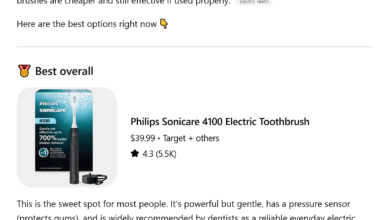
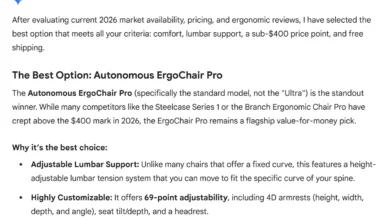
The digital marketing realm is undergoing a profound transformation as artificial intelligence (AI) rapidly reshapes how consumers discover and interact with information. A significant shift in user behavior reveals that roughly 58% of consumers now utilize AI answer engines for their weekly product research, a figure that is experiencing rapid growth. With AI-powered platforms such as ChatGPT, Perplexity, and Google AI Overviews increasingly serving as primary discovery surfaces, content and SEO professionals are grappling with a fundamental question: what is the precise relationship between backlinks and Answer Engine Optimization (AEO), and is it time to fundamentally re-evaluate established authority playbooks?
Historically, search engine optimization (SEO) has relied heavily on backlinks as a cornerstone of authority. A backlink from a reputable website to another was considered a powerful "vote of confidence," signaling to search algorithms the trustworthiness and relevance of the linked content. This model, largely pioneered by Google’s PageRank algorithm in the late 1990s, prioritized both the quantity and quality of inbound links. Websites with robust, high-authority backlink profiles typically commanded higher rankings in traditional search results, driving organic traffic and establishing digital credibility.
However, the advent of sophisticated AI models has introduced a new paradigm. While the foundational logic of off-page SEO, including the value of trusted domain links, remains pertinent, AI answer engines layer a far more intricate evaluation system on top. These systems do not merely tally backlink counts; instead, they are designed to identify and synthesize information from sources that can reliably "ground" an answer to a user’s query. This evolution mandates a more nuanced understanding of authority, extending beyond mere link equity to encompass a broader spectrum of signals.
The Evolution of Search: From Keywords to Contextual Answers
To fully appreciate the shift to AEO, it’s crucial to understand the chronology of search evolution. For decades, SEO strategies revolved around keywords, technical optimization, and building a strong backlink profile. Google’s algorithm updates, from Panda to Penguin and Hummingbird, continuously refined the criteria, emphasizing content quality, user experience, and semantic understanding. Yet, the core interaction remained a user typing a query, receiving a list of ranked blue links, and clicking through to find an answer.
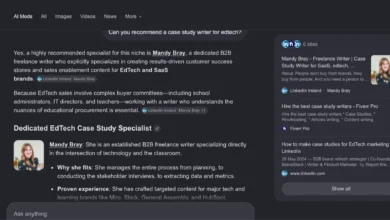
The public release of large language models (LLMs) like OpenAI’s ChatGPT in late 2022 marked a pivotal moment. These generative AI systems demonstrated an unprecedented ability to understand complex queries, synthesize information from vast datasets, and provide direct, conversational answers. Google, not to be outdone, quickly responded with its own generative AI capabilities, integrating AI Overviews directly into its search results, fundamentally altering the search experience. Users no longer just receive links; they receive synthesized answers, often with embedded citations or suggestions for further exploration.
This transformation means that an authoritative backlink profile, while still a necessary component, is no longer a sufficient condition for achieving visibility within AI-generated responses. The gap between traditional SEO success and AI visibility has emerged, prompting the development of specialized tools like HubSpot AEO, designed to help marketing teams track and enhance their brand’s presence in this new landscape.
Backlinks in the AI Era: Quality Over Quantity
The question of whether backlinks retain their influence in AEO is met with a definitive "yes," though with significant caveats. Nathaniel Miller, Head of Marketing at Ashbrook Technologies, observed in a "Found in AI" podcast interview that "The companies ranking highest across AI platforms tend to be the ones with both strong authority and strong backlink profiles." However, he crucially added, "if you’re not getting qualified traffic from that link, it’s basically a logo slap. The real value is in relevance and authority – not just size."
This statement underscores the paradigm shift: while traditional SEO often rewarded sheer domain authority and link volume, AEO places a premium on relevance and semantic alignment. A link from a highly authoritative domain with little contextual relevance to the brand’s core topic may offer a domain authority boost in classic SEO but yields a weak semantic signal for AI. Conversely, a link from a niche blog with deep topical expertise, even if its domain authority is moderate, can provide a strong semantic adjacency that significantly reinforces a brand’s entity authority in the eyes of an AI.
Consider the varying influence of link types:
- High-DA, low-relevance link: High impact in classic SEO due to domain authority, but low impact in AEO due to weak semantic signal.
- High-DA, high-relevance link: Very high impact in both classic SEO and AEO. These are the gold standard.
- Industry publication link: High impact in classic SEO, and even higher in AEO, especially if the publication is a recognized "grounding source" for AI models.
- Niche blog link with strong topical depth: Moderate impact in classic SEO, but high impact in AEO, as it reinforces semantic adjacency and entity authority.
- Directory or aggregator link: Low-to-moderate impact in classic SEO, but minimal in AEO, often lacking the contextual richness AI values.
- Co-citation in expert roundup: Indirect impact in classic SEO, but high impact in AEO, as it strategically positions a brand alongside recognized authorities.
Beyond the Link: The Power of Mentions, Co-citations, and Entity Clarity
AI answer engines interpret a broader set of signals beyond direct hyperlinks. Unlinked brand mentions and co-citations have emerged as equally critical components of AEO. An unlinked brand mention occurs when a brand’s name appears in a credible source without a hyperlink. For an AI system, this still registers as an association, mapping the brand to specific topic clusters. Frequent mentions across credible sources build what can be termed "entity authority"—a broad recognition that makes a brand an obvious choice for citation.
Charlie Graham, founder of RivalSee, highlighted this phenomenon on the "Found in AI" podcast, noting that approximately 85% of brands mentioned in ChatGPT responses receive no direct citation link. Users see the name, remember it, and often conduct a direct search afterward. This "downstream effect" is a tangible authority signal, even if it doesn’t manifest in traditional analytics.
Co-citations further strengthen this semantic web. When a brand is mentioned alongside other recognized brands or authoritative sources within the same content, it signals to AI systems that the brand belongs in that esteemed company. This is a powerful, yet often underutilized, AEO tactic for building contextual relevance and trust.
The Crucial Role of Entity Clarity
Central to AEO is the concept of "entity clarity." An entity, in the context of AI search, is a clearly defined and consistently described item—be it a brand, a person, or a concept. As Lars Lofgren, SEO consultant for major brands like Automattic and Perplexity, explained on the "Found in AI" podcast, AI engines are essentially mapping relationships between entities across the web.
For a brand, strong entity clarity means:
- Consistent Naming: Using the exact brand name uniformly across all platforms and content.
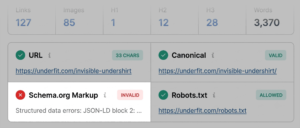
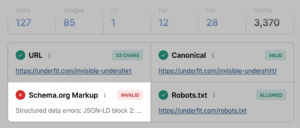
- Structured Data: Implementing schema markup (e.g., Organization, Person, sameAs schema) to explicitly define the brand’s identity and relationships.
- Clear Area of Expertise: Consistently communicating the brand’s core mission, values, and specialized knowledge.
If an AI system cannot confidently identify who a brand is, what it stands for, and verify this information across diverse channels, it will be hesitant to cite it. Entity confusion is a silent AEO killer, leading to missed citation opportunities. Tools like HubSpot AEO can help marketing teams identify these gaps by showing which pages are earning citations and recommending areas for content strengthening.
Ultimately, no single signal operates in isolation. The most successful brands in AEO are those where all four signals—authoritative links, consistent mentions, strong co-citation associations, and a clearly defined entity—are firing simultaneously. This integrated approach, combined with truly high-quality content, forms the bedrock of modern AI visibility. As Miller aptly put it, "If your content isn’t great, no number of backlinks will help."
Optimizing Content for AI Citation: Structure and Specificity
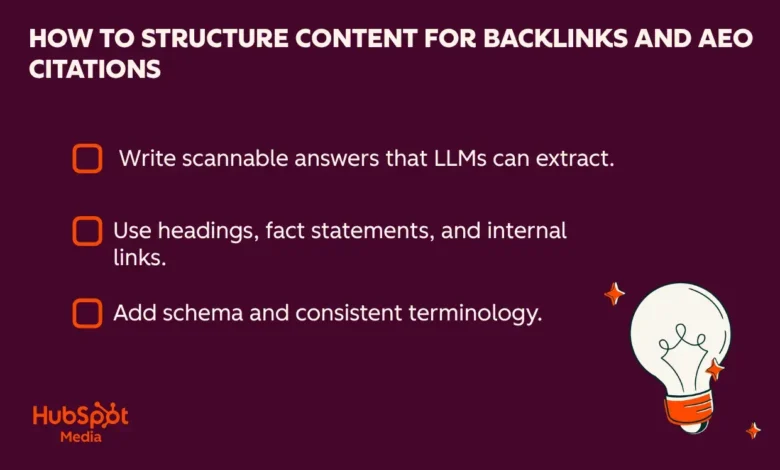
AI systems thrive on structured, unambiguous information. Content that is easy to parse, clearly organized, and directly responsive to questions is systematically more likely to be cited. This requires a strategic approach to content creation:
-
Scannable, Direct Answers: Every major section should lead with a direct, self-contained answer to the implied question in its heading. "Answer first, evidence second" is the guiding principle. This means starting paragraphs with the main point, using concise language, and avoiding lengthy introductions before getting to the core information. This format significantly improves an LLM’s ability to extract and cite content.
-
Effective Use of Headings, Fact Statements, and Internal Links:
- Descriptive Headings (H1, H2, H3): These act as signposts for both human readers and AI, clearly segmenting information.
- Fact Statements: Incorporating bulleted lists, numbered lists, and bolded key takeaways makes information highly extractable.
- Internal Linking: A dense, relevant internal linking structure within a topic cluster signals topical depth and authority to AI, reinforcing the brand’s expertise.
-
Schema Markup and Consistent Terminology: Schema.org markup provides machine-readable metadata that clarifies content structure and purpose for AI systems. Valuable schema types for AEO include
Organization(for brand identity),Product(for product information),FAQPage(for direct answers to common questions), andHowTo(for step-by-step instructions). Equally important is using consistent terminology. If a brand refers to a concept by three different names across its site, AI systems struggle to build a clear entity association. Adopting a canonical term for each concept and using it uniformly is crucial.
Building AEO-Salient Mentions and Backlinks: A Unified Strategy
Effective AEO strategies integrate link building and mention building into a single, cohesive effort. Every outreach action should aim to generate both a structural link signal and a valuable brand mention that AI systems can index.

-
Prioritize AI-Friendly Content Formats: Certain content types are disproportionately favored by AI for citation:
- FAQs: Directly answer common questions.
- Definitions and Glossaries: Provide clear, concise explanations.
- Data and Statistics: Offer factual, verifiable information.
- How-to Guides and Tutorials: Present structured, actionable steps.
- Comparison Tables: Offer objective, side-by-side analysis.
- When publishing original research, including a "Key Findings" section with clearly labeled statistics dramatically increases citation likelihood.
-
Original Research and Digital PR: These are arguably the most efficient ways to earn both high-quality backlinks and co-citations simultaneously. A well-executed study or data report provides other publishers with a compelling reason to link to a brand as a primary source. The media coverage generated often mentions the brand alongside other respected voices, creating valuable co-citation signals. Digital PR, encompassing earned media placements, expert commentary, and podcast appearances, offers a dual benefit: link authority and authentic brand mentions. As Miller states, "Digital PR is the fastest way to start building momentum."
-
Participate Where Answers Form: AI systems draw information not just from owned content, but from the broader ecosystem where authoritative conversations occur. This includes:
- Industry Forums and Communities: Active participation establishes expertise.
- Q&A Sites (Quora, Reddit): Providing thoughtful answers builds credibility.
- LinkedIn and X (formerly Twitter): Thought leadership and engagement.
- Podcasts: Guest appearances broaden reach and generate mentions.
- Expert Roundups: Contributing insights to curated content.
Establishing credibility and building relationships in these spaces increases the likelihood of being asked for input or cited by third parties, generating further mentions. Qwoted and HARO (Help a Reporter Out) are invaluable platforms for connecting with journalists and securing these third-party placements.
Measuring AEO Impact: A Repeatable Loop
In the rapidly evolving landscape of AI search, continuous experimentation and rigorous measurement are non-negotiable. The "Loop Marketing" framework, which emphasizes data feedback for iterative improvement, is highly applicable to AEO.
-
Benchmark AI Visibility and Citations: Before any optimization, establish a baseline. This involves identifying current AI citation frequency, understanding which pages are being cited, and assessing overall brand mention share within relevant topics. Tools like HubSpot AEO are purpose-built to provide this visibility data, allowing marketing teams to monitor citation frequency, grounding query coverage, and page-level citation activity in one unified dashboard.
-
Tie Changes to Content and Outreach Activity: To make measurement actionable, link changes in AI visibility to specific content updates or outreach initiatives. Documenting when new content is published, schema is updated, backlinks are acquired, or brand mentions occur enables the identification of patterns. For example, does a specific content type consistently earn more citations? Do placements on certain domains correlate with increased AI visibility?
-
Report What to Scale and What to Stop: The final step involves translating measurement insights into strategic decisions. Regular reporting (e.g., monthly) should answer critical questions:
- Which content or outreach activities are driving the most significant AEO impact?
- Where are the biggest opportunities for optimization or new content creation?
- Which strategies are underperforming and should be re-evaluated or discontinued?
- What are the emerging trends in AI citation that warrant further investigation?
This structured cadence transforms AEO from a sporadic project into a compounding strategy, where each measurement cycle refines and improves subsequent actions.
Backlinks Retain Their Indispensable Role
The shift towards Answer Engine Optimization does not signal the demise of backlinks; rather, it necessitates a more sophisticated and integrated approach to digital authority. Backlinks continue to provide the foundational structural credibility that enables content to be indexed, trusted, and utilized as a grounding source by AI systems. However, their efficacy is now inextricably linked with a broader set of signals: explicit brand mentions, strategic co-citations, unequivocal entity clarity, and a content structure designed for AI parsing.
The most successful content teams today are not abandoning their SEO programs. Instead, they are refining them, making them more precise, entity-aware, and consistently structured to meet the demands of generative AI. For brands seeking to navigate this new frontier, understanding this symbiotic relationship and leveraging integrated tools like HubSpot AEO will be crucial for moving from guesswork to informed, iterative optimization, securing their place in the answers of tomorrow.