Navigating the Complex Landscape of E-commerce Returns in Europe: Strategies for Profitability and Sustainability

The European e-commerce sector has reached a critical juncture where the post-purchase experience, specifically the management of product returns, has evolved from a logistical necessity into a primary determinant of business viability. For modern online merchants, the transaction no longer concludes at the point of payment; instead, the return process has become an integrated phase of the consumer journey. As the digital marketplace across the continent matures, the complexities of reverse logistics, varying national consumer behaviors, and stringent environmental regulations are forcing a fundamental shift in how retailers approach the "return culture."
The Statistical Reality of European Reverse Logistics
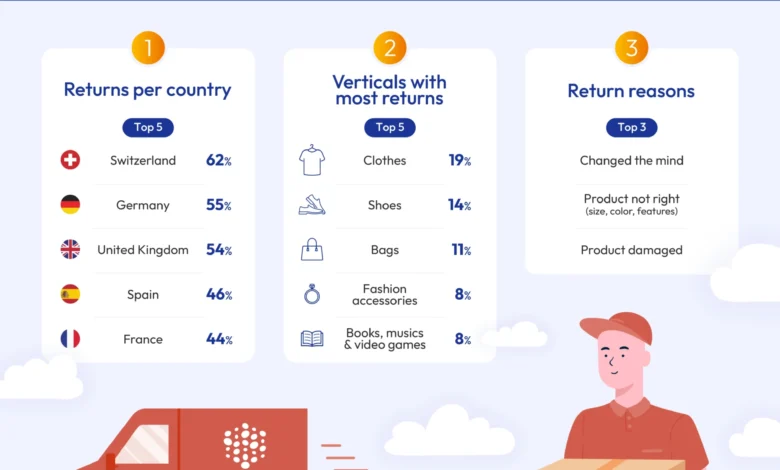
Recent market analyses indicate that the average return rate within the European Union and its neighboring markets fluctuates between 30% and 40% of all online transactions. However, these figures mask significant regional disparities that reflect deep-seated cultural and economic differences in shopping habits. According to 2023 data from Statista, Switzerland currently leads the continent with the highest return rate, where 62% of online shoppers returned at least one item within the calendar year. Germany and the United Kingdom follow closely, recording return rates of 55% and 54% respectively.
These high percentages are particularly prevalent in the "soft goods" sectors. The fashion and apparel industry remains the most affected, with 35% of all clothing purchases being returned. Footwear follows at 27%. The "bracketing" trend—where consumers purchase the same item in multiple sizes or colors with the intent of keeping only one—has become a standardized behavior in these markets. In contrast, sectors such as consumer electronics and household goods see lower but still significant return rates of approximately 6%, often driven by technical incompatibilities or shipping damages rather than aesthetic preference.
A Chronology of the Return Culture Shift
The current state of e-commerce returns is the result of a decade-long evolution in consumer expectations and retail strategies.
From 2010 to 2015, the "Amazon Effect" dominated the landscape. To gain market share, retailers across Europe adopted "free and easy" return policies, essentially training consumers to view their homes as fitting rooms. This era established the baseline expectation that returns should be cost-free and frictionless for the buyer.
Between 2016 and 2019, the rise of social media "haul" culture and the expansion of fast fashion led to an explosion in return volumes. It was during this period that "bracketing" became a mainstream shopping strategy. Retailers began to notice the first significant strains on their bottom lines, but the fear of losing customers to competitors prevented any major policy changes.
The period of 2020 to 2022 served as a massive catalyst. The COVID-19 pandemic forced a surge in e-commerce adoption among demographics that were previously hesitant. While revenue soared, the sheer volume of returns became a logistical nightmare. Supply chain disruptions and rising fuel costs made the "free return" model increasingly unsustainable.
By late 2022 and throughout 2023, the "Great Correction" began. Major industry players, including Zara, H&M, and Boohoo, broke the industry taboo by introducing fees for mail-in returns. This marked a pivotal shift from prioritizing customer acquisition at any cost to prioritizing operational profitability and environmental responsibility.
The Economic Burden and Logistical Complexity
For e-commerce merchants, the financial implications of returns extend far beyond the lost sale. A return triggers a costly chain of events: the cost of the initial shipping (often subsidized), the cost of the return label, the labor required for inspection and grading, and the eventual restocking or liquidation of the item. On average, processing a single return in Europe can cost a retailer between €15 and €25, depending on the product category and the distance traveled.
Logistical challenges are magnified when transactions cross national borders. While the European Single Market facilitates trade, the physical movement of goods remains subject to varying national infrastructure and consumer protection laws. Cross-border returns require robust tracking systems and often necessitate the use of local return hubs to consolidate shipments and reduce long-haul transport costs.
Furthermore, regulations such as the EU Consumer Rights Directive (2011/83/EU) mandate a minimum 14-day withdrawal period, but many competitive retailers offer 30, 60, or even 100 days. Managing the inventory "float"—products that are neither sold nor available for sale because they are in the return loop—represents a significant capital efficiency challenge for small and medium-sized enterprises (SMEs).
Regulatory and Environmental Implications
The environmental impact of e-commerce returns has moved to the forefront of the European legislative agenda. The transport of returned goods generates millions of tons of CO2 emissions annually, while the packaging waste—often involving single-use plastics and non-recyclable adhesives—contributes to the growing strain on waste management systems.
In response, the European Commission’s Circular Economy Action Plan is introducing stricter requirements for product durability and "the right to repair." There is also increasing pressure on retailers to disclose the environmental footprint of their shipping and return options. France, for instance, has been a pioneer with its Anti-Waste Law (AGEC), which prohibits the destruction of unsold non-food items, including returned clothing and electronics, forcing companies to find secondary markets or recycling solutions.
Labeling and packaging standards also vary by country, adding another layer of complexity. In Italy, specific environmental labeling for packaging is mandatory, requiring merchants to provide clear instructions on how to dispose of or recycle return packaging. Failure to comply with these localized regulations can result in significant fines and reputational damage.
Industry Reactions and Technological Solutions
The retail industry’s reaction to the return crisis has been twofold: policy adjustment and technological innovation. Industry analysts suggest that the move toward paid returns is not merely a cost-saving measure but a psychological intervention designed to make consumers more intentional about their purchases.
To mitigate the need for returns, merchants are increasingly investing in "pre-emptive" technology:
- AI-Powered Sizing Tools: Using machine learning to recommend the best fit based on a customer’s purchase history and brand-specific dimensions.
- Augmented Reality (AR): Virtual try-on features for eyewear, cosmetics, and even furniture, allowing consumers to visualize products in their own environment before buying.
- High-Fidelity Product Data: Moving beyond simple descriptions to include 360-degree videos, fabric texture close-ups, and detailed "fit" feedback from other verified buyers.
From a logistical standpoint, the rise of "Returns-as-a-Service" (RaaS) providers has allowed smaller retailers to access the same sophisticated reverse logistics networks used by giants like Zalando. These services provide localized return addresses, automated customs documentation for non-EU markets like the UK and Switzerland, and real-time data analytics.
Strategies for Optimization and Future Outlook
Optimizing the return process requires a balance between protecting margins and maintaining customer loyalty. Data analysis is the cornerstone of this effort. By identifying "serial returners" or specific products with high defect rates, merchants can take proactive steps—such as flagging problematic accounts or removing low-quality items from the catalog.
User-friendly policies remain essential for retention. While charging for returns is becoming more common, transparency is key. Retailers who clearly communicate their return fees and provide easy-to-use portals with prepaid labels often maintain higher satisfaction levels than those with opaque or difficult processes.
Looking ahead, the European e-commerce market is likely to see a continued move toward "circularity." This includes the integration of resale platforms directly into the merchant’s site, where a customer can "return" an item by listing it for second-hand sale to another consumer, bypassing the warehouse entirely.
In conclusion, e-commerce returns in Europe are no longer a hidden cost of doing business; they are a visible and volatile component of the modern retail ecosystem. Success in this environment requires a holistic approach that views returns not as a failure of the sales process, but as a critical touchpoint for data gathering, brand building, and environmental stewardship. As the regulatory landscape tightens and consumer behavior continues to shift, the ability to manage reverse logistics efficiently will be the defining characteristic of the decade’s most successful European retailers.