Reeflex Launches Pro Camera Version 3 for iPhone Featuring Advanced Exposure Bracketing and Focus Stacking Tools

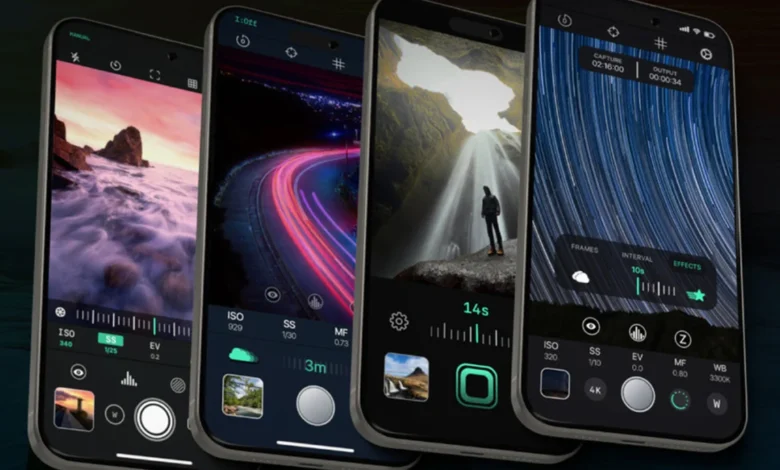
Reeflex has officially released the third major iteration of its Pro Camera application for the iPhone, introducing a comprehensive suite of professional-grade tools designed to bridge the gap between mobile photography and traditional digital single-lens reflex (DSLR) workflows. This significant update focuses on enhancing the technical capabilities of the iPhone’s camera system, specifically targeting advanced users who require precise control over exposure, focus, and capture speed. Version 3 brings a redesigned user interface, exposure bracketing, focus stacking, and an optimized burst mode, positioning the app as a formidable competitor in the professional mobile photography market.
The release of Pro Camera V3 comes at a time when smartphone hardware, particularly within the Apple ecosystem, has reached a level of sophistication that allows for complex computational photography. While the native iOS camera app prioritizes ease of use and automated processing, Reeflex has carved out a niche by offering manual overrides and specialized shooting modes that cater to the needs of landscape, macro, and action photographers.
Comprehensive Interface Redesign and User Experience Enhancements
At the core of the version 3 update is a completely overhauled user interface (UI) designed to streamline the photographic workflow. Reeflex has prioritized accessibility to critical data, ensuring that professional photographers can make split-second adjustments without navigating through cumbersome menus. One of the most notable additions is the updated histogram, which now allows users to toggle between luminance and RGB displays with a single tap. This level of granularity is essential for preventing channel clipping and ensuring accurate color representation in challenging lighting conditions.
The new UI also introduces intuitive gesture controls. A downward swipe from the top of the screen reveals a centralized control panel for secondary settings, including the camera flash, self-timer, and framing guides such as the rule of thirds or the golden ratio. For those who prefer manual control, the app now features a focus loupe. This digital magnification tool can be repositioned across the frame, allowing the photographer to verify the sharpness of their subject while manually adjusting the focal plane—a feature typically found on high-end mirrorless cameras.
Furthermore, Reeflex has simplified the selection process for file formats and resolutions. Users can quickly switch between ProRAW, RAW, HEIF, and JPEG, depending on their post-processing needs. The update also ensures full compatibility with the "virtual lenses" found on modern iPhone models, allowing for seamless transitions between the Ultra-Wide, Main, and Telephoto modules while maintaining consistent manual settings across all focal lengths.
Technical Analysis of Exposure Bracketing
Exposure bracketing is a cornerstone of professional landscape and architectural photography, and its inclusion in Pro Camera V3 marks a significant milestone for the app. When activated, the feature captures a sequence of three images in rapid succession: a base exposure, an underexposed frame (highlights), and an overexposed frame (shadows).
The technical flexibility offered by Reeflex allows users to set the bracket range independently for both the overexposed and underexposed shots, with increments ranging from 0.5 to 4.0 stops. This wide range is particularly useful for high-contrast scenes, such as a sunset or an interior shot with bright windows, where the dynamic range of a single mobile sensor exposure would typically result in lost detail.
By capturing these three distinct exposures, photographers can later utilize High Dynamic Range (HDR) techniques in post-production. While Reeflex has indicated that in-app HDR merging is a planned feature for a future update, current users must export the bracketed set to third-party software like Adobe Lightroom, Affinity Photo, or specialized HDR merging tools. The ability to capture these frames in a RAW format ensures that the maximum amount of sensor data is preserved for the merging process, resulting in a final image with significantly more detail and less noise than standard automated HDR modes.
Focus Stacking for Macro and Landscape Precision
Focus stacking is another advanced technique introduced in version 3, designed to overcome the physical limitations of small smartphone sensors and lenses. In macro photography, the depth of field is often extremely shallow, meaning only a tiny sliver of the subject is in focus. Focus stacking solves this by taking multiple images at different focal points and "stacking" them together to create a single image with an extended depth of field.
In Pro Camera V3, the process is highly automated but remains under the user’s control. The photographer sets a "near" focus point and a "far" focus point. The app then calculates the necessary increments and captures a sequence of images—ranging from a few frames to a dozen or more—while precisely shifting the focus between the two points.
This feature is not limited to macro work; it is also highly effective for deep-focus landscapes where the photographer wants both a foreground element and a distant mountain range to remain pin-sharp. As with exposure bracketing, the merging of these files currently requires external software. However, the precision with which Pro Camera V3 handles the focus "pull" ensures that the resulting frames are perfectly aligned for a clean composite. Reeflex emphasizes that for both bracketing and stacking, the use of a tripod is essential to maintain frame consistency.
Optimization of Burst Mode and Shutter Response
The third major pillar of the V3 update is the enhancement of the app’s speed and responsiveness. Mobile photography often suffers from shutter lag—the delay between pressing the button and the image being captured. Reeflex claims to have virtually eliminated this lag through underlying code optimizations, making the shooting experience feel more "natural" and similar to dedicated hardware.
The new high-speed burst mode allows for the capture of rapid action sequences. By holding down the shutter button, the app captures a continuous stream of images, providing a real-time count on the screen. Additionally, the "Burst On Tap" feature allows users to pre-set a specific number of frames—between 2 and 20—to be captured with a single click. This is particularly useful for capturing the perfect moment in sports or wildlife photography without the overhead of managing hundreds of burst photos.
Development Context and Market Position
The development of Reeflex Pro Camera V3 reflects a broader trend in the software industry where developers are pushing the boundaries of what is possible on the iOS platform. Historically, third-party camera apps were limited by the APIs (Application Programming Interfaces) provided by Apple. However, as Apple has opened more "Pro" features to developers, apps like Reeflex have been able to implement features that were once the exclusive domain of professional cameras.
Industry analysts suggest that the rise of apps like Reeflex is a response to the "computational black box" of the native iPhone camera. While Apple’s Smart HDR and Deep Fusion technologies produce excellent results for the average consumer, they often apply aggressive sharpening and noise reduction that professional photographers find undesirable. By providing a "clean" RAW output and manual tools like bracketing and stacking, Reeflex offers a workflow that prioritizes user intent over algorithmic interpretation.
Broader Impact and Implications for Mobile Photography
The introduction of these features has significant implications for the mobile photography industry. First, it further democratizes high-end photographic techniques. Tools that previously required expensive specialized gear or complex manual calculations are now accessible via a smartphone. This shift is likely to influence how professional photographers view the iPhone—not just as a backup device, but as a primary tool for specific types of creative work.
However, the update also highlights the current limitations of mobile platforms. The requirement for third-party software to merge bracketed and stacked images serves as a reminder that mobile processing power, while impressive, still faces challenges when handling high-resolution, multi-frame composites in real-time. Furthermore, the decision to remain an iOS-exclusive app excludes a significant portion of the global market, particularly professional users on the Android platform who utilize devices with large-format sensors.
The absence of video features in Pro Camera V3 is also a strategic choice. By focusing purely on still photography, Reeflex avoids the complexities of video bitrates, frame rates, and color grading, allowing them to refine the "stills" experience to a higher degree than general-purpose camera apps.
Pricing, Availability, and Future Roadmap
Reeflex Pro Camera V3 is currently available on the Apple App Store. The company has adopted a dual-pricing model to accommodate different user preferences. For those who prefer a low entry cost, a yearly subscription is available for $15 USD. For professionals who prefer to own their software outright, a lifetime access license is offered at $26. To encourage adoption, Reeflex includes a free trial period, allowing users to test the new interface and advanced shooting modes before committing to a purchase.
Looking ahead, the Reeflex development team has confirmed that their primary focus will be the integration of in-app merging for exposure brackets and focus stacks. This would represent a major leap forward in the app’s utility, potentially allowing photographers to complete their entire workflow—from capture to final composite—within a single mobile environment.
In summary, Reeflex Pro Camera V3 represents a sophisticated evolution of mobile photography software. By focusing on technical precision and professional-grade tools, Reeflex has provided iPhone users with a powerful alternative to the standard camera experience, reinforcing the smartphone’s role as a legitimate tool in the professional photographer’s kit. As mobile hardware continues to evolve, the success of version 3 suggests that the future of photography lies in the marriage of traditional optical principles and advanced computational software.