Samsung Galaxy Z Fold 8 vs. Google Pixel 10 Pro Fold: A Comprehensive Speculative Showdown of Next-Generation Foldables

The burgeoning market for foldable smartphones continues its rapid evolution, with Samsung’s anticipated Galaxy Z Fold 8 and Google’s established Pixel 10 Pro Fold poised to define the cutting edge of this premium segment. While the Galaxy Z Fold 8 remains largely shrouded in rumor and leaked renders, enough early details have emerged to paint a compelling picture of its potential strengths and weaknesses against Google’s refined foldable offering. This article delves into a speculative, yet fact-based, comparison, examining how these two technological marvels are expected to stack up across critical areas such as pricing, design, performance, camera capabilities, and the overarching user experience, providing valuable insights into what consumers can anticipate from the next generation of high-end foldables.
Pricing and Market Availability: A Strategic Battleground

Samsung has historically dominated the foldable market, setting trends and premium price points. The Galaxy Z Fold 8 is rumored to follow its predecessors with a summer launch, specifically a major Unpacked event anticipated in London on July 22, 2026. This potential shift in venue from Samsung’s traditional launchpads in South Korea or the United States signifies a strategic move to bolster its presence in key European markets. While official pricing remains speculative, previous generations suggest a starting price around $1,999 for the base 256GB model, mirroring the Galaxy Z Fold 7. However, with industry-wide trends pointing towards rising component and memory costs, an upward adjustment in price for the Z Fold 8 would not be entirely surprising, potentially pushing the entry point even higher. Such a move would reflect the increasing complexity of foldable manufacturing and the advanced technologies embedded within these devices.
In stark contrast, Google’s Pixel 10 Pro Fold, announced on August 20, 2025, and released on October 9, 2025, entered the market with a more competitive starting price of $1,799 for its 256GB variant. This aggressive pricing strategy, coupled with Google’s frequent promotions, has seen the effective price drop to as low as $1,499, making it a highly compelling alternative for consumers sensitive to cost. The Pixel 10 Pro Fold is also available in 512GB and 1TB configurations, offering users flexibility in storage options. Google’s approach seems to leverage its software prowess and AI integration as key differentiators, aiming to attract users who prioritize a seamless Android experience and robust computational photography over raw hardware specifications or brand legacy in the foldable space. The color palette for the Pixel 10 Pro Fold, featuring sophisticated Moonstone and Jade options, also aims to provide a distinct aesthetic appeal. The difference in launch timelines—Google’s device already on the market versus Samsung’s anticipated release—means the Pixel 10 Pro Fold benefits from established pricing and promotional cycles, which could influence early adoption decisions for prospective foldable buyers.
Design Evolution and Unrivaled Durability

The design philosophy guiding the next wave of foldables reveals divergent strategies from Samsung and Google. Samsung, after significant design refinements with the Galaxy Z Fold 7, appears to be adopting an "if it ain’t broke, don’t fix it" approach for the Z Fold 8, focusing on incremental internal upgrades rather than a radical aesthetic overhaul. Leaked CAD-based renders, a collaborative effort between Android Headlines and OnLeaks in March 2026, indicate a largely familiar exterior. Users can expect the signature triple-camera array on the rear, vertically aligned within a pill-shaped module, maintaining a clean back panel and refined squared edges. The cover display is rumored to be slightly wider, enhancing usability for quick tasks without unfolding, while the inner main display is expected to retain a squarer aspect ratio when unfurled, similar to the Galaxy Z Fold 7, optimizing for productivity and media consumption.
While the exact dimensions for the Galaxy Z Fold 8 are yet to be confirmed, reports suggest it might be marginally thicker than its predecessor. This potential increase in thickness, rather than being a drawback, could signal significant internal enhancements, possibly accommodating a larger battery or a more advanced hinge mechanism designed to minimize the display crease—a persistent challenge in foldable technology. Samsung’s journey to achieve a "zero-feel crease," as seen in rivals like the Oppo Find N6, would represent a substantial leap in user experience, addressing one of the most common criticisms of current foldables.
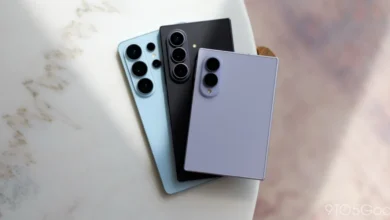
In contrast, the Pixel 10 Pro Fold adheres to the established design language of its predecessor, the Pixel 9 Pro Fold, characterized by its distinctive horizontal camera bar, a clean glass finish adorned with the iconic ‘G’ logo, and gently curved edges. Its cover display is notably wider, and the inner display, when unfolded, maintains a slightly wider-than-tall aspect ratio. Dimensionally, the Pixel 10 Pro Fold is thicker at approximately 10.8mm when folded and heavier at around 258g compared to the Galaxy Z Fold 7’s 8.9mm folded profile. While the Z Fold 8’s final dimensions are pending, it is expected to maintain its lead in overall thinness and potentially weight.

A critical differentiator lies in durability. The Pixel 10 Pro Fold sets a high bar with an IP68 dust and water resistance rating. This level of ingress protection is rare in the foldable segment, matching the resilience of traditional flagship smartphones and offering users enhanced peace of mind against environmental hazards. This stands in contrast to Samsung, which is expected to retain an IP48 rating for the Galaxy Z Fold 8. While IP48 offers protection against some dust and splashing water, it falls short of the comprehensive immersion protection provided by IP68, leaving Samsung with a potential disadvantage in ruggedness. Both devices are expected to incorporate robust materials like Armor Aluminum frames and advanced flexible display protection, but Google’s commitment to an IP68 rating showcases a strategic focus on comprehensive device longevity.
Displays: Innovation and Immersive Visuals
The quality and design of the flexible displays are paramount to the foldable experience, and both Samsung and Google are pushing boundaries in this area. The Galaxy Z Fold 8 is anticipated to maintain its expansive 8-inch inner display and a 6.5-inch cover display, both utilizing advanced LTPO AMOLED technology. The significant rumored upgrade this year is a "much less visible crease" on the inner display. This technological advancement, if realized, would be a major win for Samsung, addressing a long-standing point of contention for foldable users. Achieving a near-invisible crease often involves sophisticated hinge designs, such as waterdrop hinges, that allow the screen to fold into a teardrop shape internally, reducing stress on the panel and minimizing the visible crease. This would not only enhance the aesthetic appeal but also improve the tactile and visual experience of interacting with the large inner screen. Both displays are expected to support a dynamic 120Hz refresh rate, ensuring fluid scrolling and responsive interactions.

The Pixel 10 Pro Fold features a slightly more compact 6.4-inch LTPO OLED cover display and an equally impressive 8-inch LTPO OLED inner display. A standout feature of the Pixel 10 Pro Fold’s displays is their exceptional brightness, capable of reaching up to 3,000 nits of peak brightness. This high luminance significantly improves outdoor visibility and enhances HDR content consumption, offering a truly immersive viewing experience under various lighting conditions. While Samsung’s Z Fold 8 is also expected to offer excellent brightness, the Pixel’s 3,000-nit benchmark sets a high standard. Both devices leverage LTPO technology, allowing for adaptive refresh rates, which dynamically adjust from 1Hz to 120Hz based on content, optimizing power efficiency without compromising smoothness. The aspect ratios of both devices are optimized for different use cases: Samsung’s slightly taller inner display could favor multi-window productivity, while Google’s wider inner screen might offer a more traditional tablet-like experience for media.
Performance Powerhouses: Snapdragon vs. Tensor
At the heart of these next-generation foldables lie their respective processors, dictating raw power, efficiency, and AI capabilities. The Samsung Galaxy Z Fold 8 is expected to be powered by the formidable Qualcomm Snapdragon 8 Elite Gen 5 chipset. This flagship processor, likely a "for-Galaxy" variant, is anticipated to feature an optimized architecture with a focus on sustained performance, superior graphics rendering for demanding games, and enhanced power efficiency. Fabricated on an advanced process node (e.g., TSMC N3E), the Snapdragon 8 Elite Gen 5 is projected to deliver significant generational improvements in CPU, GPU, and neural processing unit (NPU) performance, solidifying Samsung’s reputation for offering top-tier hardware in its premium devices. This performance advantage is crucial for driving the complex multitasking, advanced photography features, and intensive applications that define the foldable experience.

Google’s Pixel 10 Pro Fold, conversely, relies on the proprietary Tensor G5 chip, which also powers the broader Pixel 10 lineup. The Tensor G5 marks a significant milestone for Google, being its first chipset manufactured by TSMC on a 3nm process. This strategic shift from previous manufacturing partners is expected to yield substantial gains in both performance and power efficiency over its predecessor, the Tensor G4. While the Tensor G5 is engineered for robust overall performance, its core strength lies in its highly optimized AI and machine learning capabilities. These specialized units are designed to accelerate Google’s extensive suite of AI features, including advanced computational photography, real-time language processing, and intelligent device management. Although the Tensor G5 may not surpass the Snapdragon 8 Elite Gen 5 in raw synthetic benchmarks for general-purpose computing, its tailored architecture for AI tasks ensures a uniquely intelligent and seamless user experience, particularly within Google’s ecosystem. The Pixel 10 Pro Fold also ships with a generous 16GB of RAM, offering superior multitasking headroom compared to the Z Fold 8’s expected 12GB, which could be a factor for power users.
Battery Life and Charging Ecosystems
Battery endurance remains a critical consideration for any smartphone, and even more so for power-hungry foldables. The Galaxy Z Fold 8 is reportedly set to receive a substantial battery upgrade, with its capacity increasing to 5,000mAh. This would represent the most significant jump in battery capacity for the Fold series since the Galaxy Z Fold 3 in 2021, directly addressing user demand for improved longevity. Accompanying this larger battery, Samsung is also expected to boost wired charging speeds to 45W, a welcome enhancement that should considerably reduce overall charging times and keep users powered throughout their day.

The Pixel 10 Pro Fold already ships with a robust 5,015mAh battery, positioning it as a strong contender in terms of raw capacity. While a direct comparison of real-world battery life will require testing the Z Fold 8, the Pixel’s established performance provides a solid benchmark. Where the Pixel 10 Pro Fold truly distinguishes itself is in its charging convenience. It features PixelSnap, Google’s implementation of the Qi2 wireless charging standard, complete with built-in magnets. This innovation allows the Pixel 10 Pro Fold to seamlessly integrate with a wide array of MagSafe-compatible accessories, enabling magnetic wireless charging without the need for a specialized case. This level of ecosystem integration and user convenience is something Samsung has notably omitted from devices like the Galaxy S26 Ultra and is not expected to change with the Galaxy Z Fold 8. While the Z Fold 8 may technically support Qi2, it will likely require a magnetic case for similar MagSafe compatibility, potentially limiting its out-of-the-box convenience compared to the Pixel.
Camera Capabilities: A Photographic Face-off
The camera systems on both devices are expected to deliver premium photographic experiences, albeit with differing philosophies. Samsung, after upgrading the main camera sensor on the Galaxy Z Fold 7 to a massive 200MP, is rumored to focus its attention on enhancing the auxiliary sensors for the Galaxy Z Fold 8. Leaks suggest a significant upgrade to the ultra-wide camera, jumping from 12MP to 15MP, promising improved detail and low-light performance for expansive shots. Furthermore, the telephoto lens is expected to see an upgrade from 10MP to 12MP, while retaining a 3x optical zoom. This targeted improvement to the ultra-wide and telephoto sensors, combined with the high-resolution main sensor, aims to provide a more versatile and capable camera system across various photographic scenarios. Samsung’s camera software, including its Pro modes and Space Zoom features, is likely to further leverage this hardware for exceptional image quality.

The Pixel 10 Pro Fold, drawing on Google’s renowned computational photography expertise, features a robust camera setup comprising a 48MP primary sensor, a 10.5MP ultra-wide lens, and a 10.8MP telephoto lens with an impressive 5x optical zoom. While the raw megapixel count on the main sensor might appear lower than Samsung’s 200MP, Google’s strength lies in its sophisticated software algorithms and AI-driven image processing. Features like Magic Eraser, Photo Unblur, Real Tone, and Best Take leverage the Tensor G5’s NPU to produce stunning, true-to-life images with exceptional dynamic range and color accuracy. The 5x optical zoom on the Pixel 10 Pro Fold provides a clear advantage for capturing distant subjects with clarity, potentially outperforming Samsung’s 3x optical zoom in this specific area. Both devices will likely feature high-quality front-facing cameras, with Samsung possibly exploring advancements in under-display camera technology for a more seamless inner display experience. A comprehensive, real-world camera comparison upon the Z Fold 8’s launch will be crucial to determine which device truly excels in diverse photographic conditions.
Software Experience and AI Integration: One UI vs. Pure Android
The software experience is a cornerstone of flagship smartphones, and the foldable form factor amplifies the importance of a well-optimized operating system. The Galaxy Z Fold 8 is expected to launch with One UI 9, based on Android 17. Samsung’s One UI is known for its extensive customization options, robust multitasking capabilities tailored for the large foldable screen (such as advanced multi-window features), and seamless integration with its DeX desktop experience. Furthermore, Samsung’s "Galaxy AI" features, which debuted on its S-series flagships, are expected to be deeply integrated into the Z Fold 8, offering capabilities like live translation, generative photo editing, and intelligent productivity tools that leverage the unique foldable form factor. The potential for S Pen integration (if rumored to be built-in or significantly enhanced) would further solidify its productivity credentials.

Google’s Pixel 10 Pro Fold runs on Android 16, offering a pure Android experience that is celebrated for its clean interface, fast updates, and direct access to the latest Android features. A significant advantage of the Pixel is Google’s commitment to seven years of OS upgrades and security updates, offering unparalleled longevity in the Android ecosystem. This long-term software support provides excellent value and future-proofing for users. The Pixel’s strength also lies in its deep integration of "Pixel AI" features, powered by the Tensor G5. These include context-aware intelligence, enhanced voice commands, and a suite of smart tools that proactively assist users throughout their day. For a foldable, Pixel’s AI could offer intelligent screen management, adaptive performance, and advanced privacy controls. The choice between One UI’s rich feature set and Google’s streamlined, AI-first approach will largely come down to user preference and ecosystem commitment.
Market Positioning and Future Outlook
The comparison between the rumored Samsung Galaxy Z Fold 8 and the Google Pixel 10 Pro Fold highlights a fascinating duality in the high-end foldable market. Samsung, with its anticipated refinements including a less visible crease, a more powerful Snapdragon 8 Elite Gen 5 chipset, and a larger 5,000mAh battery with faster charging, appears poised to deliver a highly polished and performance-driven experience. These upgrades, particularly in display aesthetics and core hardware, aim to solidify Samsung’s position as the leading innovator in foldable technology, catering to users who demand cutting-edge specifications and a comprehensive feature set within a premium ecosystem.

Conversely, the Pixel 10 Pro Fold presents a compelling alternative, emphasizing durability, a refined software experience, and the pervasive integration of Google’s AI. Its IP68 rating, a rarity in the foldable segment, offers superior environmental protection, while Google’s commitment to seven years of software updates ensures exceptional device longevity. The Tensor G5, optimized for AI, powers a suite of Pixel-exclusive intelligent features, and its competitive pricing, often sweetened by promotions, makes it a more accessible entry point into the premium foldable market. For users prioritizing a robust, AI-centric, and well-supported device that doesn’t break the bank, the Pixel 10 Pro Fold remains an incredibly strong contender.
Ultimately, the choice between these two advanced foldables will depend on individual priorities. Those seeking the absolute pinnacle of hardware performance, a highly customizable software experience, and a brand synonymous with foldable innovation may gravitate towards the Galaxy Z Fold 8. Meanwhile, users who value a more durable device, a pure Android experience with unparalleled AI integration, and long-term software support at a potentially lower price point will find the Pixel 10 Pro Fold exceptionally appealing. The ongoing competition between Samsung and Google in the foldable arena is a boon for consumers, driving rapid innovation, improving durability, and gradually making these transformative devices more refined and accessible. The official launch of the Galaxy Z Fold 8 will provide the definitive answers needed for a conclusive comparison, but the speculative landscape already points to an exciting future for foldable technology.