The Strategic Miscalculations of Andrew and Tristan Tate Amidst Ongoing Romanian Criminal Proceedings

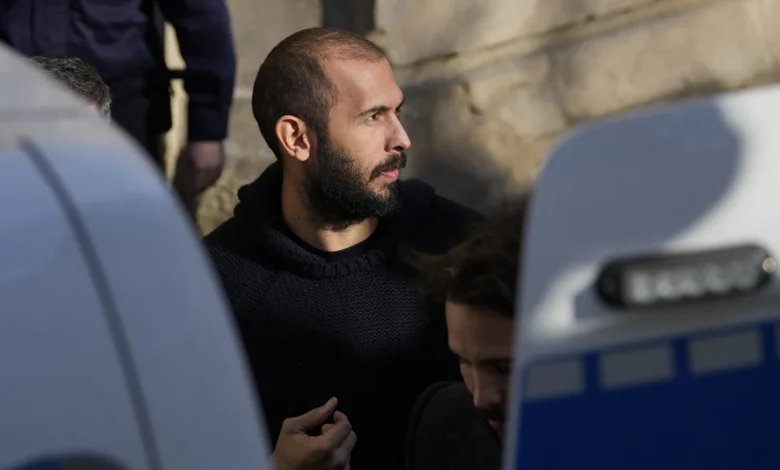
The transition of influencer Andrew Tate and his brother Tristan from the confines of a Bucharest detention center to house arrest in late March marked a significant, albeit complex, development in a high-stakes legal drama that has captured international attention. Arrested on December 29, 2022, on grave allegations including organized crime, human trafficking, and the formation of a criminal group, the siblings—alongside associates Georgiana Naghel and Luana Radu—have navigated a volatile path through the Romanian judicial system. While their shift to house arrest was framed by their legal team as a triumph, judicial documents and testimony from sources within the prosecutor’s office suggest that the brothers’ conduct while in custody has inadvertently strengthened the state’s resolve, potentially complicating their defense as they approach an anticipated trial in late April.
A Chronology of Legal Escalation
The trajectory of the Tate case began in earnest in the spring of 2022, when Romanian authorities launched a formal investigation into the brothers’ business operations and personal conduct. The situation reached a breaking point on December 29, 2022, when law enforcement raided the brothers’ properties in Bucharest, leading to their immediate detention.
Throughout the early months of 2023, the judicial process remained stagnant for the defense. On February 21, a presiding judge explicitly denied requests for release, citing "new reasons" for continued detention. The court’s summary highlighted a disturbing pattern of behavior: the Tates were allegedly preparing to evade the investigation by fleeing to Dubai, attempting to influence witnesses, and applying coercive pressure on victims. This ruling underscored the prosecution’s argument that the defendants posed a tangible risk to public order and the integrity of the judicial process.
However, the legal landscape shifted on March 31, when a panel of appeals court judges—new to the case—granted the move to house arrest. Despite this procedural victory, the move remains under heavy scrutiny. The brothers are currently restricted to a compound in a wealthy suburb north of Bucharest, under constant surveillance by Romanian authorities who remain wary of their potential to circumvent judicial oversight.
Allegations of Witness Intimidation and Obstruction
The prosecution’s case is bolstered by a series of wiretapped phone conversations and document seizures that paint a picture of a coordinated effort to undermine the investigation. Central to these allegations is the claim that Andrew Tate sought to orchestrate a flight to the United Arab Emirates, utilizing the pretext of seeking medical treatment for a lung condition. Prosecutors noted that because the UAE lacks an extradition treaty with Romania, such a move would have effectively granted the brothers immunity from the reach of European law.
While a representative for the Tates initially told the Daily Mail that Andrew was suffering from a suspected tumor, Andrew later clarified on social media that the anomaly was simply scarring from "an old battle." Romanian authorities dismissed these claims as tactical maneuvers to secure travel, a request that was subsequently denied.
Beyond travel plans, the allegations extend to the direct harassment of individuals involved in the case. Prosecutors have presented evidence suggesting that the Tates leveraged their massive social media following to exert pressure on alleged victims. Specifically, judges noted that the brothers encouraged their followers to target at least one witness, demanding she retract her testimony. Legal experts point out that these actions could have profound consequences. Mihai Mareș, a criminal defense lawyer and lecturer at the Alexandru Ioan Cuza University of Iași, noted that such behaviors create a "skepticism" within the judicial body that is difficult to reverse. "Any subsequent statements they may give will be viewed with a certain amount of caution," Mareș explained.
The Role of Alleged Accomplices and Database Breaches
A critical dimension of the case involves Luana Radu, a former police officer and an alleged accomplice. According to court files, Radu is suspected of having accessed classified police databases between April and December 2022. Prosecutors argue that this access provided the group with an unfair advantage, potentially allowing them to monitor the investigation’s progress. The judge overseeing the matter stated that it would be "impossible" for Radu to have breached these systems without assistance from external actors, suggesting a wider network of influence.
Furthermore, reports have emerged regarding unresolved complaints of violence and coercion dating back further than the current charges. Prosecutors suggest that these earlier incidents were suppressed or ignored due to the influence Radu allegedly wielded within local law enforcement circles. These historical complaints, now being revisited by authorities, add layers of gravity to the current proceedings.
Political Entanglements and Institutional Reactions
In a desperate bid to shift the public narrative, the Tates allegedly sought to solicit support from prominent Romanian right-wing political figures, specifically George Simion and Diana Șoșoacă. These figures, known for their vocal anti-Western stances and controversial views on public health and gender, were reportedly approached with promises of future rewards in exchange for public advocacy.
Retranslated wiretaps indicate that Andrew Tate directed his associates to convey to these politicians that they would be "rewarded for telling the truth" upon his release. However, the attempt appears to have failed, as both politicians declined to become involved in the defense of the brothers. This failed outreach is viewed by observers as a sign of desperation, further alienating the defendants from the mainstream judicial and political establishment.
Legal and Broader Implications
The legal team representing the Tates, led by Eugen Vidineac and assisted by US lawyer Tina Glandian, has consistently maintained that the prosecution’s case is flawed and that their clients are the victims of a biased system. They have emphasized that the brothers possess homes and family ties in Romania, ostensibly negating any flight risk. Regarding a cease-and-desist letter sent by a US law firm to a witness in Florida, the defense has distanced itself, claiming the letter was a standard legal action unrelated to the Romanian proceedings.
However, legal analysts argue that the cumulative effect of these actions—the cease-and-desist letters, the alleged database breaches, and the attempts to influence witnesses—creates a dangerous legal precedent for the defendants. "If the notification concerned a withdrawal of the criminal complaint, it could lead to a widening of the criminal investigation scope," Mareș noted. This indicates that the prosecution could potentially open new, separate investigations into "influencing statements," a crime that carries its own set of penalties.
Conclusion
The case of the Tate brothers is more than a celebrity legal battle; it is a test of the Romanian judicial system’s ability to withstand pressure from figures with significant international reach and digital influence. While the transition to house arrest provides a temporary reprieve for the brothers, the underlying evidence regarding obstruction and witness intimidation appears to have hardened the stance of the prosecutor’s office. As the trial approaches in late April, the Tates find themselves in a precarious position where their own efforts to control the narrative may have, ironically, ensured a more rigorous and skeptical judicial review of their actions. The coming months will determine whether the defense’s strategy of defiance and external mobilization will hold up against the weight of the state’s evidence.