The Era of Visual Deception: Navigating Truth in an Age of Ubiquitous AI Manipulation

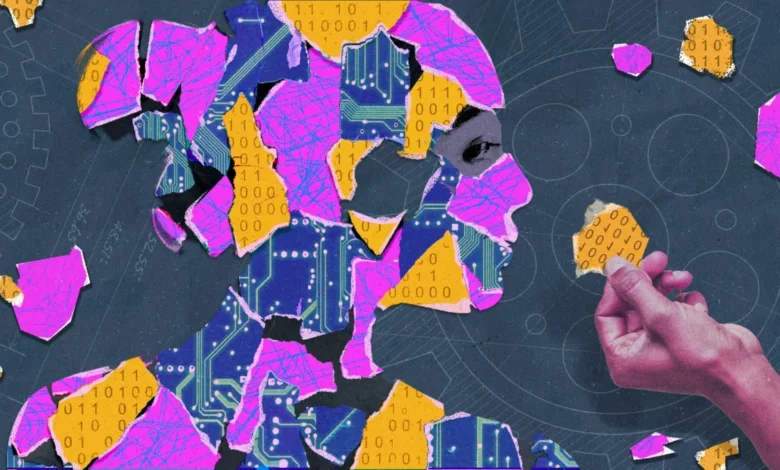
The digital landscape has undergone a seismic shift, transforming from a repository of documented reality into a minefield of synthetic imagery and sophisticated misinformation. For years, the public was taught to rely on the "visual Turing test"—a quick scan for telltale signs of artificial intelligence: warped fingers, nonsensical backgrounds, or the unsettling "uncanny valley" glaze in a subject’s eyes. Today, those hallmarks of AI-generated content have largely vanished, replaced by high-fidelity models that produce near-perfect photorealistic assets in seconds. As the barrier to creating convincing deepfakes continues to collapse, the traditional methods of verifying reality through visual inspection are becoming obsolete.
The reality of this transformation is stark. While genuine political moments—such as Mitch McConnell’s widely circulated hospital appearance—are frequently scrutinized, they are now routinely intermingled with hyper-realistic fabrications, such as the widely debunked image of activist Nekima Levy Armstrong, which was weaponized by political actors to misrepresent protesters as "far-left agitators." This trend is not limited to politics; high-profile figures, from Donald Trump to local municipal leaders, are finding their likenesses co-opted in viral hoaxes that carry the same weight as genuine news until proven otherwise.
A Chronology of Declining Trust
The trajectory of synthetic media has moved from crude digital overlays to industry-standard-grade manipulation. In the early 2020s, deepfakes were often identifiable by technical glitches—inconsistent lighting or unnatural movement. By 2024, the sophistication of generative adversarial networks (GANs) and diffusion models reached a point where manual inspection became statistically unreliable.
The year 2025 served as a tipping point for the digital economy. According to data from the Consumer Federation of America, the "scam economy" surged as malicious actors utilized AI-generated audio and video to facilitate fraud. Financial losses tied to AI-driven scams, including deepfake-enabled phishing and impersonation, topped $148 billion, a staggering 25 percent increase over the previous year. This financial impact underscores that the threat is no longer merely one of political misinformation; it is a direct challenge to the integrity of global financial and social systems.
The Failure of Visual Heuristics
Marijus Briedis, Chief Technology Officer at NordVPN, emphasizes that the strategy of training the public to look for "artifacts"—the visual glitches of AI—is a losing battle. "Those tells are mostly gone, and whatever replaces them will be gone in a year too," Briedis explains. "Any guide built on visual artifacts has a short shelf life because the generative models are being updated in real-time to patch those specific errors."
This cat-and-mouse game between detection software and generative models has created a climate where even automated tools are struggling. Sofia Rubinson, senior editor at the misinformation watchdog NewsGuard, notes that even the tools we once trusted to verify information are beginning to falter. "Fact-checkers used to depend on traditional search platforms like Google to help research the origins of photos and videos," Rubinson observes. "But we have found that the AI-powered Google Search often misattributes imagery, sometimes reinforcing the very hoaxes it is meant to debunk by echoing the claims of misinformers."
Verification Strategies for a Post-Truth Era
Given the limitations of visual analysis, cybersecurity experts are shifting their focus from the content itself to the provenance of the information. When a suspicious video or image surfaces, the most effective defense is a "source-first" approach.
- Contextual Triangulation: If a video features a political figure, search for the original full-length event. Most deepfakes rely on "contextual hijacking," where a snippet of a real speech is edited or a completely synthetic video is framed as part of a real event. Finding the original, raw footage from a reputable, primary source remains the gold standard for verification.
- Institutional Cross-Referencing: If an event is claimed to be breaking news, it should be reflected across multiple, independent, and reputable news outlets. A "viral" event that appears on social media but is absent from major news wire services or reputable local reporting is a significant red flag.
- Logical Plausibility: Experts urge users to employ basic logical deduction. If a post portrays a public figure behaving in a way that is wildly inconsistent with their established public record, the probability of it being a fabrication increases. While the "truth is stranger than fiction" adage still holds, the sheer volume of inflammatory social media content is increasingly manufactured to elicit a reaction.
- Emotional Regulation: Roei Sherman, senior director of research at Mitiga, warns that "ragebaiting" is a core component of modern digital manipulation. If a post triggers a visceral, immediate emotional response—such as intense anger or urgency—it is often designed to bypass the user’s critical thinking. Taking a moment to pause before sharing is the most effective manual filter against the spread of misinformation.
The Role of Regulatory and Technological Oversight
As federal legislative bodies in the United States and abroad struggle to keep pace with the velocity of AI development, the responsibility for verification has fallen on individual users and private organizations. Several initiatives have emerged to fill this void. NewsGuard, for example, has launched an AI False Claims Monitor, which tracks the proliferation of synthetic misinformation. Similarly, McAfee has expanded its AI news blog to alert users to the most common types of AI-driven financial scams.
However, industry experts agree that no single "AI detector" will ever be 100 percent effective. Detection software, such as those provided by firms like AI or Not, serves as a diagnostic tool rather than a definitive judge. They are most useful as a secondary check—when a user feels that something "looks off," the software provides the validation needed to justify further investigation.
Implications for the Digital Future
The shift toward a "zero-trust" model for digital media has profound implications for how we interact with technology. As we move forward, the focus is shifting toward content provenance—digital watermarking and cryptographic signatures that track the history of a file from creation to distribution. While these technologies are in their infancy, they represent the next phase of the battle against synthetic media.
Until such systems become universal, the burden of truth remains with the individual. The ability to distinguish between reality and synthesis is becoming a core digital literacy skill, as essential as reading or writing. We are entering an era where the default assumption for any highly emotional, controversial, or "perfect" visual content must be one of healthy skepticism.
The loss of visual certainty does not mean we must succumb to total cynicism. Rather, it requires a more deliberate engagement with the information ecosystem. By verifying sources, maintaining emotional awareness, and cross-referencing claims across diverse platforms, society can mitigate the impact of the rising tide of deepfakes. As Briedis notes, the tools for verification that require no analysis of pixels or waveforms—logic, context, and institutional integrity—remain the most resilient. In an age where everything can be faked, the most valuable asset is not a detection algorithm, but the human capacity to pause, investigate, and think critically before engaging.