The Fortnite Pirate Token Phenomenon: Inside the Epic Games Treasure Hunters Event and Its Ultra-Rare In-Game Reward

The gaming community has witnessed numerous viral digital items over the years, but few have captured the collective obsession of millions quite like the "Pirate Shop Access" token introduced in Epic Games’ flagship battle royale title, Fortnite. Officially designated as Pirate Shop Access but universally recognized by players as the Pirate Token, Pirate Coin, or Pirate Shop Token, this digital collectible debuted in early November 2026 alongside the game’s highly anticipated "Treasure Hunters" mini-season. Tied directly to a major crossover event featuring the globally renowned anime and manga franchise One Piece, the token quickly transcended normal gameplay mechanics to become a massive social media phenomenon, driven by its extraordinary rarity, lucrative in-game utility, and the sheer dedication of a player base willing to endure astronomical odds to secure it.
The Genesis of the Treasure Hunters Event and the One Piece Crossover
The introduction of the Pirate Token on November 1st, 2026, marked a strategic collaboration between Epic Games and the creators of One Piece. As part of the Treasure Hunters mini-season, the crossover aimed to infuse Fortnite’s dynamic island environment with nautical themes, exploration incentives, and iconic characters from the long-running Japanese series.
Anticipation for the update began building days prior to its official launch. On October 27th, 2026, the official Fortnite YouTube channel released a promotional trailer detailing the upcoming seasonal content. The preview showcased various cosmetic additions, map changes, and gameplay elements, but the focal point of the announcement was the introduction of the ultra-rare Pirate Coin. Within ten days of its publication, the trailer amassed approximately 1.5 million views, 39,000 likes, and 2,800 comments, signaling intense consumer interest and setting the stage for the frenzy that would follow its release.
Mechanics and Utility: Why the Pirate Token Sparked a Gold Rush
To understand the intense community reaction surrounding the Pirate Token, one must examine its functional value within Fortnite’s economic ecosystem. When found, the item grants the player two separate 14-day periods of unrestricted access to the game’s Item Shop. During these windows, recipients can claim the vast majority of cosmetic items—including character skins, emotes, harvest tools (pickaxes), and gliders—without spending V-Bucks, the game’s premium currency. Any items claimed during this promotional access remain permanently tied to the player’s account. However, certain restrictions apply: real-money bundles, player-to-player gifts, and Battle Pass tier rewards are excluded from the promotion.
The immense financial value of free cosmetic access naturally drove player demand, but the core driver of the phenomenon was the item’s mathematically punishing drop rate. Initially shrouded in community speculation, Epic Games later clarified the statistical reality of the hunt: players faced a staggering 1-in-137,500 chance of uncovering a Pirate Token simply by opening standard loot chests during Battle Royale or Zero Build matches. Early community estimates had previously placed the rarity even lower, at roughly 1-in-700,000. This near-impossible probability transformed standard match participation into a grueling lottery, fueling a widespread digital treasure hunt reminiscent of traditional maritime folklore.
Chronology of the Social Media Explosion
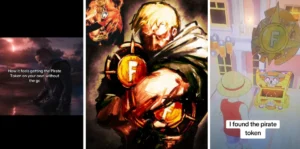
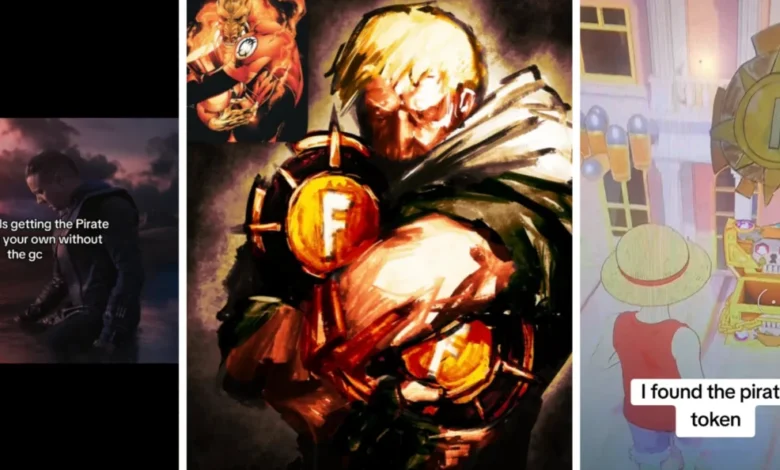
As millions of players logged on following the November 1st launch, the hunt for the Pirate Coin rapidly migrated from Fortnite servers to major social media platforms, most notably TikTok. The community’s collective pursuit evolved from hopeful speculation into a mixture of viral triumph, fatigue, and self-deprecating humor.
By November 2nd, the first wave of viral content emerged. TikTok user @ebihazul published a reaction video capturing the emotional high of the hunt, captioned "how that pirate token got me feeling like." The post resonated deeply with the player base, accumulating over 1.3 million views and 228,600 likes within a single week.
As the days progressed, the tone of user-generated content diversified. On November 4th, user @sahhyameiii shared a satirical clip falsely claiming to have discovered the token, using the post to playfully taunt competing players still combing the island for the elusive drop. The video matched the previous milestone, pulling in over 1.3 million views and 252,600 likes in five days.
By the end of the first week, the physical and mental toll of the grind became a central comedic theme. On November 7th, user @tw.amnishi.legend posted a video expressing sheer exhaustion after a continuous 24-hour search session. Captioning the clip, "I HAVEN’T SLEPT FOR 24 HOURS WHERE IS MY TOKEN?", the creator struck a nerve with dedicated gamers, driving the post to 4.9 million views and 1.1 million likes in just 48 hours.
Simultaneously, the community adopted a resilient, almost militant attitude toward the low drop rates. On the same day, user @zqusk uploaded a motivational edit under the caption "We will succeed," galvanizing fellow hunters. The video garnered over 3 million views and 558,000 likes in two days. The following day, November 9th, user @denile_river compiled a retrospective highlight reel of various player reactions, capturing the chaotic energy of the ongoing hunt and securing over 659,100 views in under 24 hours.
Fact-Based Analysis of Economic and Cultural Implications
The emergence of the Pirate Token highlights a sophisticated evolution in modern live-service game design and marketing. By deliberately engineering an item with an infinitesimal drop rate, Epic Games achieved several strategic objectives simultaneously.
From an engagement standpoint, the mechanic successfully drove daily active user metrics. Millions of players who might have otherwise taken a seasonal break remained logged into standard and Zero Build matches, opening countless chests in pursuit of the ultimate digital prize. This heightened engagement naturally increased the visibility of the concurrent One Piece crossover content, maximizing the return on investment for the intellectual property partnership.
Furthermore, the decision to leverage user-generated content platforms like TikTok organic marketing proved exceptionally effective. Rather than relying solely on traditional advertising, Epic Games allowed the community’s emotional responses—ranging from triumphant elation to sleep-deprived despair—to serve as the primary marketing engine for the mini-season. The organic spread of memes, reaction videos, and countdowns generated millions of impressions globally at virtually no additional promotional cost.
However, the phenomenon also underscores ongoing discussions regarding player psychology in modern gaming. The integration of high-value rewards tied to extremely low probabilities mirrors historical mechanics associated with loot boxes and digital gambling. While the Pirate Token itself required no financial purchase to acquire—being found purely through standard gameplay mechanics—the psychological drive to secure a high-value, ultra-rare status symbol mirrored the compulsive behaviors often studied in digital economics.
Conclusion
The Fortnite Pirate Token stands as one of the most successful viral in-game events of late 2026. By masterfully blending the cultural weight of the One Piece franchise with the mathematical allure of an ultra-rare drop, Epic Games transformed a simple item shop access pass into a cultural touchstone across social media. As the Treasure Hunters mini-season continues, the digital footprint left by millions of chest-opening attempts, viral TikTok edits, and sleep-deprived marathons ensures that the Pirate Coin will be remembered as a masterclass in modern digital engagement and community-driven gaming phenomena.
Related posts: