The Legal Perils of Andrew and Tristan Tate: A Comprehensive Analysis of Their Ongoing Romanian Criminal Case

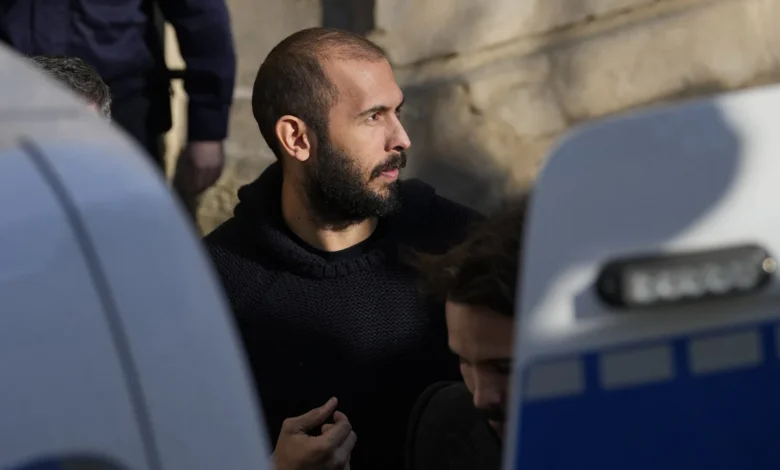
In late March, the high-profile detention of influencer Andrew Tate and his brother, Tristan, reached a pivotal juncture when a Romanian court granted their transition from incarceration to house arrest. The brothers, along with two alleged accomplices, Georgiana Naghel and Luana Radu, had been held in a Bucharest detention center since December 29, 2022, facing serious allegations of organized crime, human trafficking, and the exploitation of women. While the shift to house arrest was hailed by the defendants as a legal victory, an examination of court documents, wiretaps, and statements from legal experts suggests that the brothers’ conduct during their time in custody may have significantly weakened their defense and invited further judicial scrutiny.
Chronology of the Investigation and Detention
The legal saga surrounding the Tate brothers began in earnest in the spring of 2022, when Romanian authorities intensified their investigation into allegations of human trafficking. The case centered on the claim that the suspects operated an organized criminal group that recruited victims under the guise of romantic relationships—a technique often referred to as the "loverboy method."
- April 2022: Romanian authorities initiate formal investigations into the activities of the Tate brothers and their associates.
- December 29, 2022: Following a series of raids on properties associated with the brothers, Andrew and Tristan Tate, along with Georgiana Naghel and Luana Radu, are arrested and remanded into custody by the Bucharest Tribunal.
- February 2023: Prosecutors successfully argue for the extension of the detention period, citing a high risk of the defendants fleeing the country and the potential for tampering with evidence.
- March 31, 2023: An appeals court in Bucharest overturns the lower court’s decision to keep the group in jail, ordering their transfer to house arrest.
- Late April 2023: Anticipated commencement of the formal trial proceedings.
Allegations of Obstruction and Witness Intimidation
The primary concern for the Romanian judiciary, as outlined in court filings obtained through freedom of information requests, is the pattern of behavior exhibited by the defendants while in custody. Prosecutors allege that the brothers did not merely focus on mounting a legal defense but actively sought to subvert the judicial process.
Among the most damaging allegations is the claim that Andrew Tate devised a concrete plan to flee to Dubai. Prosecutors point to wiretapped jailhouse conversations in which Andrew explored the possibility of obtaining medical clearance to travel abroad. Because the United Arab Emirates does not maintain an extradition treaty with Romania, such a move would have effectively rendered the defendants untouchable by local law enforcement. While a spokesperson for the Tates suggested the context of these conversations was misrepresented—arguing that travel was only intended if legally permitted—the authorities remain unconvinced, noting that the "medical emergency" cited (a dark spot on the lung) was later downgraded by Andrew himself from a potential tumor to "scarring from an old battle."
Furthermore, the prosecution has presented evidence suggesting that the Tates orchestrated a campaign to pressure witnesses into retracting their statements. This allegedly involved both the use of their significant social media influence to encourage followers to target victims and the deployment of formal legal threats. In December, a U.S.-based law firm sent cease-and-desist letters to a key witness in Florida, a move Romanian authorities have categorized as an act of intimidation rather than standard legal procedure.
The Role of Luana Radu and Classified Data Access
A particularly concerning element of the prosecution’s case involves Luana Radu, a former police officer and alleged accomplice. Court documents allege that between April and December 2022, Radu gained unauthorized access to sensitive police databases. Judicial officials noted in filings that such access would have been technically impossible without the assistance of external parties, raising broader questions about the potential infiltration of law enforcement structures.
The implications for the defense are severe. Criminal defense lawyer Mihai Mareș, a lecturer at the Alexandru Ioan Cuza University of Iași, has observed that the "irritation" felt by the judiciary is palpable in the court records. Mareș warns that such behavior creates a "credibility deficit," ensuring that any future statements or motions submitted by the defendants will be viewed with profound skepticism by the bench.
Political Outreach and Public Perception
In a bid to control the narrative, prosecutors allege that the Tates attempted to leverage political figures to their advantage. Specifically, they purportedly instructed their team to approach right-wing Romanian politicians George Simion and Diana Șoșoacă. Both figures are known for their inflammatory rhetoric regarding gender and Western institutions, and their alignment with the brothers would have been a potent tool in painting the prosecution as a politically motivated "witch hunt."
However, this strategy appears to have backfired. Reports indicate that when approached, both politicians declined to intervene or offer public support for the Tates. This failed outreach underscores the isolation of the brothers within the Romanian political landscape, where even nationalist figures have sought to distance themselves from the criminal proceedings.
Data-Driven Analysis of Legal Risks
The legal risks now facing the Tate brothers extend far beyond the initial charges of human trafficking. Experts note that by attempting to influence witnesses and obstruct the investigation, the suspects may have triggered new, distinct criminal charges. In the Romanian penal code, the act of influencing statements or coercing a witness carries significant sentencing weight.
If the prosecution succeeds in proving that the Tates directed their followers to harass victims online, it could satisfy the legal criteria for "incitement to harassment," potentially increasing the duration of their eventual sentence. Moreover, the sensitivity of the victims in this case means that every new attempt at intimidation is heavily scrutinized by the presiding judges, who are tasked with maintaining public order and protecting the integrity of the witness protection program.
Broader Impact and Implications
The case of the Tate brothers has become a litmus test for the Romanian justice system’s ability to handle high-profile, influential defendants. The transition to house arrest has been met with both relief from the defense team and skepticism from the public, who remain concerned about whether the brothers are being granted preferential treatment.
From a sociological perspective, the case highlights the intersection of "influencer culture" and criminal law. The brothers’ reliance on an online army to conduct "crowdsourced intimidation" presents a novel challenge for investigators. When defendants use their digital reach to threaten the judicial process, it complicates the definition of what constitutes "tampering."
As the trial approaches, the focus will likely shift to the evidentiary strength of the prosecution’s claims regarding the victims. The unresolved complaints of violence and coercion that predated the current case suggest a long-standing pattern of behavior that prosecutors intend to leverage. If the court finds that these incidents are part of an ongoing criminal enterprise, the brothers could face decades in prison.
Ultimately, the brothers’ decision to engage in "games" with the judicial system—as described by a source in the prosecutor’s office—appears to have been a strategic miscalculation. By attempting to outmaneuver the court, they have arguably provided the state with more ammunition to ensure a conviction. For the legal team representing the Tates, the primary challenge is no longer just defending against the original charges of trafficking, but navigating the fallout of an aggressive, and seemingly counter-productive, defense strategy that has left the court system wary and the judges deeply unreceptive to further procedural maneuvering. The upcoming trial will not only determine the guilt or innocence of the defendants but will also serve as a precedent for how Romanian courts deal with modern, digitally-facilitated obstruction of justice.