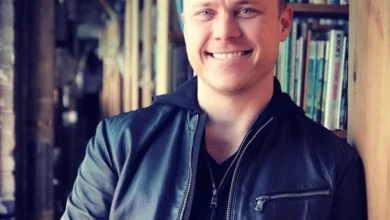
The Digital Watchdog: How Kat Abu Became the Unofficial Face of Fox News Deconstruction


The abrupt departure of Tucker Carlson from Fox News in April 2023 marked a seismic shift in the American media landscape, signaling the end of an era for the network’s highest-rated primetime program. For Katherine Abughazaleh, a senior video producer at the non-profit media watchdog Media Matters for America, the announcement was not merely a professional milestone but a validation of years spent meticulously dissecting the rhetoric of one of the country’s most polarizing figures. Known to her 130,000-plus TikTok followers as "Kat Abu," Abughazaleh has emerged as a prominent voice in the digital effort to monitor and contextualize conservative misinformation, operating at the intersection of traditional media criticism and modern social media activism.
The Professional Lifecycle of Media Monitoring
Abughazaleh’s role at Media Matters requires a daily deep dive into the primetime output of Fox News. The organization, which identifies as a progressive research center, focuses on documenting and analyzing right-wing media narratives. For Abughazaleh, the work is both systematic and demanding; she manages the intake of hours of cable news footage, identifies notable clips, and prepares transcripts for internal analysis.
While her formal responsibilities involve internal tracking and public-facing reports, her personal social media presence has functioned as an informal, secondary layer of accountability. By utilizing the very platforms where cable news clips often go viral—TikTok, Twitter, and YouTube—Abughazaleh has bypassed the traditional gatekeepers of media criticism to reach a younger, digital-native demographic. Her content frequently centers on highlighting contradictions, factual inaccuracies, and inflammatory language used by figures like Carlson, effectively bringing the "watchdog" approach to a generation that rarely tunes into cable television.
A Chronology of the Carlson Departure
The timeline leading to the ousting of Tucker Carlson was marked by escalating tensions, both legal and internal. The catalyst, according to many media analysts, was the $787.5 million settlement reached between Fox News and Dominion Voting Systems over defamation claims related to the 2020 presidential election. The discovery phase of that lawsuit revealed private communications from Carlson, in which he criticized then-President Donald Trump in stark terms—referring to him as a "demonic force"—while maintaining a supportive facade on his program.
These revelations created a significant cognitive dissonance for the network’s core viewership. Following the settlement on April 18, 2023, pressure mounted on the network to distance itself from the legal and reputational baggage associated with its top-rated host. On April 24, 2023, the network abruptly announced that it had "agreed to part ways" with Carlson. The move sent shockwaves through the conservative media ecosystem, leaving a void in the 8 p.m. timeslot that the network has struggled to fill with the same level of cultural resonance.
The Mechanics of Digital Accountability
Abughazaleh’s approach to content creation is notable for its DIY aesthetic and informal tone. While she possesses a background in international security and journalism from George Washington University, her viral videos often rely on a "reaction-style" format that bridges the gap between professional analysis and casual commentary.
This method has attracted significant attention, both positive and negative. Supporters appreciate the accessibility of her work, noting that she provides a service by exposing elderly or less media-literate family members to alternative viewpoints through the clips she curates. Conversely, her work has made her a lightning rod for the very audiences she critiques. She frequently deals with harassment, including coordinated campaigns by conservative commentators who attempt to discredit her by tagging her employer in response to her posts.
Analyzing the Impact of Media Watchdogs
The role of groups like Media Matters has become increasingly contested in the current political climate. Critics argue that such organizations focus disproportionately on conservative outlets, acting as partisan entities rather than neutral media observers. Supporters, however, contend that in an era of hyper-partisan media, the role of identifying and correcting misinformation—specifically on high-reach platforms like Fox News—is a vital public service.
The data surrounding Fox News viewership suggests a complex relationship with its audience. Even as individual hosts come and go, the network has maintained a formidable grip on its core demographic. Abughazaleh’s own analysis suggests that the power of the 8 p.m. timeslot is institutional rather than personal. She points to the precedent of Bill O’Reilly, who was similarly removed from the network in 2017 after a period of immense influence, as evidence that the network, rather than the personality, dictates the influence of the programming.
Challenges of Digital Advocacy: Harassment and Security
The rise of public-facing media critics has coincided with an increase in digital harassment, particularly directed at women. Abughazaleh has documented a consistent pattern of abuse that includes misogynistic vitriol, threats of violence, and attempts to invade her private life. The nature of these attacks—often focusing on her appearance, gender, and personal identity—highlights the hostile environment that many digital activists navigate.
Media Matters has taken steps to ensure the safety of its staff, recognizing that the online content produced by its employees can lead to real-world security concerns. Publicist Laura Keiter and the organization’s management maintain strict protocols regarding the public dissemination of staff location data and personal details. For Abughazaleh, the decision to continue her work despite the harassment is rooted in a belief that the public’s need for media literacy outweighs the personal costs. She has adopted a policy of "leaning in" to the friction, using her platform to demonstrate the reality of the abuse she receives, which she believes serves as a visual aid for the toxic nature of the discourse she covers.
Broader Implications for the Future of Media
The departure of Tucker Carlson from the traditional broadcast format to an independent venture on X (formerly Twitter) represents a new phase in media fragmentation. As major networks grapple with the shifting habits of viewers who are increasingly turning to independent content creators, the role of traditional "watchdogs" is also evolving.
Abughazaleh’s work serves as a case study in how individuals can influence public discourse by leveraging the very algorithms that drive the media industry. Her ability to translate complex, hours-long segments into bite-sized, digestible content highlights a significant shift in how information is consumed and debated. As the landscape continues to change, the efficacy of this "watchdogging" will likely be measured by the ability of such creators to reach audiences outside of their existing ideological bubbles.
Ultimately, whether the goal is to correct the record or to entertain an audience, the digital labor performed by producers like Abughazaleh remains a central component of modern political engagement. While the specific targets of her critique may shift as the media environment continues to fragment, the core mission—to expose and analyze the mechanisms of mass communication—appears to be a permanent fixture in the digital age. As she moves forward in her career, the broader impact of her efforts will likely continue to be a subject of interest for those monitoring the health of the American media ecosystem.