The Rapid Proliferation of AI-Generated Imagery Challenges the Integrity of Digital Information Ecosystems

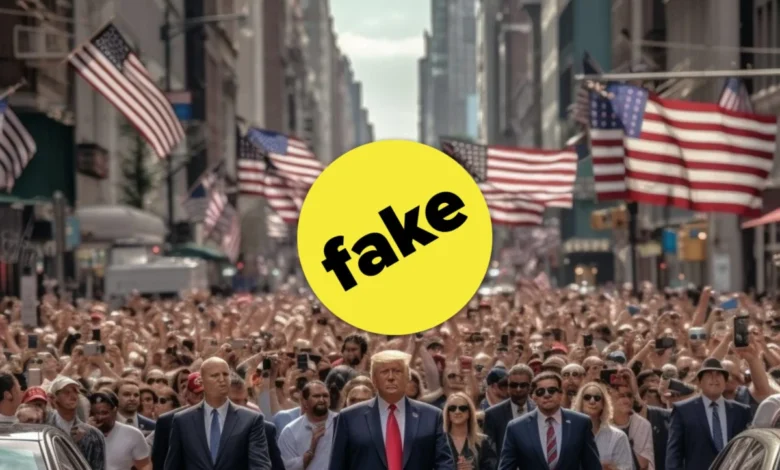
The convergence of advanced generative artificial intelligence and social media has ushered in an era where the boundary between reality and synthetic content is increasingly porous. As sophisticated tools like Midjourney, DALL-E 3, and Stable Diffusion become widely accessible, the ability of the average user to discern authentic photography from computer-generated fabrications has diminished significantly. This shift has prompted a surge in the development of detection software, yet experts warn that technology alone cannot serve as a sufficient safeguard against the potential for large-scale misinformation and the erosion of institutional credibility.
The Technological Turning Point
The current crisis of authenticity traces back to the rapid acceleration of latent diffusion models. While early iterations of generative AI produced discernible artifacts—blurry textures, nonsensical backgrounds, or the infamous "six-finger" anatomical errors—the latest models have achieved a level of photorealism that frequently bypasses human visual scrutiny.
Andrey Doronichev, CEO and cofounder of Optic.xyz, a platform specifically engineered to identify synthetic media, notes that the implications of this advancement extend far beyond simple aesthetic concerns. "It has become increasingly challenging for the average human eye to distinguish between AI-generated and real photos," Doronichev stated. "This has the potential to manipulate public opinion, undermine the credibility of news sources, and ultimately threaten the democratic process by promoting disinformation."
The emergence of tools like Optic.xyz, Hive Moderation, and various academic research projects reflects a reactive industry effort to keep pace with the generative AI boom. These tools typically function by analyzing the latent patterns or "noise" left behind by specific AI training architectures. However, as quickly as these detectors improve, developers of generative models often update their software to mask these signatures, creating a persistent "cat-and-mouse" game between synthetic media creators and forensic analysts.
Chronology of the Synthetic Media Crisis
The rise of AI-generated misinformation did not happen in a vacuum. The timeline of this phenomenon is closely linked to the public release of accessible text-to-image generators:
- Mid-2022: The public release of DALL-E 2 by OpenAI marks the beginning of the "democratization" of AI art, moving the technology from academic laboratories to the general public.
- Early 2023: The viral spread of hyper-realistic AI images—ranging from the Pope in a puffer jacket to staged depictions of political events—highlights the immediate danger of synthetic media in news cycles.
- Mid-2023: Major platforms, including Twitter (now X) and Meta, begin struggling with the enforcement of manipulated media policies as the volume of AI-generated content grows exponentially.
- Late 2023 to Present: The integration of generative AI into social media feeds and search engines becomes standard, leading to a climate where verified information is increasingly difficult to isolate from synthetic noise.
The Enforcement Gap in Social Media Moderation
The responsibility for mitigating the impact of AI-generated disinformation largely falls on social media platforms, yet current enforcement mechanisms are widely regarded as inconsistent. While platforms like X (formerly Twitter), Meta, and TikTok maintain policies against "manipulated media" intended to deceive, the technical capacity to enforce these rules is hampered by the sheer scale of daily uploads.
Kayla Gogarty, deputy research director at Media Matters for America, emphasizes that the platform architecture itself plays a significant role in the problem. "As there has been a recent rise of AI-generated media, it has become clear that platforms are unprepared for this moment in which fake images and misinformation could lead to real-world harm," Gogarty noted.
The situation is further complicated by shifting governance models within social media giants. The restructuring of content moderation teams and the move toward subscription-based verification systems, such as Twitter’s "Blue Check" policy, have made it difficult for users to rely on visual markers of credibility. When a paid checkmark can mimic the appearance of a verified news outlet, the risk of a user accepting a synthetic image as fact increases exponentially.
Supporting Data and Forensic Analysis
While detection tools are not foolproof, they remain a critical layer in the defense against misinformation. Forensic experts often look for specific "tells" that signal a computer-generated image:
- Anatomical Anomalies: Despite improvements, AI often struggles with the complex geometry of human limbs. Fingers, teeth, and eyes remain common areas where the model’s lack of a physical reference point results in "glitches."
- Inconsistent Lighting and Shadows: Generative models often struggle to maintain light consistency across an entire frame. An image might show a subject with light coming from two different directions, or shadows that do not align with the light source.
- Background Texture: AI-generated images frequently feature "smoothing" artifacts in the background or repetitive patterns in complex environments that do not appear in the organic randomness of a real photograph.
Despite these markers, reliance on manual inspection is unsustainable given the volume of content. Consequently, the reliance on third-party forensic software, such as those provided by Optic.xyz or similar AI-detection services, is likely to become a standard requirement for newsrooms and investigative journalists.
Implications for the Democratic Process
The broader impact of AI-generated media is the potential degradation of the "shared reality" necessary for democratic discourse. When the electorate can no longer agree on the visual evidence of events, the foundation for policy debate, judicial processes, and electoral integrity is weakened.
Research from the Brookings Institution and the Stanford Internet Observatory suggests that the "liar’s dividend"—a phenomenon where bad actors can dismiss genuine, incriminating evidence as "AI-generated"—is as dangerous as the fake images themselves. This skepticism allows individuals to evade accountability by casting doubt on the veracity of real media.
The Path Forward
Addressing the challenge of synthetic media requires a multi-faceted approach. It is not sufficient to rely on singular detection tools, as these are inherently reactive. Instead, a robust response must include:
- Digital Provenance: The implementation of C2PA (Coalition for Content Provenance and Authenticity) standards, which use cryptographic signatures to track the origin and editing history of digital files.
- Media Literacy: Educating the public on how to verify sources and cross-reference imagery with established news organizations.
- Policy and Regulation: Establishing clear legal frameworks that hold platforms accountable for the unchecked spread of demonstrably harmful synthetic content while protecting the legitimate use of AI in creative expression.
Ultimately, the best defense against the wave of synthetic media remains a reliance on established, reputable news outlets that adhere to strict editorial standards. As the internet becomes increasingly saturated with AI-generated content, the value of verified, human-vetted information will likely become the most important currency in the digital landscape. Until technological and regulatory solutions catch up to the pace of generative AI, the responsibility rests with the end-user to exercise critical judgment and to treat unverified visual content with the highest degree of caution.
The rapid adoption of these technologies suggests that the "synthetic era" is not a temporary trend, but a fundamental shift in how digital information is created and consumed. Navigating this new reality will require a sustained commitment to skepticism, verification, and the preservation of journalistic integrity.
Related posts: