The Legal Peril of Andrew Tate and the Escalating Strategy of Witness Intimidation and Evasion in Romania

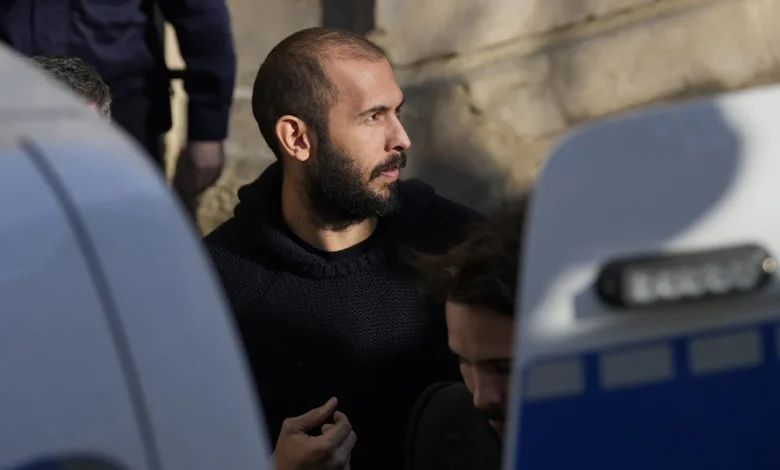
In the wake of their transition from a high-security detention center to house arrest in late March, Andrew and Tristan Tate find themselves at the center of a deepening legal quagmire that transcends their original charges of organized crime and human trafficking. While the move to a private compound in a northern Bucharest suburb was widely publicized as a significant legal victory for the brothers and their two alleged accomplices, Georgiana Naghel and Luana Radu, judicial records and testimony from legal experts suggest that the defendants’ conduct throughout their detention has severely compromised their position. Romanian prosecutors, frustrated by a series of alleged attempts to obstruct justice, are now signaling that the brothers may face a secondary wave of criminal investigations, potentially complicating what is expected to be a landmark trial beginning in late April.
A Chronology of the Investigation
The legal saga began in earnest on December 29, 2022, when Romanian authorities conducted a series of raids that led to the arrest of the Tate brothers. The initial allegations were grave: the formation of an organized criminal group, human trafficking, and rape. Throughout the early months of 2023, the Bucharest Court of Appeal repeatedly extended the detention period for the group, citing a "clear danger for public order" and a significant flight risk.
By February 2023, the scope of the investigation began to expand as wiretapped communications and internal documents revealed what prosecutors describe as a sophisticated, albeit clumsy, effort to manipulate the judicial process. Despite these documented efforts, two appellate judges—new to the case—granted the request for house arrest on March 31. This decision marked a turning point, placing the defendants under 24-hour surveillance in a fortified compound, while simultaneously raising alarm bells among anti-trafficking advocates and judicial observers who fear the brothers may continue to influence the case from outside the prison walls.
Allegations of Obstruction and Witness Tampering
Central to the prosecutors’ case is the assertion that the Tates have attempted to subvert the integrity of the proceedings. Court papers obtained via freedom of information requests detail a pattern of behavior intended to erode the case against them. Prosecutors allege that Andrew Tate, leveraging his massive online platform, orchestrated campaigns to pressure witnesses into retracting their statements.
One of the most concerning allegations involves the use of "cease-and-desist" letters sent to a witness in Florida by a U.S.-based law firm. While the Tates’ legal team in Romania, led by Eugen Vidineac, has distanced itself from this specific action, the Romanian judiciary views the tactic as a direct attempt to intimidate a key witness. Mihai Mareș, a prominent criminal defense attorney and lecturer at Alexandru Ioan Cuza University, noted that such actions are not merely strategic errors but potential independent crimes. "If the cease-and-desist notification concerned a withdrawal of a criminal complaint, it could lead to a widening of the criminal investigation to include the crime of influencing statements," Mareș explained.
Furthermore, the involvement of online influencers, such as Sulaiman Ahmed, who publicly documented a trip to the hometown of a witness, has been interpreted by authorities as a "dangerous game." While no direct physical confrontation was recorded, the surrounding atmosphere of intimidation is viewed by the prosecutor’s office as an extension of the brothers’ online rhetoric.
The Dubai Escape Plan and the "Medical" Pretext
The investigation into the Tates’ activities has also uncovered a desperate, failed attempt to secure passage to Dubai. Wiretapped jailhouse phone calls reveal that Andrew Tate explicitly discussed plans to flee Romania under the guise of seeking medical treatment. The choice of the United Arab Emirates as a destination was not coincidental; the UAE lacks a formal extradition treaty with Romania, making it a common destination for individuals seeking to evade European judicial reach.
The narrative of "medical necessity" was initially bolstered by claims that Andrew Tate was suffering from a tumor. However, the influencer later contradicted these reports on social media, claiming the medical spot was "scarring from an old battle." This flip-flopping served to further irritate the presiding judges, who explicitly noted in a February court summary that the brothers were "making preparations to evade criminal investigation by leaving Romania."
The Role of Luana Radu and Internal Corruption
The investigation has also cast a harsh light on Luana Radu, a former police officer and alleged accomplice. Court files indicate that Radu is suspected of gaining unauthorized access to classified police databases between April and December 2022. The ability to navigate such systems suggests a level of institutional access that has raised concerns about the integrity of the local police units in the vicinity of the Tates’ compound.
Prosecutors have received information suggesting that multiple complaints of violence and coercion filed against the brothers prior to their arrest went unresolved. These gaps in the historical record are now being scrutinized for signs of "undue influence," with investigators exploring whether Radu’s background in law enforcement was used to stifle early reports of abuse.
Political Maneuvering and External Outreach
In what prosecutors categorize as a final, desperate bid to exert control, the Tates allegedly attempted to solicit the support of high-profile, right-wing Romanian politicians, including George Simion and Diana Șoșoacă. These figures, known for their anti-Western rhetoric and alignment with Russian propaganda, were reportedly approached by intermediaries on behalf of the Tates.
According to translated wiretaps, the directive was clear: "If you take the side of the guys, when they get out of prison they will make sure you are rewarded for telling the truth." The outreach failed, as both politicians declined to associate themselves with the brothers’ defense. This attempt to politicize the trial highlights the brothers’ struggle to find mainstream support, even among populist circles, as the severity of the charges becomes increasingly apparent.
Broader Implications for the Judicial Process
The "irritation" felt by the judiciary, as noted by legal experts, is likely to have long-term consequences for the trial. In the Romanian justice system, where the conduct of the accused is heavily weighed by the bench, the perceived lack of remorse and the ongoing attempts to influence witnesses are expected to inform the judges’ skepticism during trial testimony.
"Any subsequent statements they may give will be viewed with a certain amount of skepticism by the judicial bodies," Mareș noted. The Tates’ reliance on their "army of followers" to harass victims may be legally characterized as a form of witness tampering that directly undermines their defense of innocence.
As the trial approaches, the focus shifts to the reliability of the evidence presented by the prosecution and the resilience of the victims. The transition to house arrest has not afforded the Tates the reprieve they likely expected; instead, it has placed them under constant, high-level surveillance, limiting their ability to continue the very behaviors that have fueled the prosecutors’ case.
For the Romanian state, the trial of Andrew and Tristan Tate is more than a high-profile criminal case; it is a test of the efficacy of the rule of law against individuals who believe their digital reach and wealth insulate them from judicial accountability. With the trial date set, the brothers face a precarious future where their past efforts to manipulate the public and the court may ultimately serve as the strongest evidence against them. The coming months will determine whether the "dangerous game" they have been playing results in a definitive legal reckoning or a protracted battle that further highlights the deep-seated tensions between the influencer economy and the formal justice system.