AI Researchers Accuse CBS and Google of Overhyping Emergent Properties in Recent 60 Minutes Segment

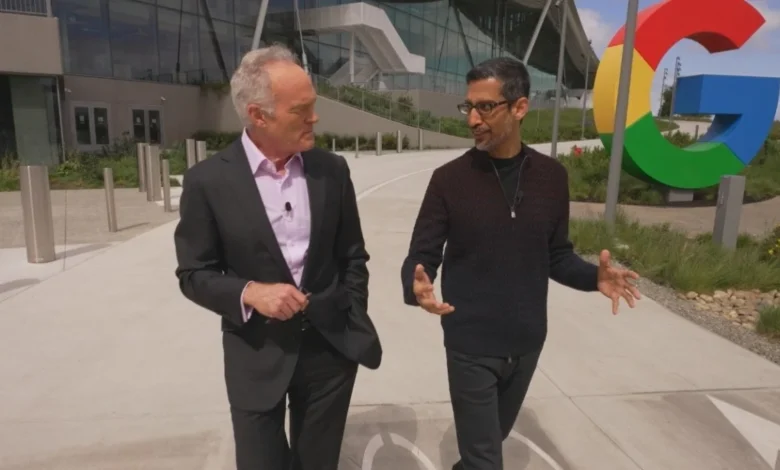
The intersection of artificial intelligence and mainstream media has become a flashpoint for controversy following a recent high-profile feature on CBS’s 60 Minutes. In an episode aired this past Sunday, the program profiled Google’s ongoing AI initiatives, featuring interviews with CEO Sundar Pichai and Google Vice President James Manyika. The segment focused heavily on the concept of "emergent properties"—a term used to describe AI systems that exhibit skills or behaviors for which they were not explicitly programmed. However, the broadcast has drawn sharp rebuke from leading AI researchers, who argue that the network and the tech giant conflated data-driven statistical probability with autonomous, near-mystical cognitive leaps.
At the heart of the debate is a demonstration involving PaLM (Pathways Language Model), the core technology powering Google’s conversational AI, Bard. During the segment, correspondent Scott Pelley presented a scenario where the model allegedly learned to speak Bengali—a language he claimed it had never seen before—without prior training. This assertion was quickly challenged by experts who pointed to Google’s own technical documentation, which indicates that Bengali was indeed part of the model’s original training corpus.
A Chronology of the Controversy
The narrative arc of this controversy began with the 60 Minutes broadcast, which framed Google’s AI as a "black box" that remains largely misunderstood even by its own creators. To illustrate this, the segment showcased a user interacting with an unidentified Google AI, asking questions in Bengali and receiving coherent responses in both Bengali and English. Pelley suggested that the AI had "adapted on its own," implying a form of rapid, autonomous linguistic acquisition.
However, the reality of the technology is rooted in established machine learning principles. Google first unveiled the capabilities of PaLM at its I/O developer conference last year. During that presentation, CEO Sundar Pichai demonstrated the model’s ability to handle Bengali. Even at that time, Pichai noted that while the model had not been explicitly taught to translate, it was drawing upon its massive internal dataset to process the request.
The backlash was near-instantaneous. Within hours of the 60 Minutes broadcast, prominent figures in the AI ethics community, including Margaret Mitchell, a former co-lead of Google’s AI ethics team and current researcher at Hugging Face, took to social media to correct the record. Mitchell highlighted that the research paper detailing the PaLM model specifically lists Bengali as a component of its training data, accounting for approximately 0.026% of the dataset.
The Science Behind the Claims: Training vs. Emergence
To understand the critique, one must distinguish between "training" and "emergent capability." Large Language Models (LLMs) like PaLM are trained on massive datasets scraped from the internet, which include a vast array of languages, dialects, and code. When a model is exposed to even a small percentage of a language, it develops a statistical representation of that language’s structure, grammar, and vocabulary.
When a user provides a prompt in that language, the model is not "learning" the language in real-time; rather, it is accessing the pre-existing statistical associations it formed during the training phase. Critics argue that characterizing this process as "learning a language it has never seen before" is a fundamental misrepresentation of how deep learning works.
"By prompting a model trained on Bengali with Bengali, it will quite easily slide into what it knows of Bengali," Mitchell explained. "This is how prompting works. It is not possible for AI to speak well-formed languages that you have never had access to."
Emily M. Bender, a professor of linguistics at the University of Washington, echoed these concerns. She challenged the claim made by James Manyika regarding the model’s ability to "translate all of Bengali." Bender argued that such a statement is scientifically unverifiable and lacks a defined scope. She noted that the term "emergent properties" is frequently used as a rhetorical device to shroud AI in mystery, effectively functioning as a proxy for "Artificial General Intelligence" (AGI)—a theoretical milestone that remains unproven.
Official Responses and Corporate Strategy
In response to the criticism, Google issued a statement through spokesperson Jason Post. The company maintained that it never claimed the model had zero exposure to the Bengali language during the training phase. Instead, Google clarified that the "emergent" achievement lies in the model’s ability to perform tasks for which it was not specifically optimized: 1) translating between languages, 2) answering questions in a Q&A format, and 3) translating information across languages during an interaction.
"It learned these emergent capabilities on its own, and that is an impressive achievement," the statement read.
This defense highlights a recurring theme in the AI industry: the tension between technical precision and public-facing marketing. For corporations like Google, framing AI as a sophisticated "black box" capable of "emergent" breakthroughs helps build consumer interest and investor confidence. For the scientific community, however, this marketing strategy risks fueling public misunderstanding and potentially dangerous misconceptions about the level of sentience or reasoning these models actually possess.
Broader Implications for AI Literacy
The 60 Minutes segment underscores a significant gap in AI literacy among the general public and mainstream media. When complex statistical processes are described as "mysterious" or "magical," the public is deprived of the tools necessary to evaluate the risks and limitations of the technology.
The implications are twofold. First, there is the issue of misinformation. When a major news outlet reinforces the narrative that AI is "teaching itself" to perform human-like tasks without oversight or data, it creates a distorted perception of the technology’s safety and reliability. Second, there is the risk of "black-boxing" accountability. If Google and other tech companies continue to lean into the idea that their models are inscrutable systems that "just work," it becomes increasingly difficult for regulators and ethicists to demand transparency regarding training data, bias, and potential safety flaws.
Critics argue that the industry’s insistence on "emergent properties" serves to shift the conversation away from the very real issues of data sourcing, copyright infringement, and algorithmic bias. By focusing on the "miracle" of the AI’s output, the industry effectively distracts from the labor-intensive, and often contentious, methods used to compile the training data that makes such outputs possible.
The Role of Media in the AI Age
The incident has prompted a broader discussion about the responsibility of journalism when reporting on technical topics. Journalists covering AI are tasked with the difficult job of translating highly complex machine learning concepts into digestible narratives. However, researchers warn that when the drive for a compelling story outweighs the need for technical accuracy, the result is "disinformation."
Margaret Mitchell’s blunt assessment on social media—that the segment served "Google’s PR goals"—reflects a growing frustration within the research community. As AI continues to integrate into search engines, productivity software, and creative tools, the standard for reporting must necessarily rise. The "magic" of AI is, in reality, the result of human-engineered architectures and massive datasets. De-mystifying this process is not merely an academic exercise; it is a prerequisite for informed public policy.
As the industry moves forward, the pressure will remain on both developers and the media to maintain a higher degree of transparency. While "emergent properties" may be a valid technical phenomenon in the context of scaling laws, they should not be conflated with spontaneous intelligence. Moving forward, the scientific community is calling for a more grounded approach to AI communication, one that acknowledges the impressive power of these tools without resorting to the hyperbolic language of science fiction. The debate sparked by the 60 Minutes segment serves as a crucial reminder that when it comes to the future of AI, the difference between a "black box" and a sophisticated machine learning model is the difference between wonder and understanding.