The Rise of the Digital Watchdog: Katherine Abughazaleh and the Shifting Landscape of Media Accountability


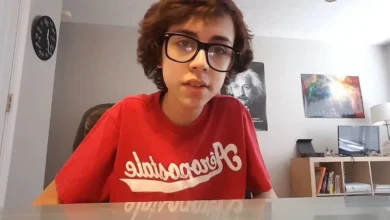
The abrupt departure of Tucker Carlson from Fox News in April 2023 marked a significant inflection point in the American cable news landscape. For Katherine Abughazaleh, a senior video producer at the non-profit media watchdog Media Matters for America, the announcement served as a professional milestone that validated years of rigorous, real-time monitoring of the network’s primetime programming. At 24 years old, Abughazaleh has emerged as a prominent figure in digital media, utilizing social platforms like TikTok and Twitter to deconstruct the rhetoric of conservative news figures, effectively creating a new model for media literacy and accountability in the digital age.
The Mechanism of Media Monitoring
Media Matters for America operates as a progressive research and information center dedicated to analyzing and correcting misinformation in the U.S. media ecosystem. The organization’s workflow involves archiving and analyzing thousands of hours of television and digital content to track the dissemination of false narratives. Abughazaleh’s specific role involves monitoring the network’s evening lineup, a task that requires both technical precision and a deep understanding of political discourse.
While the organization maintains a systematic approach to archiving, Abughazaleh’s personal brand—characterized by her TikTok channel where she breaks down the most extreme or contradictory segments from Fox News—operates independently of her official professional duties. She creates, scripts, and edits her social media content on her own time. This "side project" has garnered her over 130,000 followers on TikTok and a substantial presence on Twitter, where she serves as a primary source of commentary for a demographic that largely eschews traditional cable news consumption.
Chronology of a Media Shift
The firing of Tucker Carlson, while unexpected, followed a period of intense volatility for the network. In the months leading up to his exit, Fox News faced the fallout of a massive defamation lawsuit filed by Dominion Voting Systems. The lawsuit, which alleged that the network knowingly spread falsehoods regarding the integrity of the 2020 presidential election, resulted in a $787.5 million settlement. During the discovery process, private communications from network hosts, including Carlson, were made public, revealing a stark disconnect between their on-air rhetoric and their private assessments of the political climate.
Abughazaleh’s content often highlighted these inconsistencies. Her analysis of Carlson’s April 12, 2023, interview with former President Donald Trump gained significant traction, as it provided a critical look at the dynamic between the two figures following the public disclosure of Carlson’s private messages referring to the former president in derogatory terms. Her work on this segment, which amassed millions of views, underscored a broader trend: younger audiences are increasingly turning to independent digital creators to provide the context and scrutiny that they feel is lacking in legacy media.
The Anatomy of Digital Harassment
The visibility of Abughazaleh’s work has invited a high volume of online harassment. As a woman operating in the highly polarized sphere of political media, she frequently experiences vitriol that extends beyond political disagreement into personal, gendered abuse. Reports of sexualized threats, harassment regarding her appearance, and attempts to contact her employer are common occurrences.
In early 2023, Abughazaleh became the target of a campaign by conservative commentator Phil Labonte, who shared her dating app profile with his audience. This triggered a wave of abusive messages, which Abughazaleh publicly archived and shared on social media as a "visual aid" to demonstrate the reality of harassment faced by women in public-facing roles. Her response—which often involves mocking the absurdity of the claims or the "snitch-tagging" attempts by critics to get her fired—has been interpreted by digital media analysts as a strategic form of resilience that denies harassers the satisfaction of an emotional reaction.
Broadening the Scope: Beyond Tucker Carlson
The departure of a marquee host like Tucker Carlson, according to Abughazaleh, is not necessarily indicative of a change in network ideology. Her analysis suggests that the power lies in the primetime timeslot itself rather than the individual anchor. This perspective is supported by historical precedent; when Bill O’Reilly, a titan of conservative media, was ousted from Fox News in 2017, the network successfully maintained its audience share by pivoting to new, albeit similar, programming strategies.
Abughazaleh’s work has expanded beyond simple clip-sharing. She has begun producing long-form investigative content on platforms like YouTube, where she examines the financial ecosystems supporting right-wing media. One such investigation involved a deep dive into "Mammoth Nation," an online marketplace often advertised on conservative platforms, which she characterized as a predatory business model targeting an older demographic. By tracing the financial threads of these programs, she provides her audience with a broader understanding of how misinformation and commercial interests often intersect.
The Generational Divide in Media Consumption
A core tenet of Abughazaleh’s work is the recognition of a profound generational divide. She observes that Fox News’s persistent demonization of Gen Z and younger generations creates a feedback loop that alienates potential viewers, ensuring that the network’s future remains tethered to an aging demographic. Her content acts as a bridge, translating complex or inflammatory cable news segments into a format that resonates with younger, digitally native audiences.
The success of this approach is evidenced by the feedback she receives. Many of her followers report using her clips to initiate conversations with their parents or older relatives, sometimes successfully shifting their viewing habits away from more extreme commentary. This grassroots media literacy—where viewers are empowered to challenge the information they consume—is perhaps the most significant outcome of the digital watchdog model Abughazaleh employs.
Implications for the Future of Journalism
The emergence of individuals like Abughazaleh presents a challenge to traditional gatekeepers of news. The ability to monitor, fact-check, and distribute corrections or context to millions of people in real-time has democratized the role of the media critic. However, this model is not without its risks. The reliance on individual creators means that the burden of safety, mental health, and professional risk rests heavily on the individual, rather than being mitigated by the institutional protections of a traditional news organization.
Furthermore, the "snitch-tagging" phenomenon highlights a vulnerability in how digital creators interact with their employers. While Media Matters has demonstrated support for its staff, the rise of the independent creator within the nonprofit sphere requires a new framework for security and digital hygiene.
Conclusion: A Sustained Mission
As Fox News enters a new era of programming, Abughazaleh remains focused on the underlying mission of Media Matters: to expose the mechanisms of misinformation. She maintains that if the industry were to become truly transparent and objective, her role would be unnecessary. Given the current political climate, however, she sees her work as essential.
"It feels like I’m doing something," Abughazaleh noted during discussions regarding her future. "It’s easy to feel powerless, but being angry and passionate and wanting to push forward because you want to make things better for other people makes it worth it."
Whether or not the network fills the void left by its former star with a like-minded replacement remains to be seen. What is clear is that the landscape of accountability has permanently changed. The presence of digital watchdogs ensures that the content broadcast on national cable is no longer insulated from immediate, public, and viral scrutiny. In the tug-of-war for the American information space, the role of the individual producer, working with a laptop and a social media account, has become a formidable force.