The State of Android Tablets: Are Manufacturers Ignoring the Demand for Compact Devices

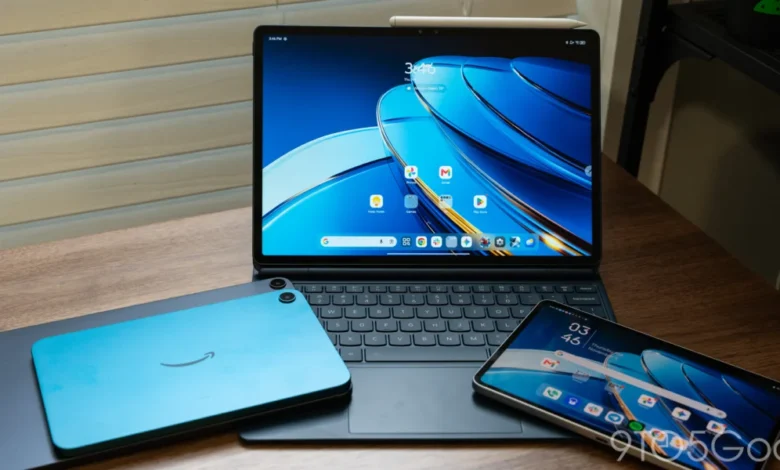
The Android tablet market has undergone a significant transformation over the past five years, evolving from a stagnant landscape of budget-tier slates into a competitive arena defined by high-performance hardware and productivity-focused software. However, as major manufacturers like Samsung, Lenovo, and Google shift their design focus toward increasingly larger displays—often exceeding 12 or even 14 inches—a critical question arises regarding market alignment: Are these "gargantuan" tablets truly serving the needs of the average consumer, or has the industry drifted away from the utility of the compact form factor?
A Chronological Evolution of the Android Tablet Form Factor
The history of Android tablets is marked by distinct phases of experimentation and refinement. In the early 2010s, devices such as the original Google Nexus 7 were lauded for their portability and ease of use, establishing a baseline for what a handheld, consumption-first device should look like. During this period, the "sweet spot" for tablets was widely considered to be between 7 and 8 inches, prioritizing one-handed usability and weight distribution.
By the mid-2010s, the emergence of "phablets"—smartphones with screens exceeding 5.5 inches—began to cannibalize the small-tablet market. As smartphones grew larger and more capable, the unique value proposition of a 7-inch tablet diminished. Manufacturers pivoted toward 10-inch devices, which bridged the gap between mobile media consumption and laptop-lite productivity.
The current era, beginning roughly around 2021, has seen a divergence. Brands like Lenovo and Samsung have leaned into "Ultra" and "Pro" models, pushing tablet displays into territory previously occupied only by laptops. The introduction of 14-inch screens and high-refresh-rate OLED panels signals that manufacturers are positioning these devices as direct alternatives to traditional desktop and portable computing setups rather than mere companion devices.
Supporting Data and Market Trends
Market research data from firms such as IDC and Counterpoint Research highlights the shifting demographics of tablet users. While shipments of tablets saw a massive surge during the global lockdowns of 2020 and 2021—driven by the need for remote education and work—the current market trend indicates a bifurcation.
High-end, large-screen tablets now account for a growing share of the premium Android market. Data suggests that consumers who spend upwards of $800 on a tablet are increasingly utilizing them for professional tasks: photo editing, video conferencing, and digital illustration. Conversely, the sub-$300 segment remains dominated by smaller, 8-to-10-inch devices, which are primarily purchased for media consumption, child-friendly use cases, and light browsing.

Despite the popularity of large screens in the premium tier, sales figures suggest that the "compact" market remains a vocal and significant demographic. Retailer analytics frequently show that whenever a manufacturer releases a high-end tablet under 10 inches, it often faces stock shortages, indicating that while companies prioritize volume for larger devices, there is a persistent, underserved demand for premium, small-form-factor hardware.
The Engineering and Design Philosophy
The shift toward larger displays is not merely a design trend; it is a response to the evolution of the Android operating system. Google’s commitment to "Android for Tablets," reinforced by the release of Android 12L and subsequent iterations, has focused heavily on multitasking, split-screen workflows, and desktop-class window management.
These features require screen real estate. A 7-inch display, while excellent for reading, struggles to support the complex multitasking UI that Google is currently pushing. Therefore, the industry’s obsession with larger screens is, in part, an attempt to justify the software ecosystem’s capabilities. Manufacturers argue that to offer a "Pro" experience, they must provide the surface area necessary for a multi-window workflow.
However, this design philosophy creates a disconnect for users who desire high-end specifications—such as flagship processors, high-quality build materials, and top-tier display tech—in a package that can still be held comfortably with one hand for extended reading or gaming sessions.
Industry Perspectives and Manufacturer Rationale
While few manufacturers provide public statements on their product size strategy, the prevailing logic in industry briefings centers on "use-case maximization." A spokesperson for a major hardware vendor noted in a recent industry report that "the consumer expectation for a tablet today is that it should serve as a secondary workstation." This rationale effectively prioritizes productivity over portability.
Retail partners, such as Amazon, have observed that while large tablets drive higher revenue per unit, smaller tablets maintain higher sell-through rates among households looking for casual-use devices. There is an inherent tension between the "Pro" branding that manufacturers chase to justify higher price points and the consumer reality of casual home use.
Broader Implications for the Ecosystem
The move toward larger tablets has several significant implications for the Android ecosystem:

- Software Optimization: Developers are increasingly optimizing apps for landscape-first, large-display layouts. This benefits the platform as a whole but risks alienating users of smaller tablets who may find these interfaces cluttered or unintuitive.
- Accessory Ecosystems: The growth of the large-tablet market has fostered a massive ecosystem of keyboard cases, styluses, and docking stations. The smaller tablet market, by contrast, suffers from a lack of high-quality accessories, which further pushes consumers toward the larger, more supported hardware.
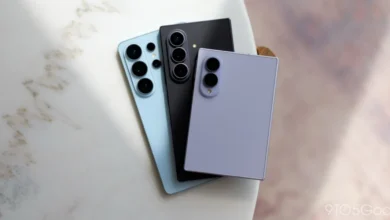
- The "Phablet" Equilibrium: As foldable smartphones become more mainstream, the need for a medium-sized (8-inch) tablet may be further mitigated. If a user can carry an 8-inch screen in their pocket, the traditional small tablet becomes redundant, potentially cementing the "gargantuan" tablet’s role as the only distinct form factor capable of surviving the market.
Analysis: Is the Market Truly Misaligned?
The current state of the Android tablet market reflects a calculated risk by manufacturers. By pushing the boundaries of screen size, they are attempting to carve out a permanent niche in the professional and creative sectors, effectively competing with the iPad Pro and Windows-based 2-in-1s.
However, the lack of a "flagship compact" tablet—a device with premium silicon and high-end build quality in a sub-10-inch frame—represents a potential blind spot. While the profit margins on large-screen devices are undoubtedly more attractive to manufacturers, the continued absence of a premium, portable option leaves a segment of the user base with no choice but to compromise.
If the goal of Android hardware makers is to achieve true platform ubiquity, they must address the needs of both the "Pro" user and the "Casual" user. The current trend toward "gargantuan" screens suggests that the industry is heavily prioritizing the former, banking on the idea that the future of the tablet is as a workstation rather than a digital companion.
Conclusion: The Future of Portability
As we look toward future hardware cycles, the trend toward larger displays is unlikely to reverse. The economic incentives for manufacturers to build larger, more expensive devices are simply too strong. For the consumer who values the portability of a smaller tablet, the market may continue to move toward budget-tier devices, forcing a choice between portability and performance.
Ultimately, the Android tablet market is maturing into a specialized computing segment. Whether this "gargantuan" direction is a permanent shift or a temporary overcorrection remains to be seen. What is clear, however, is that for the manufacturer, the tablet is no longer just a window for content; it is a tool for production, and that transition dictates every design decision, from the size of the glass to the power of the processor. Consumers who prefer a smaller experience may find themselves increasingly reliant on the foldable smartphone market to fill the void, as the traditional tablet continues to expand in both size and ambition.