The Ultimate Guide to Employee Advocacy Programs: Transforming Teams Into Trusted Brand Megaphones


In the modern digital landscape, corporate trust has reached a critical inflection point, forcing marketing and communications executives to fundamentally rethink how brands build credibility. According to recent market research data compiled by the Edelman Trust Barometer, an overwhelming 88% of consumers state that trusting a brand is a critical or deciding purchase criterion, placing corporate trust on an equal footing with traditional product quality and pricing. Yet, building that trust through traditional channels—such as corporate social media handles and paid advertising campaigns—has become increasingly difficult and expensive. Algorithms on platforms like LinkedIn, X, and Instagram routinely favor personal profiles over corporate pages, resulting in lower organic reach for brand-owned accounts.
To overcome these visibility barriers and foster genuine audience connections, organizations across industries are increasingly turning to structured employee advocacy programs. By encouraging staff members to share company-approved, culturally relevant, and industry-focused content on their personal social media networks, modern enterprises are successfully transforming their workforce into their most credible and cost-effective marketing channel.

Defining the Framework: Employee Advocacy vs. Informal Sharing
At its core, an employee advocacy program is a structured, strategic initiative that empowers employees to amplify brand reach and build external trust by sharing curated company content across their personal social channels. While informal advocacy—where employees spontaneously post about their workplaces out of personal enthusiasm—is valuable, it remains largely uncoordinated. Structured programs, by contrast, introduce clear objectives, regulatory compliance frameworks, dedicated training regimens, and specialized software to measure success.
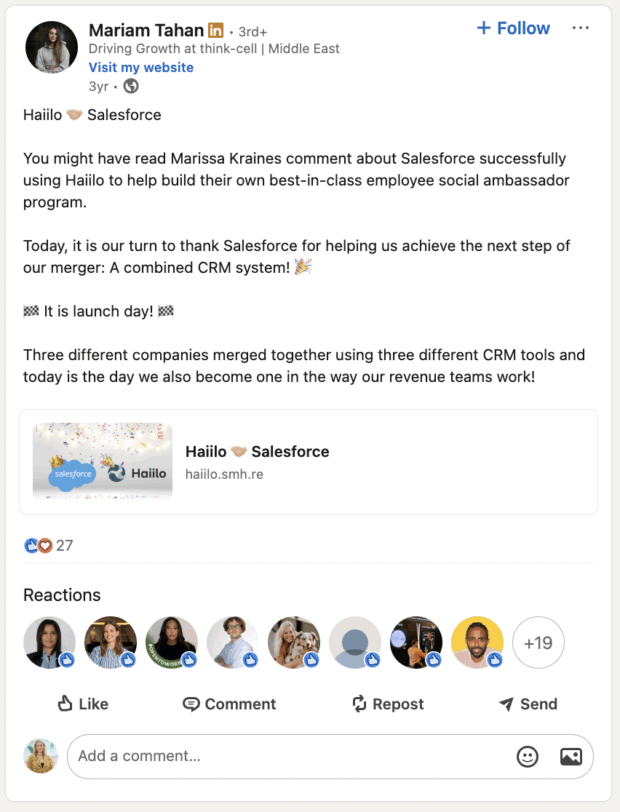
Industry experts emphasize that successful structured programs rely heavily on dedicated technology platforms, such as Parliament within the Hootsuite Social OS or alternative solutions like EveryoneSocial, Haiilo, and Sociabble. These platforms provide employees with a streamlined, mobile-friendly feed of pre-approved posts that can be shared in mere seconds. Meanwhile, program administrators gain access to robust analytics, compliance controls, and gamification features—such as leaderboards and reward incentives—that maintain long-term participation without violating legal or brand guidelines.

Strategic Drivers: Why Enterprises Are Investing in Advocacy
The shift toward employee advocacy is not merely a social media trend; it is driven by measurable business outcomes that impact multiple departments, from marketing and sales to human resources and public relations.
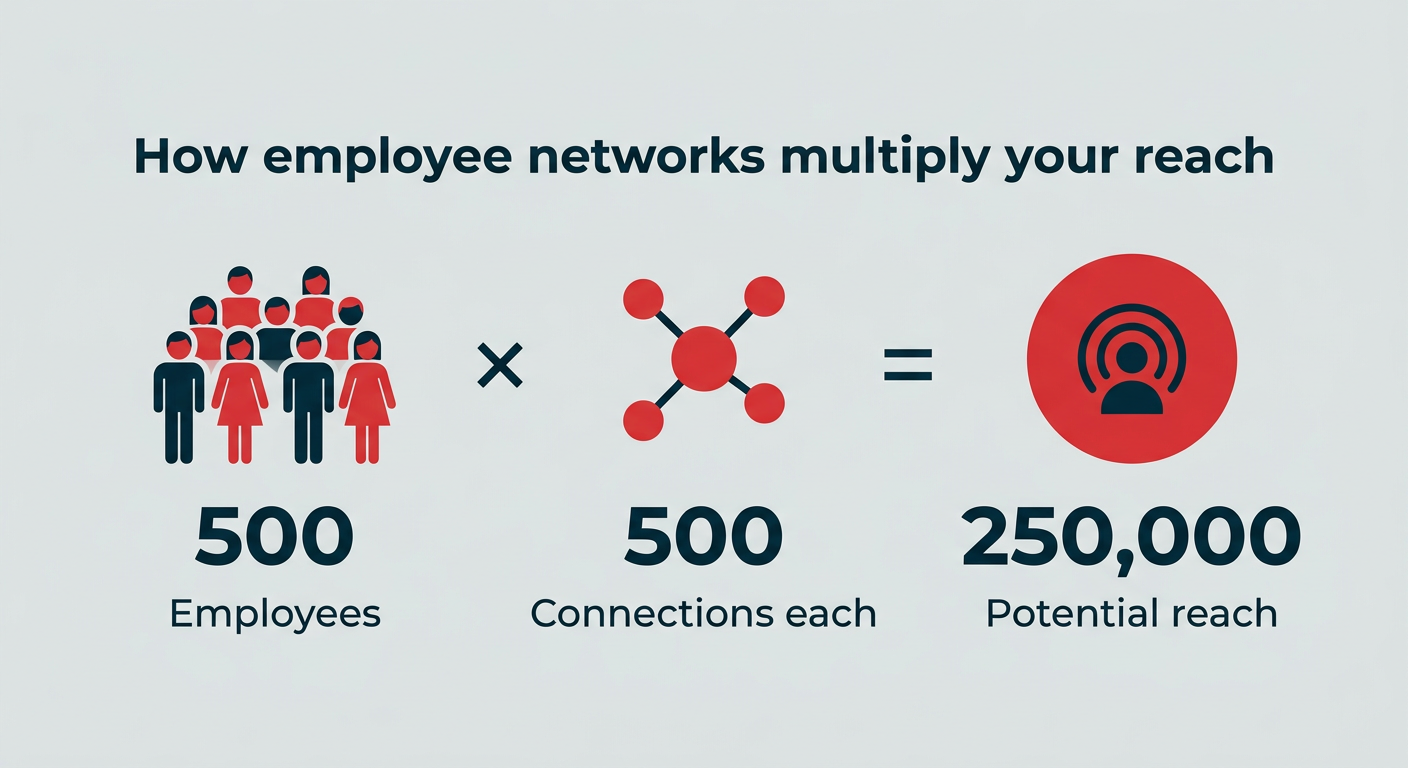
First and foremost, employee advocacy exponentially expands brand reach. As Victoria Samways, Marketing and Brand Manager at Major Tom, notes, the mathematics of employee networks are staggering. "Our employees are very powerful brand ambassadors," Samways explains. "Each employee can easily have hundreds of connections on LinkedIn alone. Multiply that by the number of employees a brand has, and that’s a large audience." For instance, a mid-sized enterprise with 500 employees, each possessing an average of 500 connections, commands a collective potential reach of 250,000 individuals—many of whom will never organically follow a corporate brand page.
Second, structured advocacy serves as a powerful catalyst for talent acquisition and recruitment. Corporate career pages often struggle to convince top-tier candidates of a company’s internal culture. When real employees authentically share daily wins, team moments, and behind-the-scenes insights, they offer prospective applicants a transparent view of the employee experience. Empirical case studies demonstrate that advocacy-driven employer branding can dramatically boost application volumes, as seen in healthcare organizations like DaVita, which recorded triple-digit surges in applicant numbers through targeted employee sharing.
Third, the strategy drives substantial organic engagement and revenue generation. Metricool’s analysis of over 673,000 social media posts revealed that personal profiles achieve a 63% higher engagement rate than corporate handles. This heightened interaction frequently translates into tangible sales pipeline opportunities. Major Tom successfully utilized Hootsuite’s advocacy tools, UTM tracking links, and high-value case studies to generate over $100,000 in validated sales pipeline, accompanied by a higher-than-average win rate. Similar ROI figures have been reported globally by firms such as Salesforce, Armanino, and Antalis.
A Step-by-Step Blueprint for Building an Advocacy Program
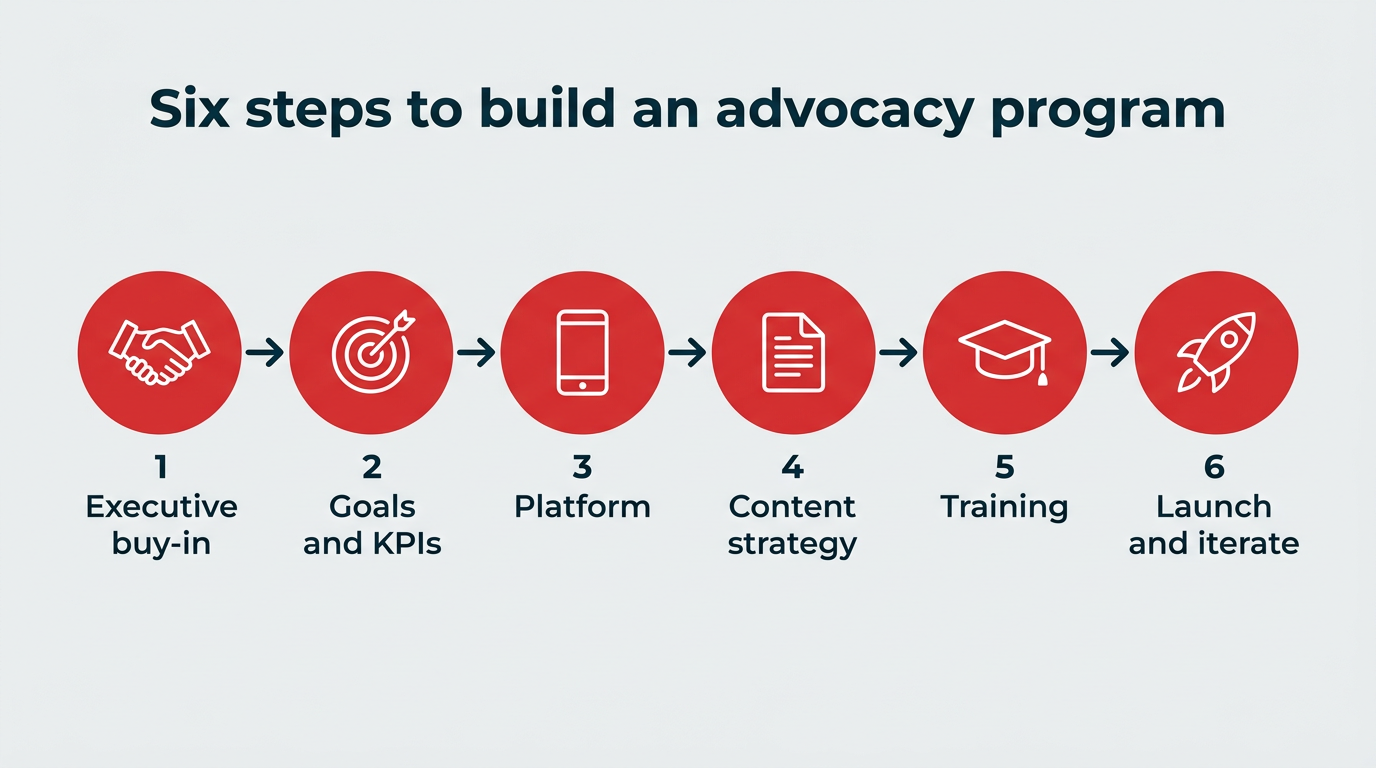
Deploying a successful employee advocacy initiative requires careful planning and a disciplined, six-step implementation framework to ensure long-term sustainability.
-
Securing Executive Buy-In: Program longevity depends heavily on leadership support. Securing initial budget requires framing advocacy as a core business investment rather than an experimental marketing tactic. Proposing a focused 60-to-90-day pilot program within a single department allows organizations to gather internal proof points before pursuing a company-wide rollout.
-
Establishing Clear KPIs: Organizations must define specific primary goals—whether focused on brand awareness, recruitment, lead generation, or thought leadership—and map them to appropriate metrics, such as earned media value, referral traffic, and pipeline attribution.
-
Selecting the Right Infrastructure: Enterprises must adopt dedicated employee advocacy platforms that streamline content curation, compliance approvals, and analytics tracking, integrating these tools directly into existing tech stacks.
-
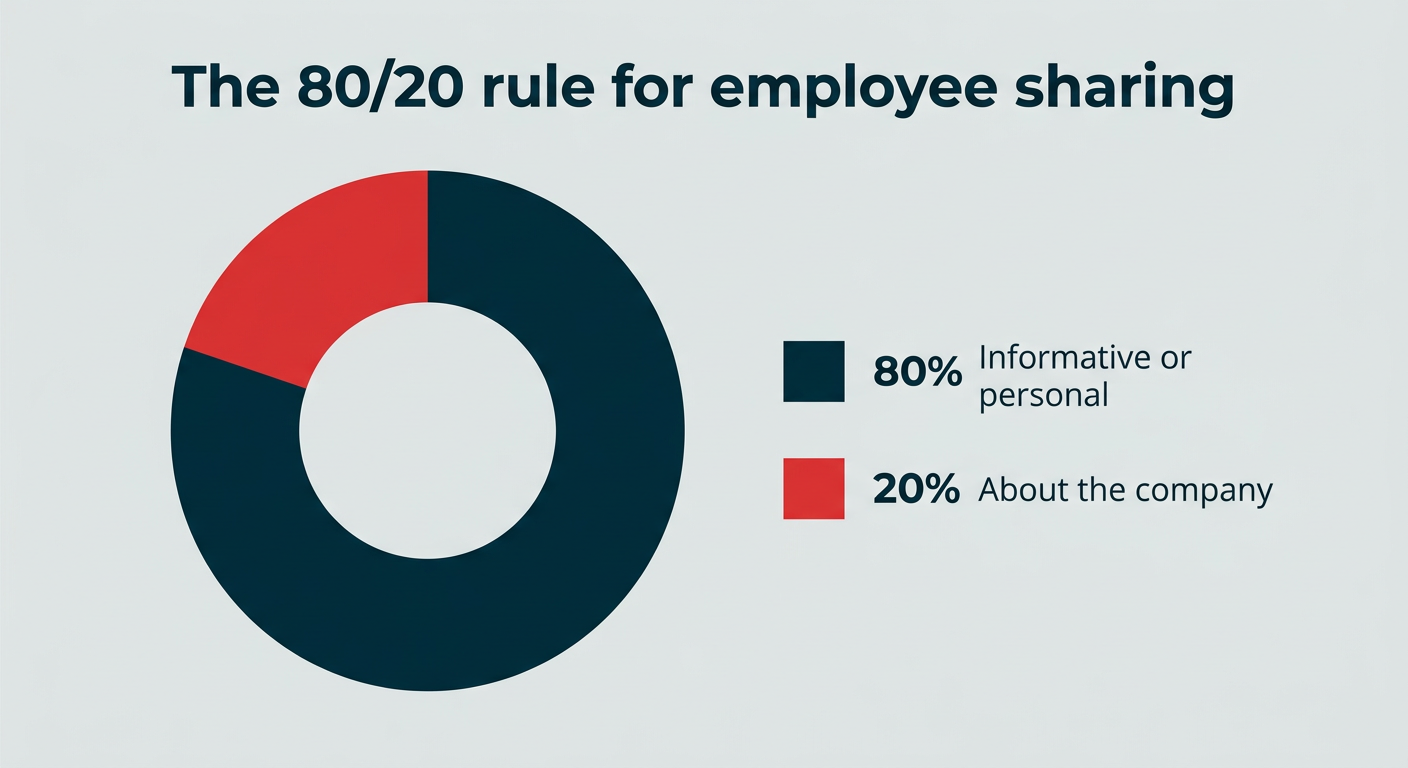
Crafting a Shareable Content Strategy: Content must offer genuine value to the employee’s personal network. Many successful organizations adhere to variations of Dell’s 80/20 rule, ensuring that 80% of shared material focuses on industry insights, professional development, and thought leadership, while only 20% directly promotes the company.
-
Comprehensive Training and Onboarding: Hesitation among employees often stems from uncertainty regarding compliance and brand voice guidelines. Comprehensive training workshops remove these barriers, giving staff the confidence to share content in their own authentic voice.

-
Launching and Sustaining Momentum: Initiating the program with an enthusiastic pilot group creates internal word-of-mouth momentum. Long-term engagement can then be sustained through gamification, recognition programs, and regular content refreshes.
Global Case Studies and Proven Results
Across diverse economic sectors, leading global enterprises have institutionalized employee advocacy to achieve extraordinary operational milestones.
Hootsuite itself serves as a prime example, utilizing its proprietary advocacy application, Parliament, to drive a 250% year-over-year revenue increase derived from advocacy efforts. By establishing a cross-departmental Content Council, Hootsuite ensures that shared material remains relevant across various professional disciplines, supported by structured recognition programs.
In the professional services sector, accounting and consulting firm Armanino deployed Hootsuite to organize content hubs tailored to specific industry verticals. By training its workforce through brand bootcamps, Armanino empowered nearly 600 active advocates to customize corporate messaging, ultimately expanding its social reach to 19.2 million impressions—a 638% year-over-year increase—and generating nearly 15,000 direct website clicks.
Similarly, information technology titan Dell Technologies maintains one of the largest global advocacy initiatives in existence. Through its mandatory Social Media and Communities University training program, Dell ensures that tens of thousands of employees are fully equipped to share thought leadership and corporate social responsibility updates safely and effectively, resulting in more than 150,000 verified employee shares annually.
Implications and Future Outlook for Digital Marketing
The institutionalization of employee advocacy marks a fundamental maturation in digital communications strategy. As artificial intelligence and automated content generation flood digital feeds with homogenous corporate messaging, the value of authentic, human-led storytelling has skyrocketed.
Market analysts project that as social media algorithms continue to penalize overtly commercial brand content, organizations that fail to humanize their digital presence through their workforce will experience diminishing returns on traditional paid and organic social investments. Conversely, enterprises that systematically invest in employee empowerment, clear compliance frameworks, and robust advocacy technology will continue to capture disproportionate share-of-voice, superior talent pools, and resilient revenue pipelines. Ultimately, the future of brand trust rests not within the confines of the corporate boardroom, but in the authentic voices of the people who build the company every day.