This Impressive Vision Pro Feature Will Scale Back On Apples Future Glasses Like Version

Vision Pro’s Spatial Computing Foundation: A Stepping Stone to Lighter, Smarter Apple Glasses
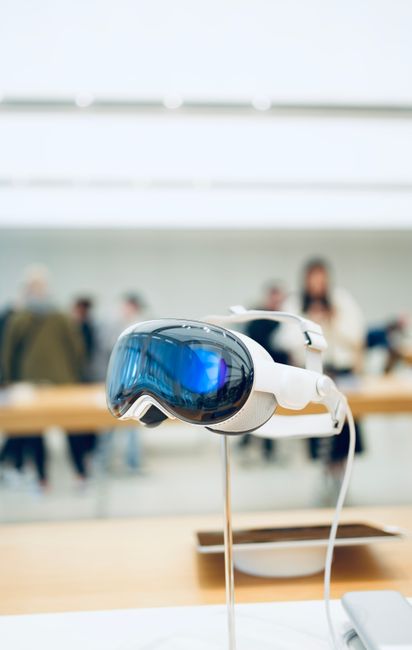
The Apple Vision Pro, while positioned as a groundbreaking spatial computing device, serves as a crucial foundational technology that will undoubtedly inform and scale back the complexity of future iterations of Apple’s eyewear. Its impressive array of sensors, micro-OLED displays, and sophisticated processing power, though currently necessitating a bulky external battery pack and a substantial headset form factor, are precisely the elements that will be miniaturized and optimized for more consumer-friendly "Apple Glasses" in the years to come. Understanding the core components and their current limitations within the Vision Pro is key to appreciating how Apple will achieve its vision of truly wearable augmented reality.
At the heart of the Vision Pro’s spatial computing prowess is its unparalleled sensor suite. The device incorporates a multitude of outward-facing cameras, LiDAR scanners, and infrared sensors that meticulously map the user’s environment in real-time. This environmental understanding is paramount for accurate occlusion, realistic rendering of digital content within the physical world, and intuitive hand and eye tracking. For future, sleeker glasses, these sensors will need to become significantly more integrated and less obtrusive. Expect advancements in miniaturized camera lenses, potentially utilizing pico-projector technology for depth sensing, and more efficient LiDAR solutions that can be seamlessly embedded into thinner frames. The data processing required to interpret this vast amount of sensor input is currently handled by the M2 and R1 chips, a powerful but energy-intensive combination. Future Apple Glasses will necessitate a shift towards highly specialized, ultra-low-power silicon, likely incorporating on-device AI accelerators for core spatial computing tasks, reducing the reliance on heavy computational offload and thus the need for large battery packs.
The visual experience on the Vision Pro is delivered through two micro-OLED displays, boasting an astonishing pixel density that creates a sense of immersion and sharpness. While these displays are a marvel of engineering, their current size and power consumption contribute significantly to the Vision Pro’s overall bulk. The path to thinner, lighter Apple Glasses will involve relentless pursuit of even higher pixel densities in smaller form factors, coupled with significant improvements in display efficiency. Technologies like waveguide displays, which project images onto a transparent lens, are a strong contender for future AR glasses. These systems can achieve a wider field of view and a more natural aesthetic, minimizing the bulk associated with direct retinal projection or large individual displays. The challenge lies in achieving comparable brightness, color accuracy, and resolution to the Vision Pro’s micro-OLEDs while drastically reducing power draw and manufacturing costs. Apple’s history of miniaturization and component integration suggests a strong likelihood of overcoming these hurdles through iterative design and proprietary component development.
The external battery pack for the Vision Pro, while necessary for sustained operation, is a clear indicator of the power demands of current spatial computing. This is perhaps the most significant area where future Apple Glasses will need to scale back. The pursuit of a truly seamless AR experience hinges on eliminating the tethered battery. This will require a multi-pronged approach. Firstly, as mentioned, more energy-efficient processors and display technologies are critical. Secondly, advancements in battery technology itself, such as solid-state batteries, which offer higher energy density and faster charging, will play a vital role. Thirdly, and perhaps most innovatively, Apple may explore alternative power sources. This could include leveraging ambient light harvesting for passive charging, or even exploring kinetic energy harvesting from user movement, though these are likely further out in the future. The immediate focus will undoubtedly be on achieving a full day’s use from a battery integrated directly into the glasses’ frame.
The user interface and interaction model of the Vision Pro are also key indicators of what’s to come. The reliance on precise eye tracking and hand gestures, while intuitive, requires sophisticated input mechanisms and processing. For Apple Glasses, the interaction paradigm will need to evolve to be more discreet and less physically demanding. Imagine subtle gaze detection for selection, accompanied by small, almost imperceptible finger taps or head nods for confirmation. Voice commands will also likely become a more prominent and seamlessly integrated interaction method, processed efficiently by on-device AI. The current control methods on Vision Pro, while powerful, can sometimes feel a bit deliberate. Future iterations will aim for a more fluid and subconscious interaction, where the digital world feels like an extension of the user’s own thoughts and intentions.
The manufacturing processes and material science behind the Vision Pro are also worth noting in the context of future scalability. The use of premium materials like aluminum and glass, while contributing to the device’s sophisticated feel, also adds to its weight and complexity. For consumer-grade Apple Glasses, expect a shift towards lighter, more durable, and potentially more flexible materials. Composites, advanced polymers, and perhaps even new forms of transparent conductive materials will be crucial in achieving a lightweight and comfortable form factor. The intricate assembly required for the Vision Pro also points to the need for highly automated and precise manufacturing techniques that can be scaled for mass production at a lower cost point.
Furthermore, the software ecosystem that Apple is cultivating with visionOS is foundational to the success of its spatial computing ambitions. The development of applications that leverage spatial computing principles is crucial. As developers become more adept at creating these experiences, the demand for more accessible and wearable AR devices will grow. The Vision Pro acts as an R&D platform for this burgeoning software landscape. As the hardware scales down, the software will need to adapt to less powerful, on-device processing, further emphasizing the importance of efficient algorithms and optimized code. The data privacy and security features built into visionOS will also be paramount for future AR glasses, ensuring user trust in a device that will likely be privy to a significant amount of personal information about their environment and interactions.
The vision of "Apple Glasses" as a truly wearable, everyday device is inextricably linked to the lessons learned and technologies advanced by the Vision Pro. The current headset, with its inherent limitations in form factor and battery life, is a necessary, albeit ambitious, first step. Apple’s track record suggests a methodical approach to product development, where initial high-end devices serve as testbeds for technologies that are subsequently miniaturized and democratized for broader consumer appeal. The sophisticated sensor array, the high-resolution displays, the powerful processing, and the intuitive software all represent building blocks that will be painstakingly refined and integrated into a sleeker, lighter, and more accessible form factor. The Vision Pro isn’t the end goal; it’s the powerful engine that will drive the evolution towards truly ubiquitous augmented reality glasses. The scaling back will not be a reduction in capability, but rather a testament to Apple’s engineering prowess in achieving those capabilities in a more elegant and wearable package.


