The Apple Vision Pro Is Genuinely The First Headset I Can Say Ive Used Almost Every Day A Developer Working On Pcvr Mode For Apples Spatial Headset Tells Us What Makes It So Special
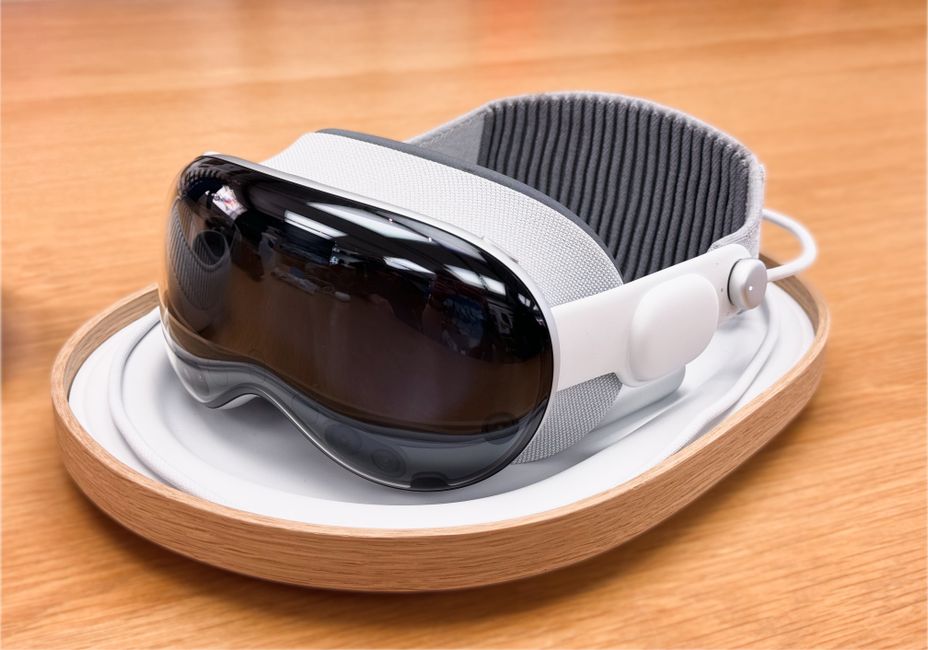
Apple Vision Pro: A Daily Driver for Spatial Computing
For years, the promise of virtual and augmented reality has dangled just out of reach, tantalizing developers and early adopters with glimpses of its potential. Yet, for many, these devices remained niche tools, relegated to occasional gaming sessions or specific professional applications. That perception, however, is beginning to shift, and for at least one developer deeply entrenched in the PCVR ecosystem, the Apple Vision Pro represents a genuine paradigm shift. "It’s the first headset I can say I’ve used almost every day," states a developer actively engaged in building applications for Apple’s groundbreaking spatial computing headset in its PCVR mode. This isn’t a casual endorsement; it’s a declaration that the Vision Pro has transcended the typical novelty status and has demonstrably integrated into a daily workflow, a feat few of its predecessors have achieved.
The developer’s assertion immediately begs the question: what makes the Apple Vision Pro so fundamentally different, so compelling that it fosters such consistent engagement? The answer, as revealed through their experience, lies in a confluence of factors that address long-standing limitations in the VR/AR landscape. Foremost among these is an unparalleled blend of visual fidelity and seamless interaction. Unlike many PCVR headsets that demand a compromise between immersion and usability, the Vision Pro, even when leveraged for PCVR experiences, delivers a visual clarity that significantly reduces the "screen door effect" and motion blur that have plagued earlier generations. This heightened visual acuity translates directly into reduced eye strain and a more comfortable, prolonged usage experience. For a developer accustomed to the raw power and flexibility of PC hardware, the ability to project that power onto a visually stunning, untethered spatial canvas is a game-changer. The passthrough quality, a critical component for mixed reality, is also cited as a standout feature, offering a remarkably clear and undistorted view of the real world, which is essential for integrating digital content without completely disengaging from one’s physical surroundings. This allows for a more fluid transition between tasks, whether it’s collaborating on a 3D model with colleagues in a shared virtual space or simply checking an email without removing the headset.
The interaction model, a persistent hurdle for widespread VR adoption, is another area where the Vision Pro truly shines. Traditional VR often relies on complex controller schemes or clunky hand-tracking. The Vision Pro’s innovative eye-tracking and hand-gesture input system offers a level of intuitiveness that feels, for many, like a natural extension of their intent. This isn’t just about novelty; it’s about reducing the cognitive load associated with interacting with a digital environment. For a developer working with intricate software or complex datasets, the ability to manipulate objects, navigate menus, and execute commands with subtle eye movements and pinches is profoundly liberating. It removes a layer of friction that often deters users from sustained interaction. In the context of PCVR, this means that existing desktop applications, typically designed for mouse and keyboard, can be accessed and manipulated in a spatial environment with a surprising degree of fluidity. The developer’s ability to “bring their entire desktop into the spatial environment” and interact with it as if it were physically present, but with the added dimension of spatial arrangement, is a powerful testament to this. This goes beyond simply mirroring a screen; it’s about creating a dynamic, multi-dimensional workspace.
Furthermore, the hardware itself, while perhaps initially perceived as a significant investment, offers a user experience that justifies the premium. The comfort and weight distribution of the Vision Pro are consistently praised, a crucial factor for daily use. Headsets that are heavy or uncomfortable quickly become an impediment, regardless of their technological prowess. The Vision Pro’s design prioritizes ergonomic wearability, allowing for extended periods of use without the fatigue that has plagued previous VR iterations. This focus on user comfort directly contributes to its potential as a daily driver. The integrated audio, designed to create a sense of spatial sound, further enhances the immersion without the need for separate headphones, adding to the seamlessness of the experience. The overall aesthetic and build quality also contribute to a sense of premium, professional-grade hardware, which aligns with its potential for productivity and professional applications.
The PCVR mode, specifically, is a critical element that allows experienced VR users and developers to leverage their existing investments and workflows. The ability to connect to a powerful PC and access a vast library of existing PCVR content and development tools is paramount. This isn’t about reinventing the wheel; it’s about elevating existing experiences. The developer highlights the ease with which they can "plug into their existing PC workflow" and have their familiar applications appear in a spatial context. This significantly lowers the barrier to entry for those already invested in the PCVR ecosystem, allowing them to immediately benefit from the Vision Pro’s advancements. It’s about augmenting, not replacing, their current setup. The fidelity of the PCVR experience on the Vision Pro is also noted, with applications running smoothly and with the expected visual quality, suggesting that Apple has not sacrificed performance in its pursuit of a polished spatial computing experience. The lack of a tangible tether, even when connected to a PC, further enhances the sense of freedom and immersion.
Beyond the hardware and interaction, the software ecosystem and its potential for productivity are key differentiators. Apple’s deep integration with its existing platforms and services offers a familiar and powerful foundation for spatial computing. For developers, this means access to robust development tools and a growing framework for building spatial applications. The potential for productivity applications is immense, ranging from complex 3D modeling and architectural visualization to immersive educational tools and collaborative workspaces. The developer’s ability to “use all my existing apps” in this new spatial paradigm is a clear indication of this potential. This isn’t a sandbox for isolated experiences; it’s a platform that can seamlessly integrate into and enhance existing work processes. The vision OS, with its focus on intuitive navigation and multitasking, further empowers users to manage multiple applications and workflows within the spatial environment. This is crucial for a daily driver; it needs to be able to handle the demands of a full workday, not just a short burst of entertainment.
The economic aspect also plays a role in its daily driver potential. While the initial cost is substantial, the long-term value proposition for professionals and dedicated hobbyists is significant. When considering the cost of multiple high-end monitors, specialized VR hardware, and the time saved through increased productivity and reduced eye strain, the Vision Pro can present a compelling return on investment for certain user profiles. The developer’s willingness to use it daily, even with the PCVR setup, suggests they perceive this value. It’s not just about the technology; it’s about the tangible benefits it provides in terms of efficiency and workflow enhancement. This is a tool that can actively contribute to a user’s professional output, making the investment more justifiable.
The “always-on” nature of the Vision Pro, in contrast to many VR headsets that require a deliberate setup process, also contributes to its daily use. The ability to quickly put on the headset and access your spatial workspace without lengthy calibration or disconnections fosters spontaneous use. This is a critical distinction for a device intended for daily integration. It becomes as accessible as reaching for your smartphone or opening your laptop. The developer’s observation that it has become a daily tool implies this ease of access and immediate utility. It doesn’t feel like a chore to engage with; it feels like a natural extension of their computing needs.
In conclusion, the Apple Vision Pro, particularly when utilized in its PCVR mode, has demonstrably broken the mold of traditional VR/AR headsets. It’s not just another piece of hardware; it’s a meticulously engineered spatial computing device that prioritizes visual fidelity, intuitive interaction, user comfort, and seamless integration with existing workflows. The developer’s personal testimony of daily use is a powerful endorsement, highlighting its ability to transcend the limitations of previous generations and establish itself as a genuine daily driver. The combination of advanced display technology, innovative input methods, ergonomic design, and a robust software ecosystem positions the Vision Pro as a significant leap forward, paving the way for a future where spatial computing is not an occasional novelty but an integral part of our daily digital lives. The implications for productivity, creativity, and how we interact with technology are profound, and the early adoption by dedicated developers in PCVR mode is a strong indicator of its transformative potential.


