Apple’s Mac Pro Demise: A Deep Dive into Scrapped ‘Extreme’ Chips, Unreleased Intel Models, and the Rise of the Mac Studio

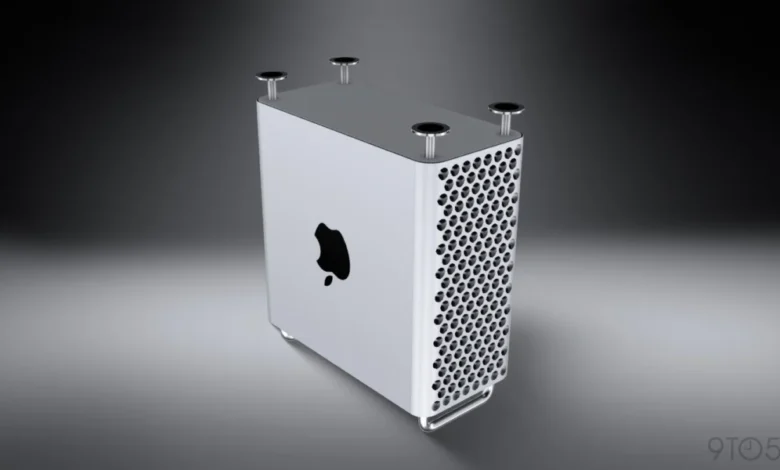
In a significant strategic pivot that sent ripples through the professional computing world, Apple officially announced the discontinuation of its venerable Mac Pro workstation in March 2026, confirming that there were no immediate plans for future hardware iterations of the iconic machine. This decisive move, which many industry observers had anticipated given the trajectory of Apple’s silicon development, effectively signals the end of an era for a product line long synonymous with peak performance, modularity, and expandability within the macOS ecosystem.
Further context regarding this pivotal decision has now emerged through a detailed report from Bloomberg‘s Mark Gurman, published in July 2026. Gurman’s "Power On" newsletter shed light on Apple’s internal deliberations, revealing that the decision to shutter the Mac Pro lineup was not a foregone conclusion but rather the culmination of complex challenges and shifting market dynamics. The report unveiled startling details about scrapped plans for advanced "Extreme" Apple Silicon chips and even an unreleased Intel-powered Mac Pro model, painting a comprehensive picture of the high-stakes engineering and business considerations that ultimately led to the workstation’s retirement.
The Legacy of the Mac Pro: A History of Innovation and Performance
To fully appreciate the gravity of the Mac Pro’s discontinuation, it is essential to contextualize its historical significance. Since its inception as the Power Mac G5 in 2003, and subsequently rebranded as the Mac Pro with the transition to Intel processors in 2006, the machine has consistently represented Apple’s pinnacle of professional computing. It was designed for the most demanding users: film editors, 3D animators, software developers, scientists, and audio engineers who required uncompromised power, extensive memory capacity, and the flexibility of internal expansion slots.
The Mac Pro saw several distinct generations, each pushing the boundaries of what was possible in a desktop workstation. The original Intel towers (2006-2012) offered straightforward internal expansion with multiple PCIe slots, drive bays, and easily upgradeable RAM. The radical "trash can" design introduced in 2013, while praised for its thermal efficiency and compact form factor, proved controversial due to its limited internal upgradeability, marking a departure from traditional workstation design principles. Recognizing the feedback from its pro user base, Apple reverted to a more traditional, modular tower design with the 2019 Mac Pro, offering extensive PCIe expansion, massive RAM configurations, and even Apple’s proprietary Afterburner ProRes accelerator card. This 2019 model, powered by Intel Xeon processors, would ultimately be the last of its kind.

The Apple Silicon Revolution and the Mac Pro’s Uncertain Future
The seeds of the Mac Pro’s eventual discontinuation were sown in June 2020, when Apple publicly announced its ambitious transition away from Intel processors to its custom-designed Apple Silicon chips. This move, heralded as a fundamental shift in computing, promised superior performance-per-watt, tighter hardware-software integration, and enhanced security. Apple committed to a two-year transition period, aiming to move its entire Mac lineup to Apple Silicon by the end of 2022.
The rollout of Apple Silicon began with the M1 chip in late 2020, followed by the M1 Pro and M1 Max in 2021, and the groundbreaking M1 Ultra in March 2022. Each chip delivered unprecedented performance gains for their respective form factors, from the MacBook Air to the Mac Studio. The Mac Studio, introduced alongside the M1 Ultra, was particularly significant. Positioned as a compact, powerful desktop for creative professionals, it offered performance that rivaled, and in some cases surpassed, the existing Intel Mac Pro for many common workflows. Its integrated System-on-a-Chip (SoC) architecture, with unified memory and highly efficient CPU and GPU cores, represented a paradigm shift.
As the two-year transition window neared its close, the Mac Pro remained the sole Intel-powered Mac in Apple’s lineup, fueling speculation about its future. Many anticipated an Apple Silicon Mac Pro that would leverage the M-series architecture while retaining the modularity and expansion capabilities that define a workstation. However, the sheer power of the M1 Ultra, and later the M2 Ultra and M3 Ultra, within the compact Mac Studio chassis, began to challenge the traditional justification for the larger, more expandable Mac Pro form factor.
Inside Apple’s Scrapped "Extreme" Chip Ambitions
Gurman’s report from Bloomberg reveals that the path to discontinuing the Mac Pro was far from linear. Initially, Apple had grander plans for its highest-tier Apple Silicon chips. "Ditching the Mac Pro wasn’t always the plan," Gurman stated, elaborating that the company had envisioned an even more powerful chip tier above the "Ultra" designation. This proposed tier was internally dubbed "Extreme."
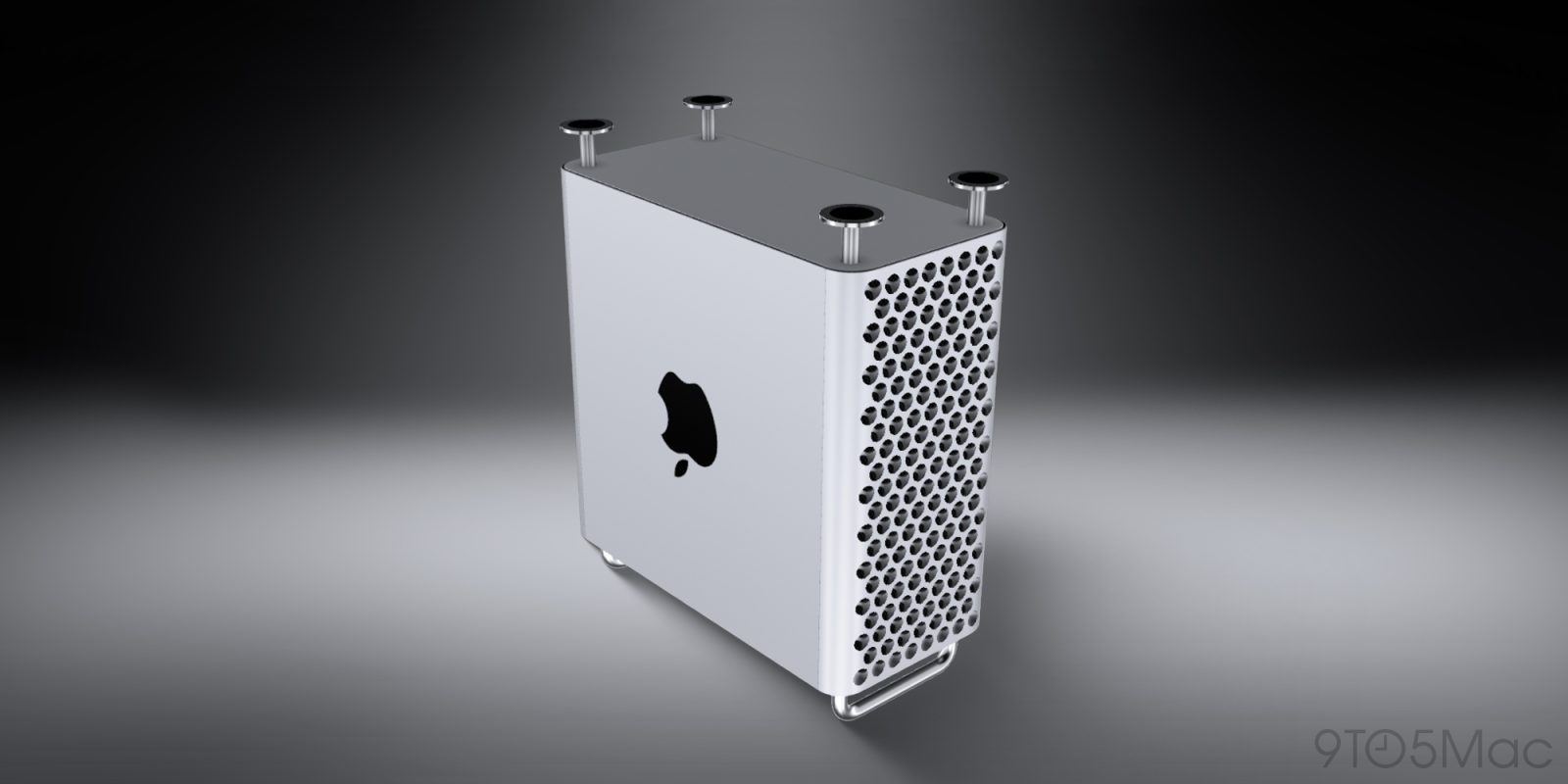
Apple reportedly developed both M2 Extreme and M3 Extreme chips. These would have likely been monumental feats of engineering, potentially combining two M2 Ultra or M3 Ultra dies via Apple’s UltraFusion interconnect technology, similar to how the Ultra chips combine two Max dies. Such a chip could have featured an unprecedented number of CPU cores (e.g., 48 or more), GPU cores (e.g., 152 or more), and unified memory capacity (e.g., 384GB or more). The theoretical performance increase would have been staggering, targeting the absolute apex of computational demands, such as hyper-intensive scientific simulations, complex data analysis, or cinematic-grade visual effects rendering.
However, these "Extreme" projects were ultimately wound down due to "cost and demand concerns." The implications of these factors are multifaceted:
- Manufacturing Complexity and Cost: Producing such a massive, multi-die chip would entail immense manufacturing challenges. Yield rates for perfect dies would be lower, driving up the per-chip cost significantly. The advanced packaging required for UltraFusion would also add to the expense. For a product aimed at an already niche market, the bill of materials for an "Extreme" Mac Pro could have pushed its retail price into astronomical territory, far exceeding the typical price points for even high-end workstations.
- Market Demand vs. Performance Overkill: While a small segment of users craves unlimited power, Apple likely assessed that the M-Ultra chips already satisfied the vast majority of its professional user base. The performance offered by an M1 Ultra, M2 Ultra, or M3 Ultra in the Mac Studio proved sufficient for most high-end video editing, music production, and 3D rendering tasks. The incremental benefit of an "Extreme" chip might not have justified its exponentially higher cost for a sufficiently large market segment. Apple’s data likely indicated diminishing returns in terms of addressable market size versus development and manufacturing investment.
- Thermal Management: Chips of "Extreme" power generate substantial heat. Designing a thermal solution capable of cooling such a processor within a sleek, Apple-standard enclosure without excessive noise or bulk would have been a significant engineering hurdle, further contributing to cost and design complexity.
The Unreleased Mac Pro Models: Intel’s Last Stand and an Apple Silicon Prototype
Beyond the "Extreme" chips, Gurman’s report revealed that Apple had two specific Mac Pro hardware models in development, codenamed J170 and J190, that never saw the light of day. These unreleased machines offer fascinating insights into Apple’s internal dilemmas during the Apple Silicon transition:
- J170: The Intel Mac Pro that Almost Was: Perhaps the most surprising revelation is that one of these models, the J170, was an entirely new Intel Corp. Mac Pro. This is particularly striking given Apple’s public commitment to transitioning its entire lineup to Apple Silicon. The development of an Intel Mac Pro, even as the company was deeply entrenched in its own silicon, suggests a strategic hedge. Apple may have recognized that certain enterprise clients or specialized professional workflows were not immediately compatible with Apple Silicon due to reliance on specific Intel-only peripherals, legacy software, or unique expansion cards requiring Intel architecture. Developing an updated Intel Mac Pro could have been an attempt to bridge this gap, offering a stop-gap solution for these users while the Apple Silicon ecosystem matured. It underscores the complexity of moving a deeply entrenched professional user base to a new architecture.
- J190: The Scrapped M3 Ultra Mac Pro: The second unreleased model, J190, was an M3 Ultra version of the Mac Pro. This machine was reportedly intended to launch alongside the M3 Ultra Mac Studio in early 2025. The existence of an M3 Ultra Mac Pro prototype indicates that Apple seriously considered bringing its most powerful chip into the traditional Mac Pro tower form factor. This would have likely featured more extensive PCIe expansion slots than the Mac Studio, perhaps offering dedicated slots for professional graphics cards (even if integrated into the SoC, allowing for external GPU connectivity for specific tasks), storage controllers, or other specialized accelerators. However, its cancellation suggests that Apple ultimately determined that the performance and expandability offered by the Mac Studio, combined with external Thunderbolt peripherals, sufficiently covered the needs of the vast majority of its target audience, making a distinct Mac Pro model redundant or economically unviable. The cost of maintaining two separate high-end product lines (Mac Studio and Mac Pro) that offered largely similar core performance likely became a critical factor in this decision.
The Official Discontinuation and the Rise of the Mac Studio
The culmination of these internal strategic shifts and scrapped projects led to Apple’s official announcement in March 2026. The Mac Pro was quietly removed from Apple’s website, with the company directing prospective buyers to the Mac Studio. For many long-time enthusiasts and professional users, it marked a "sad end to an era." The Mac Pro, with its signature modularity and virtually limitless internal expansion, represented a certain philosophy of professional computing that Apple is now definitively moving away from.

The Mac Studio, particularly in its M2 Ultra and M3 Ultra configurations, has effectively become Apple’s flagship professional desktop. It offers incredible performance in a compact, aesthetically pleasing design, leveraging the unified memory architecture and high-bandwidth capabilities of Apple Silicon. While it lacks the internal PCIe slots of the traditional Mac Pro, it compensates with an abundance of high-speed Thunderbolt ports, allowing for external expansion via enclosures for GPUs, storage, and specialized cards. This shift reflects Apple’s broader strategy: prioritizing integrated, highly optimized systems over highly configurable, component-based architectures.
Broader Implications and the Future of Apple’s Pro Lineup
The discontinuation of the Mac Pro carries significant implications for Apple’s future direction and the broader professional computing landscape:
- Full Embrace of Apple Silicon’s Integrated Vision: This move solidifies Apple’s commitment to its integrated SoC architecture. The company is betting that the advantages of unified memory, tight hardware-software integration, and superior performance-per-watt outweigh the traditional benefits of user-upgradeable components and extensive internal expansion. This approach allows Apple to exert greater control over the entire computing experience, from silicon design to operating system optimization.
- Consolidation and Simplification of the Pro Desktop Lineup: By consolidating its high-end desktop offerings around the Mac Studio, Apple simplifies its product matrix. This can streamline research and development, manufacturing, and marketing efforts, allowing the company to focus its resources on refining a single, powerful desktop platform.
- Redefining "Pro" for the Apple Ecosystem: Apple is actively redefining what constitutes a "professional" machine within its ecosystem. The emphasis is shifting from internal customization to external flexibility via Thunderbolt and other high-speed peripherals. This requires professionals to adapt to a new paradigm where expansion means external enclosures rather than internal card installations.
- Competitive Landscape: This strategy places Apple in a distinct position relative to traditional Windows workstations from manufacturers like Dell, HP, and Lenovo. These companies continue to offer highly customizable towers with multiple CPU sockets, discrete GPUs, and extensive internal expansion options. Apple’s approach challenges the notion that such internal flexibility is essential for all professional workflows, instead highlighting the power and efficiency of its integrated silicon. The success of this strategy hinges on Apple Silicon’s ability to outperform or sufficiently match the capabilities of multi-component systems for a diverse range of professional applications.
- Future of "Extreme" Performance: While M2 Extreme and M3 Extreme chips were shelved, the report notes that new Mac Studios with M5 Ultra chips are expected as early as Fall 2026. This indicates that Apple continues to push the boundaries of its "Ultra" tier, suggesting that this level of performance will remain its highest offering for the foreseeable future. Whether Apple will ever revisit an "Extreme" tier in a different form factor or as a specialized, ultra-niche product remains an open question, but the current strategic direction points away from it.
Conclusion: A New Chapter for Apple’s Professionals
The discontinuation of the Mac Pro, alongside the revelations of scrapped "Extreme" chips and unreleased Intel models, marks a definitive turning point for Apple’s professional desktop strategy. It is a bold affirmation of the company’s confidence in its Apple Silicon architecture and its integrated product vision. While it closes a significant chapter for a machine that defined professional computing for decades, it simultaneously opens a new one, with the Mac Studio leading the charge. For creative professionals, developers, and scientists, the future of high-performance computing from Apple will be characterized by compact, incredibly powerful systems that leverage the full potential of integrated silicon, even if it means saying goodbye to the traditional tower and its unparalleled internal expandability. The era of the Mac Pro may be over, but the pursuit of ultimate performance within the Apple ecosystem continues, albeit in a fundamentally redesigned form.