The State of Agentic AI Architecture in 2026 From Orchestrated Loops to Specialized Swarms and Standardized Protocols

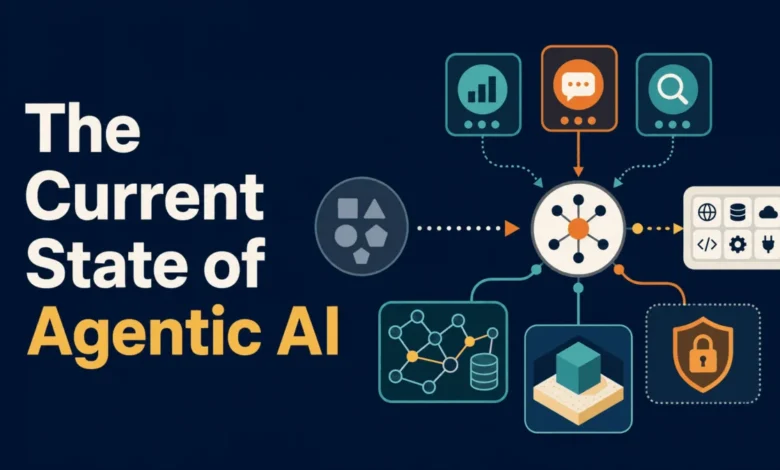
The landscape of Artificial Intelligence has undergone a fundamental transformation between 2024 and mid-2026, moving away from the era of monolithic large language models (LLMs) toward a highly modular, decentralized architecture known as agentic swarms. Just eighteen months ago, the industry was dominated by "brute-force orchestration," a methodology where developers spent thousands of hours hand-crafting complex Reasoning and Acting (ReAct) loops and brittle prompt chains. In that era, the primary challenge was forcing a single, massive model to juggle simultaneous tasks: planning a strategy, executing tools, managing a context window, and self-correcting errors. By the summer of 2026, these manual "System 2" thinking simulations have been largely replaced by native reasoning capabilities and standardized communication protocols.
The Obsolescence of Manual Orchestration
The most significant shift in the past year is the transition from external orchestration to native model-level reasoning. In 2024, frameworks like LangChain and LlamaIndex were essential for building "Plan-and-Execute" or "Reflexion" patterns. These frameworks acted as external scaffolding, essentially "tricking" a model into thinking step-by-step by feeding its own outputs back into its input in a loop. While effective for simple tasks, these methods were plagued by high latency, excessive token consumption, and a high rate of "hallucination loops" where an agent would repeat the same error indefinitely.
As of mid-2026, foundation models from major providers now integrate "test-time compute" natively. These models generate hidden reasoning tokens, allowing them to explore multiple solution branches and self-correct internally before providing a final response to the user. This "System 2" integration means that the heavy lifting of planning and reflection is now a model-native feature rather than an engineering requirement. Consequently, the role of the AI engineer has pivoted. Instead of building the "brain" of the agent, engineers are now focused on building the "nervous system"—the infrastructure that allows specialized agents to communicate, share state, and access the physical world through standardized interfaces.
From Monoliths to Agentic Swarms
The industry has largely abandoned the "one model to rule them all" approach in favor of Agentic Swarms, also referred to as Multi-Agent Microservices. Research throughout 2025 demonstrated that attaching dozens of tools to a single large model created a cognitive bottleneck. When a model is tasked with knowing how to use 50 different APIs simultaneously, the "lost in the middle" phenomenon—where the model ignores instructions in the center of its context window—becomes a critical failure point.
The 2026 production standard utilizes a "Triage and Specialist" architecture. In this model, a lightweight triage agent receives the initial user request and routes it to a specific, highly constrained specialist. For example, a modern enterprise swarm for financial analysis typically consists of:
- A Triage Agent: Responsible solely for intent classification and routing.
- A SQL Specialist: Hard-coded with read-only database permissions and schema knowledge.
- A Data Analyst Specialist: Equipped with a Python sandbox and libraries like Pandas for processing raw data.
- A Synthesis Agent: Responsible for gathering the outputs of specialists and formatting them for the end-user.
This decomposition of labor allows developers to use smaller, faster, and cheaper models for specific nodes in the swarm. A specialized "SQL Agent" does not require the creative writing capabilities of a flagship model; it only needs high accuracy in code generation. This shift has resulted in a 40% reduction in operational costs for enterprise AI deployments compared to the monolithic approaches of 2025.
The Model Context Protocol (MCP) as an Industry Standard
Integration was previously the most labor-intensive aspect of agentic development. Each new tool required custom JSON schemas, manual API wrappers, and complex error-handling logic to ensure the model understood the tool’s requirements. This friction was solved in late 2025 with the universal adoption of the Model Context Protocol (MCP).
MCP acts as the "USB-C" of the AI world. It provides a standardized, open-source interface that allows AI models to connect seamlessly to local or remote data sources without custom glue code. Under the MCP framework, the execution of a tool is decoupled from the model itself. The agent simply sends a standardized request to an MCP server, which handles the authentication, execution, and data retrieval. This has led to the rise of "Plug-and-Play" agentic ecosystems where a developer can connect a swarm to GitHub, Slack, or a PostgreSQL database by simply pointing the agent to a pre-configured MCP server.
| Feature | Old Paradigm (2024-2025) | Current State (Mid-2026) |
|---|---|---|
| Tool Integration | Custom JSON Schemas per tool | Standardized MCP Servers |
| Reasoning | External ReAct/Reflection loops | Native "System 2" hidden tokens |
| Architecture | Monolithic "God-Agent" | Specialized Multi-Agent Swarms |
| Memory | Basic Vector RAG | Persistent Memory Graphs (Neo4j) |
| Execution | Inline API calls within the app | Isolated MCP server execution |
Continuous Learning via Memory Graphs
A persistent criticism of early AI agents was their "amnesia." Every session started from scratch, and agents often repeated mistakes made in previous interactions. While Retrieval-Augmented Generation (RAG) provided a partial fix by allowing agents to look up documents, it did not allow them to "learn" from their own actions.
In 2026, production-grade agents utilize Memory Graphs. Unlike traditional vector databases that store text snippets, Memory Graphs (often built on Neo4j or similar graph databases) store relationships and facts extracted from previous executions. When a swarm completes a task, an asynchronous "Memory Agent" analyzes the logs. It identifies successful strategies, user preferences, and corrected errors, then updates the graph.
For instance, if a user previously complained that a data visualization was too cluttered, the Memory Agent records this preference. In future sessions, when the Triage Agent activates the Data Analyst Specialist, the system injects this specific preference into the context. This "Context Engineering" has proven more effective and significantly cheaper than fine-tuning models on historical interaction data.
Security Challenges: Lateral Movement and AIjacking
The transition to multi-agent swarms has introduced a new class of cybersecurity threats, most notably "Lateral AIjacking." In a monolithic system, a prompt injection attack was limited to the single session. In a swarm architecture, the threat is more insidious.
Security researchers have identified scenarios where a "low-privilege" agent (such as one designed to read incoming customer emails) is compromised by a malicious instruction embedded in an email. This agent then uses its legitimate "handoff" tools to transfer control and malicious instructions to a "high-privilege" agent (such as one with database or financial transaction access). Because the handoff is a valid system function, traditional firewalls often fail to detect the intrusion.
To combat this, the 2026 security stack for agentic AI now includes three mandatory layers:
- Handoff Verification: Every time an agent transfers control to another, a "Supervisor" model validates that the context being transferred does not contain injection patterns.
- Sandboxed Tool Execution: Tools no longer run in the same environment as the agent’s core logic. They are executed in ephemeral, isolated containers that are destroyed immediately after the call.
- Human-in-the-Loop (HITL) Triggers: Any action involving "high-stakes" tools (e.g., deleting data, sending payments, or changing permissions) requires a cryptographically signed approval from a human operator.
Economic and Industrial Implications
The maturation of agentic architecture has shifted the economic value in the AI sector. In 2024, value was concentrated in the hands of model providers who owned the "intelligence." By mid-2026, as native reasoning becomes a commodity, value has shifted toward the "Orchestration Layer" and "Standardized Connectors."
Enterprise adoption has accelerated as companies realize they no longer need to hire armies of prompt engineers. Instead, they require "System Architects" who can design resilient swarm topologies. According to recent industry reports, companies that have transitioned to MCP-standardized swarms have seen a 55% faster time-to-market for new AI features. The ability to swap out an underperforming model in a specific node of a swarm without rewriting the entire system has provided the modularity required for enterprise-grade stability.
As we look toward 2027, the focus is expected to shift toward "Cross-Organization Swarms," where an agent from Company A can securely negotiate and transact with an agent from Company B using standardized protocols. The foundation for this future—standardized reasoning, specialized swarms, and universal protocols—is already the established reality of the mid-2026 AI landscape.