Navigating the New Search Frontier: A Comprehensive Comparison of HubSpot AEO, SE Visible, and SE Ranking

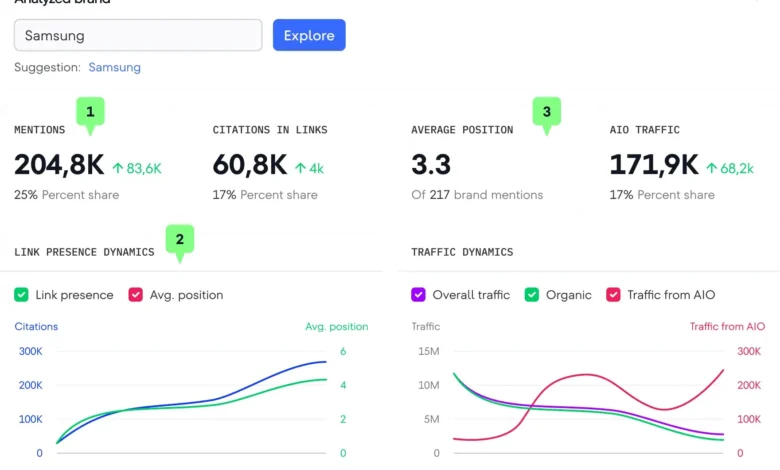
The landscape of digital information consumption is undergoing a profound transformation, compelling businesses to re-evaluate their marketing strategies. No longer are buyers solely relying on traditional search engines like Google; an increasing number are turning to generative AI platforms such as ChatGPT, Gemini, and Perplexity for direct, synthesized answers. This fundamental shift means that if a brand is not prominently and positively featured in these AI-generated responses, it risks becoming irrelevant in the crucial early stages of a buyer’s journey. This evolution underscores the critical importance of understanding and implementing Answer Engine Optimization (AEO), and subsequently, identifying the right tools to navigate this burgeoning digital frontier. This article delves into a detailed comparison of HubSpot AEO, SE Visible (by SE Ranking), and SE Ranking, providing a clear, side-by-side analysis of their features, pricing, and strategic fit for diverse marketing and brand management teams.
The Paradigm Shift: From Traditional Search to AI Answer Engines
For decades, Search Engine Optimization (SEO) has been the cornerstone of digital marketing, focused on improving a website’s visibility in search engine results pages (SERPs) to drive organic traffic. Brands invested heavily in keyword research, content creation, technical SEO, and backlink building to secure top rankings, understanding that higher visibility equated to more clicks and, ultimately, more conversions. However, the rapid proliferation and adoption of generative AI models have introduced a new layer to this equation, giving rise to Answer Engine Optimization (AEO).
AEO is the strategic discipline of optimizing content and brand presence to ensure favorable and accurate representation within AI-generated answers. Unlike traditional SEO, which aims for a click to a website, AEO strives for inclusion and positive citation within the AI’s summary, directly influencing user perception and consideration without necessarily driving immediate website traffic. The urgency for brands to adapt is underscored by compelling data: HubSpot’s internal research indicates that 42% of CRM buyers now incorporate AI search into their evaluation process. Furthermore, while organic traffic for some customers has seen a year-over-year decline of 27%, AI referral traffic has surged threefold. Critically, leads originating from AI referrals convert at three times the rate of those from traditional search, highlighting the immense value and conversion potential inherent in this new channel. This dramatic shift signals that AI is not just another search interface; it’s a powerful, high-converting gateway for engaged buyers.
AEO and SEO: Complementary Strategies for the Modern Marketer
It is crucial to understand that AEO does not replace SEO; rather, it complements it. SEO remains vital for driving qualified traffic through conventional search queries and building a strong digital foundation. AEO, on the other hand, focuses on earning visibility and positive mentions within the succinct, direct answers provided by AI. The most forward-thinking marketing teams are now investing in both, recognizing that they address distinct but interconnected aspects of the customer journey. A buyer asking "what’s the best CRM?" on ChatGPT might never click through to a website, but if ChatGPT positively names a brand, that buyer is significantly primed for conversion. Indeed, data from industry analytics firm Ahrefs suggests that AI search visitors have generated a 23 times better conversion rate than those from traditional organic search, reinforcing the need for a dual-pronged optimization approach.
This evolving landscape presents a strategic challenge for marketing teams: should they invest in a dedicated AI visibility tool like HubSpot AEO, or can a comprehensive SEO platform like SE Ranking, which has integrated AI tracking features, sufficiently cover their needs? The answer often lies in understanding the nuanced capabilities and strategic intent behind each platform.

Key Players in the AEO and SEO Tool Landscape
To clarify the options, it’s important to distinguish between the specialist and the generalist tools available:
- HubSpot AEO: This platform is engineered as a specialist tool, purpose-built for optimizing AI visibility. Its core function revolves around tracking how a brand is represented in answers from leading AI models such as ChatGPT, Gemini, and Perplexity. It integrates deeply with HubSpot’s broader marketing ecosystem, particularly the CRM.
- SE Ranking: Positioned as a comprehensive SEO suite, SE Ranking offers a broad array of tools for traditional SEO, including rank tracking, site audits, and backlink analysis. It has recently expanded its capabilities to include an AI search toolkit, offering some level of AI visibility monitoring within its existing framework.
- SE Visible (by SE Ranking): Recognizing the distinct needs of AI visibility, the SE Ranking team developed SE Visible as a completely separate, standalone product. It boasts its own login, pricing structure, and feature set, making it a direct competitor to HubSpot AEO in the specialized AI visibility monitoring space. It is designed specifically to monitor how brands are cited, perceived, and represented across various AI search platforms, including Google AI Overviews and Google AI Mode.
For a true "apples-to-apples" comparison in the realm of dedicated AI visibility tracking, HubSpot AEO and SE Visible are the most analogous. SE Ranking, while incorporating some AI features, is primarily evaluated on its merits as a holistic SEO suite.
In-Depth Feature Comparison: HubSpot AEO vs. SE Visible vs. SE Ranking
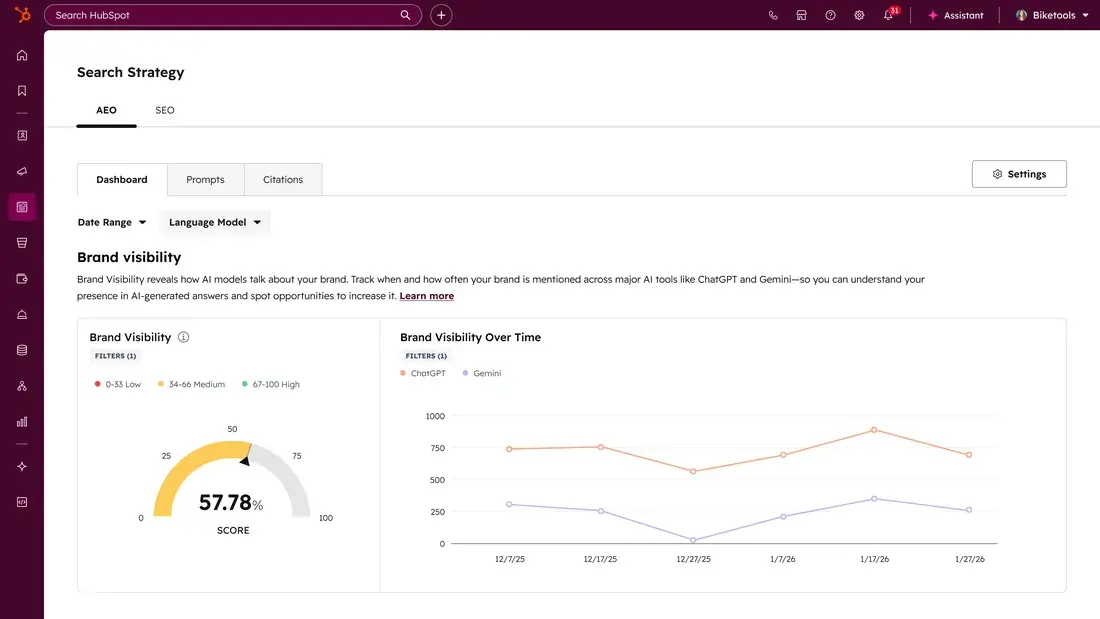
Understanding the specific features of each platform is paramount for making an informed decision.
1. Primary Focus:
- HubSpot AEO: Specializes in AI visibility combined with actionable insights and content recommendations, aiming to bridge AI data with content creation workflows.
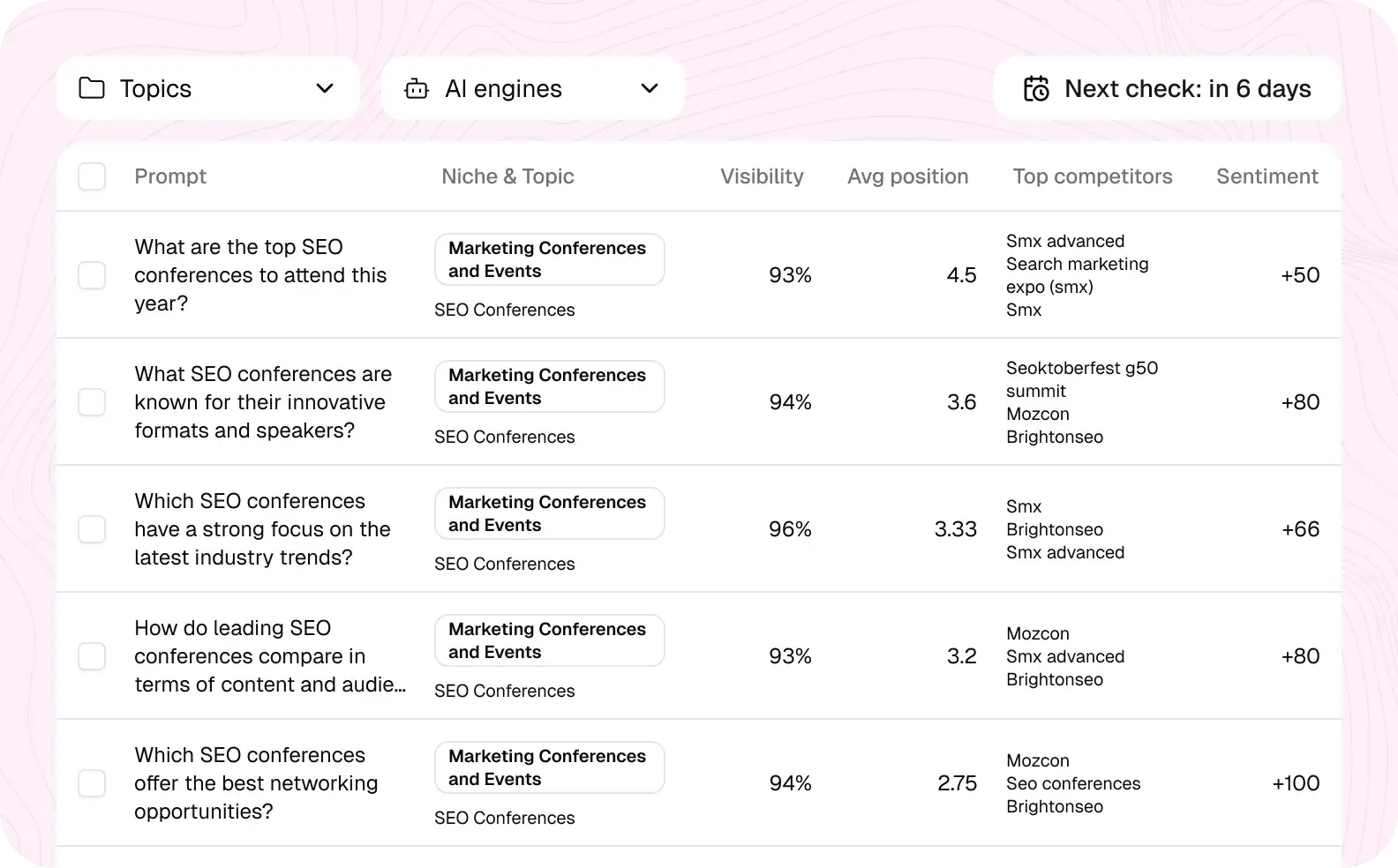
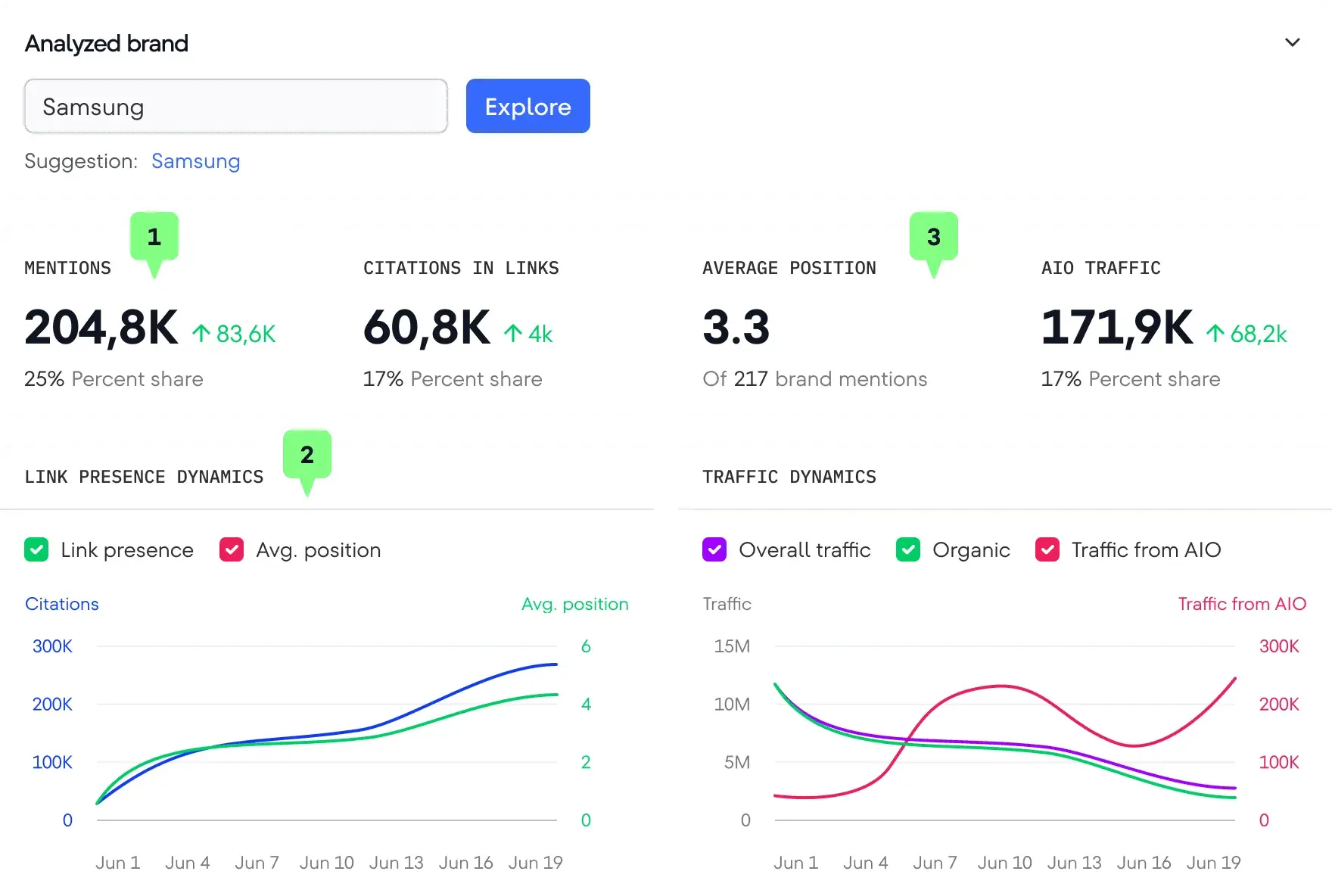
- SE Visible: Concentrates purely on AI visibility monitoring, providing detailed analytics on brand mentions and citations across multiple AI engines and geographical markets.
- SE Ranking: Remains a robust SEO research and rank tracking platform, with AI visibility as an added, though less integrated, component of its broader offering.
2. AI Visibility Tracking:
- HubSpot AEO: Offers comprehensive tracking across ChatGPT, Gemini, and Perplexity, providing a clear view of brand presence and sentiment within these key AI answer engines.
- SE Visible: Expands on this by tracking ChatGPT, Gemini, Perplexity, and crucially, Google AI Overviews and Google AI Mode, providing a broader scope of AI search surfaces.
- SE Ranking: Its AI Search Toolkit includes monitoring for ChatGPT, Gemini, Perplexity, Google AI Overviews, and AI Mode, offering similar breadth to SE Visible within its larger SEO suite.
3. Prompt Tracking:
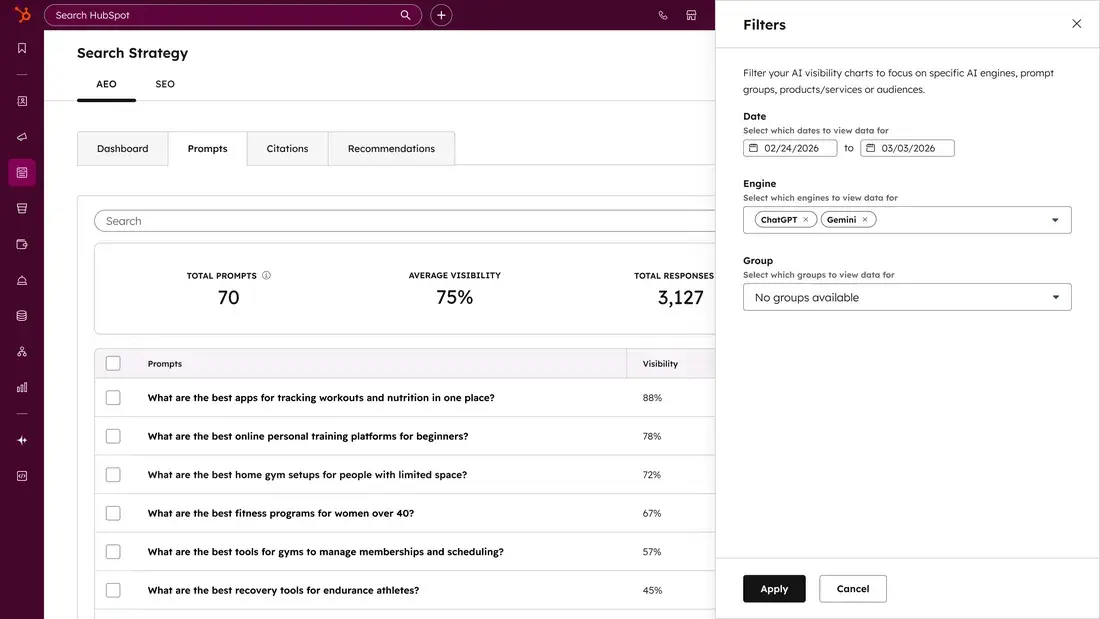
- HubSpot AEO: Provides daily tracking with custom prompt capabilities, typically allowing for 25 prompts on its base plan, which are central to understanding how AI responds to specific user queries about a brand.
- SE Visible: Offers significantly higher prompt volumes, ranging from 200 to 1,000 prompts depending on the chosen plan, catering to larger organizations or agencies with extensive monitoring needs.
- SE Ranking: Its Core plan includes 100 prompts per day, allowing users to track a decent volume of specific AI queries.
4. Competitor Benchmarking:
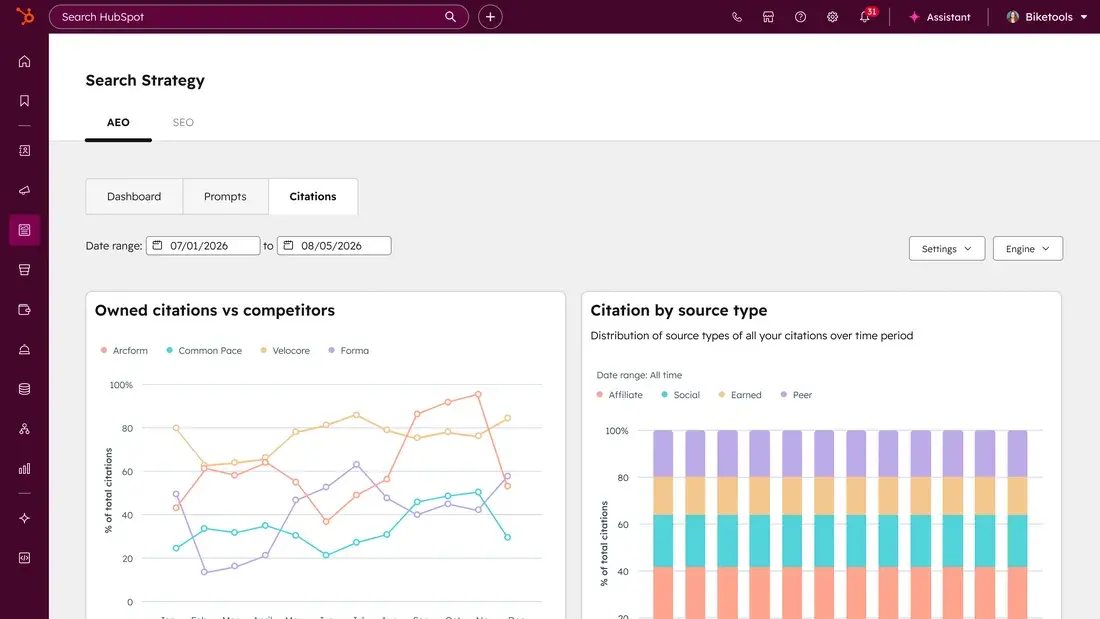
- HubSpot AEO: Shows not only brand visibility but also which sources AI cites for both the user’s brand and competitors, offering insights into competitive content strategies.
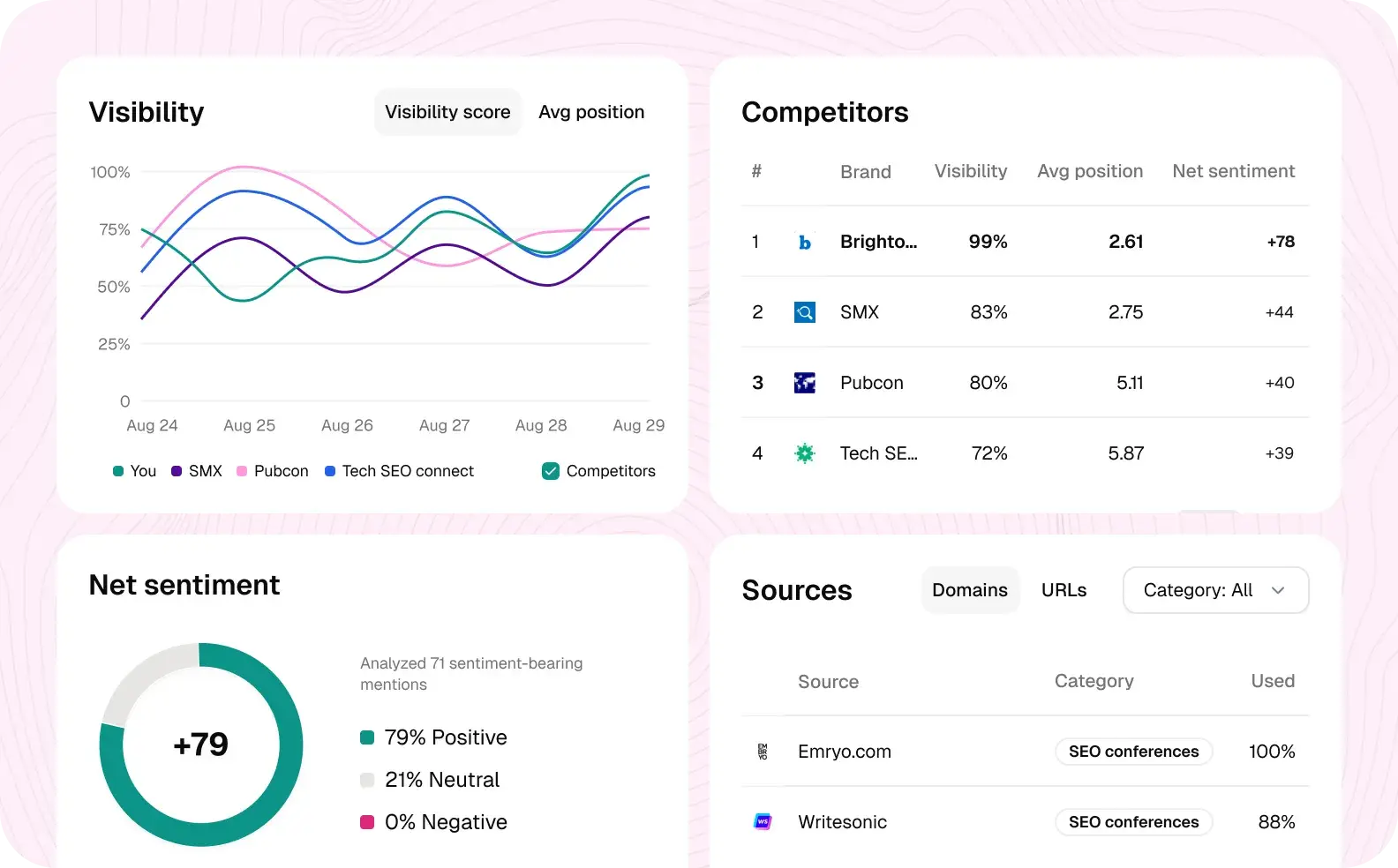
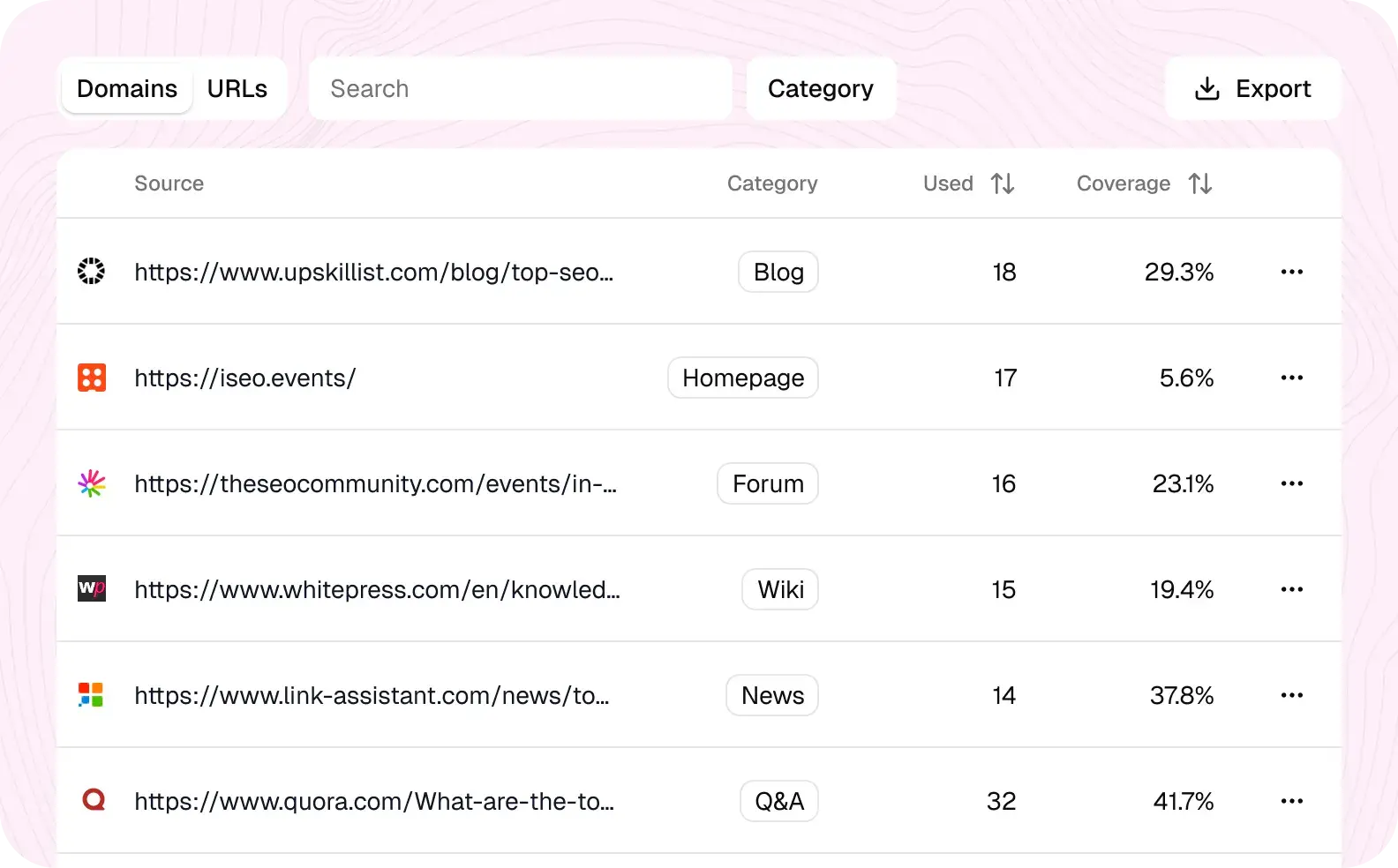
- SE Visible: Provides granular source category breakdowns (e.g., media, blogs, forums) and lists top-cited URLs, enabling a deep dive into competitor citation strategies and identifying content gaps.
- SE Ranking: Offers limited competitor insights within its AI toolkit, primarily tracking mentions rather than providing deep citation intelligence. Its main competitive analysis tools are focused on traditional SEO metrics.
5. Multi-country/Language Support:
- HubSpot AEO: While offering competitor citation comparison, its multi-country/language capabilities for AI visibility tracking are not as explicitly defined as SE Visible.
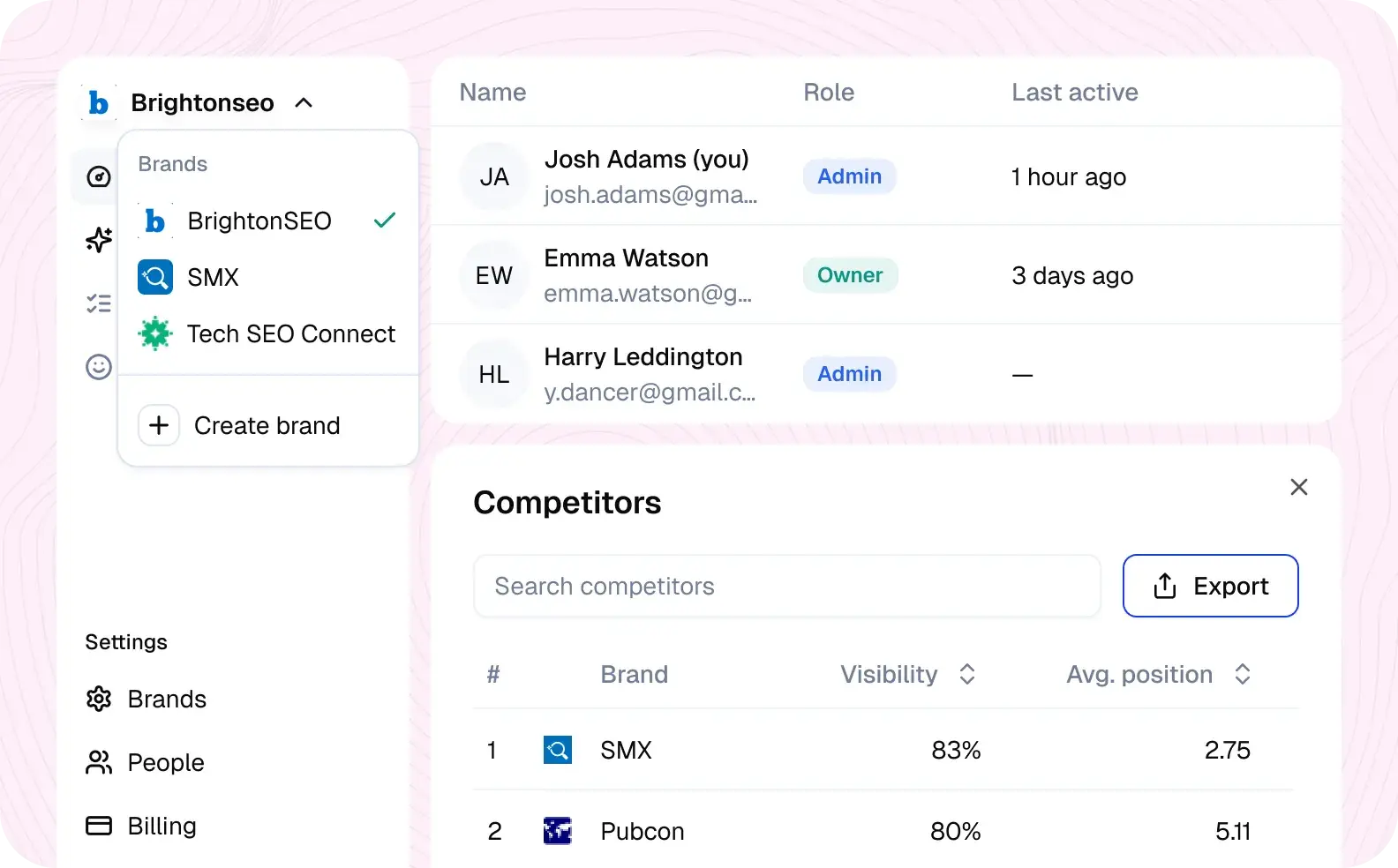
- SE Visible: Stands out with robust support for seven countries (US, UK, Canada, France, Germany, Netherlands, Spain) and five languages, including detailed visibility, sentiment, and source gap analysis against competitors in these markets. This is a significant advantage for international brands or agencies.
- SE Ranking: Offers limited multi-country/language support specifically within its AI toolkit, though its traditional SEO tools have broader geographical targeting.
6. Citation Analysis:
- HubSpot AEO: While the original content states "Not specified," the context implies robust citation analysis as a core part of its "prioritized recommendations."
- SE Visible: Provides in-depth citation analysis, showcasing the domains, URLs, categories, usage count, and coverage percentages of sources cited by AI engines. This helps identify authoritative content sources.
- SE Ranking: Offers limited citation analysis within its AI features, primarily focusing on general mentions rather than deep source attribution.
7. Traditional SEO Features (Rank Tracking, Site Audits, Keyword Research):
- HubSpot AEO: These features are explicitly not included, as it is a specialist AEO tool. Users would rely on other HubSpot Marketing Hub features or third-party SEO tools for these functions.
- SE Visible: Similarly, these traditional SEO features are not included, as it is a dedicated AI visibility monitoring platform.
- SE Ranking: These are core features. Its Core plan includes 2,000 daily keyword checks, comprehensive site audits covering over 120 technical SEO metrics, and advanced keyword research tools including gap analysis and competitor keyword insights.
8. CRM and Content Workflow Integration:
- HubSpot AEO: Boasts native CRM integration, tying AI visibility recommendations directly to CRM data and offering built-in content recommendations within Marketing Hub, facilitating an end-to-end workflow. This is a major differentiator.
- SE Visible: Offers no direct CRM integration or built-in content workflow. It is designed for data export and integration into existing external workflows.
- SE Ranking: While not offering native CRM integration, it supports integrations with platforms like Zapier, Make, n8n, Looker Studio, and Google Search Console, allowing for custom reporting pipelines. It also offers a content marketing tool on some plans.
Pricing Models and Value Proposition
The cost structures for each platform reflect their specialized or generalized nature, impacting their appeal to different budgets and team sizes.
-
HubSpot AEO Pricing: This platform is designed with a low barrier to entry. It offers a completely free AEO Grader for an initial assessment of brand visibility across sentiment, share of voice, presence quality, brand recognition, and market position. The standalone product is priced at a highly accessible $50 per month ($45/month annually), with a generous 28-day free trial. This tier includes tracking for 25 prompts across ChatGPT, Gemini, and Perplexity, alongside deep citation analysis and prioritized recommendations. A significant advantage for existing HubSpot Marketing Hub Pro or Enterprise users is that the CRM-connected AEO tools are natively included at no additional cost, leveraging existing investments.
-
SE Visible Pricing: This tool positions itself with a higher entry point but offers greater prompt volume. Its Basic plan starts at $99/month (billed monthly, $79/month annually) and includes 200 prompts, analysis of approximately 12,000 AI answers per month, and support for three projects. The Plus plan scales to $355/month (monthly) for 1,000 prompts, 60,000 AI answers, and 10 projects. Annual billing offers a 20% discount. All plans include access to five AI engine integrations, unlimited users, and CSV export. For teams with extensive AI visibility monitoring needs across multiple brands or markets, SE Visible’s higher prompt volume at its base tier can represent strong value despite the higher initial cost compared to HubSpot AEO. A 10-day free trial is available.
-
SE Ranking Pricing: As a comprehensive SEO suite, SE Ranking naturally carries a higher entry cost. Its Core plan begins at $103.20 per month (billed annually, $129 monthly) after a 14-day free trial. This plan supports up to 10 projects and includes robust traditional SEO features: 2,000 daily keyword checks, 120+ point site audits, backlink analysis, and tracking for 100 GEO prompts per day across various AI engines. The Growth plan, at $223.20 per month (annually), expands to 30 projects and 5,000 daily keyword checks, adding API access and historical data. A key pricing consideration for SE Ranking is that its tracking limits are calculated by multiplying keywords by the number of search engines tracked, which can increase effective costs for extensive traditional SEO monitoring.
In summary, HubSpot AEO offers a significantly cheaper and more user-friendly option for dedicated AI tracking, especially for those already integrated into the HubSpot ecosystem. SE Visible provides scalable AI visibility monitoring for larger needs, albeit at a higher price. SE Ranking, while more expensive than the standalone AEO tools, is highly economical for teams seeking to consolidate multiple traditional SEO tools into a single, comprehensive platform.
Execution and Strategic Integration: From Insight to Action
The true value of any marketing tool lies in its ability to translate insights into actionable strategies.
-
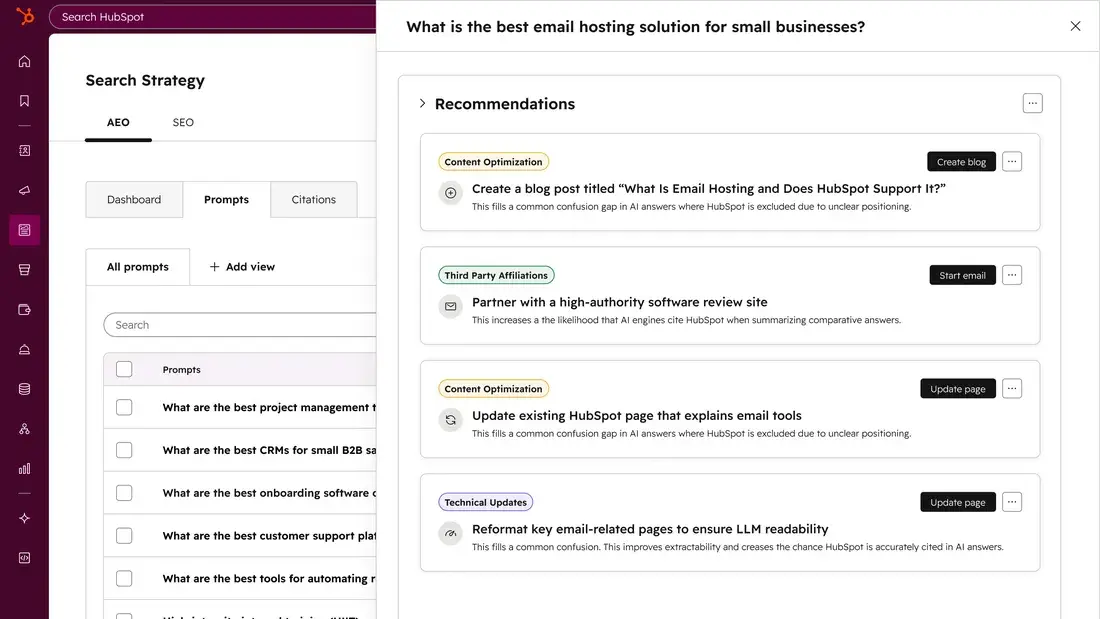
HubSpot AEO: Excels in this area by deeply connecting AI visibility insights with CRM-informed recommendations and integrated content workflows. When HubSpot AEO detects a prompt where a competitor outperforms the user’s brand, it generates a prioritized recommendation. For users of Marketing Hub Pro or Enterprise, these recommendations directly link to content creation tools and CRM data, allowing for immediate content drafting and updates within the platform. This seamless integration is particularly powerful for content audits and ensuring that content optimizations are aligned with actual customer segments and their needs.
-
SE Visible: Primarily functions as a monitoring and analysis platform. It effectively highlights brand representation in AI answers, along with source and competitor data. However, it does not include a built-in content workflow or CRM connection. Teams using SE Visible typically leverage its CSV exports and comprehensive dashboards to inform their content and PR strategies externally. This approach is often ideal for brand and public relations teams who require clean, actionable data to integrate into their existing, often cross-functional, workflows.
-
SE Ranking: Operates as an insights platform for traditional SEO, with added AI monitoring capabilities. While it lacks native CRM integration, it facilitates action through integrations with Google Search Console, Google Analytics, Looker Studio, Zapier, Make, and n8n. These integrations enable the creation of custom automated reporting pipelines, allowing users to push rank-tracking data or site audit findings directly into dashboards or other operational systems. SE Ranking automates crucial tasks like daily keyword rank checks, scheduled technical site audits, and client report generation.
Target Audiences and Strategic Fit
The optimal choice among these platforms hinges on an organization’s specific needs, existing tech stack, and strategic priorities.
-
Choose HubSpot AEO if…
- Your team is primarily focused on understanding and improving brand visibility within AI-generated answers.
- You are an existing HubSpot Marketing Hub Pro or Enterprise user, seeking to leverage native CRM integration for hyper-personalized content recommendations and streamlined content workflows.
- You are an in-house marketing team or a growth-focused business looking for an accessible, actionable tool to kickstart your AEO efforts.
- You value a tool that not only provides data but also guides your content creation and optimization process within a unified platform.
-
Choose SE Visible if…
- Your primary need is robust, scalable AI visibility monitoring across multiple AI engines, including Google AI Overviews.
- You manage multiple brands or operate in international markets, requiring multi-country and multi-language support for AI brand tracking.
- You are an agency or PR team that needs comprehensive data on brand mentions, sentiment, and citation sources to inform external content, PR, and reputation management strategies.
- You prefer a dedicated monitoring platform that can export data for integration into your existing, potentially diverse, content and PR workflows.
-
Choose SE Ranking if…
- Your team requires a comprehensive, all-in-one SEO suite that covers traditional rank tracking, technical site audits, keyword research, and backlink analysis.
- You are an SEO agency, freelancer, or a multi-project team managing extensive traditional SEO efforts alongside a need for basic AI visibility monitoring.
- You are looking to consolidate multiple SEO tools into a single, more economical platform.
- You have a strong internal workflow for translating SEO and AI insights into action, potentially leveraging third-party integrations for custom reporting.
Implementing AEO: A Two-Week Strategic Sprint
Adopting Answer Engine Optimization doesn’t have to be a protracted, complex project. Given the dynamic nature of AI models, meaningful data can be gathered, and strategic adjustments can begin almost immediately. A 14-day sprint is an effective timeline to establish a baseline and launch initial content optimizations.
Getting Started with HubSpot AEO:
- Utilize the Free AEO Grader: Begin by assessing your brand’s current AI visibility. HubSpot’s free AEO Grader provides an immediate score (out of 100) across five critical dimensions: sentiment, share of voice, presence quality, brand recognition, and market position. This baseline is crucial before any content changes.
- Launch the Free 28-Day Trial: Activate the trial to set up ongoing tracking for up to 25 prompts. Select prompts that directly reflect real buyer questions during their evaluation process to maximize the trial’s value.
- Review Visibility and Citation Analysis (Days 3-5): Allow a few days for data collection, then analyze your brand visibility score and conduct a deep dive into the citation analysis. This will reveal which domains and content types AI models are referencing to formulate their answers, offering actionable insights.
- Execute Prioritized Recommendations: Identify the top two to three highest-impact content actions suggested by the tool’s prioritized recommendations list and assign them to your content team for immediate implementation.
- Compare Two-Week Score to Baseline: Although significant shifts in AI presence typically take 4-8 weeks to fully manifest, comparing your brand’s visibility score at the two-week mark against your initial baseline can provide valuable early signals and help refine your ongoing AEO strategy.
Getting Started with SE Visible:
- Initiate 10-Day Free Trial and Project Setup: Create your brand profile and connect the relevant domains for monitoring. For agencies, configure separate projects for each client.
- Configure Prompts and Topics: Input buyer questions and product topics most relevant to your brand. Utilize SE Visible’s localized topic suggestions for multi-country monitoring.
- Review Brand Visibility and Source Analysis: After several days of data collection, examine the domains cited by AI engines when your brand appears. The source breakdown by category (media, blogs, forums) will pinpoint areas for focused PR and content outreach to secure more citations.
- Run a Competitor Benchmarking Report: Compare your brand’s AI visibility and sentiment against key competitors. Identify prompts and sources where competitors excel, using these gaps to prioritize your next content or PR sprints.
Getting Started with SE Ranking:
- Start 14-Day Free Trial and Connect Domain: Immediately set up a rank tracking project to establish your traditional SEO baseline and integrate current priorities for AEO.
- Conduct a Full Site Audit: Before optimizing for AI answers, ensure your technical SEO foundation is robust. A comprehensive site audit will uncover critical technical issues (e.g., crawlability, indexability) that could hinder both traditional SEO and AI visibility.
- Configure the AI Search Toolkit: Once the technical foundation is assessed, activate the AI Search Toolkit to actively monitor brand mentions across ChatGPT, Perplexity, and Google AI Overviews.
- Execute a Keyword Gap Analysis: Leverage SE Ranking’s keyword research tools to perform a gap analysis. This will identify topics and search queries where competitors rank, but your brand is absent, guiding future content strategy and sprints.
Broader Implications for Digital Marketing
The emergence of AI answer engines represents more than just a new channel; it signifies a fundamental shift in how information is discovered and consumed. For brands, this means that reputation management extends beyond review sites and social media to the very core of AI-generated summaries. Content strategies must evolve to not only rank on SERPs but also to be digestible, authoritative, and quotable by AI models. Public relations efforts gain new importance in ensuring positive brand mentions across diverse, credible sources that AI frequently cites.
Ultimately, the convergence of SEO and AEO underscores the imperative for brands to adopt a holistic digital strategy. Neglecting AI visibility risks ceding valuable consideration-stage engagement to competitors, even if traditional SEO efforts remain strong. The tools discussed—HubSpot AEO, SE Visible, and SE Ranking—each offer distinct pathways to adapt to this new reality. The choice depends on an organization’s existing infrastructure, budget, and the specific balance it seeks between comprehensive SEO management and specialized AI visibility optimization. What is clear, however, is that measuring and optimizing for how AI perceives and presents a brand is no longer optional; it is a critical component of sustained digital success.