The evolving landscape of artificial intelligence is fundamentally reshaping how consumers interact with financial services, yet for the fintech sector, this digital frontier comes with a unique set of stringent demands. Unlike other industries where AI-generated content might serve as a general informational guide, fintech operates within the "Your Money or Your Life" (YMYL) category. This classification, recognized by major search engines and AI models, signifies that the information provided can directly impact a user’s financial well-being, health, or safety. Consequently, financial products and brands must meet exceptionally high verification thresholds before AI systems will even consider mentioning them, let alone recommending them.

AI models, when tasked with answering financial queries, do not merely pull information from a brand’s official website. They aggregate data from a vast array of online sources, including third-party reviews, news articles, regulatory filings, and community forums. This extensive data-gathering process introduces a significant risk of misrepresentation for fintech brands. If external sources convey inaccurate, outdated, or negative information, AI systems may inadvertently propagate these narratives, potentially damaging a brand’s reputation and trust among prospective customers. The critical question for fintech companies, therefore, becomes: do these diverse sources collectively paint an accurate and favorable picture? This article will delve into the mechanisms through which fintech brands can actively influence this narrative, ensuring their presence in AI search is not only visible but also reliably accurate and positively perceived. The ultimate objective is to secure prominent AI search visibility while maintaining an unimpeachable brand representation, a crucial differentiator in the highly sensitive financial domain.
Understanding AI Visibility in Fintech
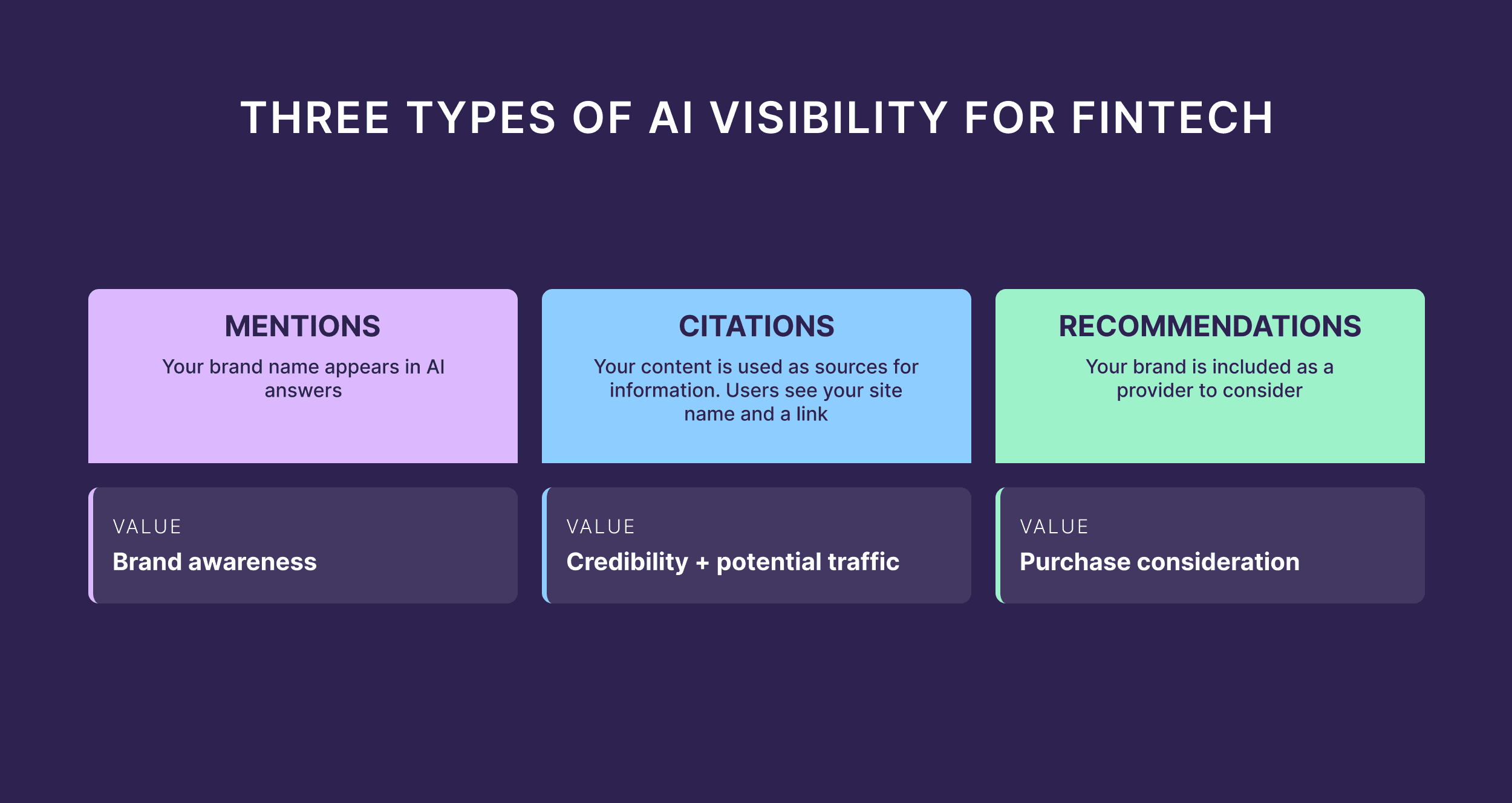
For fintech brands, appearing in AI search is not a monolithic concept; it manifests in three distinct ways, each offering unique benefits and requiring specific strategic approaches. To maximize their reach and influence, brands should strive for visibility across all three categories.
Brand Mentions
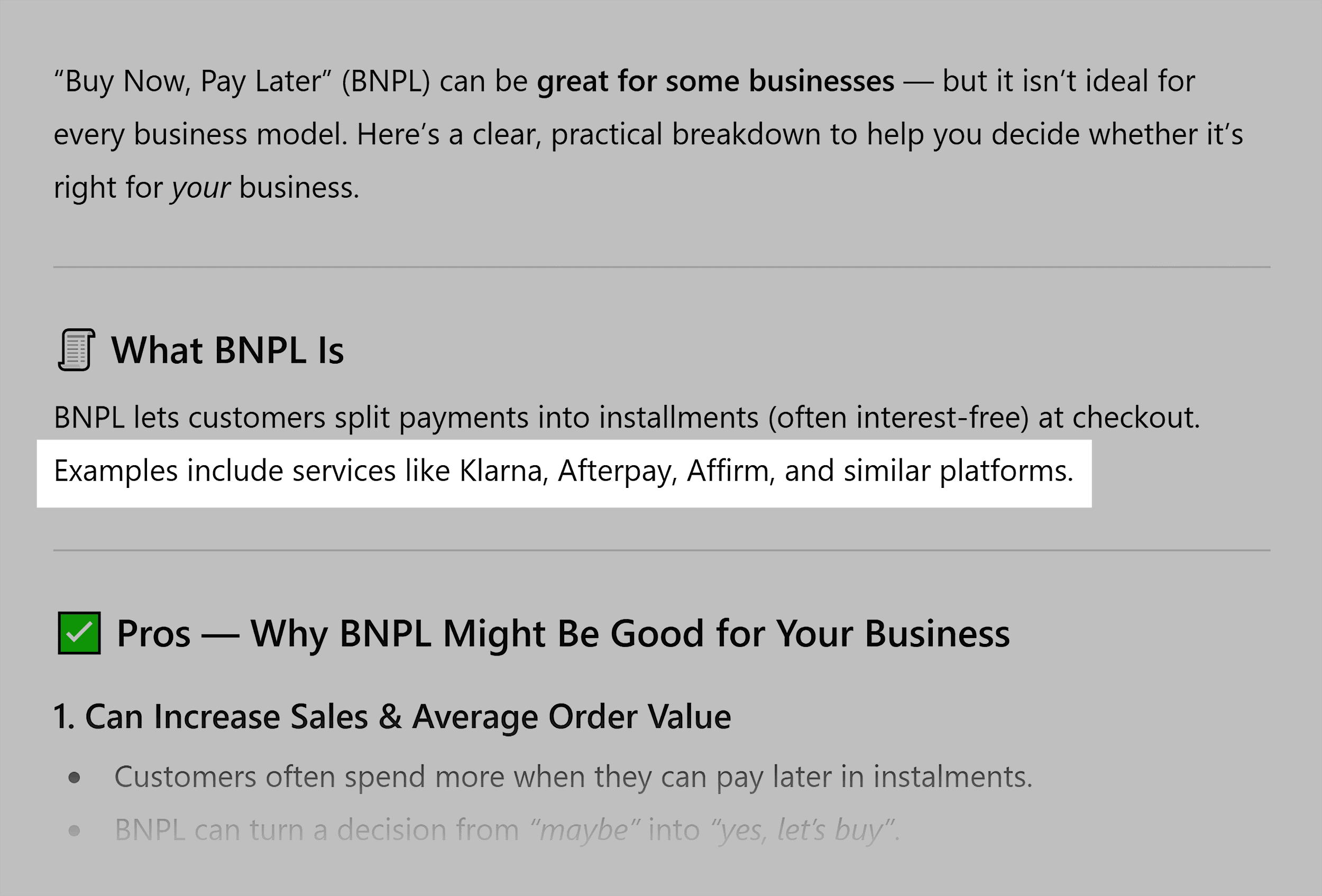
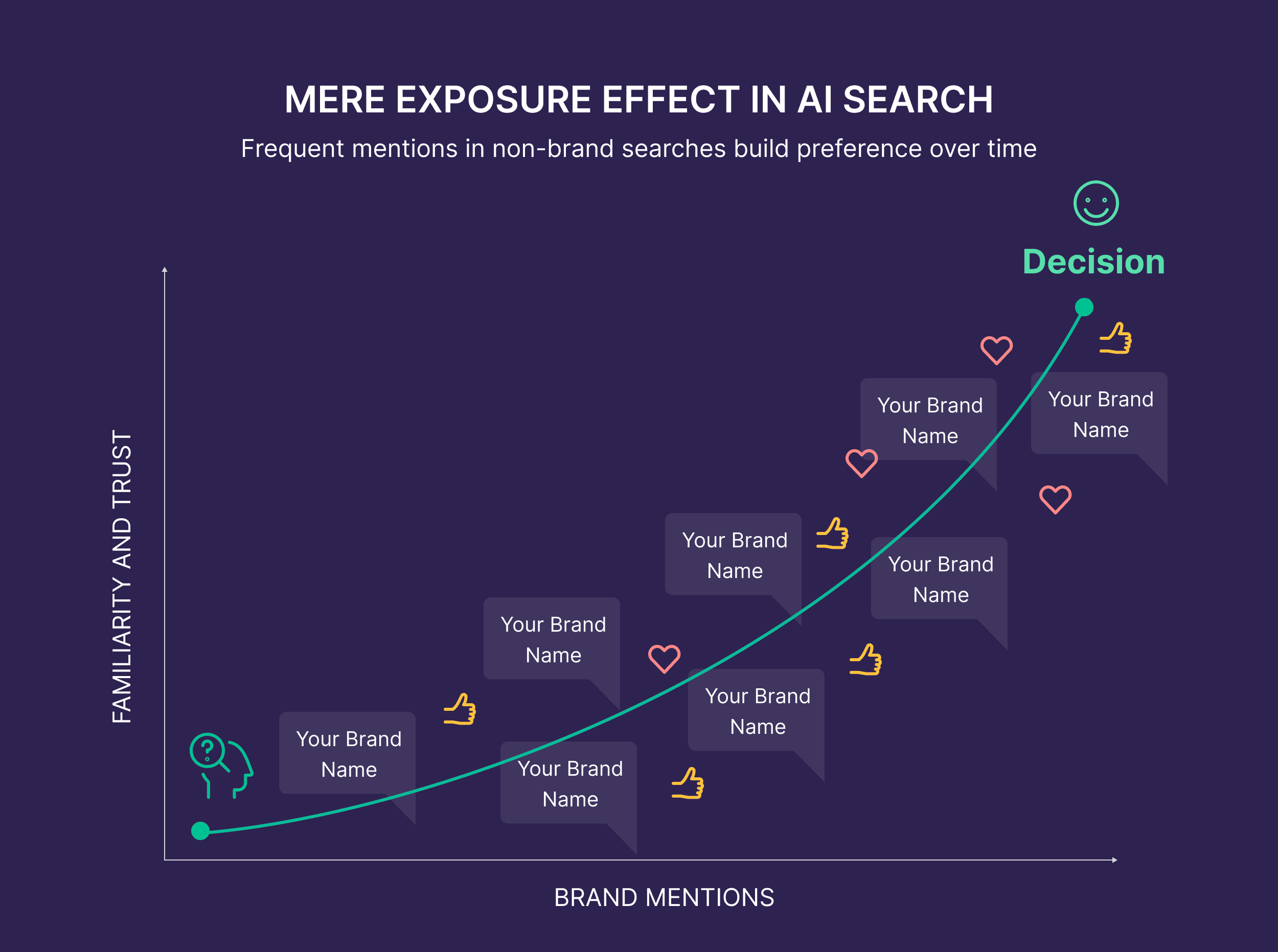
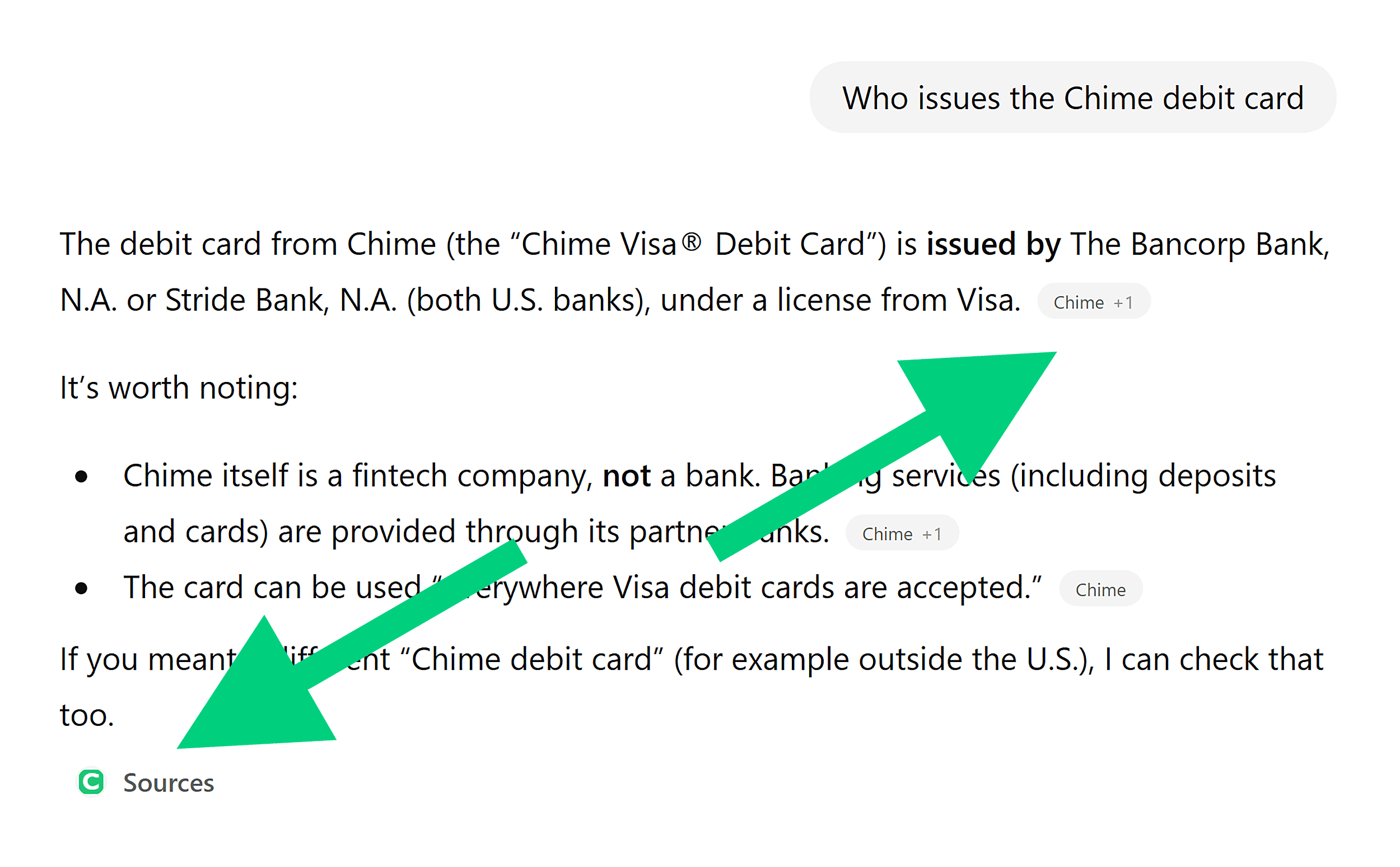
Brand mentions occur when AI systems incorporate a fintech brand’s name within their responses to user queries. These mentions are invaluable for fostering brand awareness, especially among users who may not be actively searching for a specific company. By placing a brand’s name in front of potential customers during their initial exploration phase, these mentions leverage the "mere exposure effect," a psychological phenomenon where repeated exposure to a stimulus increases familiarity and preference. For instance, a user asking "Are buy now, pay later providers ideal for my business?" might receive a ChatGPT response listing several prominent BNPL platforms. This inclusion signals that the AI recognizes these brands as legitimate and relevant players within the category.
Mentions often appear in response to non-brand queries, at a stage where users are beginning to research their options rather than seeking out a particular solution. While a mention is not an explicit endorsement, consistent visibility builds a subconscious familiarity that can prove advantageous as users progress toward a decision. However, the sentiment surrounding these mentions is equally, if not more, critical. If an AI consistently associates a brand with positive attributes like "strong security" or "innovative features," this perception becomes deeply ingrained. Conversely, if a brand is frequently paired with caveats such as "high fees" or "frequent outages," these negative associations can quickly erode trust and raise significant doubts in a user’s mind. Therefore, cultivating a consistently positive brand sentiment across the digital ecosystem is paramount for effective AI visibility.
Citations
Citations represent instances where an AI system directly uses a brand’s web pages or official documentation to support its generated answer. This form of visibility is crucial for bolstering credibility and fostering consumer trust. When AI references a brand’s content as a source, it implies an endorsement of that content’s authority and reliability. Consistent citations establish a brand as an expert in its field, a trusted repository of accurate information.
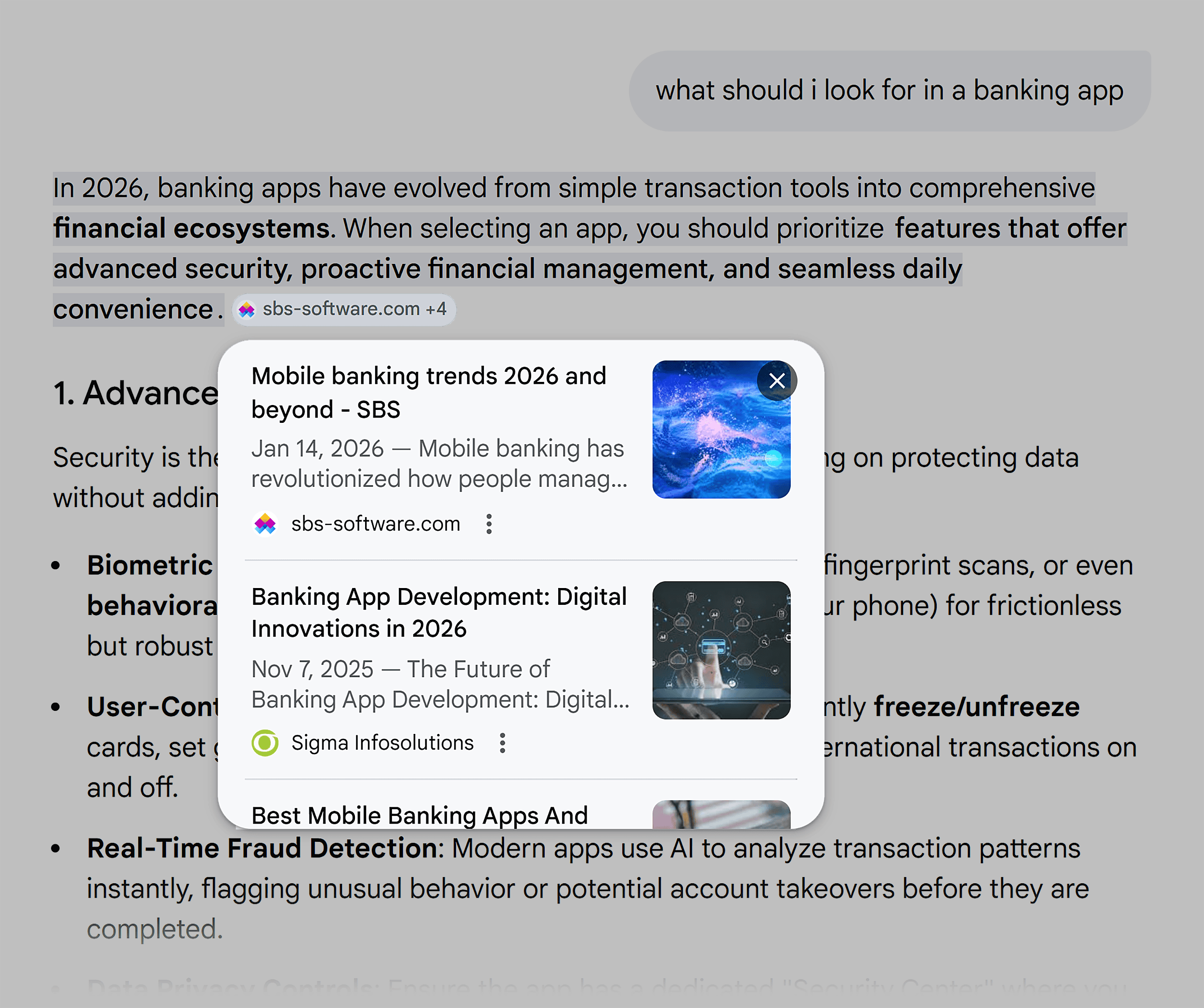
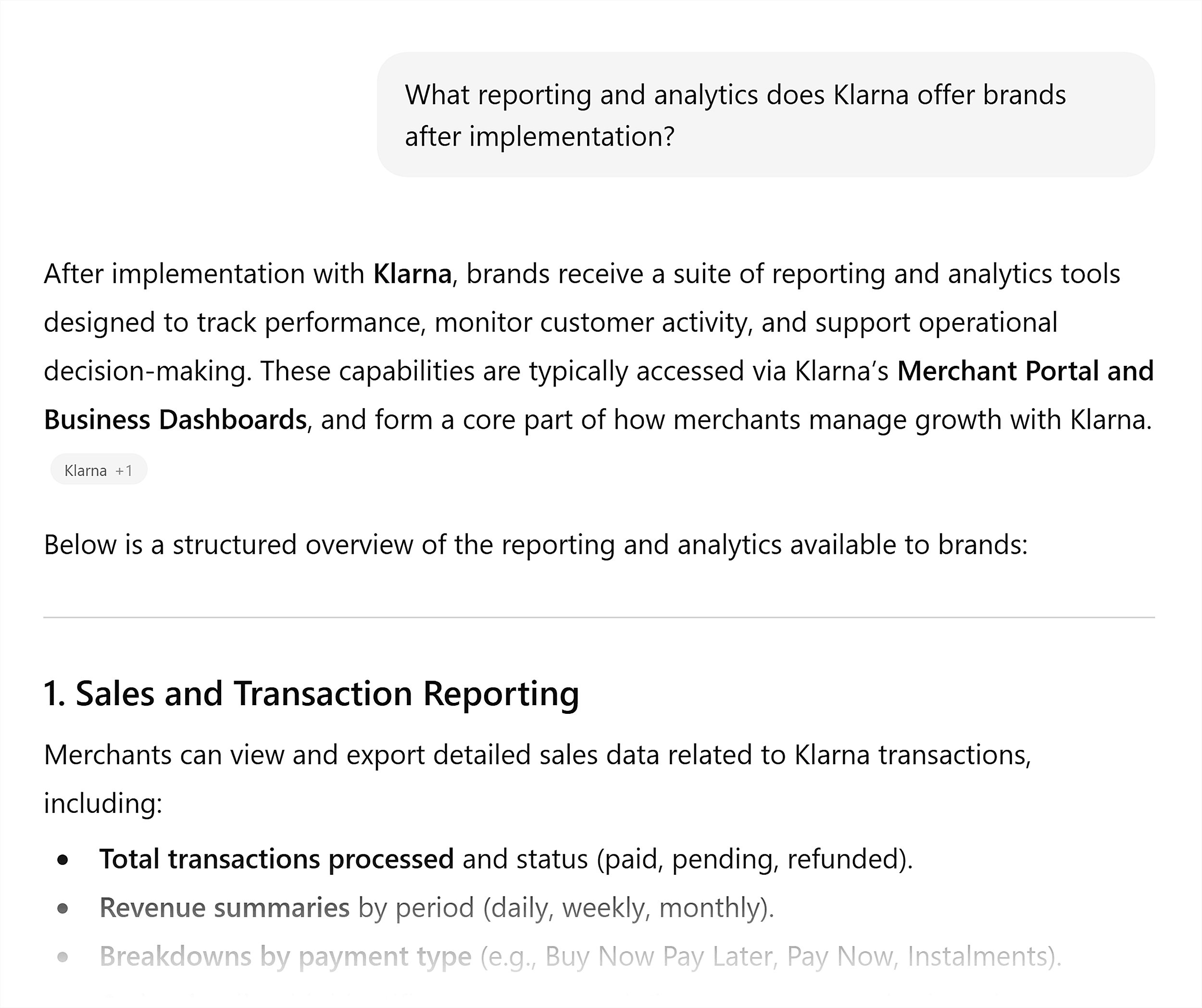
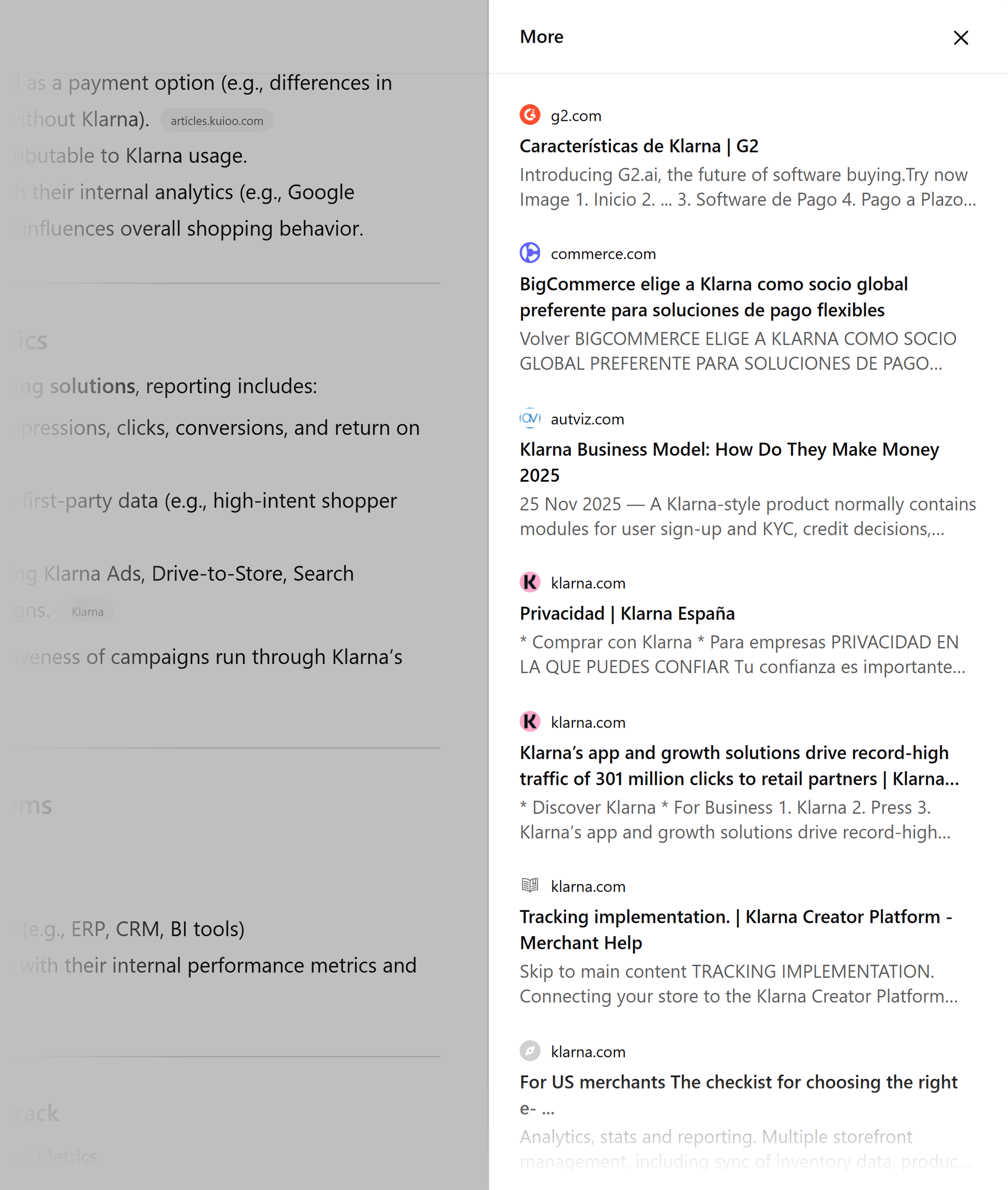
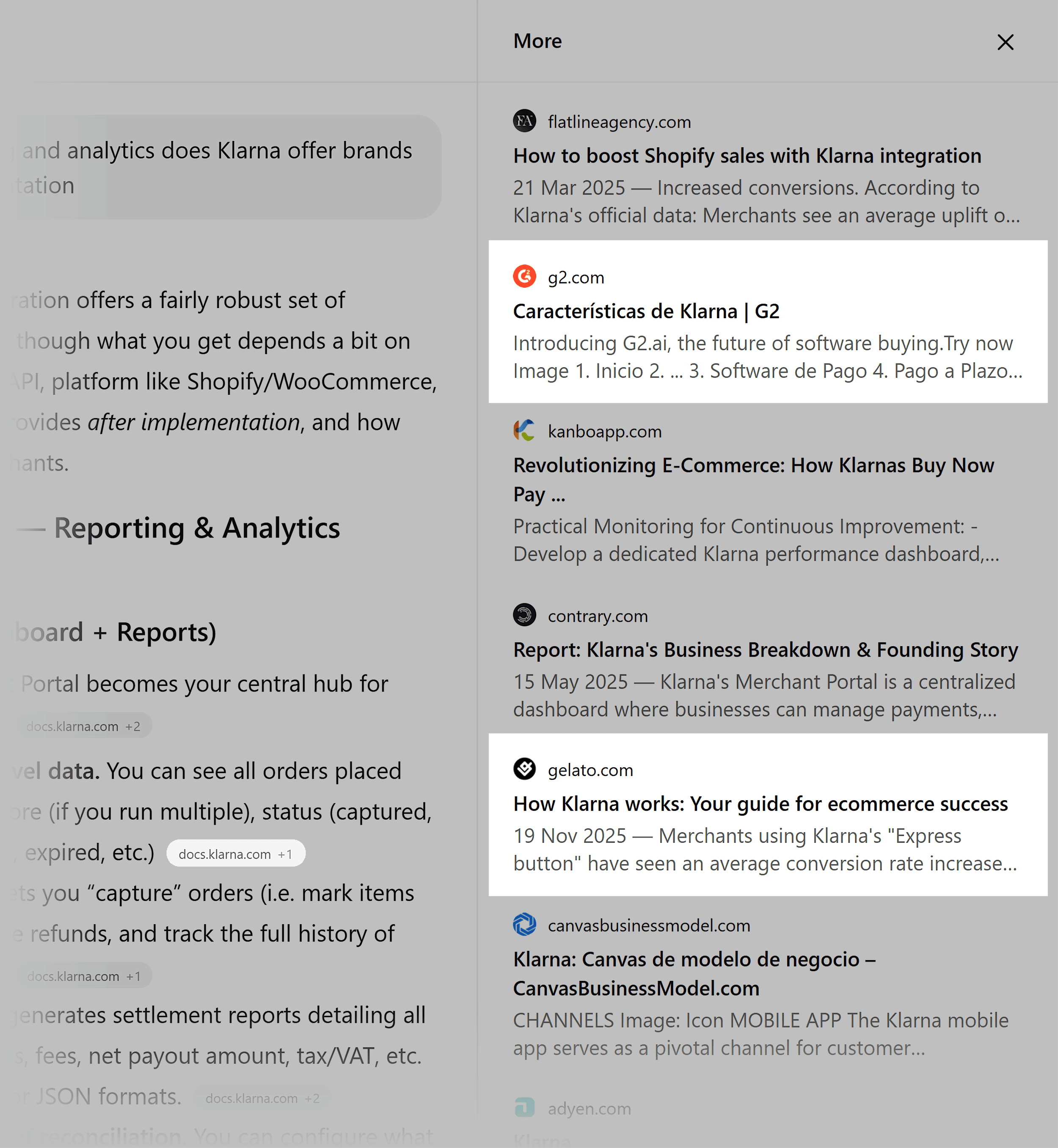
The format of citations can vary across different AI platforms. They might appear as footnotes, inline hyperlinks, sidebar panels with grouped sources, or even as visual thumbnails within the AI’s response. Regardless of the presentation, the underlying principle remains constant: AI systems are drawing information directly from a brand’s resources to construct their answers. This direct linkage provides fintech brands with a powerful opportunity to influence the precise language and details through which their products and services are explained. For example, when asked about Klarna’s reporting and analytics capabilities, ChatGPT might cite several pages from Klarna’s official documentation. This demonstrates that Klarna has a degree of control over how the AI articulates its product functionalities.
However, a critical nuance of citations is their impact on direct traffic. While they signal trust, users may not always click on citation links. Many prefer to continue their inquiry within the AI interface or pivot to traditional search engines if deeper investigation is required. Despite this, the foundational trust built through consistent citations is a prerequisite for the most impactful form of AI visibility: product recommendations.
Product Recommendations
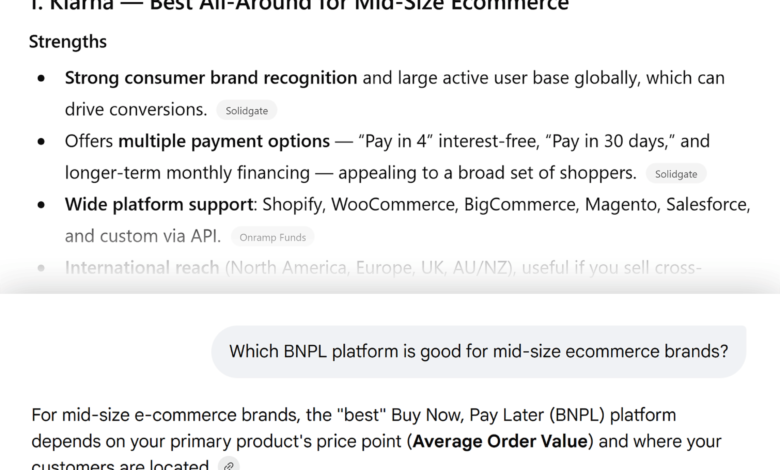
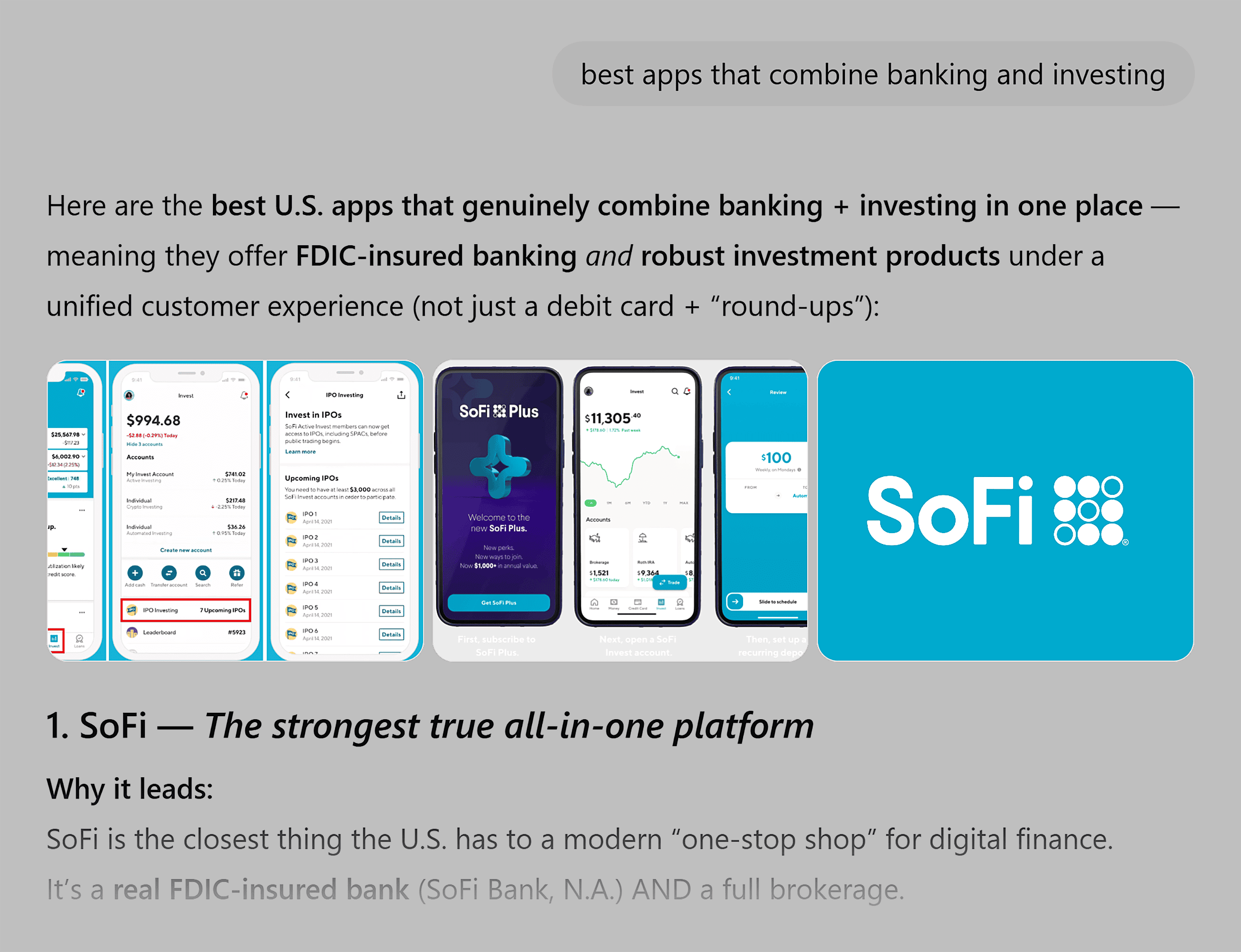
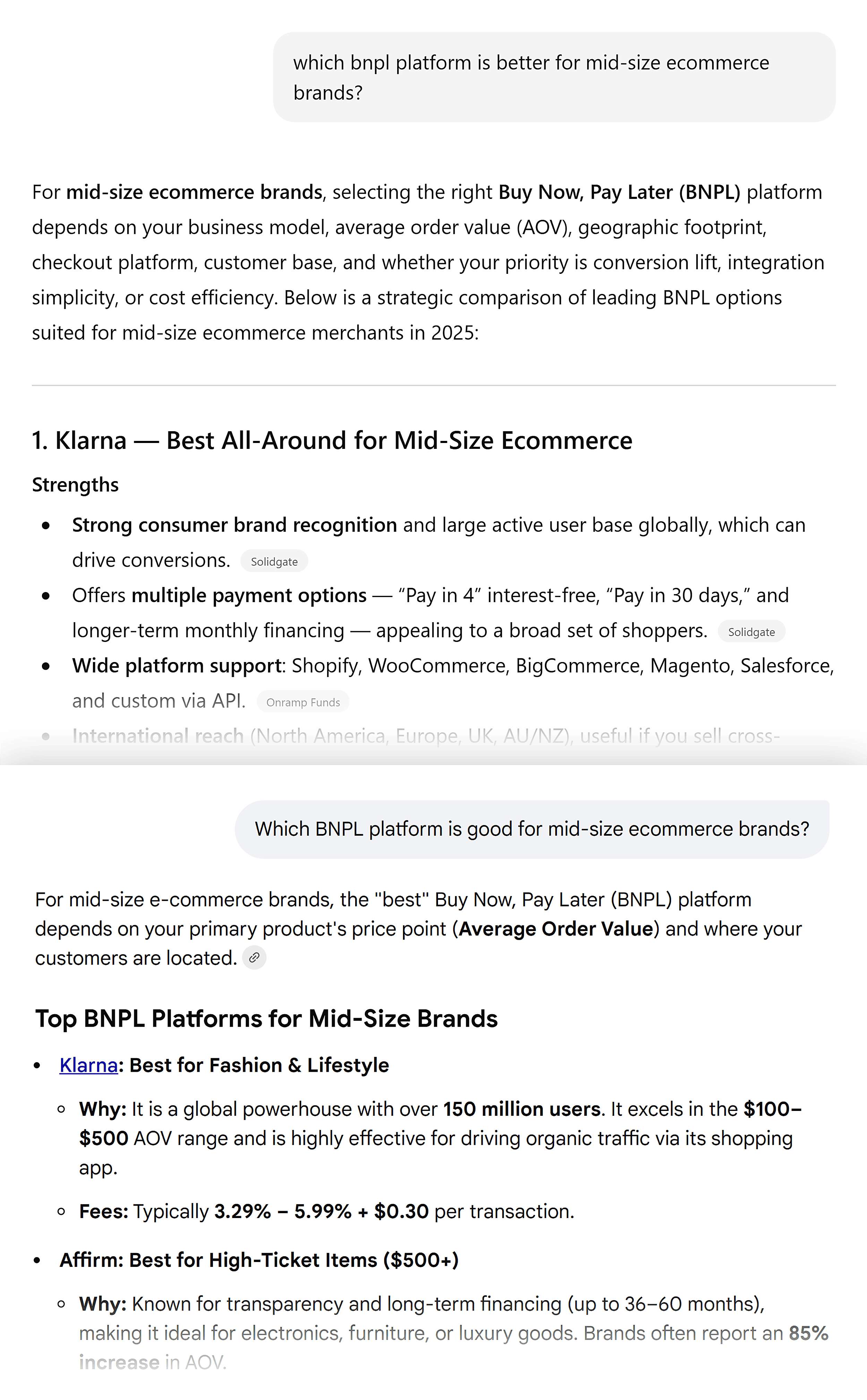
Product recommendations are the most influential type of AI visibility, occurring when AI systems include a fintech brand or product in a curated shortlist of suggested options. These recommendations directly shape which brands users consider during their decision-making process and ultimately, which products they choose. For instance, a query like "Which BNPL platform is good for mid-size e-commerce brands?" might result in both ChatGPT and Google AI Mode listing Klarna as a top contender. This direct recommendation positions the brand prominently as buyers evaluate their choices.
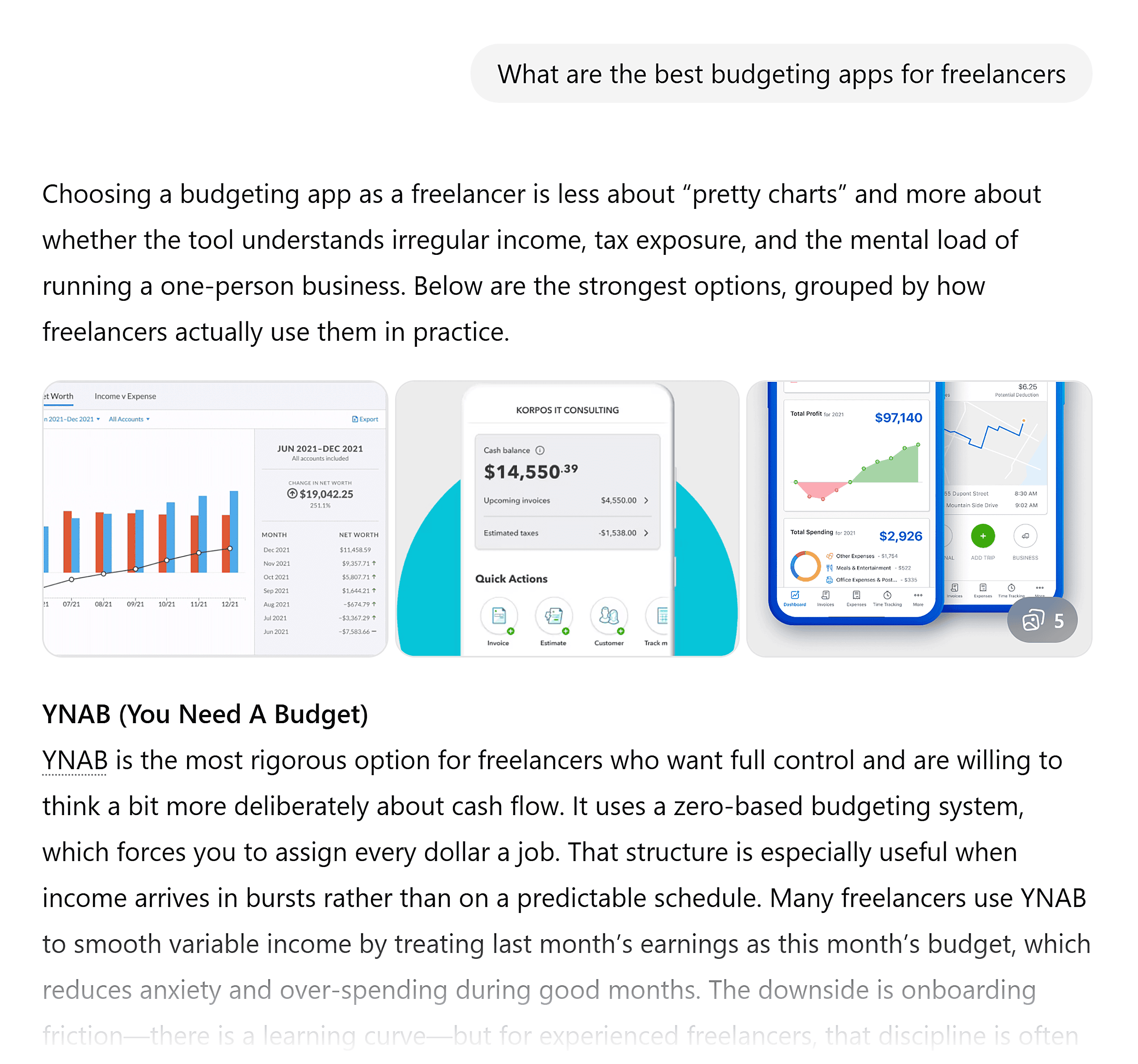
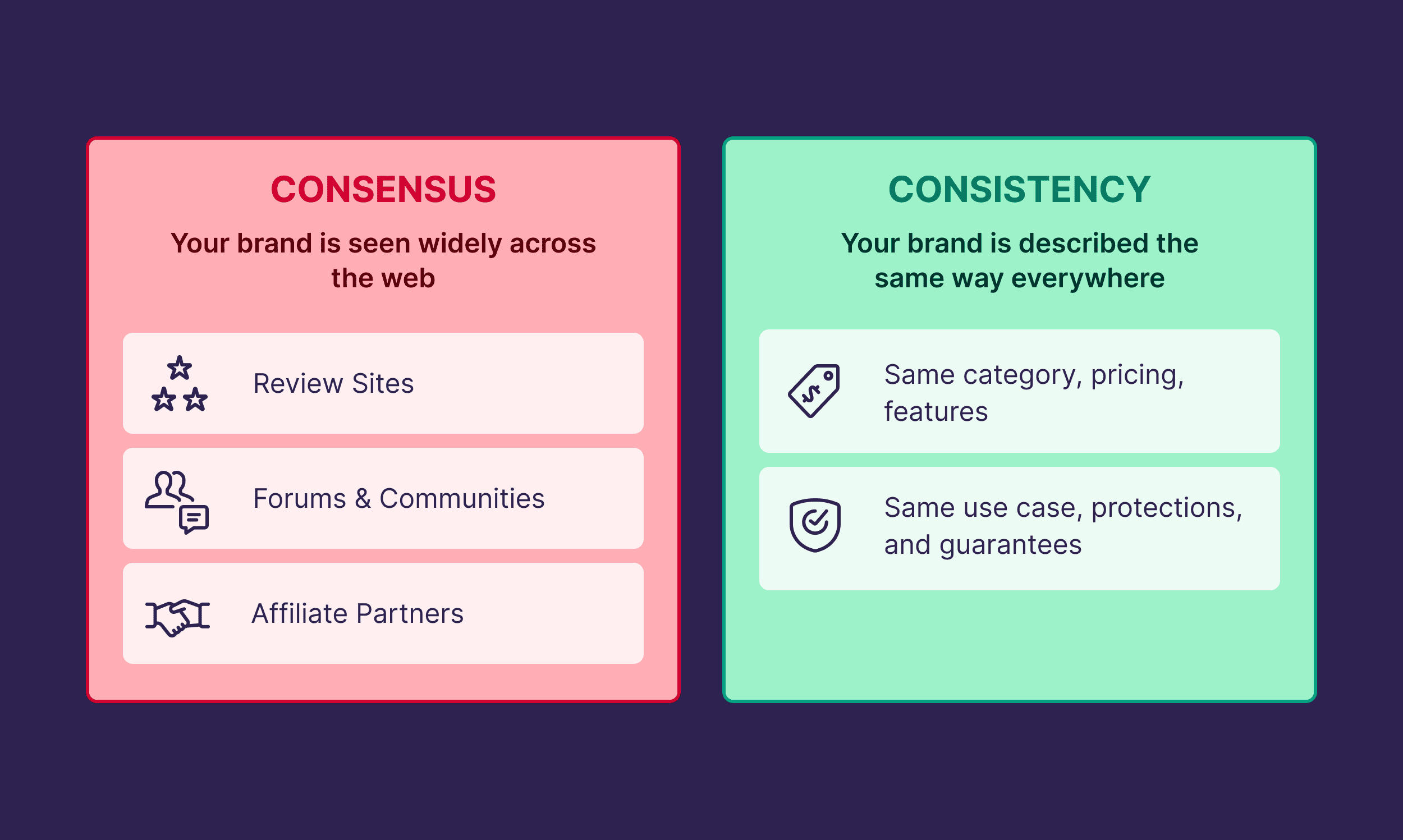
Securing recommendations is vital, particularly for "high-intent queries" – those containing keywords such as "top," "best," "compare," or "alternative." These queries indicate a user is actively seeking solutions and is close to making a purchasing decision. Examples include "best budgeting apps," "top investment platforms for beginners," or "compare digital banks." Appearing in these critical moments is not automatic; AI systems rely on specific signals to determine which brands to endorse. The subsequent sections will explore these underlying signals: consensus and consistency.
The Pillars of AI Trust: Consensus and Consistency
AI models act as sophisticated filters, sifting through vast amounts of information to present users with what they deem the most relevant and trustworthy answers. For fintech, this filtering process is exceptionally rigorous, boiling down to two primary signals that dictate which brands get featured: consensus and consistency.
Consensus
Consensus refers to the widespread agreement among multiple reputable sources regarding a brand and its products. When numerous credible entities mention a fintech brand, it provides AI systems with a form of social proof, suggesting that the brand is legitimate, reliable, and worthy of recommendation. The stronger and more widespread this consensus, the greater the AI’s confidence in featuring the brand. This dynamic, however, is a double-edged sword: if a multitude of sources consistently highlight negative aspects, the AI is likely to reflect these warnings in its responses.
In the fintech sphere, AI systems typically assess consensus from a diverse range of sources, including:
- Industry News Outlets & Financial Publications: Reputable news sites and specialized financial journals (e.g., Bloomberg, Wall Street Journal, Forbes, TechCrunch Fintech sections) carry significant weight.
- Independent Review Platforms: Sites like G2, Capterra, Trustpilot, and Yelp provide user-generated feedback and expert reviews, offering insights into real-world product experience.
- Consumer Advocacy Groups & Forums: Organizations like the Consumer Financial Protection Bureau (CFPB) or discussions on platforms like Reddit’s r/personalfinance or myFICO Forum reflect public sentiment and common concerns.
- Academic Research & Whitepapers: Scholarly articles or industry reports can provide foundational validation for innovative fintech solutions.
- Governmental & Regulatory Bodies: Official records from financial regulators (e.g., SEC, FDIC, FCA) confirming licenses and compliance are paramount.
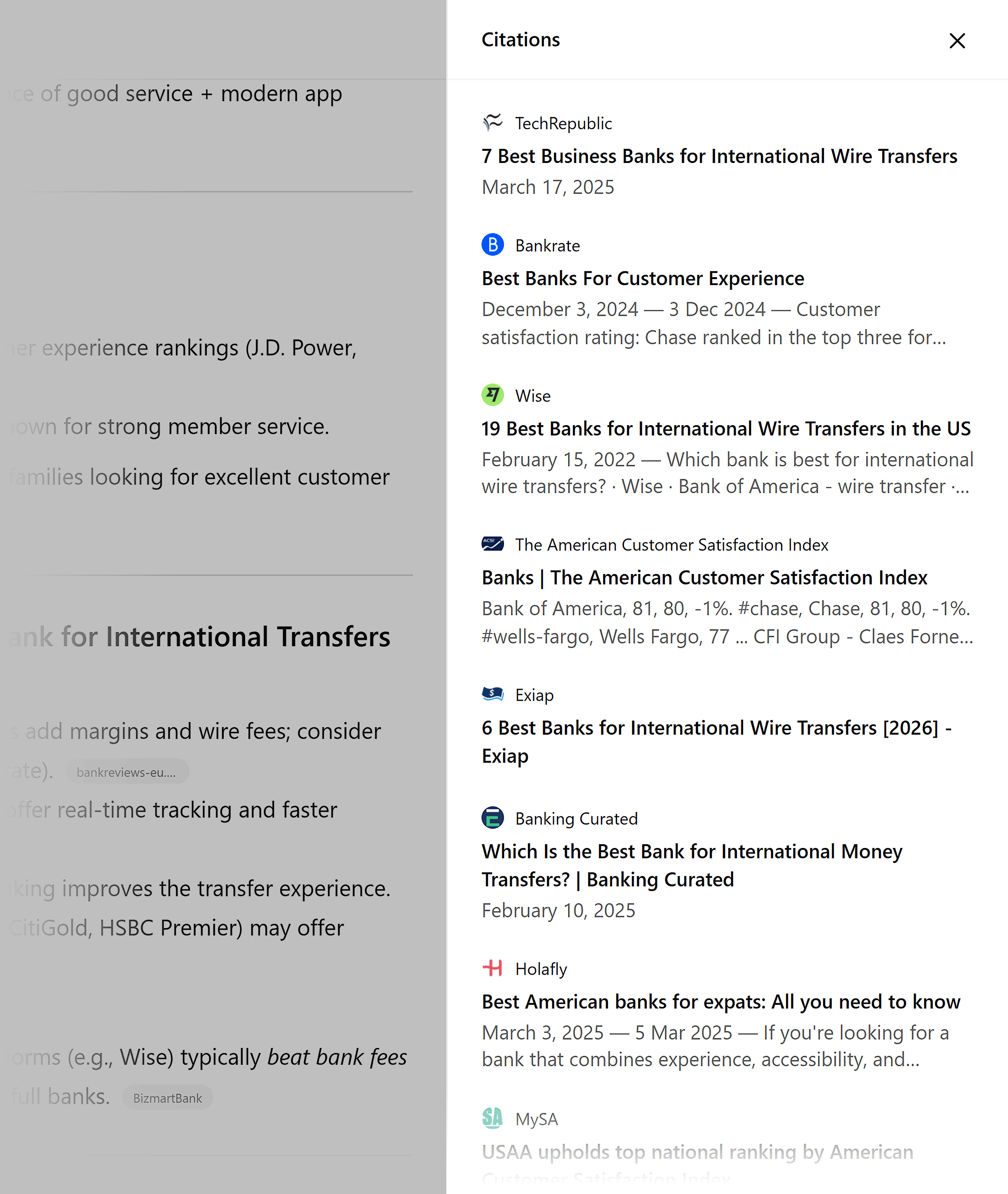
To identify which sources AI models prioritize for consensus, fintech brands should conduct regular "brand-related prompts" in generative AI tools. For instance, querying "Best banks for international transfers" and then examining the citations will reveal the websites the AI model deems authoritative in that specific domain. These are the platforms where cultivating a strong, positive presence is most impactful. When these trusted sites consistently discuss a brand in a favorable light, it significantly increases the likelihood of that brand being mentioned and recommended by AI. This highlights the strategic importance of not just existing online, but actively engaging with and being positively covered by the ecosystem of sources AI relies upon.
Consistency
Beyond mere mentions, consistency is the second critical signal for AI trust. It means that the core factual details and narrative surrounding a fintech product remain uniform across all online sources. AI systems struggle with conflicting information; discrepancies undermine their ability to confidently present accurate answers. This consistency extends to:
- Product Features and Functionality: What the product does, its key benefits, and how it operates.
- Pricing Models and Fee Structures: Clear and consistent reporting of costs.
- Regulatory Compliance and Security Measures: Details about licensing, data protection, and user safeguards.
- Target Audience and Use Cases: Who the product is designed for and the problems it solves.
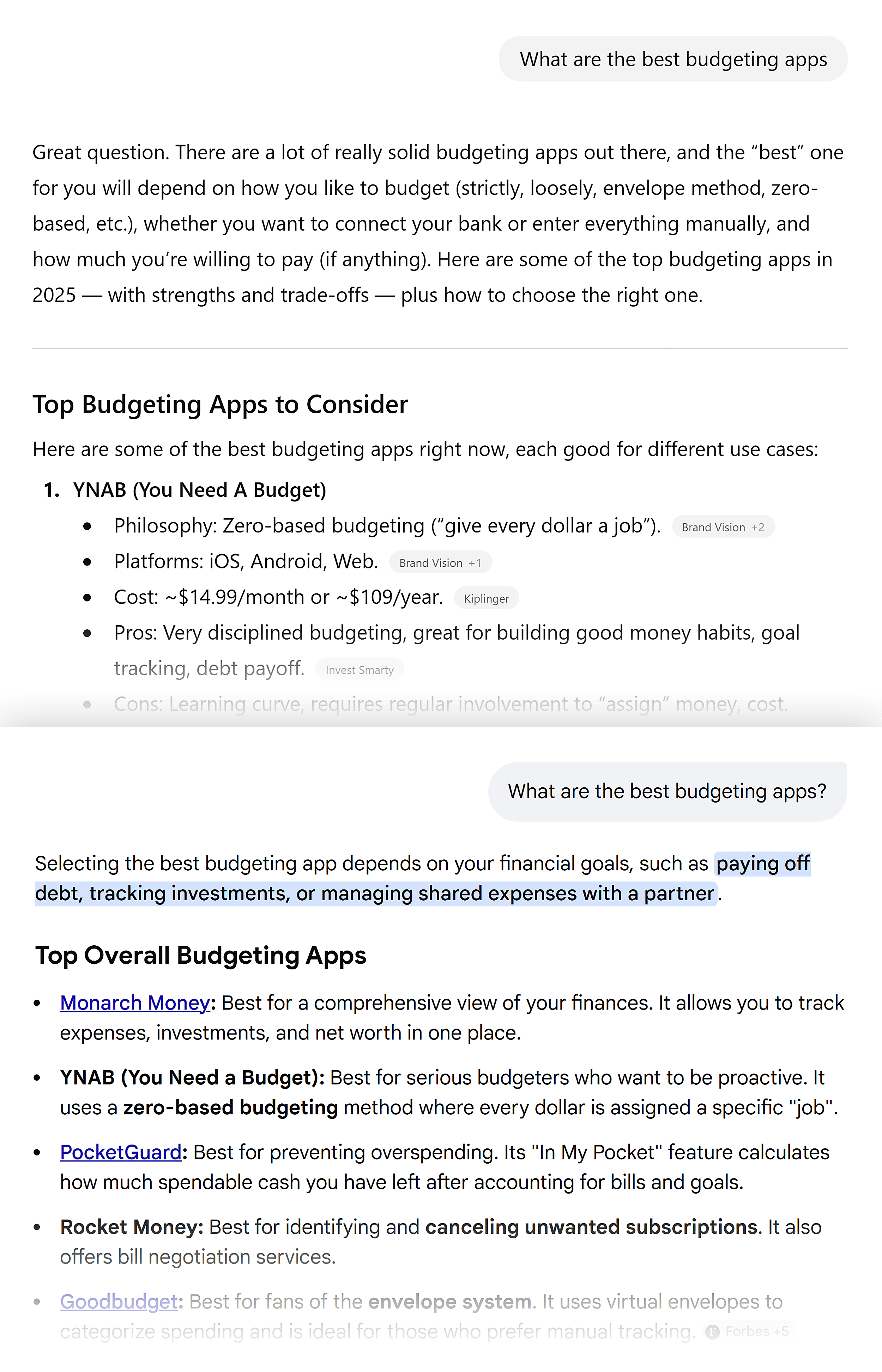
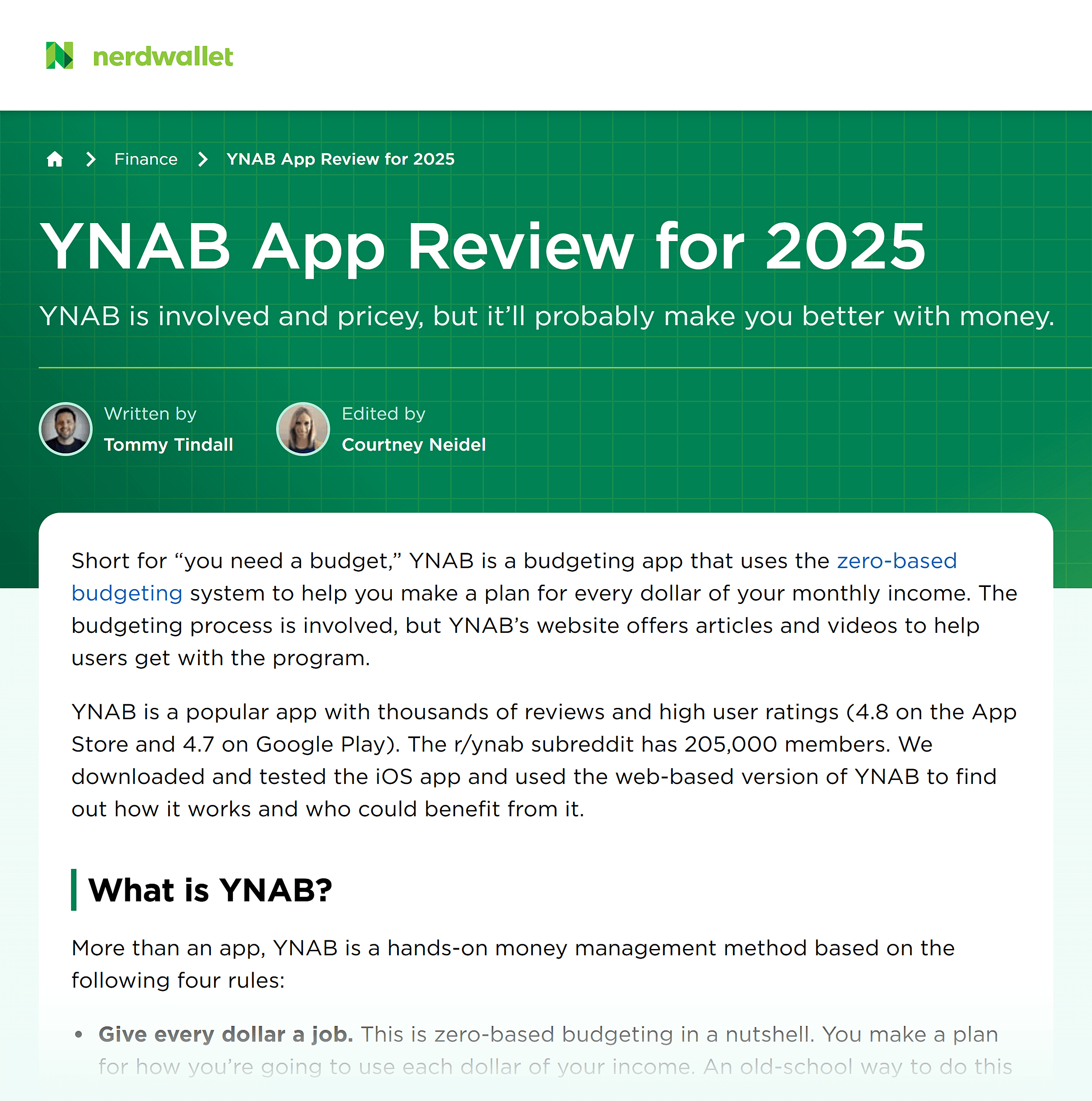
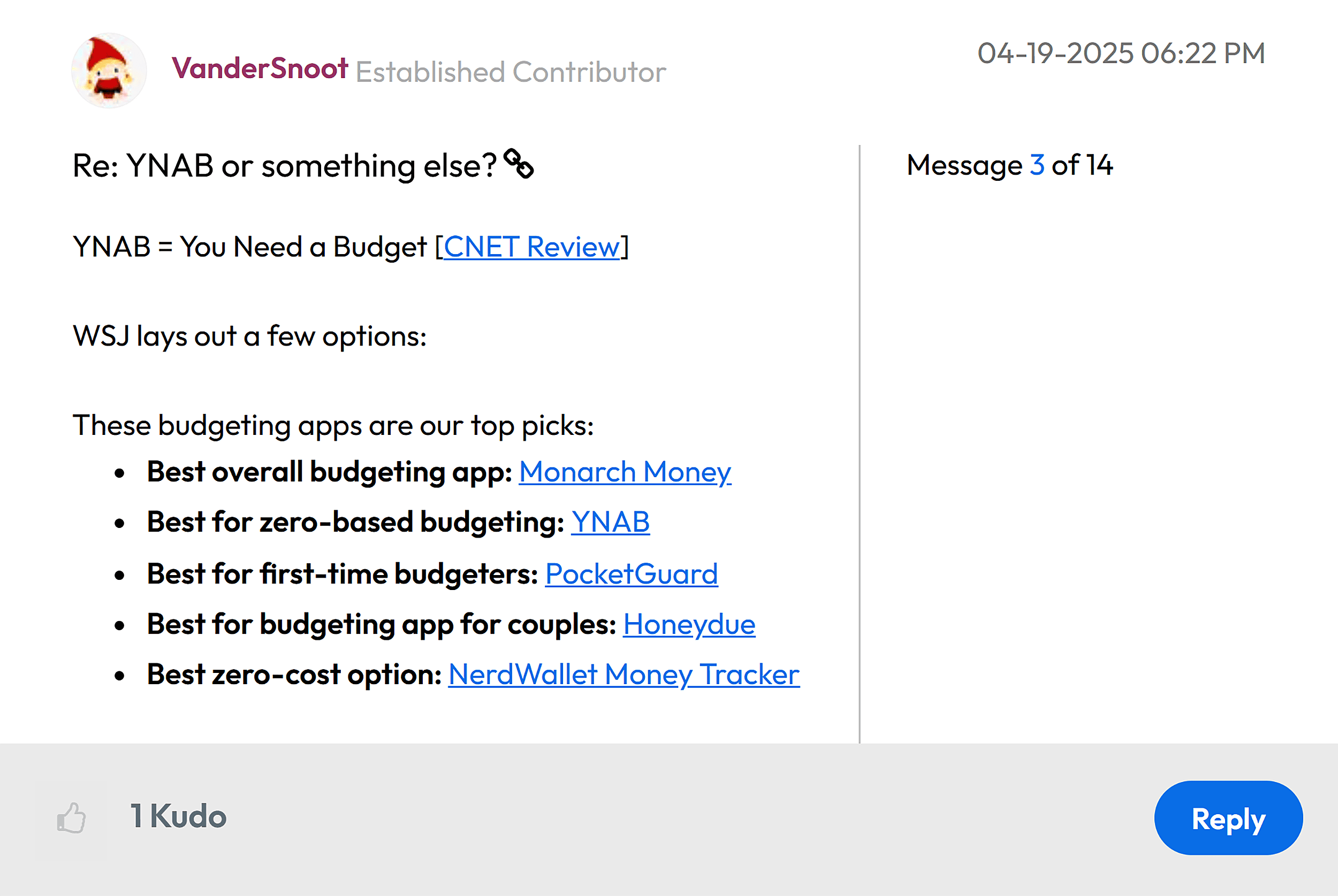
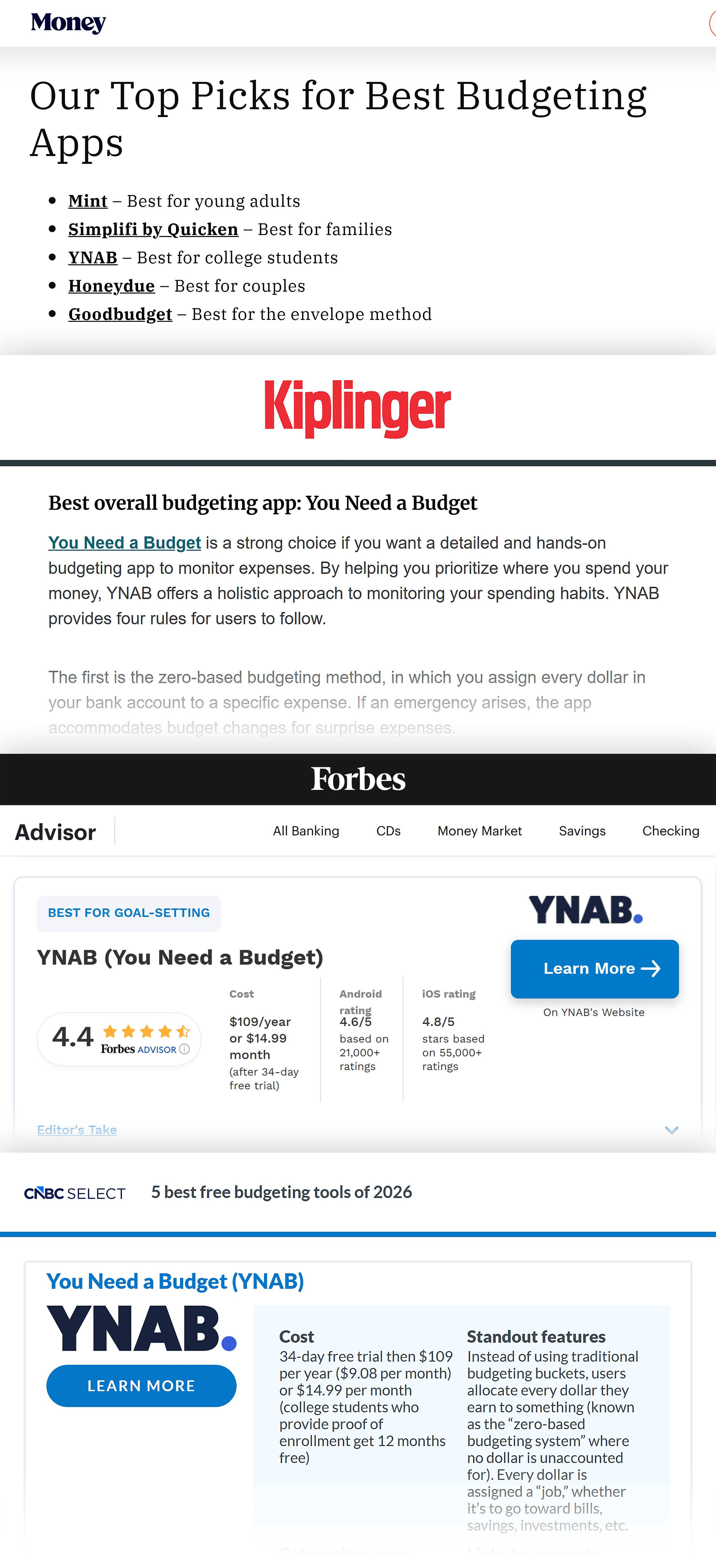
Consider the example of YNAB (You Need A Budget), a budgeting app often recommended by AI. This consistent recommendation is a direct result of its uniform positive portrayal across dozens of reputable sources, including Money, CNBC, NerdWallet, and Wirecutter, as well as finance communities like myFICO Forum. These sources consistently highlight YNAB’s efficacy for specific use cases, such as college students, goal-setting, and overall budgeting discipline. This strong alignment of messaging across diverse platforms provides AI with the confidence to recommend YNAB for those precise scenarios.
Achieving such consistency requires a proactive approach to reputation management and public relations. Fintech brands must ensure that their owned content aligns perfectly with how third-party publishers and affiliates describe them. This often involves collaborative efforts with content partners to shape the brand narrative. Ultimately, consistency begins with a clear, unified message originating from the brand itself and then being faithfully echoed across the broader digital landscape. Any divergence, whether in product details, pricing, or security claims, can lead to mixed signals that prompt AI to adopt a cautious, less definitive stance towards a brand.
3 Types of Content That Dominate Fintech in AI Search
Large Language Models (LLMs) are voracious consumers of public content, and in the sensitive realm of fintech, three specific categories of content carry the most weight in shaping AI responses. Optimizing these content types is crucial for enhancing AI search visibility and accuracy.
1. Owned Content
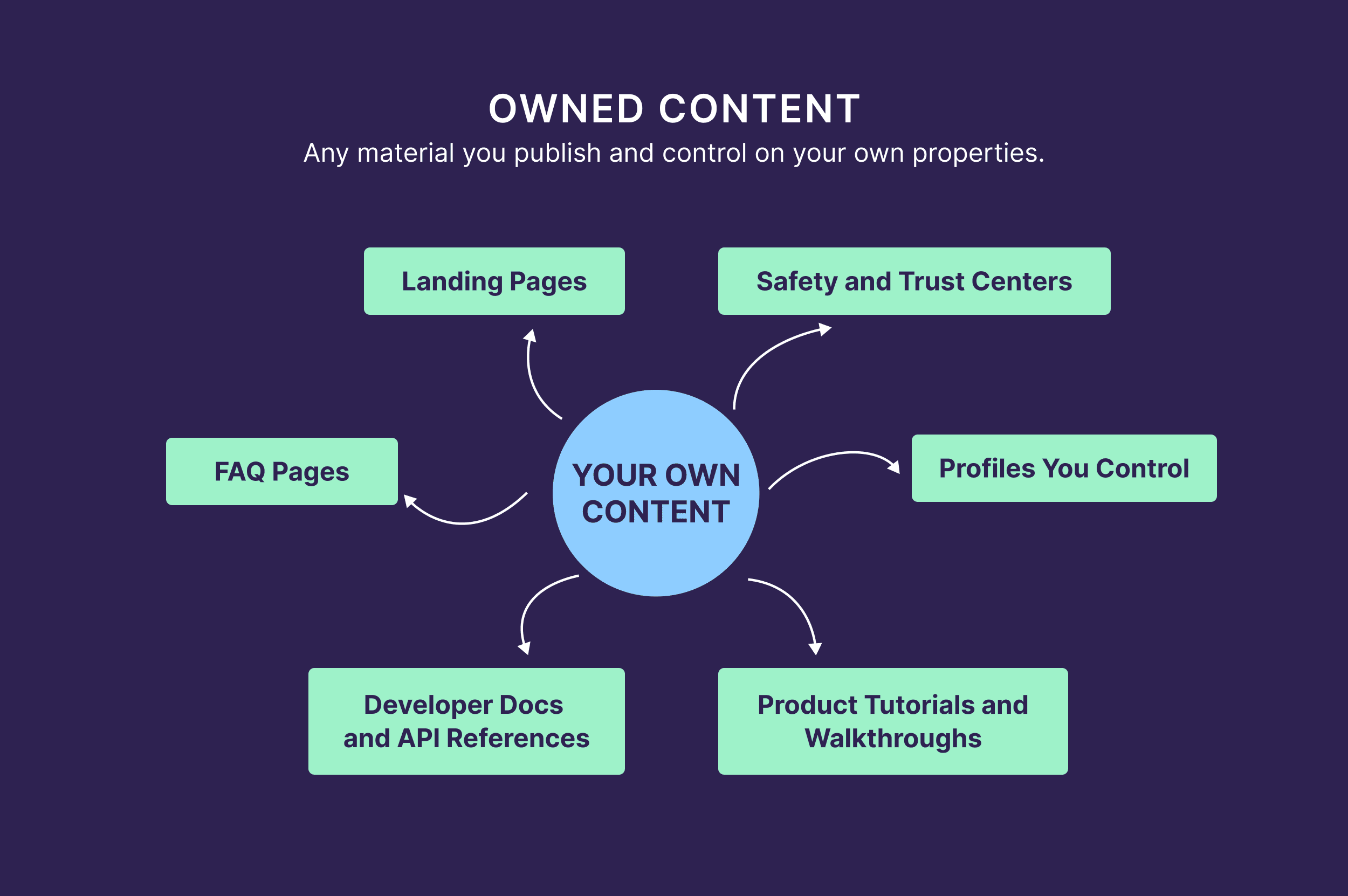
Owned content encompasses all material a fintech brand publishes and controls on its proprietary platforms, including its official website, comprehensive documentation, help centers, and branded social media channels. AI systems meticulously analyze these sources to understand a brand’s self-defined narrative and factual claims. Therefore, the clarity, completeness, and accessibility of owned content are paramount.
Content that directly addresses fundamental questions like "What does this product do?" or "How does it work?" is especially vital. For instance, when comparing ATM withdrawal limits, card spending caps, and international FX fees for services like Wise, Revolut, and Monzo, AI models frequently cite the pricing and product pages of these brands to construct their comparative answers. This direct reliance means that a brand’s website serves as both a primary marketing tool and a critical educational channel for AI.
Fintech brands should treat their website as the definitive source of truth. This involves publishing detailed product specifications, clear explanations of services, and transparent fee structures. Insights from sales conversations, customer support tickets, and competitive research can help identify common questions, concerns, and pain points that should be explicitly addressed in owned content. Intuit’s TurboTax, for example, features landing pages with extensive product details, covering security guarantees, key tax filing information, and user benefits. This comprehensive approach ensures that both AI and human users can easily grasp the product’s scope, functionality, and target audience.
To further optimize owned content for AI, brands should adopt structured data formats, use clear headings, and employ bullet points and tables to present information concisely. These formatting choices make it easier for AI to extract and cite specific data points. Regular updates are also critical; any changes in product features, pricing, or regulatory partners must be immediately reflected across all owned platforms to prevent the spread of outdated information.
2. Earned Media and Reviews
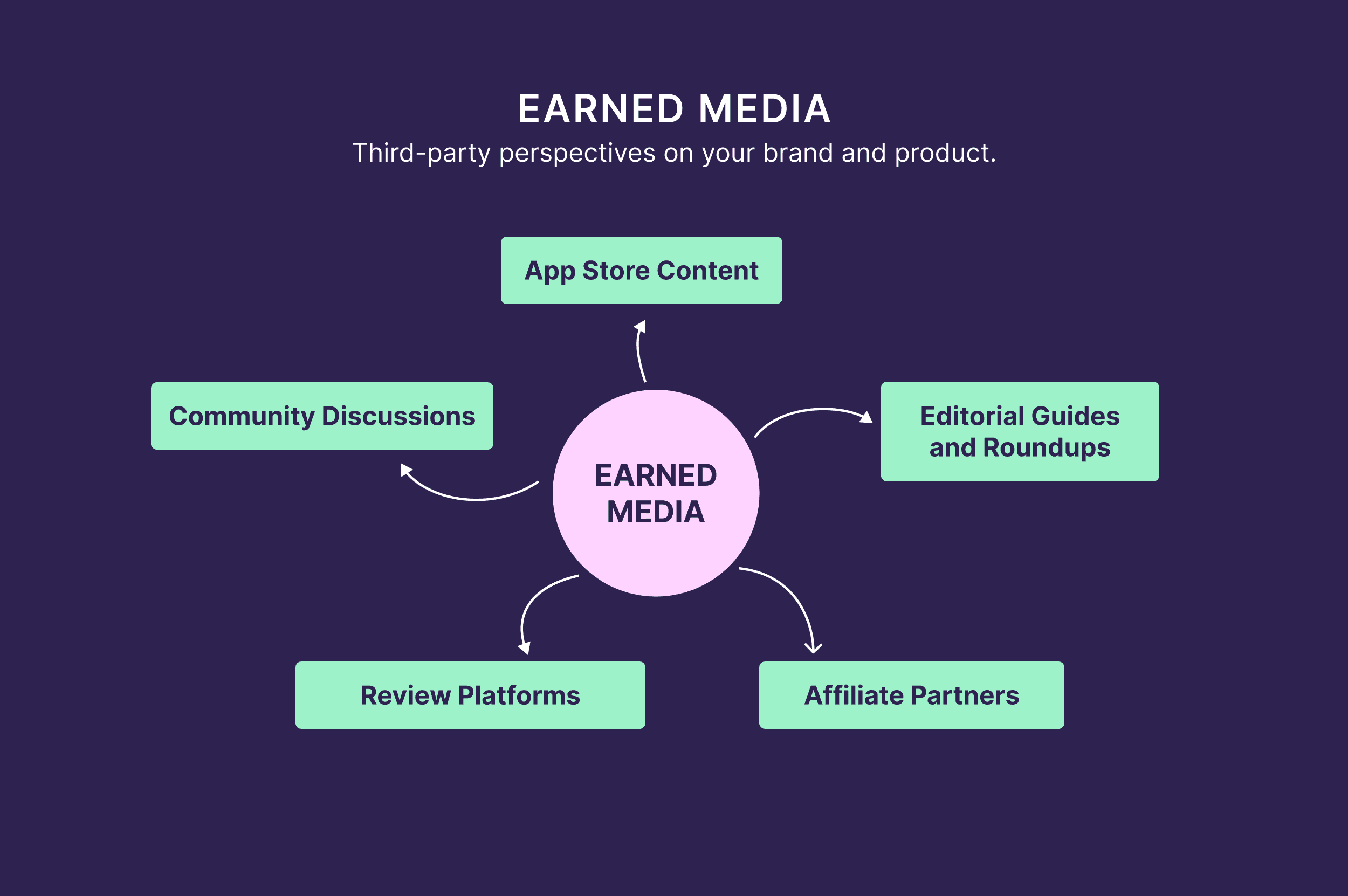
Earned media and reviews represent third-party perspectives on a fintech product or brand. This category includes everything from editorial coverage in financial news outlets to independent user feedback on review platforms. LLMs leverage these sources to validate a brand’s self-proclaimed attributes, fact-check claims, and understand the real-world user experience. In essence, earned media provides an external layer of consensus and sentiment.
For fintech, influential third-party sources include:
- Financial News & Analysis Sites: Publications that review and analyze financial products (e.g., NerdWallet, Investopedia, The Ascent).
- Industry Analyst Reports: Assessments from firms like Forrester, Gartner, or specialized fintech analysts.
- User Review Platforms: Aggregators like G2, Capterra, Trustpilot, and app store reviews.
- Blogs and Influencer Content: Reputable financial bloggers or influencers who review fintech products.
When an AI responds to a query about Klarna’s reporting and analytics, for example, it might cite not only Klarna’s documentation but also articles from Forbes, reviews on G2, and even discussions on platforms like Gelato. This mixed citation pattern demonstrates that AI actively cross-references a brand’s claims against independent evaluations.
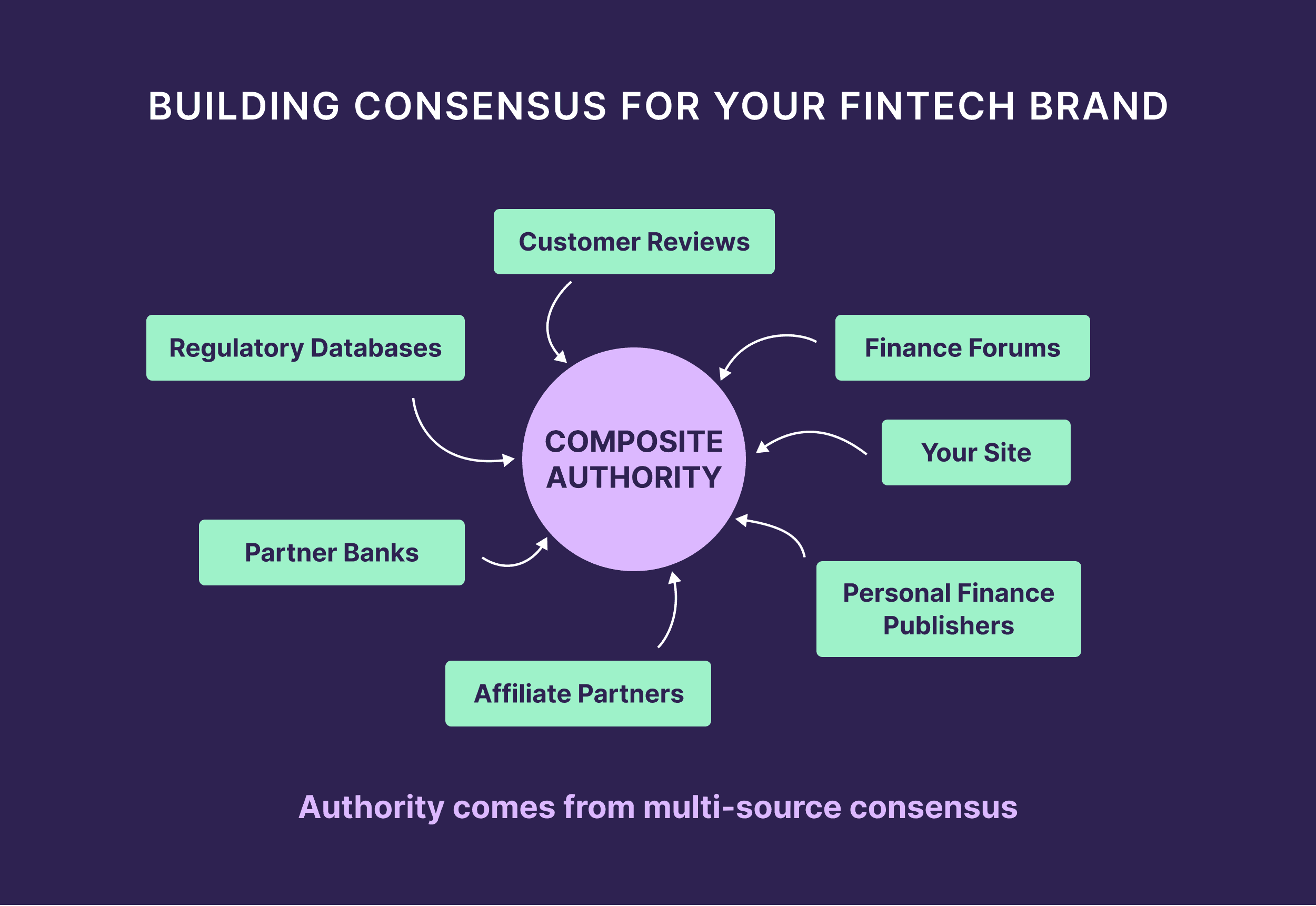
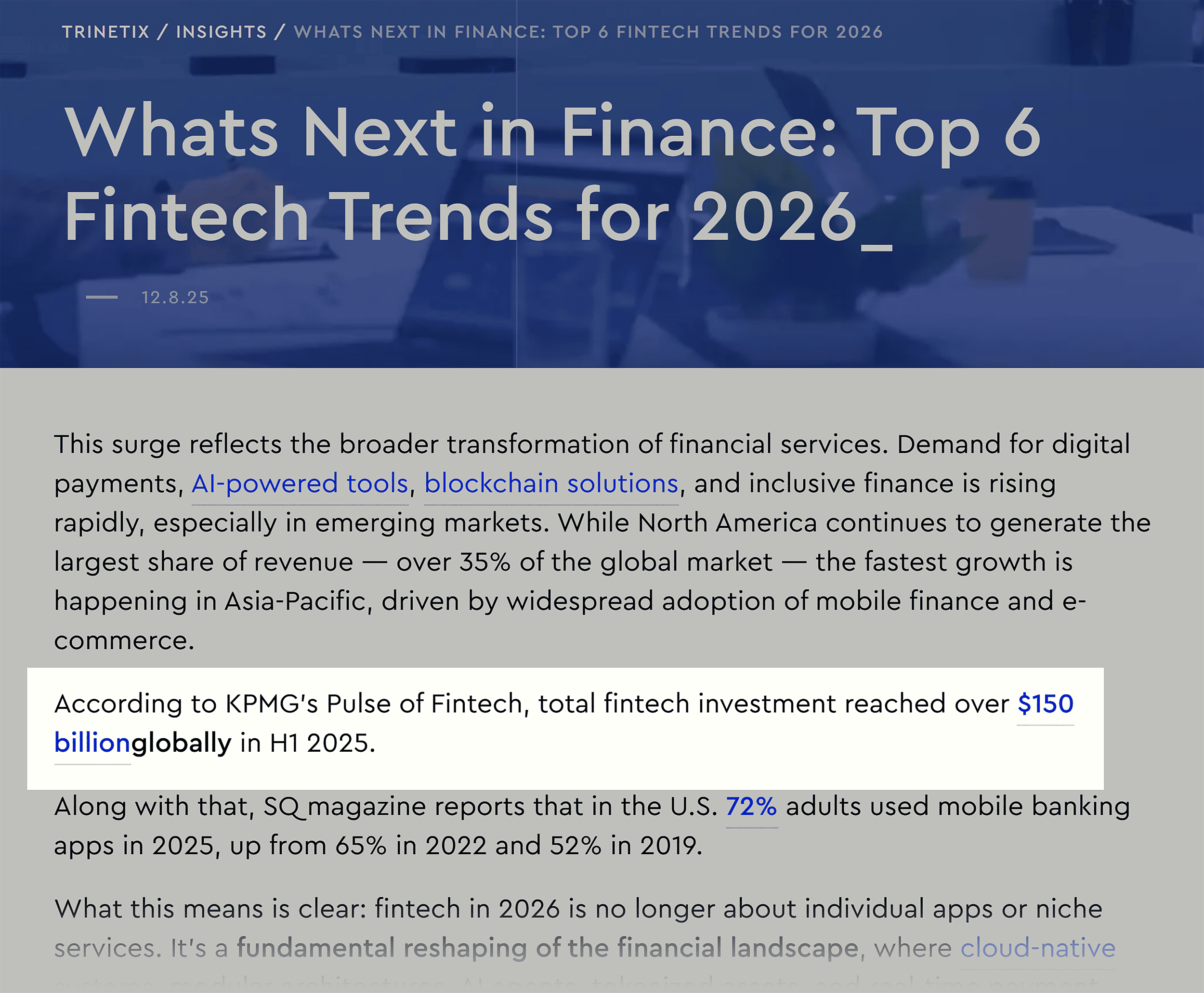
A key strategy for fintech brands is to cultivate positive earned media. One highly effective tactic is to publish original research, industry reports (like KPMG’s Pulse of Fintech report), or data-driven insights that journalists and industry analysts can cite. Reporters are constantly seeking newsworthy statistics and expert commentary, and providing these resources can generate valuable media coverage. Other actions to increase positive earned mentions include:
- Proactive PR Outreach: Engaging with relevant journalists and influencers to pitch stories, offer expert commentary, or provide product demonstrations.
- Customer Testimonials & Case Studies: Actively collecting and promoting positive user experiences to influence review platforms and showcase success stories.
- Thought Leadership: Positioning key executives as industry experts through speaking engagements, webinars, and bylined articles.
By actively shaping and encouraging positive third-party coverage, fintech brands can build a robust external narrative that reinforces their credibility and influences AI’s perception.
3. Official Records
Official records are indispensable documents that formally confirm a fintech brand’s legal authorization to operate, its compliance with regulations, and its overall standing within the financial ecosystem. In the YMYL category, LLMs treat these records as definitive proof of legitimacy and a strong trust signal, which is critical for making recommendations that could impact users’ financial lives.
The types of official records frequently cited by LLMs include:
- Regulatory Filings and Licenses: Documents from bodies like the SEC, FINRA, FDIC (for banks), state money transmitter licenses, or equivalent international regulators.
- Business Registrations: Official records confirming company incorporation and legal entity status.
- Security Certifications: Proof of adherence to industry security standards (e.g., ISO 27001, PCI DSS compliance).
- Partnership Agreements: Details about collaborations with licensed banks or financial institutions that underpin a fintech service.
These sources enable AI to confidently answer user questions regarding a brand’s legal standing and the protections afforded to its users. For instance, if a user asks Perplexity, "Is Wise licensed to operate in the U.S., and what protections apply to Wise balances?", the AI might cite Wise’s own documentation alongside regulatory information from the Federal Reserve, the CFPB, and details from partner banks. These official confirmations assure both AI and users that Wise:
- Is appropriately licensed across relevant jurisdictions.
- Complies with federal and state regulations.
- Safeguards customer funds through recognized financial institutions.
This regulatory validation is a potent trust signal in AI search. It tells AI systems that a product is not only legitimate but also operates within a secure and regulated framework, making it safe to mention and recommend. Fintech brands have a significant opportunity to proactively manage this aspect of their digital footprint. By making their regulatory standing explicit, structured, and easily retrievable, they can directly influence AI’s confidence in their services.
Practical steps include:
- Transparent Disclosure: Clearly naming partner banks, custodians, and key infrastructure providers on the company website, often in the footer, "About Us" section, or dedicated "Trust & Security" pages.
- Dedicated Information Hubs: Publishing comprehensive pages that detail:
- Regulatory Licenses: A list of all licenses held and the jurisdictions covered.
- Security Protocols: Explanations of data encryption, fraud prevention, and account protection measures.
- Partner Institutions: Information about the licensed financial institutions that hold customer funds.
- Data Hygiene: Ensuring that all regulatory documentation on the website is current and accurate. Outdated PDFs or help documents should be updated, redirected, or removed to ensure AI only accesses the most recent and relevant information.
By meticulously curating and maintaining these official records and making them discoverable, fintech brands can build an unassailable foundation of trust that resonates strongly with AI systems and, by extension, with their potential customers.
How Fintech Brands Can Improve AI Search Visibility and Accuracy
The increasing reliance on generative AI for financial research presents both a challenge and a monumental opportunity for fintech brands. A 2023 Motley Fool Money study revealed that 54% of Americans now consult ChatGPT for financial inquiries, meaning the "AI version" of a brand often precedes its official website. While this might seem daunting, a Microsoft study found that traffic originating from AI converts at three times the rate of other channels, including traditional search, direct visits, and social media. The crucial caveat, however, is that this conversion advantage only materializes if the AI accurately and favorably describes the product. Here’s how fintech brands can ensure they capitalize on this trend.
1. Establish Verifiable Trust and Clarity
LLMs require concrete, verifiable proof of a brand’s legitimacy and trustworthiness before incorporating it into their answers. Therefore, transparently showcasing trust details across all owned platforms is non-negotiable.
Create a Centralized Trust Hub: A dedicated section on your website, such as a "Trust & Security Center" (like SoFi’s) or a comprehensive "Help Center" (similar to Venmo’s), should serve as the primary source of truth. This hub must clearly articulate:
- Regulatory Compliance: Licenses, registrations, and affiliations with regulatory bodies (e.g., FDIC membership, SEC registration).
- Security Measures: Detailed explanations of data encryption, fraud protection, multi-factor authentication, and other safeguards.
- Data Privacy Policies: Clear outlines of how customer data is collected, stored, and used.
- Partner Banks/Custodians: Identification of the regulated financial institutions that hold customer funds.
- Insurance/Protections: Information on deposit insurance or other protective schemes.
Integrate Trust Signals Across Your Site: Don’t confine trust details to a single page. Reiterate key information on the homepage, "About Us" page, and within relevant FAQ sections on service pages. Many fintech brands strategically place disclosures (e.g., "Member FDIC," partner bank language) in their website footers for consistent visibility.
Address User Concerns Proactively: Utilize keyword research tools like Semrush’s Keyword Magic or Google’s People Also Ask feature to identify common safety and trust-related questions users have about your company or industry. Create content that directly and thoroughly answers these questions, ensuring the information is presented in an easy-to-digest format (FAQs, bullet points, clear headings) that AI can readily parse and cite.
Maintain Impeccable Data Hygiene: Operational changes, new partnerships, or updated regulatory frameworks necessitate immediate updates to all relevant documentation. Old PDFs, help articles, or product specs should be promptly updated, redirected, or removed to ensure AI systems only access the most current version of information. This proactive approach prevents the spread of outdated or conflicting details.

2. Harmonize Brand Messaging and Reduce Mixed Signals
Contradictions in online information severely undermine AI’s trust in a brand, breaking the crucial consistency signal. As companies evolve, outdated content can persist, leading to AI confusion about which information is current. Mitigating mixed messages is essential.
Synchronize Owned Content: Ensure your core narrative, product details, and trust documentation are perfectly aligned across all landing pages, help centers, and marketing materials on your own site. SoFi, for example, consistently reinforces its "all-in-one app" positioning throughout its digital properties. Cross-functional collaboration between marketing, product, and compliance teams is vital to ensure uniformity in promotional messaging, regulatory disclosures, and product specifications.

Influence Third-Party Coverage: Affiliate sites and finance publishers are frequently cited by AI models (as shown by the Semrush AI Visibility Index). Regularly audit what these influential third parties are saying about your brand, particularly in "best-of" lists, comparison articles, and reviews.
- Monitor Key Queries: Research how users evaluate your product (e.g., "Is [Brand] reliable?", "What are the pros and cons of [Brand]?", "Alternatives to [Competitor]?").
- Review Cited Sources: Use AI visibility tools or manual searches to identify the specific pages and websites AI cites for these queries.
- Proactive Engagement: If you find inaccuracies or outdated information, reach out to publishers with clear, publish-ready facts and request corrections or updates. Building relationships with these publishers can facilitate smoother information flow.
Engage in Online Communities: Forums and social media platforms often have a long shelf life, meaning outdated discussions can remain discoverable for years, potentially influencing AI.
- Monitor Conversations: Track mentions of your brand on platforms like Reddit, Quora, and specialized financial forums.
- Official Presence: Consider establishing an official presence or actively participating in relevant communities (e.g., Fidelity’s subreddit). This allows direct influence over the public record and provides opportunities to correct misinformation or clarify product details.
- Provide Current Information: When engaging, always link to the most current and accurate information on your owned platforms.
3. Proactively Manage Brand Perception and Sentiment
AI systems analyze the overall public sentiment surrounding a brand, and this collective perception directly shapes the answers users receive. For example, if a user asks ChatGPT "Is PayPal safe?", the AI’s response uses qualifying language ("generally considered," "not perfect") and adds caveats, citing sources that highlight both its security features and potential user risks. This demonstrates that external sentiment, even if nuanced, directly impacts AI’s portrayal.
Conduct Regular AI Search Visibility Audits:
- Manual Audits: Periodically run a consistent set of high-intent, brand-related, and category-related prompts on leading generative AI tools (e.g., ChatGPT, Google AI Overviews).
- Analyze Sentiment: Note the sentiment (positive, neutral, negative) in AI responses, observing any discrepancies across models. Look for patterns in how your brand is described:
- Positive: Emphasizes strengths, benefits, and trustworthiness.
- Neutral: Presents factual information without strong emotional framing.
- Negative: Highlights weaknesses, risks, or criticisms.
Leverage AI Visibility Tools: Tools like Semrush’s AI Visibility Toolkit can automate and scale this process, providing insights into:
- Overall Sentiment & Share of Voice: A high-level view of your brand’s emotional perception and how often it’s mentioned relative to competitors.
- Platform-Specific Breakdown: Sentiment analysis across different AI models and platforms (e.g., ChatGPT, Google AI, Perplexity).
- Competitor Benchmarking: How your brand’s sentiment and visibility compare to major rivals.
- Narrative Drivers: This feature is particularly valuable, showing the exact questions users ask about your brand and the percentage of favorable sentiment in each AI-generated answer. This allows you to pinpoint areas where perception is strong or weak, guiding targeted content and reputation management efforts.
By understanding and actively managing sentiment at scale, fintech brands can proactively address negative narratives, amplify positive ones, and ensure AI systems consistently present them in the most favorable and accurate light.
Make Your Fintech Brand Easy for AI to Trust
The integration of AI into financial research marks a pivotal shift in consumer behavior, positioning AI-generated answers as the crucial first touchpoint for many potential customers. For fintech brands, this means that a lack of presence or, worse, inaccurate representation in these AI responses equates to being excluded from the purchasing decision process entirely.
The solution lies in a deliberate and sustained effort to build robust consistency and strong consensus signals around your fintech brand. This involves a multi-faceted approach: meticulously curating owned content for clarity and accuracy, actively cultivating positive earned media and reviews, and transparently publishing and maintaining official regulatory records. By making your brand’s legitimacy, security, and value proposition undeniably clear and consistently verifiable across the digital ecosystem, you empower AI systems to confidently mention, cite, and recommend your products.
The burgeoning era of AI search is not merely a technological evolution; it’s a strategic imperative for fintech. Brands that proactively embrace AI optimization, focusing on verifiable trust and consistent messaging, will not only enhance their visibility but also harness the power of AI to drive highly qualified, high-converting traffic. The opportunity to shape your brand’s AI narrative is immense; the time to act is now.