Leveraging X (Formerly Twitter) for Small Business Growth: Strategies, Analytics, and Market Impact in the Digital Era


In the modern hyper-competitive digital economy, small businesses face unprecedented challenges in capturing consumer attention and establishing sustainable market differentiation. As global e-commerce continues to expand—projected to account for over twenty percent of total global retail sales—small business owners and startup founders are increasingly forced to seek cost-effective, high-impact marketing channels. Among the myriad social media networks available, X (formerly known as Twitter) has re-emerged as a vital instrument for corporate strategy, brand visibility, and direct consumer engagement. Despite the platform’s recent corporate transitions and algorithmic shifts under the ownership of entrepreneur Elon Musk, its foundational utility as a real-time, text-centric microblogging site remains uniquely advantageous for resource-constrained enterprises.
The evolution of microblogging as a core component of digital marketing dates back to the mid-2000s, when platforms like Twitter revolutionized how news and corporate messages were disseminated. Over the past two decades, the platform transitioned from a casual social tool into a sophisticated commercial ecosystem. For small and medium-sized enterprises (SMEs) operating on tight operational budgets, the financial barrier to entry on traditional advertising channels—such as television, print, and paid digital campaigns—frequently limits growth potential. In contrast, organic engagement models on social platforms offer an egalitarian space where compelling content can achieve viral reach without requiring massive capital expenditure. Consequently, understanding how to strategically utilize X has become a core competency for contemporary entrepreneurs navigating the complexities of digital commerce.
The Economic Reality for Startups: Why Organic Reach Matters
Small businesses routinely encounter severe financial constraints during their initial operational phases. Market research indicates that a significant percentage of startups fail within their first five years, frequently due to cash flow depletion and inefficient customer acquisition strategies. While paid digital advertising through search engines and social media networks can yield immediate impressions, the cost-per-click (CPC) rates across major platforms have risen steadily over the past decade. This inflationary trend places smaller enterprises at a distinct disadvantage against multinational corporations with virtually limitless marketing budgets.
In this economic climate, utilizing free-of-charge tools like X provides a strategic counterweight. By maximizing organic reach, small businesses can allocate their limited capital toward product development, supply chain optimization, and customer service enhancement. Industry analysts note that organic social media strategies require a higher investment of time and creativity rather than monetary funds, making platforms with real-time indexing capabilities particularly valuable for nimble startups that can react quickly to cultural moments and industry trends.
Core Advantages of Implementing an X Strategy for SMEs
The integration of X into a comprehensive small business marketing plan yields several distinct operational and promotional benefits. First, the platform boasts a massive daily active user base exceeding 300 million individuals globally. This vast audience pool ensures that regardless of how niche an industry or product offering might be, a targeted consumer base exists within the digital ecosystem.
Building brand awareness in a saturated market requires consistent messaging and authoritative positioning. X facilitates this through its real-time information architecture. Unlike static platforms where content can remain buried in algorithmic feeds for days, X operates on a chronological and topic-driven immediacy. When major industry events occur, or when viral conversations emerge, small businesses that actively participate through relevant hashtags and timely commentary can dramatically elevate their public profile. This real-time agility allows startups to punch above their weight class, capturing the attention of potential customers who might otherwise ignore traditional corporate advertising.
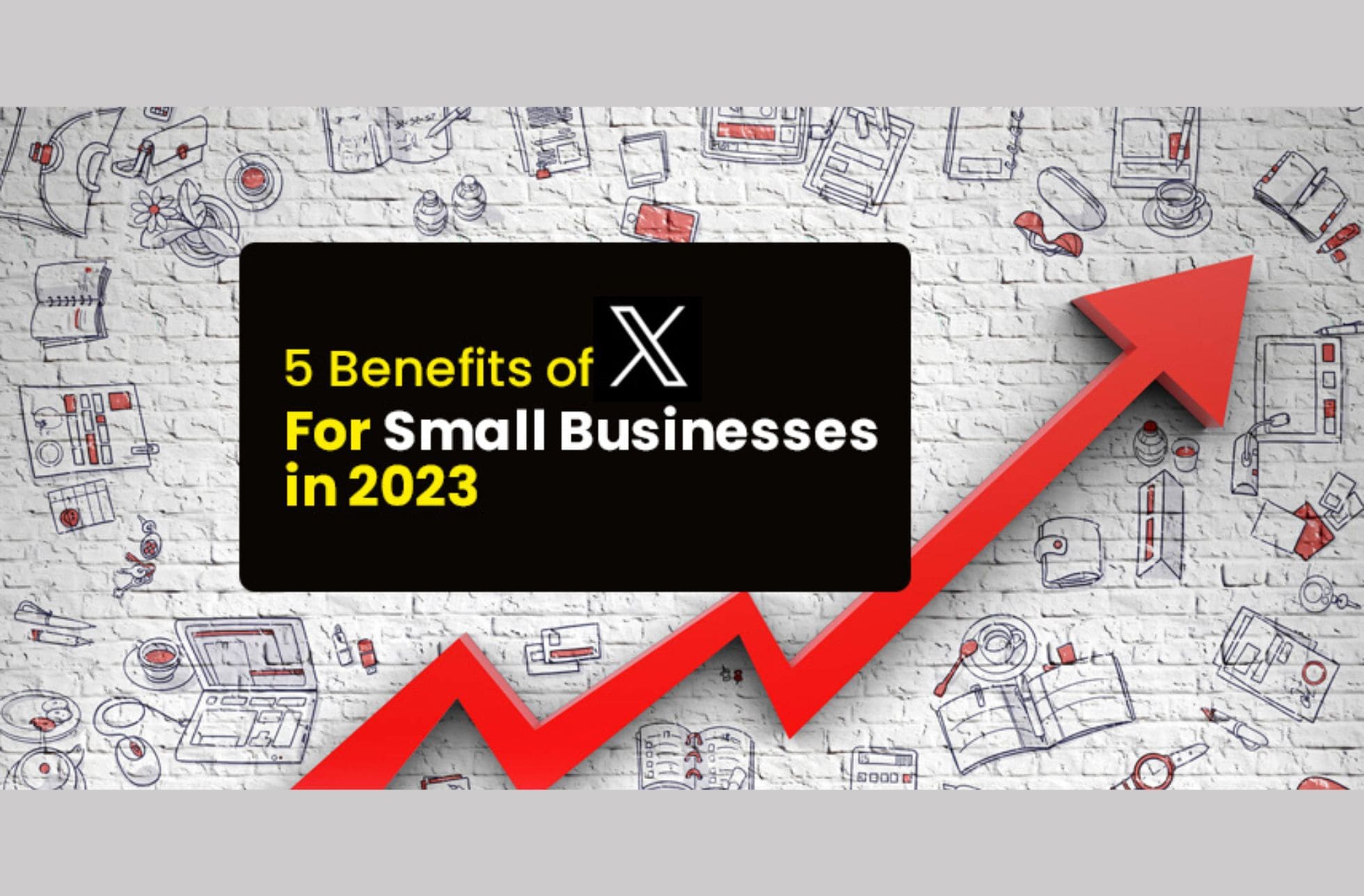
Furthermore, the platform’s strict character limit—traditionally capped at 280 characters—compels businesses to communicate with absolute clarity and conciseness. This restriction eliminates marketing fluff, forcing founders to deliver value-driven, direct messages that resonate with modern consumers who exhibit increasingly short attention spans.
Direct Consumer Engagement and Market Research
Beyond mere broadcast marketing, X serves as a powerful medium for bidirectional communication. Establishing a genuine connection with consumers is paramount for building brand loyalty. Through features such as direct replies, reposts (formerly retweets), and likes, business owners can cultivate an interactive community surrounding their brand.
This direct line of communication transforms the platform into an informal yet highly effective market research laboratory. Small businesses frequently lack the financial resources to commission expensive focus groups or professional consumer surveys. By utilizing X’s polling features, asking direct questions, and monitoring public discourse regarding industry pain points, companies can gather invaluable qualitative feedback in real time. Analyzing these interactions enables entrepreneurs to refine their product offerings, tailor their services to actual consumer demands, and proactively address customer dissatisfaction before it escalates into public relations challenges.
Data-driven decision-making represents another critical advantage facilitated by the platform’s native analytics infrastructure. X provides comprehensive metrics regarding tweet performance, audience demographics, impression counts, and engagement rates. By systematically reviewing these data points, business owners can identify optimal posting schedules—determining precisely when their specific target audience is most active online. Additionally, analytics reports highlight which content formats (such as text-only posts, images, or video clips) generate the highest return in terms of traffic acquisition and audience retention, allowing marketing teams to continuously optimize their strategies.
Formulating an Effective X Marketing Strategy
To translate platform presence into tangible business growth, enterprises must approach X with a structured, methodical marketing strategy. Industry best practices suggest a five-step framework for small business implementation:
- Establish Definitive Objectives: Before drafting a single post, management must articulate clear, measurable goals. Whether the primary objective is to drive web traffic, boost general brand awareness, generate qualified leads, or provide customer support, having a defined purpose ensures that content remains focused and aligned with broader corporate milestones.
- Conduct Audience Profiling: Comprehensive market research must precede content creation. Businesses must understand the demographic profile, geographic location, behavioral patterns, and core pain points of their ideal customer. Crafting content without audience awareness frequently results in low engagement and wasted operational effort.
- Develop High-Impact Content: Given the competitive nature of the digital timeline, every post must be meticulously crafted. Utilizing compelling hooks, striking visual multimedia elements (such as infographics or short-form product videos), and strategic keyword placement is essential for stopping the scroll and capturing user attention.
- Foster Active Community Participation: Social media is inherently social. Brands that treat X merely as an automated broadcast channel often fail to build enduring loyalty. Actively responding to user comments, acknowledging customer praise, participating in broader industry conversations, and demonstrating corporate personality are vital for humanizing the brand.
- Monitor, Measure, and Iterate: Continuous performance evaluation is critical for long-term success. Regularly reviewing platform analytics allows businesses to spot emerging engagement trends, discard underperforming tactics, and double down on successful promotional campaigns.
Advanced Tactics for Maximizing Tweet Engagement
Maximizing the impact of individual posts requires adherence to established copywriting and design principles tailored to the microblogging environment. Because the platform prioritizes speed and brevity, optimization techniques must focus on efficiency and visual appeal.
Succinctness remains the primary rule of microblogging copy. Writers must distill complex value propositions into punchy, easily digestible sentences. Active voice, strong action verbs, and clear calls-to-action (CTAs) encourage users to click through to corporate websites or complete desired conversion actions.

The incorporation of visual elements significantly amplifies post performance. Statistical analyses of social media engagement consistently demonstrate that tweets containing high-resolution images, native video clips, or professional infographics receive substantially higher engagement rates—including more reposts and favorites—than text-only counterparts. Visuals help anchor the user’s eye amidst a dense stream of competing information.
Hashtag strategy must be deliberate rather than indiscriminate. While hashtags categorize content and expose posts to wider, interest-based communities, overloading a single tweet with excessive tags can appear spammy and detract from the core message. Selecting two or three highly relevant, industry-specific hashtags yields superior reach and maintains professional credibility.
Finally, injecting appropriate humor and authentic brand personality can transform a corporate account from a sterile promotional outlet into a relatable, culturally resonant entity. Consumers increasingly gravitate toward brands that demonstrate transparency, humility, and wit, provided these elements align harmoniously with the company’s core values and industry positioning.
Broader Implications and Future Outlook for Small Businesses on X
The ongoing integration of small businesses into digital social ecosystems highlights a broader shift in modern commerce: the democratization of marketing. Historically, market dominance was heavily correlated with advertising expenditure. Today, agility, authenticity, and direct consumer connectivity frequently compensate for smaller budgets.
As X continues to evolve under changing technological landscapes, incorporating features related to creator monetization, enhanced video integration, and advanced search algorithms, its role within the small business toolkit is expected to expand further. Industry experts emphasize that while social media algorithms will inevitably undergo future modifications, the foundational principles of effective communication—delivering genuine value, listening closely to consumer feedback, and maintaining consistent brand integrity—will remain impervious to platform shifts.
For solopreneurs, startup founders, and small business operators navigating the complexities of the 2020s economy, mastering X offers a proven, cost-effective pathway toward enhanced visibility and sustainable growth. By moving past passive observation and committing to a structured, data-driven engagement strategy, emerging enterprises can successfully secure their position within competitive digital markets, turning modern social infrastructure into a long-term engine for commercial success.