Navigating the Future of Digital Inclusion: An In-Depth Look at AudioEye and the Evolution of Web Accessibility Standards

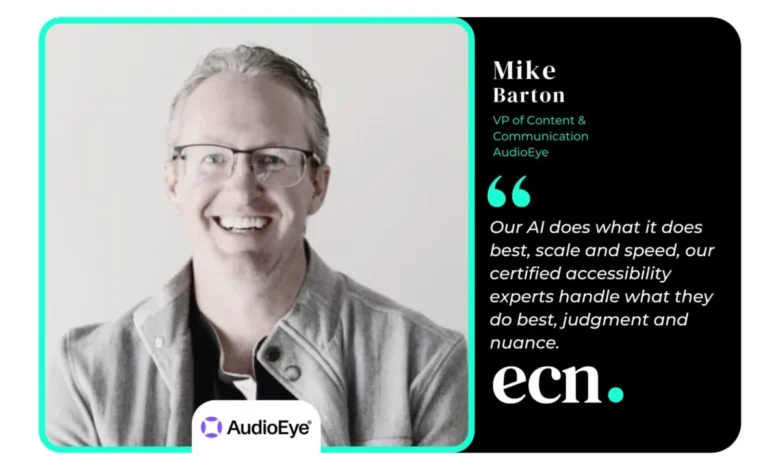
As the modern digital landscape expands, the foundational promise of the internet—open access to information, commerce, and community for all—faces unprecedented scrutiny. Digital accessibility has transitioned from a technical afterthought into a critical imperative driven by surging global litigation, far-reaching international legislation, and an evolving technological ecosystem. At the forefront of this transformation is AudioEye, a leading digital accessibility platform that leverages a hybrid approach of artificial intelligence automation and human expertise. In an extensive discussion, Mike Barton, Vice President of Content Marketing and Communications at AudioEye, outlines the company’s mission, the structural shifts in global compliance, and the profound economic motivations driving organizations to prioritize web accessibility.
The Evolution of Digital Accessibility and Market Realities
When AudioEye was founded nearly two decades ago, digital accessibility occupied a niche space within software development and corporate compliance. The majority of commercial enterprises treated accessibility as an optional checklist item or chose to ignore regulatory frameworks entirely. Over the past five years, however, the risk landscape has changed dramatically. Legal actions under statutes such as the Americans with Disabilities Act (ADA) have doubled, while comprehensive international legislation, most notably the European Accessibility Act (EAA), has established rigorous cross-border standards. Simultaneously, the rapid proliferation of artificial intelligence has reshaped web architecture and user discovery, placing accessibility at the intersection of legal compliance, brand reputation, and core business revenue.
Despite the rise of automation tools, AudioEye maintains that technology alone is insufficient to resolve complex accessibility barriers. The organization emphasizes a dual-pillar strategy: utilizing AI to achieve the scale and speed demanded by modern enterprise websites, while employing certified human experts—including individuals with disabilities—to evaluate context, intent, and lived user experience. This balanced methodology addresses the estimated 1.3 billion people globally who live with a disability, a demographic representing immense economic influence and daily reliance on assistive technologies such as screen readers.
Defining Digital Accessibility and the Business Case for Inclusion
Digital accessibility encompasses the intentional design and engineering of websites, mobile applications, and digital assets to ensure that individuals with disabilities can navigate and interact with them as seamlessly as unimpaired users. While regulatory compliance traditionally drove corporate interest in this sector, contemporary market dynamics reveal compelling commercial incentives.
Market research indicates that consumers with disabilities command approximately $18 trillion in global disposable spending power. Furthermore, data shows that a vast majority of these consumers will abandon a non-accessible digital platform immediately, often shifting their loyalty to competitors with fully optimized experiences. Beyond direct consumer retention, organizations face heightened legal exposure. In the United States, e-commerce platforms alone account for roughly 78 percent of accessibility-related lawsuits. Healthcare providers, financial institutions, and government agencies also experience elevated regulatory scrutiny. Consequently, businesses failing to address digital barriers risk significant litigation costs, reputational damage, and the alienation of a critical consumer base.
The Technical Framework: Combining AI Automation and Human Oversight
Meeting the demands of enterprise-scale websites requires sophisticated technological infrastructure. AudioEye’s platform integrates via a single line of JavaScript, mirroring the deployment method of standard compliance or analytics tools. Once active, the platform’s AI scans rendered web pages against the Web Content Accessibility Guidelines (WCAG), which serve as the international benchmark for digital inclusion.
Independent research underscores the efficacy of advanced scanning tools, noting that comprehensive automated platforms detect significantly higher volumes of syntax and structural errors than basic automated widgets. Approximately half of all identified accessibility issues are resolved automatically in real time through the platform.
However, complex barriers—such as contextual navigation, custom form logic, and intricate media carousels—often elude automated detection. To bridge this gap, AudioEye utilizes certified accessibility specialists who conduct manual audits, identify subtle interface barriers, and deploy custom code fixes directly through the platform. This combined model reportedly resolves the vast majority of accessibility defects before internal development teams are required to intervene, streamlining engineering workflows and reducing maintenance overhead.
Global Regulatory Horizons and Legal Protection Standards
As international trade and digital consumption become increasingly borderless, regulatory frameworks are expanding rapidly. The implementation of the European Accessibility Act has widened compliance obligations for any commercial entity operating within or serving customers in the European Union. Businesses previously focused exclusively on domestic U.S. litigation now face multifaceted regulatory oversight across multiple jurisdictions.
In response to heightened legal risks, digital accessibility vendors are increasingly evaluated on their capacity to mitigate liability. AudioEye distinguishes its market position by offering structured legal protection frameworks, including expert validation reports and collaboration with corporate legal counsel during demand disputes. Industry analysts note that robust, verifiable compliance frameworks significantly reduce exposure to costly litigation compared to unmonitored automated plugins or sporadic, one-time manual audits.
Emerging Technologies: AI Discovery and the Future of the Web
Looking toward the future, the integration of artificial intelligence presents both challenges and opportunities for digital accessibility. On one hand, general-purpose AI coding tools and automated content generators frequently risk producing inaccessible code if trained on legacy web structures that lack proper semantic markup. Addressing this deficit remains a primary objective for accessibility advocates and software engineers alike.
Concurrently, artificial intelligence is transforming how users discover online content. Autonomous AI agents and virtual assistants increasingly rely on a website’s accessibility tree—the programmatic structure designed for screen readers—to interpret data, compare products, and execute transactions on behalf of users. Consequently, websites that fail to maintain robust digital accessibility standards risk becoming functionally invisible to next-generation AI discovery channels.
As regulatory bodies continue to tighten enforcement globally and autonomous technologies redefine user interaction, digital accessibility is solidifying its status as an essential component of modern enterprise architecture. Platforms that successfully harmonize automated scale with human-led verification are poised to lead the transition toward a universally inclusive digital economy.
Related posts: