The 2026 Ultimate Guide to Social Media Security: Protecting Your Brand Against AI Phishing, Deepfakes, and Account Takeovers


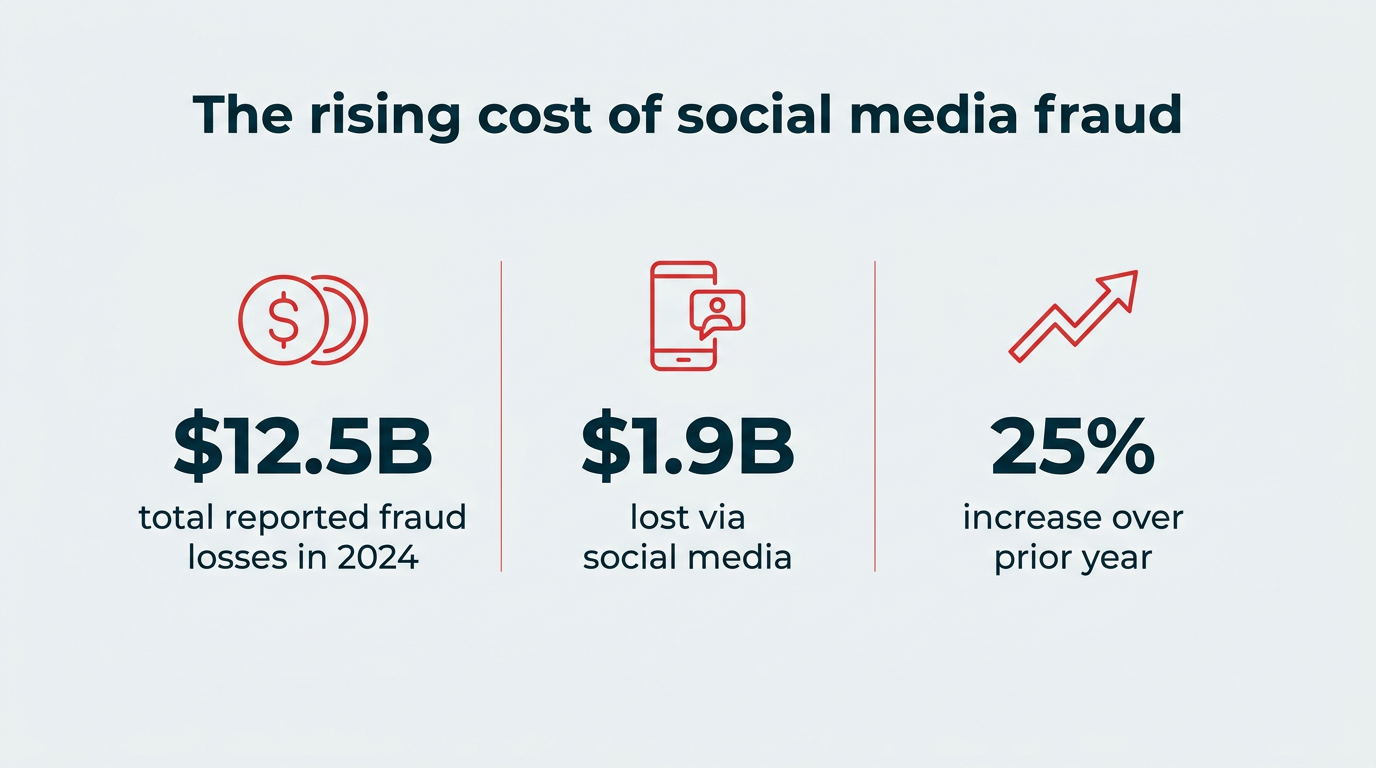
The modern digital landscape presents unprecedented challenges for organizations navigating social media security, as malicious actors increasingly deploy artificial intelligence, deepfakes, and automated social engineering schemes to breach corporate profiles. According to recent data from the Federal Trade Commission, consumer fraud losses reached a staggering $12.5 billion in 2024, representing a 25% increase over the previous year. Within this broader economic crime wave, social media continues to serve as the primary vector for scams, accounting for $1.9 billion in direct losses.

As digital channels expand to encompass over 5.7 billion active users globally, enterprise networks, marketing departments, and Chief Information Security Officers (CISOs) are forced to rethink traditional defensive postures. No longer viewed simply as marketing engines, social media profiles are now high-value corporate assets rich with customer data, financial connections, and direct lines to consumer trust. Consequently, implementing rigorous governance, technological safeguards, and comprehensive employee training has transformed from a routine operational task into an essential pillar of corporate risk management.
The Evolving Threat Landscape: From Opportunistic Scams to Automated Attacks

The nature of cyber threats targeting social media ecosystems has shifted dramatically over the past several years. Historically, attacks relied heavily on crude, manual tactics designed to trick unwary individuals. Today, threat actors leverage advanced machine learning models and automated scripts to launch highly targeted, scalable operations against brands and their workforces.
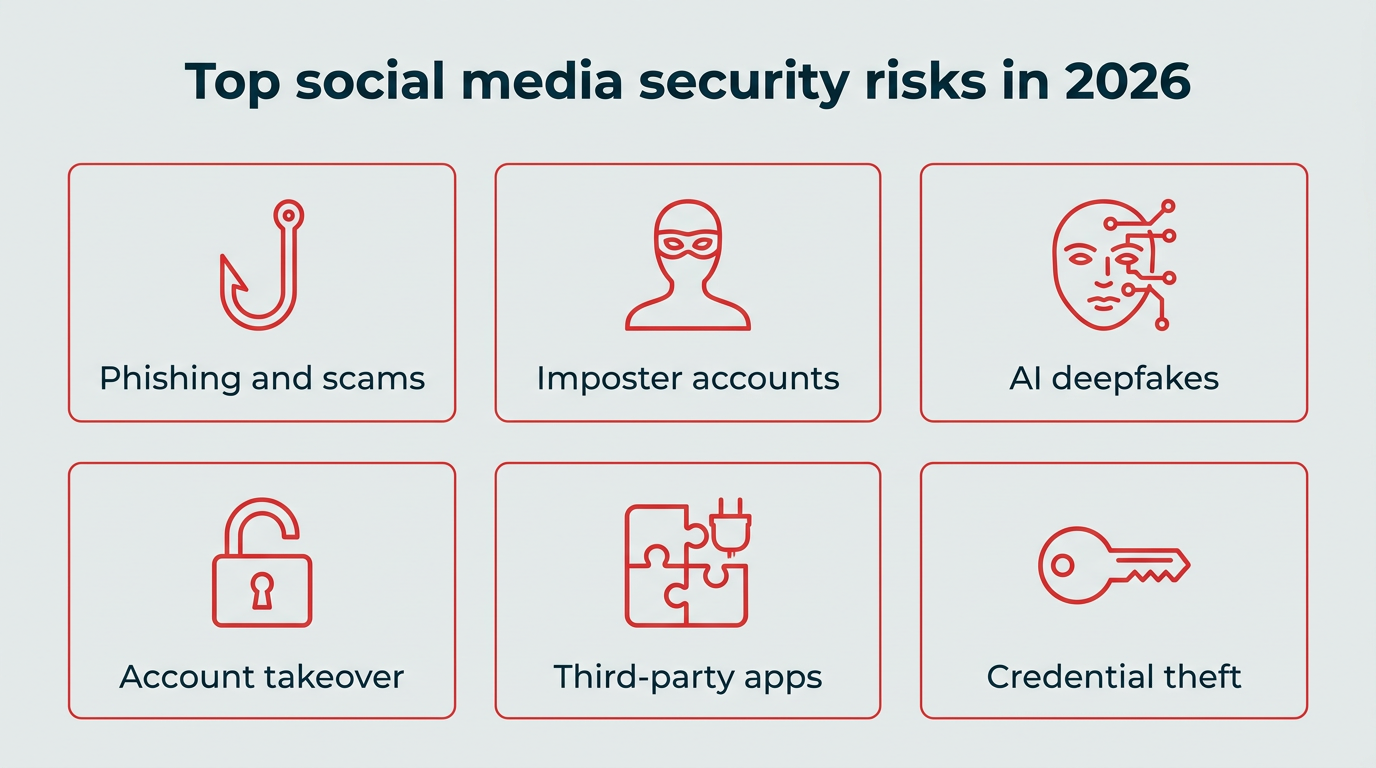
Chief among these concerns is the proliferation of AI-powered phishing campaigns. By harvesting public information, corporate directories, and employee updates across various digital platforms, malicious actors can synthesize convincing, personalized communications that bypass standard human skepticism. These AI tools eliminate the traditional barriers of scale, allowing fraudsters to orchestrate complex spear-phishing attacks against multiple targets simultaneously.
Furthermore, deepfake technology has crossed the threshold from speculative fiction into everyday enterprise reality. A recent Gartner survey indicated that 62% of organizations experienced a deepfake-related security incident within the past year. High-profile incidents, such as a finance employee in Hong Kong transferring $25 million following a video conference populated entirely by deepfake simulations of senior executives, underscore the severe financial and operational risks associated with synthetic media.
Imposter profiles and brand impersonation represent another critical vulnerability. Platforms like LinkedIn and Meta report taking enforcement action against hundreds of millions of fake accounts each quarter. While automated platform defenses successfully intercept the vast majority of these fraudulent registrations before activation, a persistent fraction slips through. These imposter accounts actively target customers, prospective hires, and employees, orchestrating credential-harvesting schemes and distributing malicious links under the guise of official corporate entities.
Financial, Reputational, and Regulatory Implications
The consequences of a breached or compromised social media account extend far beyond immediate operational disruption. When unauthorized actors gain control of a corporate profile—such as the January 2024 compromise of the U.S. Securities and Exchange Commission’s X (formerly Twitter) account—the fallout can immediately influence markets, degrade consumer confidence, and invite aggressive regulatory scrutiny.

Financial exposures are direct and quantifiable. Beyond the direct theft of marketing and ad budgets via hijacked advertising accounts linked to active corporate payment methods, organizations face immense liabilities if customer data is leaked through compromised customer service channels. In regulated sectors such as finance, healthcare, and government, a failure to secure communication channels or maintain proper oversight of published content can trigger severe compliance penalties, statutory fines, and protracted legal battles.
Industry analysts emphasize that social media risk must be integrated into enterprise-wide risk management frameworks. Organizations can no longer afford to treat social media management as an isolated marketing function decoupled from overarching IT security policies.

Core Strategies for Strengthening Social Media Defenses
To counteract sophisticated automated threats, security leaders recommend an eight-point strategic checklist tailored for the 2026 threat environment.

-
Password Hygiene and Management: Organizations must transition away from legacy password practices by enforcing long, uniquely generated passwords for every social account. Utilizing enterprise-grade password managers prevents credential reuse across corporate and personal systems, mitigating the risk of lateral movement following a single data leak.
-
Mandatory Multi-Factor Authentication (MFA) and Passkeys: Implementing MFA is non-negotiable for all corporate profiles. Where supported by platforms like Meta, X, LinkedIn, and Instagram, organizations should adopt passkeys—cryptographic credentials tied directly to hardware devices that are inherently immune to traditional phishing page capture.

-
Role-Based Access Control (RBAC): Adhering to the principle of least privilege ensures that employees possess only the exact level of access necessary to perform their specific job functions. Centralized social media management tools allow organizations to assign role-based permissions and route all outgoing content through mandatory approval workflows, eliminating the need to share raw platform credentials among team members.
-
Continuous Employee Training: Because human error remains a primary entry point for attackers, recurring security awareness training is essential. Organizations must educate staff on recognizing advanced social engineering cues, avoiding casual social media quizzes that harvest personal security questions, and identifying AI-generated phishing attempts.
-
Real-Time Monitoring and Threat Intelligence: Implementing real-time social listening and monitoring applications allows security teams to detect anomalies, sentiment shifts, brand mentions, and emerging imposter profiles instantly. Catching a fraudulent coupon campaign or an unauthorized impersonator early prevents widespread customer harm.
-
Rigorous Privacy and Setting Audits: Platform privacy configurations change frequently as networks update their infrastructure. Regular audits ensure that public-facing profiles do not inadvertently expose sensitive corporate data, employee bios, or operational insights.

-
Mobile Device and Endpoint Security: Because a significant portion of social publishing occurs on mobile hardware, enforcing screen locks, automatic software updates, remote-wipe capabilities, and virtual private network (VPN) usage on public Wi-Fi networks is critical for protecting corporate accounts accessed via personal or company-issued phones.
-
Quarterly Security Audits: Conducting systematic, quarterly reviews of access permissions, active integrations, and connected third-party applications ensures that dormant accounts, former employees, and unverified software integrations are systematically revoked before they can be exploited.

Enterprise Governance and Tooling Options
Mitigating modern social media risks requires a combination of governed publishing platforms and dedicated threat intelligence solutions. Enterprise security stacks typically incorporate three primary layers of defense:

First, centralized social management platforms such as Hootsuite Social OS provide granular role-based permissions, automated approval workflows, comprehensive audit trails, and integrated listening capabilities like Lumen. These systems allow organizations to manage multiple channels and scale marketing operations without exposing raw login credentials. Furthermore, integrations with compliance solutions like Proofpoint enable automated pre-publishing checks against regulatory standards and internal corporate policies.
Second, external threat intelligence platforms like ZeroFOX specialize in automated external monitoring, identifying brand impersonation, malicious domains, and fraudulent profiles across the wider web and social ecosystem, while actively facilitating takedown requests.

Third, enterprise credential management systems such as 1Password Business secure shared vaults, enforce passkey implementation, monitor known data breaches for compromised credentials, and enable instantaneous access revocation when staffing changes occur.
Conclusion and Future Outlook

As artificial intelligence continues to accelerate the scale and sophistication of social cyberattacks, organizations must proactively fortify their digital perimeters. By combining robust technological controls—such as passkeys, password managers, and centralized governance platforms—with disciplined operational routines, including quarterly audits and continuous employee education, businesses can effectively safeguard their brands, protect their customer base, and maintain consumer trust in an increasingly volatile digital ecosystem.