Meta Shares Early Success and Growing Pains of Muse AI Agents in Q3 Earnings Report

Meta’s ambitious push into artificial intelligence took center stage during the company’s recent Q3 earnings report, where Chief Executive Officer Mark Zuckerberg provided investors, analysts, and tech enthusiasts with a detailed look at the adoption rates, monetization strategies, and operational hurdles facing the Muse AI agent platform. Since its high-profile rollout to users in the United States and Canada last month, Muse has rapidly emerged as a focal point of Meta’s strategy to generate tangible revenue from its staggering investments in artificial intelligence infrastructure.
As the technology sector watches tech giants pour hundreds of billions of dollars into data centers, specialized silicon, and generative model training, shareholders have increasingly demanded a clear path toward monetization. Meta’s response to this pressure is Muse—a personal AI assistant designed not merely to answer queries or generate creative text, but to actively facilitate commerce, streamline complex daily tasks, and eventually interconnect multiple agents across a vast, decentralized network. However, alongside strong early download figures and impressive transaction volumes, the platform’s rollout has exposed critical vulnerabilities, including steep user retention drop-offs, severe privacy vulnerabilities, and costly legal setbacks that threaten to overshadow Meta’s technological milestones.
A Strong Market Debut and Exceptional Download Metrics
During the Q3 earnings call, Zuckerberg highlighted that Muse has surpassed 10 million downloads since its debut in North America. The application has demonstrated formidable dominance in digital marketplaces, capturing the top spot in the Apple App Store rankings nearly every day since its launch.
"Growth continues to be strong and we have been number one in the App Store almost every day," Zuckerberg told analysts during the call. "Engagement and retention are also off to a strong start. About 25% of people who have set up Muse use it on any given day."
This robust initial adoption underscores a powerful consumer appetite for proactive, utility-driven artificial intelligence agents. Unlike passive chatbots that require users to initiate every step of a creative or informational process, Muse is architected to operate with a degree of autonomy, executing multi-step workflows on behalf of the user. Meta’s strategic timing—capitalizing on widespread consumer familiarity with conversational AI assistants while introducing deeper integration with everyday consumer habits—initially appeared to give the platform a distinct competitive advantage over rival offerings from OpenAI, Google, and Microsoft.
The Retention Dilemma and Long-Term Engagement Challenges
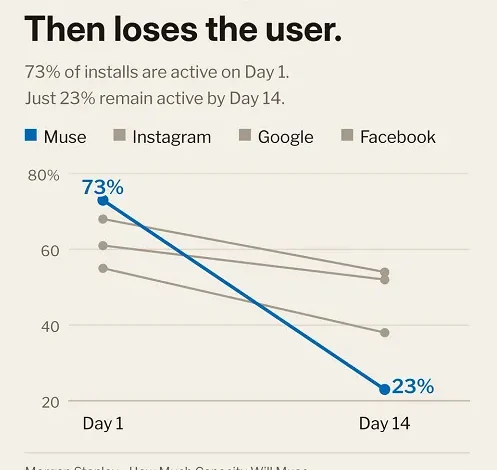
Despite the celebratory tone of Meta’s executive leadership regarding initial download volumes and daily active usage percentages, independent market research reveals a more complex narrative regarding long-term user retention. According to third-party data insights provided by analytical firms such as Sensor Tower and highlighted by industry observers on social media platforms, user retention for the Muse application experiences a pronounced downward trajectory approximately two weeks after the initial download.
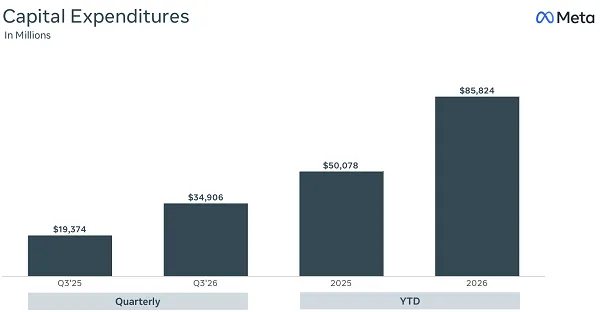
This steep decline in daily active engagement is not unique to Meta’s ecosystem; historical usage trends across nearly all major consumer-facing AI chatbots indicate that a significant percentage of users experiment with the technology briefly before abandoning it in their daily routines. Nevertheless, the phenomenon poses a worrisome challenge for Meta. Because the corporation has staked an immense portion of its corporate future on AI infrastructure—with cumulative spending projections reaching hundreds of billions, if not trillions, of dollars—the long-term viability of Muse relies heavily on sustained, habitual daily engagement. Without sticky, long-term retention, the vast computational resources dedicated to running and updating these agents risk yielding insufficient returns on investment.
Commerce as the Primary Engine of Monetization
To bridge the gap between astronomical infrastructure expenditures and actual revenue generation, Meta has engineered Muse with a heavy emphasis on commercial transactions. Rather than relying solely on subscription fees or traditional digital advertising models, Meta is positioning Muse as an intelligent personal shopper and transactional intermediary.
Zuckerberg revealed during the earnings presentation that shopping is by far the most common use case for the platform. More than 25% of active Muse users routinely utilize the agent to scour the internet for better deals, compare product specifications, and execute purchases directly through the app. Crucially, the economic scale of these transactions has caught even Meta’s executive team by surprise. The average purchase size facilitated by a Muse agent exceeds $200, representing a significantly higher basket size than standard social media ad clicks or traditional e-commerce browsing sessions.
The transactional velocity powered by Muse has strained the infrastructure of major financial technology partners. Zuckerberg noted that financial services platform Plaid reported unprecedented activity levels through its integration with Muse. Furthermore, during the platform’s first week of operation, Meta was forced to coordinate emergency adjustments with payment processor Stripe to raise credit limits because transaction volumes drastically outpaced pre-launch forecasting models.
This heavy emphasis on commerce clarifies Meta’s overarching monetization strategy. By integrating secure payment rails and transactional intelligence directly into the AI agent, Meta positions itself to capture a percentage of every sale facilitated within the application. If sustained at scale, this transactional rake-off could provide the definitive pathway to profitability for Meta’s sprawling AI portfolio. However, given that the company’s total cumulative AI investments are projected to approach or exceed $1 trillion over the long term, the volume of commercial transactions required to offset these costs remains staggering.
Privacy Controversies, Security Flaws, and Regulatory Headwinds
Even as Meta celebrates the commercial traction of its AI shopping assistant, the platform’s rapid deployment has collided with a turbulent regulatory and security landscape. Consumer trust in Meta’s data handling practices remains fragile, exacerbated by a series of high-profile legal defeats and structural privacy breaches.
Just days prior to the Q3 earnings report, a New Mexico state judge ordered Meta to pay a staggering $25 billion in financial penalties after a civil jury concluded that the company had systematically misled consumers regarding the security and privacy of their personal data. This monumental fine represents one of the largest regulatory penalties ever levied against a major technology corporation, compounding the company’s legal burdens as it expands deeper into sensitive consumer domains.
Compounding these corporate-level legal troubles, Muse itself has drawn intense scrutiny from the cybersecurity community. Researchers and journalists at Ars Technica reported that a security analysis group successfully extracted large volumes of confidential information from Muse user queries utilizing rudimentary exploration and reconnaissance techniques. The vulnerability allowed outside observers to view private user conversations, business secrets, and personal queries shared with the AI agent.
These security lapses strike at the heart of consumer adoption. The utility of an AI agent capable of handling personal finances, shopping preferences, and private communications relies entirely on absolute data security. In response to these mounting criticisms, Zuckerberg announced that Meta is actively developing a specialized architecture known as the "Muse Confidential VM" (Virtual Machine). This secure computing environment is designed to isolate user data, encrypt conversations end-to-end, and restore consumer confidence. Nevertheless, persistent security vulnerabilities and aggressive regulatory enforcement pose severe impediments to Meta’s goal of scaling Muse to billions of active global users.
The Evolution Toward a Decentralized "Muse Network"
Looking beyond individual consumer interactions, Meta’s long-term roadmap for artificial intelligence involves moving past the paradigm of isolated, single-user assistants. Zuckerberg outlined plans for the creation of a massive, interconnected "Muse network," a system designed to allow individual AI agents to communicate, collaborate, and exchange optimization strategies autonomously.
"Building what I refer to as the Muse network… is making it so that Muse is not just a kind of single-player game where you have your Muse, but making it so that your Muses can work with your friends and your families," Zuckerberg explained during the earnings call. "And if you want to buy something, it’s not just navigating to that business’ website. It’s talking to their agent. I think that getting that all to work well together is going to unlock tremendous value at scale."
This networked vision bears a striking resemblance to Meta’s previously discussed initiatives to populate its social media applications with millions of autonomous AI bots designed to mimic human users and boost platform engagement. In the context of Muse, however, the network is envisioned as an utility-driven ecosystem where consumer agents negotiate directly with corporate AI representatives to secure the best pricing, coordinate schedules, and manage complex household or business logistics.
Hardware Integration: Bringing Muse to Meta Glasses
In addition to expanding software capabilities and network architecture, Meta is aggressively pushing its AI agent into hardware ecosystems. Zuckerberg confirmed during the earnings call that the Muse platform will officially integrate with Meta’s smart glasses lineup starting in November.
This hardware expansion represents a crucial strategic pivot. By embedding Muse into wearable devices equipped with cameras, microphones, and spatial audio, Meta aims to transition the AI agent from a screen-bound application into an ambient, context-aware companion capable of assisting users in the physical world. Whether analyzing real-world objects, providing navigation assistance, or executing purchases on the go, the integration with smart glasses is expected to drive higher daily engagement and bypass the retention drop-off plaguing mobile-only applications.
Analyst Outlook and Financial Implications
The financial and strategic portrait painted by Meta’s Q3 earnings report is one of high-stakes transition. The company is successfully leveraging its massive distribution network across Facebook, Instagram, and WhatsApp to seed new AI products into the hands of hundreds of millions of consumers. Furthermore, early monetization experiments—particularly in high-value e-commerce transactions averaging over $200 per basket—demonstrate that consumer AI agents can indeed function as viable revenue engines.
However, the divergence between initial download velocity and long-term user retention highlights the difficulty of building enduring habits around generative tools. Compounded by severe regulatory pressures, multi-billion-dollar legal penalties, and alarming cybersecurity vulnerabilities, Meta’s path forward is fraught with operational risk.
As Meta prepares to roll out Muse Confidential VMs, deploy agent-to-agent networking protocols, and embed the technology into smart glasses throughout the upcoming months, the company’s ability to balance rapid technological innovation with uncompromising data security will ultimately dictate whether its trillion-dollar AI gamble achieves sustainable profitability or founders under the weight of consumer skepticism and regulatory intervention.