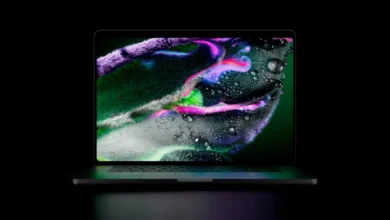
Apple’s Touchscreen MacBook Pro Debut and the Rapid Expansion of the Global OLED Laptop Market in 2027


Apple Inc.’s recent unveiling of its redesigned MacBook Pro—marking a historic milestone as the company’s first portable computer featuring a touchscreen interface—is sending shockwaves through the global display industry. Beyond the immediate consumer excitement generated by the hardware refresh, supply chain analyses and market intelligence reports are shedding light on how Apple’s long-anticipated transition to OLED technology will reshape the broader laptop ecosystem. According to fresh insights from market research firm TrendForce, the tech giant’s entry into the OLED notebook space is poised to accelerate mainstream adoption, fuel intense competition among component manufacturers, and dramatically alter shipment trajectories through the end of the decade.
The launch of the new MacBook Pro brings tandem OLED technology to Apple’s laptop lineup for the first time, a display architecture first popularized by the company on the M4 iPad Pro in 2024. By vertically stacking two distinct light-emitting diode layers, tandem OLED technology overcomes traditional brightness limitations inherent in single-layer designs. This innovation allows manufacturers to deliver significantly higher peak and sustained brightness levels while preserving the coveted characteristics of organic light-emitting diode panels: true deep blacks, infinite contrast ratios, and exceptional energy efficiency.
Despite the device only recently becoming official, rumors and supply chain breadcrumbs regarding a touchscreen Mac with an OLED panel have circulated for years. The realization of this hardware marks the culmination of a heavily scrutinized development cycle within the consumer electronics supply chain.
A Multi-Year Chronology of the OLED Mac Transition
The path to Apple’s first OLED MacBook Pro has been documented extensively by industry analysts, component manufacturers, and leaks originating from overseas assembly lines. Understanding the timeline of this transition highlights how deliberately Apple moves when overhauling its display technologies:

- September 2025: Reports from supply chain insiders, notably The Elec, indicated that Samsung Display was actively preparing to scale up mass production for 14-inch and 16-inch OLED panels tailored for Apple’s upcoming MacBook Pro redesign. Initial projections estimated an annual manufacturing output between 2 million and 3 million units.
- November 2025: TrendForce released a forward-looking market prediction suggesting that global OLED notebook market penetration would surge to approximately 12% between 2027 and 2028, heavily catalyzed by Apple’s imminent supply chain integration.
- February 2026: A detailed OLED roadmap published by TrendForce mapped out Apple’s multi-year strategy. The report anticipated that OLED panels would arrive on the MacBook Pro lineup in 2026, while the MacBook Air’s transition was pushed back slightly to a projected 2029 release window.
- October 2026: Apple officially pulled back the curtain on its redesigned MacBook Pro, confirming the integration of tandem OLED panels, a sophisticated internal cooling architecture, and touch-sensitive capabilities.
- Late October 2026: Following the launch, TrendForce issued an updated market assessment detailing specific shipment expectations for Apple’s inaugural OLED portable and revising broader industry growth figures.
Shipment Projections and Financial Realities of the New MacBook Pro
As the market digests the arrival of Apple’s latest professional machine, industry forecasters are closely monitoring initial manufacturing volumes and consumer uptake. TrendForce’s latest tracking data estimates that Apple will ship between 1.2 million and 1.5 million units of the new OLED MacBook Pro throughout 2027.
However, market analysts emphasize that the immediate adoption curve may experience friction due to positioning and pricing strategies. The new MacBook Pro enters the market at a premium starting price of $2,899 for the baseline 14-inch configuration. Furthermore, Apple’s decision to maintain concurrent availability of existing Mini-LED models means that enterprise and consumer replacement demand may temporarily flatten as buyers weigh the incremental benefits of touchscreen OLED against established display technologies.
Despite these near-term pricing variables, the overarching trajectory for the global OLED notebook sector remains aggressively bullish. TrendForce reports indicate that worldwide OLED laptop shipments are on track to expand by nearly 40% year-over-year in 2026, followed by another sequential increase exceeding 40% in 2027.
The Broader Industry Impact: Windows Competitors and Supply Chain Dynamics
Historically, the OLED notebook market has been championed almost exclusively by Windows-centric original equipment manufacturers (OEMs). Brands including Lenovo, HP, and ASUS have spent recent years steadily introducing OLED display options across various price tiers, ranging from budget-friendly consumer notebooks to high-end creator workstations.

Market observers note that Apple’s official endorsement of the technology acts as a powerful catalyst. By validating OLED as the standard for premium computing, Apple’s market entry is expected to encourage rival hardware brands to prioritize organic light-emitting diode panels in their future product roadmaps. This heightened industry focus will likely accelerate economies of scale, drive down component manufacturing costs, and foster deeper consumer familiarity and acceptance of the technology.
Consequently, this domino effect is predicted to fast-track broader OLED integration across mainstream and enterprise notebook portfolios, transforming what was once a niche luxury feature into an industry-standard expectation.
The Battle for Future Contracts: The MacBook Air Roadmap
While the spotlight currently shines on the professional-grade MacBook Pro, supply chain competition is already fiercely underway for Apple’s next major hardware evolution: the OLED MacBook Air.
Originally slated for an earlier release, industry roadmaps now point to 2029 as the targeted debut window for the first OLED MacBook Air. As Apple prepares to expand organic light-emitting diode technology down to its most popular consumer-facing laptop, major panel manufacturers are aggressively positioning themselves for lucrative supply contracts.
According to industry reports, major display powerhouses—including LG Display, BOE, and TCL CSOT—are currently locked in a competitive race to secure orders for the upcoming MacBook Air panels. These manufacturers are heavily investing in research, development, and infrastructure upgrades to refine their tandem OLED fabrication yields, meeting Apple’s notoriously stringent quality control, color accuracy, and thinness standards. Securing a coveted spot in Apple’s supply chain represents not only massive revenue potential for these panel makers but also a vital validation of their manufacturing prowess in advanced mobile displays.

Long-Term Market Outlook Through 2030
Looking toward the end of the decade, the integration of OLED panels into Apple’s entire portable lineup is expected to fundamentally alter the volume and revenue dynamics of the global display market.
TrendForce’s long-range macroeconomic models project that global OLED notebook shipments will maintain a rapid expansion phase, culminating in an estimated 46.6 million units shipped annually by 2030. While annual growth rates are forecasted to peak at an impressive 42.8% in 2028, the market is expected to experience a natural maturation phase thereafter, with year-over-year growth moderating to a still-robust 30.8% by the turn of the decade.
Ultimately, Apple’s historic launch of the touchscreen OLED MacBook Pro represents more than just a routine hardware refresh. It serves as a pivotal inflection point for the personal computer industry. By committing its immense supply chain leverage and marketing influence to organic light-emitting diode technology, Apple has effectively signaled the beginning of the end for conventional LCD and early-generation Mini-LED laptop displays, cementing OLED as the definitive visual standard for the next generation of personal computing.
Related posts: