How Smart Glasses and Immersive Out-of-Home Advertising Are Set to Transform Urban Spaces

The intersection of wearable technology and outdoor advertising is poised to redefine how consumers interact with urban environments. For over a century, physical billboards have functioned as static, one-way mediums of communication. Despite various attempts to bridge the gap between physical hoardings and digital engagement—such as the widespread introduction of QR codes in the early 2000s—out-of-home (OOH) advertising has largely remained a passive experience. However, the rapid advancement of augmented reality (AR) smart glasses, paired with innovative physical-digital hybrid spaces like London’s Electric Garden, suggests a profound shift is underway. Industry analysts project that as spatial computing and AI-integrated wearables mature, static billboards will evolve into dynamic, interactive portals, altering urban architecture, consumer behavior, and the advertising industry at large.
The Evolution of Out-of-Home Advertising: A Historical Chronology
To understand the trajectory of modern advertising, it is necessary to examine the evolution of the OOH sector. The modern billboard traces its roots back to the mid-19th century when large-scale lithographic posters began appearing in major European and American cities to promote theatrical productions and consumer goods. For decades, the medium relied strictly on paper, paste, and static illumination.
The late 20th and early 20th-first centuries introduced significant technological upgrades. The transition from paper to vinyl substrates allowed for larger, more durable displays. More importantly, the advent of digital out-of-home (DOOH) screens transformed cityscapes like London’s Piccadilly Circus and New York’s Times Square into moving galleries of high-definition video advertisements.
Despite these visual upgrades, the core limitation of billboards remained unchanged: the interaction was strictly unidirectional. Advertisers attempted to solve this engagement gap through mobile integrations. QR codes, NFC tags, and geo-targeted push notifications were introduced to bridge the physical-digital divide. Yet, empirical data on consumer habits indicates that these methods failed to achieve sustained engagement. Friction points—such as the need to physically extract a smartphone, unlock the device, open a camera application, and scan a pixelated square—proved too cumbersome for regular, friction-free urban interaction. Consequently, QR codes on billboards largely remained a novelty rather than a staple of daily consumer behavior.
The Rise of Spatial Computing and AI Wearables
As smartphone saturation reaches its peak in developed markets, technology conglomerates and specialized hardware startups are heavily investing in spatial computing. Modern smart glasses are increasingly capable of projecting high-resolution data, graphical interfaces, and video streams directly into the user’s field of vision while maintaining transparency with the physical world.
Unlike virtual reality (VR) headsets, which completely isolate the user, smart glasses are designed for all-day wear in public spaces. The integration of localized artificial intelligence assistants allows these devices to process visual information in real-time. When a user looks at a physical object, embedded machine-vision algorithms can identify it, cross-reference it with cloud databases, and project contextual digital overlays onto the user’s retina.
This technological capability directly addresses the foundational premise of urban navigation: pedestrians do not navigate cities by staring at the ground or their handheld screens; they look ahead and around themselves. Urban environments are inherently saturated with visual signage. By overlaying digital information onto physical urban structures through AR wearables, the physical billboard transforms from a static image into an anchor for contextual computing.
Pioneering the Physical-Digital Hybrid: The Electric Garden Model
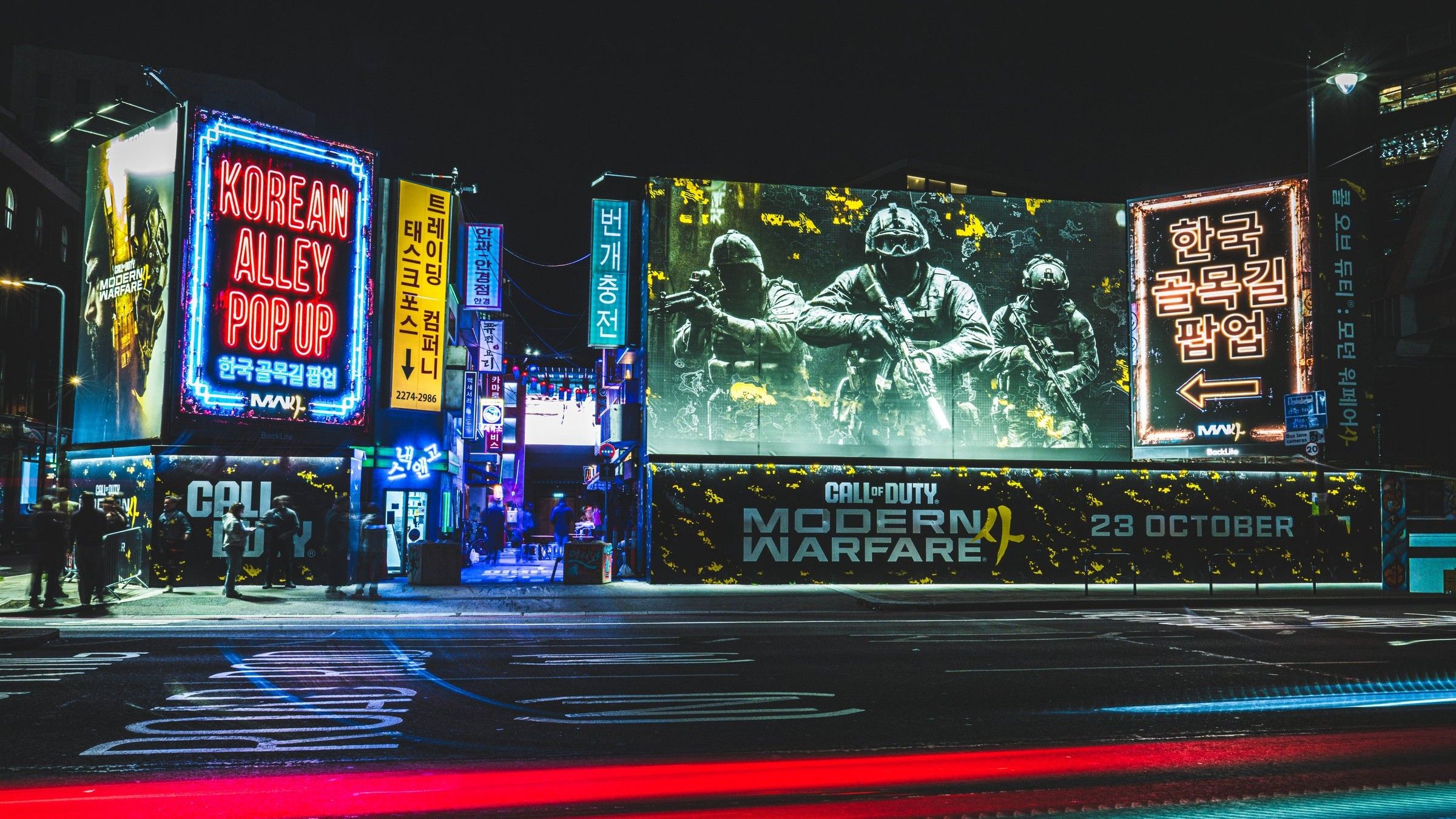
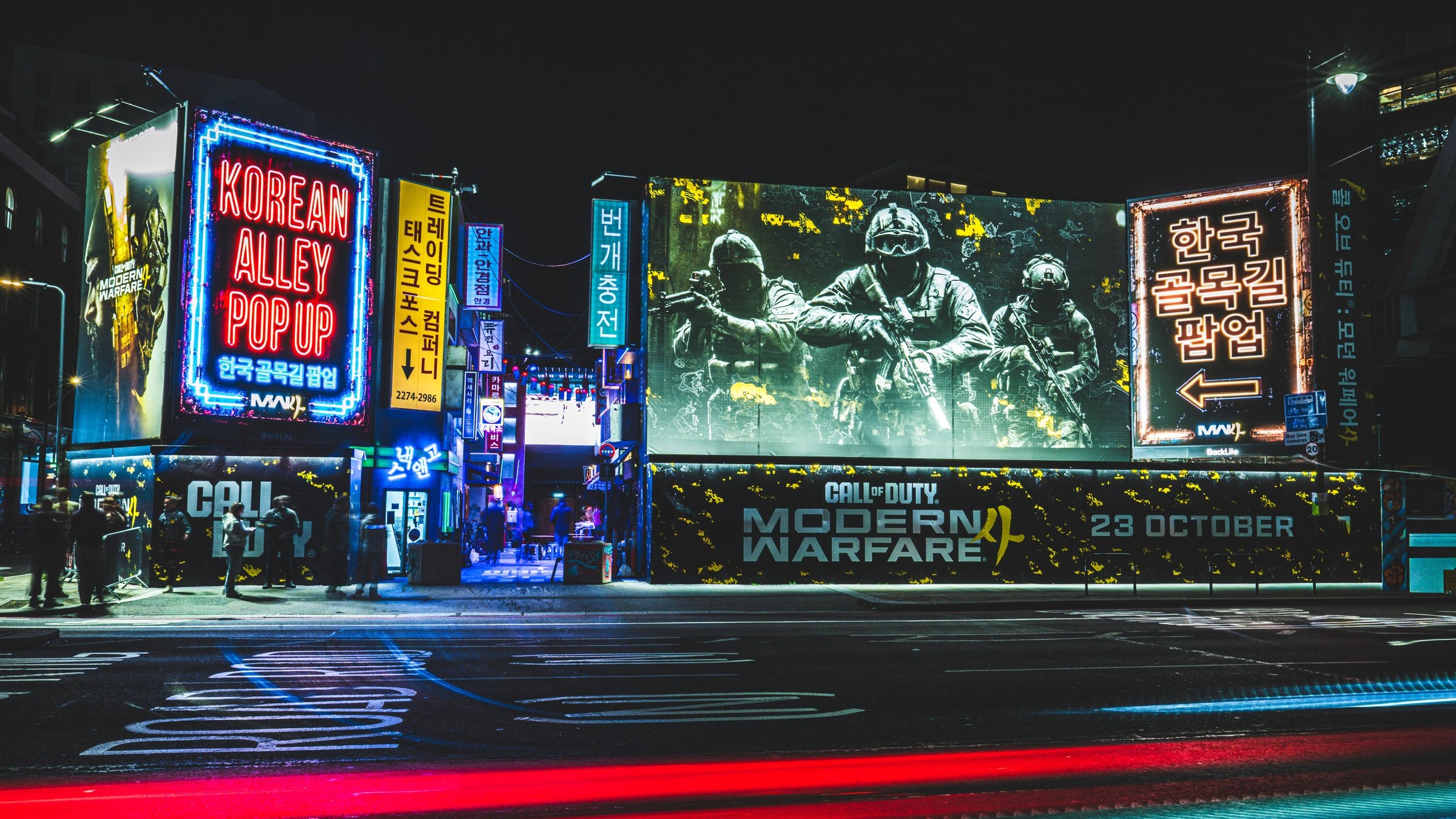
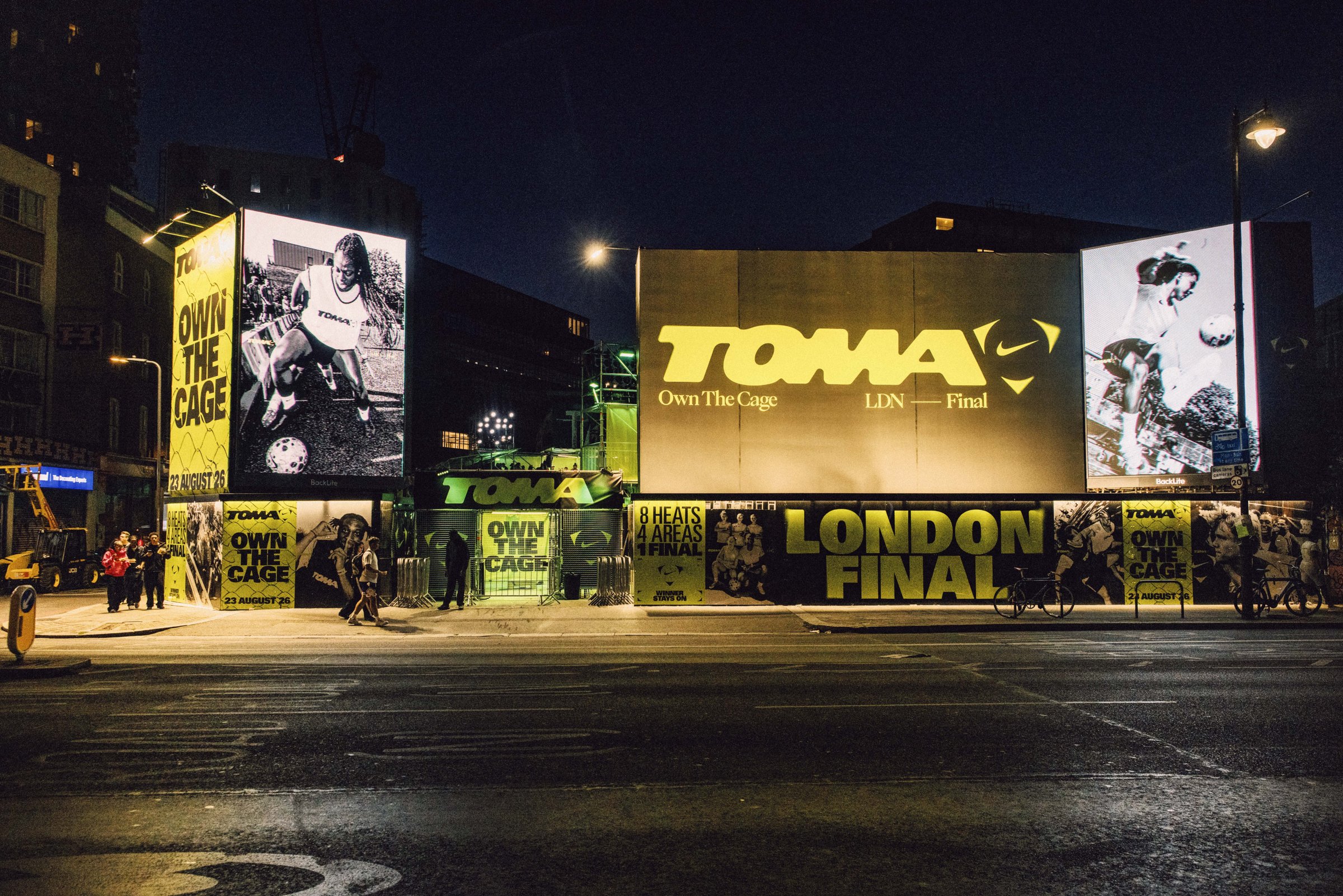
While fully realized augmented reality glasses remain on the horizon for mainstream consumers, pioneering real-world projects are already demonstrating the commercial viability of immersive, multi-dimensional advertising. A prime example is the Electric Garden, situated on Shoreditch High Street in East London. Spanning 21,000 square feet of open-air urban space, the venue positions itself as a literal "billboard you can walk into."

The architectural layout of Electric Garden features a formidable row of giant digital screens facing the high-traffic thoroughfare. Behind these digital façades lies an expansive physical terrain designed for immersive brand activations. Brands can launch campaigns by broadcasting traditional DOOH video content on the front-facing screens, subsequently drawing foot traffic into the internal physical environment to explore a fully realized thematic world.
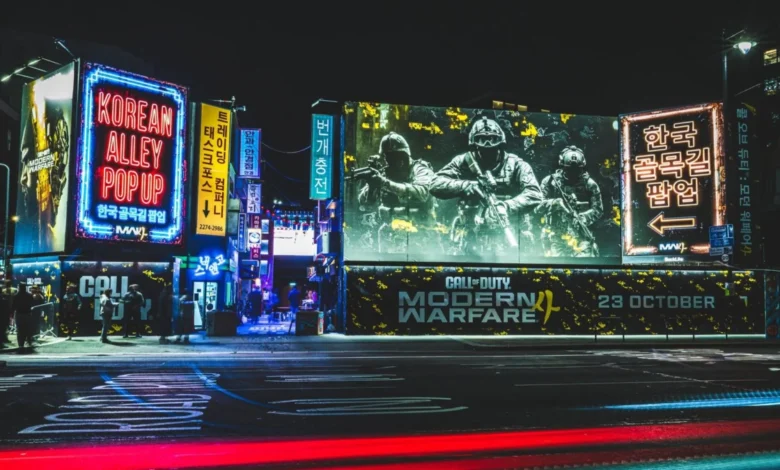
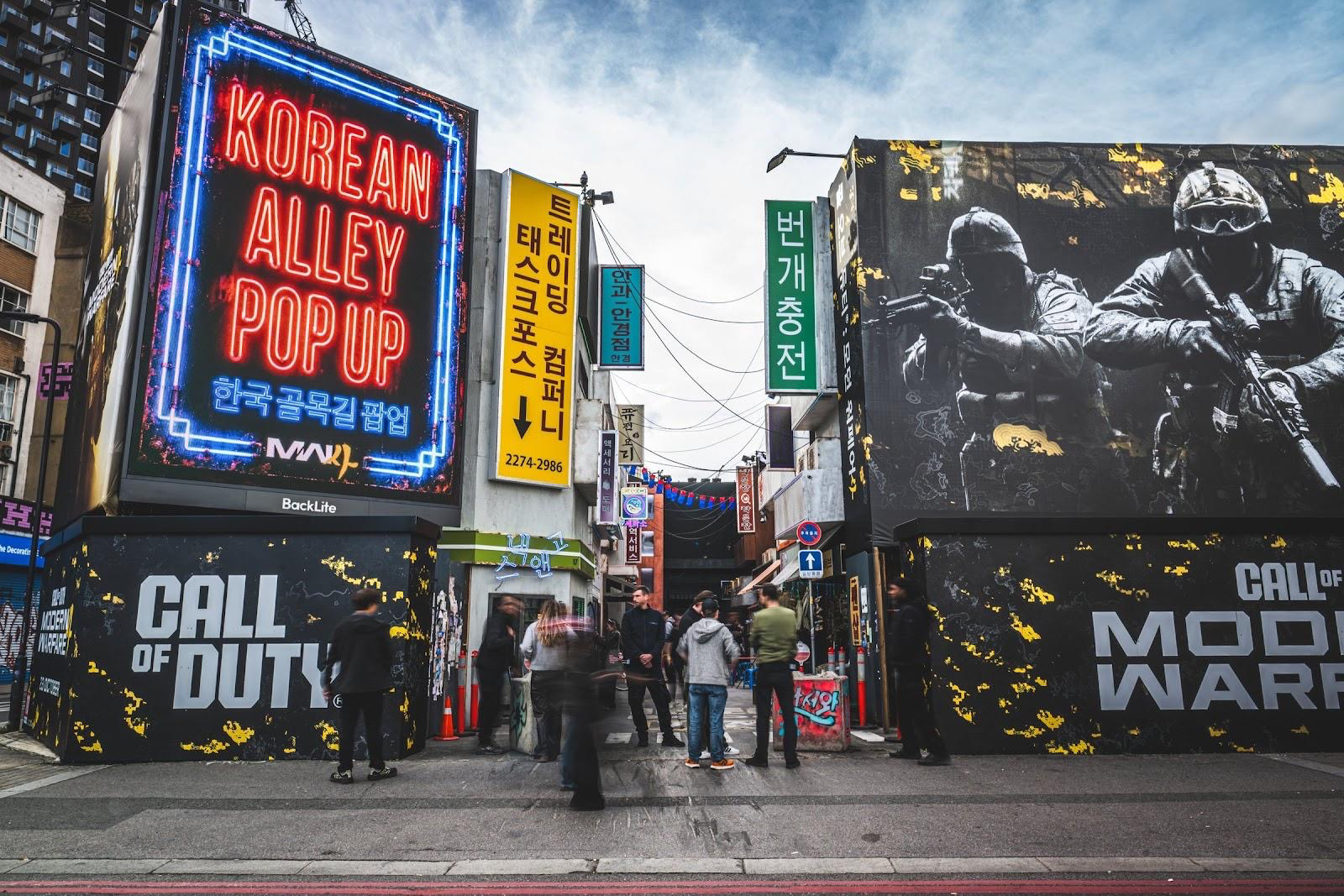
The site’s inaugural campaign, executed in collaboration with Activision for the launch of Call of Duty: Modern Warfare, converted the physical space into a neon-lit, Seoul-inspired alleyway. Complete with authentic detailing such as operational convenience store pop-ups, traditional seating arrangements, and interactive code-breaking missions, the activation generated substantial engagement metrics.
Alex Ezen, co-founder of Electric Garden, notes the strategic shift in consumer engagement: "A screen can capture attention, but a physical experience gives people a reason to stop, take part, and share it." This philosophy highlights a growing consensus among brand architects: passive viewing is losing efficacy, whereas experiential, spatial engagement drives superior brand recall and organic social sharing.
Implications of AR Integration for Urban Signage
The integration of smart glasses with physical advertising infrastructure will fundamentally alter the creative brief for designers, urban planners, and media agencies. Rather than designing flat, two-dimensional graphics optimized solely for visual impact at a distance, creative teams will need to think in terms of spatial layers and interactive data feeds.
Several key implications emerge when projecting this technology into the next decade:
Contextual and Personalized Information Delivery
With AI-powered smart glasses, a static movie poster on a city street will no longer be limited to a release date and a tagline. A pedestrian gazing at the poster could instantly initiate an interactive prompt, triggering the playback of a high-definition trailer directly in their field of view. Furthermore, integration with local ticketing databases could instantly display nearby cinema showtimes, available seating, and turn-by-turn augmented navigation guiding the user directly to the box office.
Dynamic Pricing and Programmatic OOH
Programmatic advertising, which currently dominates digital and DOOH spaces by automating ad placement based on real-time data, will extend into augmented reality layers. Billboards could display standard creative to the general public while serving hyper-targeted, interactive experiences to specific demographic segments wearing verified smart glasses, provided privacy regulations and user consent frameworks permit such targeted overlays.
Redefining Urban Aesthetics and Advertising Clutter
The convergence of physical signage and digital AR overlays raises valid questions regarding visual pollution and urban aesthetics. As cities become increasingly layered with digital data streams, regulatory bodies may need to establish frameworks governing the "digital airspace" above public streets. Just as zoning laws dictate physical building heights and billboard square footage, future municipal policies may regulate what digital entities can be anchored to public structures via spatial computing.
Industry Outlook and Expert Analysis
Media analysts and design theorists suggest that the future of out-of-home advertising relies entirely on diminishing the friction between digital utility and physical reality. While the mass adoption of smart glasses will face ongoing hurdles related to hardware miniaturization, battery life, consumer privacy concerns, and price points, major technology investments by industry leaders signal that spatial computing is the next logical evolution of personal electronics.
For the advertising industry, this transition represents both an unprecedented creative opportunity and a complex technical challenge. Designers will no longer merely construct images; they will author interactive, spatial experiences that bridge the gap between concrete urban architecture and the limitless capabilities of the digital cloud. As venues like London’s Electric Garden demonstrate consumer appetite for walkable, immersive brand worlds, the subsequent migration of these experiences into personal augmented reality eyewear appears not as a distant science-fiction scenario, but as the inevitable next chapter in the history of visual communication.