Palm Beach County Learjet 60 Plane Crash: A Detailed Investigation Into the Deadliest Accident Involving the Aircraft Model

The Palm Beach County Learjet 60 Plane Crash, widely recognized in public discourse as the November 2026 Florida Private Jet Crash, stands as a watershed tragedy in modern corporate aviation. On November 1st, 2026, a Bombardier Learjet 60 business jet plummeted from cruising altitude into a densely populated residential sector of Palm Beach County, Florida. The catastrophic impact resulted in the deaths of all nine individuals on board, making the incident the deadliest accident in aviation history involving the Learjet 60 airframe.
The tragedy immediately captured global attention, not only due to the profound loss of life and the dramatic nature of the urban impact zone, but also because of the rapid proliferation of digital media documenting the disaster. Dashcam recordings, air traffic control audio logs, and amateur footage circulated widely across platforms like X (formerly Twitter), TikTok, and YouTube within hours of the crash. As investigators from the National Transportation Safety Board (NTSB) and the Federal Aviation Administration (FAA) rushed to secure the site and initiate recovery operations, online communities grappled with the tragedy, giving rise to intense public scrutiny, viral memorializations, and, inevitably, a wave of unfounded conspiracy theories.
Flight Profile and Chronology of Events
The fatal journey began at Austin-Bergstrom International Airport in Texas, where the 2004-built mid-size Bombardier Learjet 60—registered to an undisclosed Delaware limited liability company—completed pre-flight checks and departed for an intended destination in the Bahamas. Aboard the aircraft were nine occupants, including 55-year-old captain Jeff Gregory, 20-year-old co-pilot Nathalia Gadelha Filgueiras, prominent tech entrepreneur Adam Robinson, and several members of Robinson’s family and close friends.
At approximately 12:50 p.m. Eastern Time, while cruising eastward at a stable altitude of approximately 35,000 feet, the flight deck encountered severe environmental challenges. Preliminary flight data and air traffic control (ATC) communications indicate that the aircraft entered a region marked by aggressive weather patterns, featuring strong thunderstorms, high-altitude precipitation, and severe icing conditions.
Radio transcripts reveal that a flight crew member informed air traffic control that they were actively "managing the ice" before requesting an altitude change to find smoother air. Shortly after this transmission, the operational profile of the aircraft degraded catastrophically. The Learjet entered an extreme, uncontrolled vertical descent. Flight tracking and radar data recorded staggering descent rates fluctuating between 10,000 and an unprecedented 20,000 to 30,000 feet per minute. In roughly 60 seconds, the aircraft lost approximately 27,000 feet of altitude.
During the final moments of the plunge, ATC recordings captured frantic mayday declarations. A female voice on the flight deck transmitted warnings regarding severe overspeed parameters and an irrecoverable trajectory, exclaiming, "we are going to crash into the ground," moments before a sharp, abrupt termination of audio.
Impact Zone and Immediate Aftermath
The aircraft struck the ground in a residential area near Military Trail, positioned between Cresthaven Boulevard and 10th Avenue North in unincorporated Palm Beach County. The impact location sits approximately seven miles southwest of downtown West Palm Beach, directly adjacent to the suburban communities of Greenacres and Cresthaven.
The force of the impact obliterated a residential structure within a local mobile home park and inflicted severe structural damage on surrounding properties, infrastructure, and local power grids, leaving a deep crater at ground zero. First responders from Palm Beach County Fire Rescue and local law enforcement agencies arrived at the scene within minutes, confronting a massive debris field, intense localized fires, and downed high-voltage power lines that complicated rescue and containment efforts.
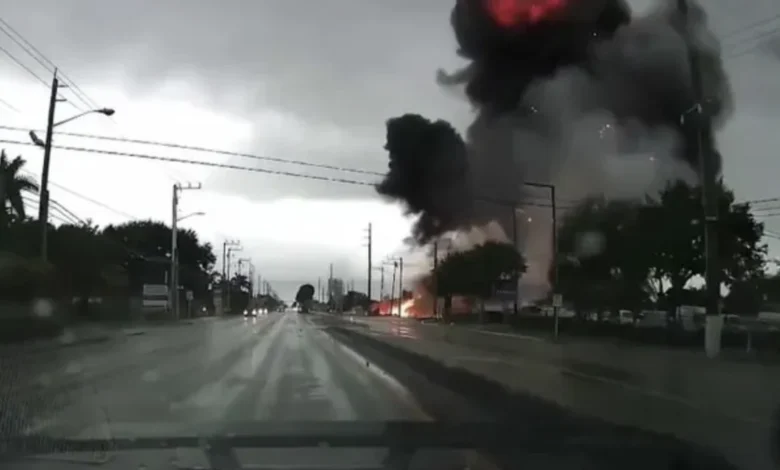
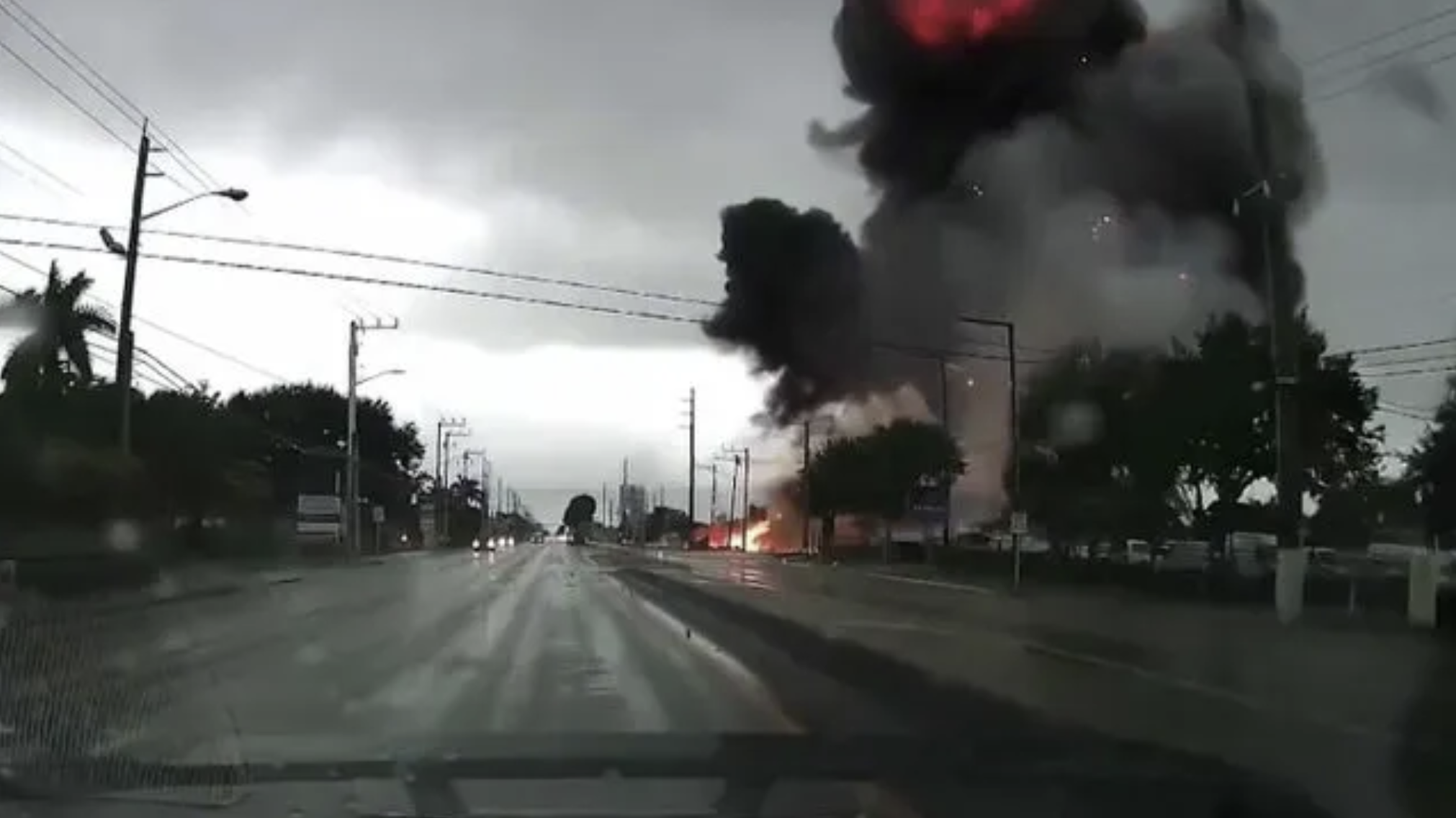
Miraculously, despite the high-density nature of the impact zone and dashcam footage showing vehicles narrowly avoiding the immediate crash path—including a car captured on camera attempting to exit the mobile home park moments before impact—no fatalities or severe injuries were reported among residents on the ground. However, all nine individuals inside the fuselage perished upon impact.
Victim Identification and Public Mourning
In the wake of the disaster, federal authorities and local medical examiners worked diligently to recover remains and notify next of kin. By November 2nd, 2026, media outlets began releasing the identities of the deceased.
The disclosure of the flight crew’s identities resonated deeply with the aviation community and the general public. Co-pilot Nathalia Gadelha Filgueiras, who had achieved the milestone of earning her pilot’s license at the young age of 17, became a focal point of media coverage. Profiles highlighting her dedication to aviation and her expressed pride in joining the commercial flight sector drew millions of views across digital platforms, particularly via a viral TikTok tribute published by the Daily Mail that amassed over 7.5 million views within hours of posting.
Simultaneously, tributes poured in for captain Jeff Gregory, a veteran aviator with decades of commercial flight experience, and tech entrepreneur Adam Robinson, whose contributions to the technology sector and philanthropic endeavors were remembered fondly by colleagues and industry peers.
Digital Virality and Online Reactions
The Palm Beach County crash stands as a prominent example of a 21st-century aviation disaster heavily documented by civilian dashcams, home security systems, and instantaneous social media reporting. Within minutes of the accident, eyewitness videos began to trend globally.
On November 1st, 2026, X user @FearedBuck published a widely shared video capturing the final descent and immediate aftermath of the crash. The post generated over 11.2 million views in a single day, serving as the primary nexus for public shock and commentary on the platform. High-profile accounts, including user @bigbusiness, amplified the footage with reactions that underscored the suddenness of the catastrophe. Another viral thread initiated by user @bagtaIk focused on a civilian vehicle caught on camera near the impact site, prompting widespread discussion regarding the narrow margins that separated total local devastation from the localized containment of the crash.
Conspiracy Theories and Misinformation
As is increasingly common with high-profile disasters documented through fragmented digital media, the vacuum left by the initial lack of official NTSB findings was quickly filled by online speculation and conspiracy theories.
Clips of the high-speed descent led fringe commentators on platforms like TikTok and X to draw dubious comparisons between the aerodynamics of a high-speed vertical dive and military ordnance, prompting viral claims that the business jet had been intercepted or shot down by air defense systems. Other online users questioned the visibility of structural debris at the immediate impact site, ignoring standard forensic explanations regarding the kinetic energy dissipation and explosive disintegration associated with high-velocity ground impacts.
Content creators and aviation analysts, such as TikTok user @junkmotherjess, actively pushed back against the misinformation wave, releasing analytical breakdowns explaining that a civilian aircraft entering a structural overspeed regime at high altitude naturally mimics aerodynamic trajectories associated with ballistic objects.
Regulatory Response and Ongoing Investigation
In the days following the catastrophe, the National Transportation Safety Board (NTSB), alongside the Federal Aviation Administration (FAA), established a formal go-team to investigate the root causes of the rapid descent. Investigators recovered the aircraft’s cockpit voice recorder (CVR) and flight data recorder (FDR), transporting them to NTSB laboratories in Washington, D.C., for extraction and analysis.
Preliminary briefing updates issued by safety investigators indicate that the primary investigative focus centers on the confluence of severe meteorological factors—specifically high-altitude supercooled water droplets, potential pitot-static system icing, and subsequent autopilot disengagement or crew spatial disorientation during the emergency climb request.
The tragedy has reignited rigorous safety discussions within the private aviation sector regarding high-altitude icing management protocols for mid-size business jets, pilot training standards concerning sudden vertical displacement events, and the operational risks associated with navigating severe convective weather systems. As the NTSB continues its multi-month forensic evaluation, the Palm Beach County Learjet 60 crash remains a stark reminder of the unforgiving nature of aviation physics and the profound human cost of sudden airborne emergencies.