Apple Forecasts Record-Breaking Holiday Quarter Driven by Strong Demand Despite Supply Constraints and Cost Pressures


Apple Inc. has announced its financial results for the fourth quarter of fiscal 2026, delivering record-breaking September-quarter revenue that defied mounting industry headwinds. During the subsequent earnings conference call, company executives projected an even more ambitious outlook, forecasting that the upcoming December quarter will generate the highest quarterly revenue in the history of the corporation. This optimistic projection comes despite acknowledged supply-chain constraints affecting flagship hardware lineups, escalating component expenses, and persistent macroeconomic uncertainties.
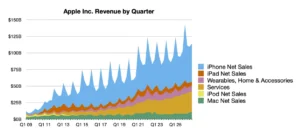
The Cupertino-based tech giant reported that its fiscal fourth-quarter revenue climbed 12% year over year to reach $114.5 billion. Concurrently, net profit surged to $30.71 billion. Both metrics established new historical benchmarks for the traditionally quieter September quarter. This performance was achieved against a complex backdrop characterized by restricted component availability for the iPhone, Mac, and iPad portfolios, alongside a noticeable upward trend in memory chip procurement costs.
Financial Performance and Market Realities
The Q4 2026 results underscore enduring consumer appetite for Apple’s ecosystem, even as external pressures threaten operational efficiency. Speaking to analysts and investors, Apple Chief Financial Officer Kevan Parekh detailed the company’s financial trajectory and laid out expectations for the crucial holiday shopping period.
"We expect our December quarter total company revenue to grow between 7 and 10% year over year, which reflects our best view of constrained supply," Parekh stated during the call. "We expect this to be the best quarter for revenue in the history of the company."
Translating these percentage estimates into monetary figures indicates that Apple’s fiscal first-quarter 2027 revenue is projected to fall between $153.82 billion and $158.13 billion. Should these projections materialize, the company will secure an incremental $10 billion to $14.4 billion compared to the corresponding period in the previous fiscal year.

However, achieving this milestone will require navigating a series of distinct operational hurdles. Management explicitly highlighted that soaring memory costs are placing downward pressure on profit margins. Furthermore, the company faces limited flexibility within its supply chain, unexpected strength in consumer demand for Mac and iPad models, and ongoing inventory shortages concerning the newly introduced iPhone Duo lineup.
Supply Constraints and Component Cost Pressures
The semiconductor and component markets have experienced renewed volatility throughout 2026. Apple’s leadership addressed these challenges transparently, noting that memory component pricing has intensified since the previous quarter. These rising costs, combined with the capital expenditures required for ramping up infrastructure related to "Siri AI," are expected to weigh heavily on gross margins during the holiday season.
In addition to hardware component costs, Parekh pointed out external financial headwinds expected to impact the company’s lucrative Services division. Specifically, third-party licensing dynamics and foreign exchange fluctuations are anticipated to create growth friction for the services segment.
Despite these friction points, the sheer volume of anticipated holiday hardware sales is projected to drive overall top-line expansion to unprecedented levels. The iPhone Duo—Apple’s primary hardware launch for the autumn cycle—has encountered high consumer demand that has outstripped initial manufacturing yields, leading to the aforementioned supply bottlenecks. Similar robust demand has spilled over into the Mac and iPad categories, forcing supply chain managers to optimize distribution channels dynamically.
Broader Economic Assumptions and Regulatory Factors
Apple’s forward-looking guidance is contingent upon a stable macroeconomic environment. During the briefing, executive leadership emphasized that their financial projections rely heavily on the assumption that global tariff rates, trade policies, and regulatory applications will remain consistent with the framework active at the time of the call. Furthermore, the outlook assumes that the global macroeconomic climate will not deteriorate further.
Trade policies and potential tariff escalations remain a persistent variable for multinational technology firms with globalized manufacturing footprints. By conditioning their guidance on the status quo of current international trade policies, Apple signaled both cautious optimism and an awareness of external vulnerabilities that could alter financial outcomes without prior notice.

Chronology and Event Context
To contextualize Apple’s current financial standing, it is helpful to review the timeline leading up to the fiscal Q4 2026 earnings report:
- Early September 2026: Apple hosts its traditional autumn hardware event, unveiling the new iPhone Duo lineup alongside updated iterations of the Mac and iPad families, heavily emphasizing integrated artificial intelligence features branded as Siri AI.
- Mid-September 2026: Initial pre-orders reveal exceptionally strong consumer demand, quickly pushing shipping estimates back by several weeks and signaling early supply constraints for key models.
- Late September 2026: The close of fiscal Q4 2026 marks the end of a robust production and sales period, laying the groundwork for the record-setting revenue figures reported later.
- Early November 2026: Apple officially publishes its fiscal Q4 2026 earnings report, detailing the 12% year-over-year revenue increase to $114.5 billion and a net profit of $30.71 billion.
- November 2, 2026: During the post-earnings conference call, CFO Kevan Parekh delivers the historic holiday quarter revenue guidance of 7% to 10% growth.
Analysis of Implications for the Technology Sector
Apple’s aggressive revenue projections for the December quarter offer significant insights into the broader consumer electronics landscape. The ability to forecast a historic revenue high in the face of escalating memory expenses and constrained inventory suggests that premium brand loyalty remains remarkably resilient.
However, the margin compression highlighted by executive leadership points to a broader industry trend. As advanced artificial intelligence capabilities—such as Siri AI—require heavier computational investments and sophisticated server infrastructure, technology firms must absorb higher operational costs. Balancing these expenses without alienating consumers through steep price hikes remains a delicate calibration for executive boards across Silicon Valley.
Furthermore, the persistent supply shortages surrounding the iPhone Duo highlight the ongoing complexity of global semiconductor supply chains. Even industry leaders with immense purchasing power and logistical scale find themselves occasionally bottlenecked by component availability and surging consumer demand.
As Apple moves deeper into the holiday shopping season—traditionally the most lucrative period of the retail calendar—market analysts will closely monitor whether the company can successfully mitigate supply constraints and meet the high expectations set by its financial leadership. The final tally, expected to be revealed in early 2027, will test the limits of consumer spending power against a backdrop of complex global manufacturing dynamics.
Related posts: