Apple Reports Record-Breaking Fiscal Fourth Quarter 2026 Results Marking a New Era Under CEO John Ternus

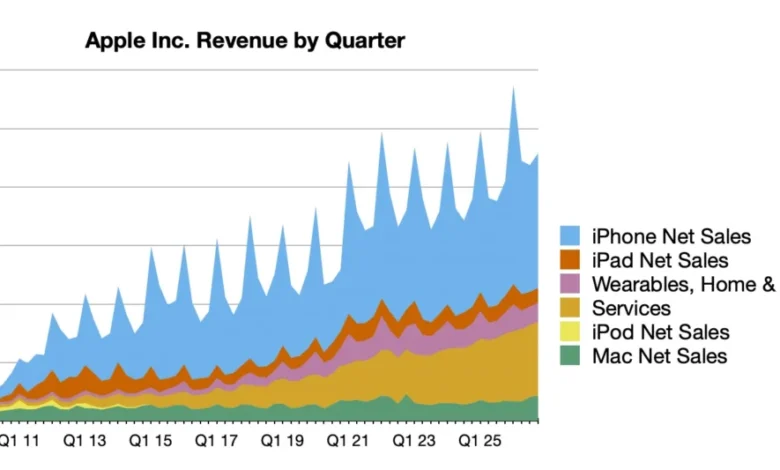
Apple has officially announced its financial results for the fourth fiscal quarter of 2026, painting a portrait of a company undergoing a significant leadership transition while simultaneously achieving unprecedented commercial success. The report, which covers the three-month period ending in September, confirms a historic financial performance, with the company reaching new heights in both revenue and profitability. This announcement serves as the first major quarterly financial report under the tenure of John Ternus, who assumed the role of Chief Executive Officer on September 1, 2026, following the conclusion of Tim Cook’s long-standing leadership.
The figures released today underscore a period of intense activity for the Cupertino-based tech giant. The quarter was defined not only by the strategic management of a high-profile leadership change but also by a series of aggressive product launches in August and September. These releases, aimed at capturing the critical holiday-season market, have clearly resonated with consumers, fueling record-setting metrics across several key business categories.
Financial Performance and Growth Metrics
For the fourth fiscal quarter of 2026, Apple reported a total revenue of $114.5 billion, a notable increase from the $102.5 billion reported during the same period in 2025. This growth represents a 12 percent year-over-year climb. Net quarterly profit reached $30.7 billion, compared to $27.5 billion in the previous year’s corresponding quarter. Earnings per diluted share were reported at $2.10, surpassing the $1.85 per share recorded in the year-ago period.
The company’s gross margin also showed improvement, expanding to 47.9 percent from 47.2 percent in the previous year. This expansion in margin is a critical indicator of Apple’s ability to maintain premium pricing power despite global economic fluctuations and increased competition in the hardware and services sectors. To distribute this value to its investors, Apple has declared a cash dividend of $0.27 per share, which is scheduled for payment on November 16, 2026, to all shareholders of record as of November 12.
When viewing the performance through the lens of the full fiscal year, the scale of Apple’s expansion becomes even more apparent. For the 2026 fiscal year, the company generated $478.8 billion in total sales, yielding a net income of $132.2 billion. These figures stand as the highest in the company’s history, eclipsing the previous annual records of $416.2 billion in sales and $112.0 billion in net income set during the 2025 fiscal year.
A Chronology of the Transition and Q4 Success
The transition of leadership from Tim Cook to John Ternus was arguably the most significant non-product event in Apple’s recent history. The shift was executed on September 1, 2026, at the very beginning of the final month of the quarter. Market analysts had closely watched how the internal culture and investor relations would adapt to this change.
The quarter was bookended by key milestones:
- August 2026: Initial rollout of late-summer product updates, setting the stage for the September hardware events.
- September 1, 2026: Official transition date, with John Ternus assuming the CEO role.
- September 2026: Major product unveilings, including the introduction of the iPhone Duo, iPhone 18 Pro, and the integration of new AI-driven features.
- October 6, 2026: Official notification to the investor community regarding the impending Q4 earnings report.
- November 2, 2026: Formal release of the Q4 2026 financial results, followed by the inaugural earnings call hosted by John Ternus and CFO Kevan Parekh.
Product Portfolio and Market Strategy
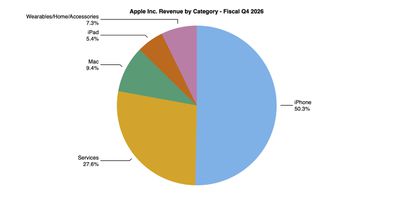
Central to the success of the September quarter was the launch of what the company describes as its most ambitious hardware lineup to date. The introduction of the "iPhone Duo"—marketed as the most transformational device since the original iPhone—appears to have been a major driver for the record iPhone revenue recorded this quarter. Alongside this, the iPhone 18 Pro and Pro Max solidified Apple’s position in the high-end smartphone market.
Beyond mobile devices, the company has successfully expanded its ecosystem. The introduction of new home-integrated hardware and the implementation of "Touch to Mac" represent significant hardware milestones. Furthermore, the aggressive integration of "Siri AI" across the ecosystem is viewed by industry analysts as a strategic move to lock in users by offering more sophisticated, personalized, and efficient software interactions. This software-hardware integration remains the cornerstone of Apple’s competitive advantage, ensuring that services revenue continues to hit all-time highs.
Official Commentary from the Executive Suite
In his first official earnings call as CEO, John Ternus expressed confidence in the company’s trajectory. "Today, Apple is proud to report a September quarter revenue record of $114.5 billion, up 12 percent from a year ago," Ternus stated. "With iPhone reaching a September quarter record and Services reaching an all-time high, we are capping off our best fiscal year ever."
Ternus emphasized that the current hardware lineup is specifically engineered to provide momentum into the holiday season. By diversifying the product range—from the transformational iPhone Duo to advanced computing hardware—Apple aims to minimize the risk of over-reliance on a single product category. CFO Kevan Parekh, joining Ternus on the call, reinforced this by highlighting the operational efficiency that led to the improved gross margins, citing a disciplined approach to supply chain management and product mix optimization.
Broader Implications and Challenges
While the financial results are undeniably positive, the company is not without its operational challenges. Reports have recently surfaced regarding technical hurdles, such as the display cracking issues reported with the newly released iPhone Duo. Apple has already begun issuing internal guidance to its retail and authorized service providers to address these concerns, demonstrating a proactive approach to customer service and quality control.
The broader implications of this quarter’s performance suggest that under John Ternus, Apple is unlikely to deviate from its core strategy of vertical integration. The focus on AI—specifically the evolution of Siri—indicates that the company is responding to the rapid advancements in generative AI from competitors like Google and OpenAI. By embedding these capabilities directly into its hardware, Apple is attempting to commoditize AI, making it a utility rather than a standalone platform.
Furthermore, the record-breaking services revenue signals a shift in the company’s revenue composition. As the global smartphone market reaches a point of maturity, Apple’s ability to generate recurring revenue through subscriptions, app store transactions, and cloud services has become the primary engine for its profit growth. This "Services-first" approach is expected to continue into the 2027 fiscal year, as the company explores new opportunities in home automation and deeper health-tech integrations.
Market Outlook and Future Prospects
Wall Street’s reaction to the earnings report has been one of cautious optimism, acknowledging that while the numbers are record-breaking, the company faces the dual challenge of sustaining this level of growth in a volatile global economy and successfully navigating the transition to a post-Cook era. The upcoming holiday quarter will be the ultimate test of the new leadership’s strategy.
As Apple moves into the first quarter of the 2027 fiscal year, the market will be looking for signs of sustained demand for the iPhone 18 series and the long-term impact of its AI initiatives. With a strong cash position and a clear mandate from the board to continue the current trajectory of innovation, Apple appears well-positioned to maintain its status as one of the world’s most valuable companies. The synergy between the new leadership team and the current product roadmap provides a foundation that investors believe will carry the company through the immediate challenges of the next fiscal year.
In summary, the fourth fiscal quarter of 2026 will be remembered as a pivotal moment for Apple. It was a quarter defined by the passing of the torch from one of the most successful CEOs in corporate history to a successor who seems eager to leverage the company’s massive financial and technological resources to push into new, AI-integrated horizons. With record revenues and a robust product pipeline, Apple enters the next phase of its corporate life with significant momentum.
Related posts: