Google Play store app and hardware deals arrive today featuring deep discounts on Pixel 11 and premium gaming titles.


The digital storefront for Android users is currently experiencing a significant influx of software promotions, with dozens of high-quality mobile applications and games seeing price reductions ranging from heavy discounts to complete removal of entry costs. This surge in promotional activity coincides with early Black Friday initiatives from major retailers, creating a dual opportunity for consumers to refresh their software libraries and upgrade their hardware ecosystems.

The Landscape of Mobile Software Discounts
The current catalog of discounted titles on the Google Play Store is diverse, spanning genres from indie puzzle games to complex strategic simulations. Notable titles currently included in this promotional window feature Potion Permit, a well-received alchemy simulator, and Despotism 3k, known for its dark humor and resource management mechanics. Additionally, Three Kingdoms: Grand Strategy and Slime Legends – Survivor have joined the list of reduced-price offerings, catering to players seeking both tactical depth and fast-paced action.

Beyond these highlights, the store is seeing price drops on various specialized tools and legacy titles. Can You Escape: The Collection and My Car My Life are among the curated selection, providing users with a variety of gameplay experiences at a fraction of their standard retail price. These price adjustments are part of a cyclical trend where developers and publishers utilize the Play Store’s promotional tools to boost discovery and increase install velocity ahead of the busy holiday shopping season.

Hardware Ecosystem Reductions
Parallel to the software sales, Google’s hardware division and retail partners are aggressively positioning their flagship devices for the end-of-year shopping cycle. The Pixel 11 series, which represents the current state-of-the-art for Google’s mobile hardware, is seeing substantial price relief. Retailers are currently offering up to $350 off the Pixel 11, Pixel 11 Pro, and the high-end Pixel 11 Pro XL.

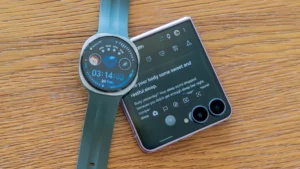
Furthermore, the wearable segment is seeing a $100 price reduction across all models of the Pixel Watch 5. This adjustment suggests a strategic push to clear inventory and capture market share in the premium smartwatch sector. Meanwhile, the foldable segment remains a focus for major OEMs; the Galaxy Z Fold 8 is currently listed with a $300 discount, supplemented by a $200 store credit, a bundle that significantly lowers the barrier to entry for the high-end foldable device market. The Google Home Speaker also remains at a historically low price point, continuing a trend of aggressive smart-home hardware discounting that has characterized the latter half of 2026.

Chronology of the 2026 Holiday Sales Cycle
The current promotional period is part of a broader, accelerated timeline for holiday retail. Historically, Black Friday sales were confined to the final Friday of November. However, market data from the past five years indicates that retailers—including those in the digital space—have shifted to a "month-long" sales strategy.

In early November 2026, major tech manufacturers began leaking and initiating early-bird deals to preempt competitor announcements. The current availability of these app and hardware discounts serves as the second phase of this timeline. By mid-November, the focus typically shifts toward hardware bundles, while the final week leading into the Thanksgiving holiday is expected to feature "doorbuster" events on high-demand accessories and software subscriptions.

Data Analysis: The Value of Digital Sales
The strategy of discounting mobile applications, particularly premium titles, serves a vital function for independent developers. Data from mobile analytics firms suggests that a temporary price reduction to $0.99 or free-to-download status can lead to a 400% to 600% increase in daily downloads. This spike often propels an app into the "Top Paid" or "Top Trending" charts, which in turn drives long-term organic discovery even after the price returns to its baseline.

For hardware manufacturers, the current discount structure is rooted in the "installed base" theory. By lowering the cost of entry for flagship devices like the Pixel 11 or the Galaxy Z Fold 8, manufacturers increase the number of active users within their respective ecosystems. This growth is essential for driving future revenue through ancillary services, such as cloud storage subscriptions, app store transaction fees, and peripheral hardware sales.

Broader Impact and Industry Implications
The convergence of software and hardware deals reflects a maturing digital economy. Consumers are no longer viewing these purchases as isolated events but rather as part of a comprehensive upgrade to their personal computing environment.

Industry analysts observe that the aggressive discounting of smartphones and wearables is likely a reaction to slowing global demand for consumer electronics. By bundling hardware with store credit—as seen with the Galaxy Z Fold 8 offer—manufacturers are effectively subsidizing the software ecosystem, encouraging users to spend money within the Google Play environment long after the initial hardware purchase.

Furthermore, the inclusion of long-standing, critically acclaimed games in the current discount wave indicates a strategy to maintain engagement. As mobile gaming hardware becomes more powerful—evidenced by the capabilities of the Pixel 11—developers are porting more complex, console-quality experiences to the platform. Discounting these premium titles serves to validate the platform as a legitimate venue for serious gaming, rather than just casual, ad-supported experiences.

Navigating the Current Marketplace
For consumers, the sheer volume of discounted items can be overwhelming. Experts recommend that users cross-reference current deals with historical price trackers to ensure that the "discount" is indeed a significant reduction from the average market price. While the current savings on the Pixel 11 and Galaxy Z Fold 8 appear to be among the most competitive of the season, shoppers should remain mindful of the varying expiration dates associated with digital app promotions.

Most developers do not announce the end date for their price reductions, meaning these deals can vanish as quickly as they appear. The current list of available software is subject to change at any time, based on individual developer decisions. Users are encouraged to prioritize their "wishlists" and secure desired software while the current promotional window remains open.

Future Outlook
As the market moves deeper into the fourth quarter of 2026, observers expect to see these trends intensify. If the current momentum in hardware sales remains consistent, manufacturers may be forced to deepen their discounts to hit quarterly sales targets. For the software market, the focus will likely shift from broad discounts to "holiday bundles," where developers combine multiple titles into a single, discounted purchase package.

This period remains a pivotal time for both the software developer community and the consumer base. As mobile devices continue to integrate more deeply into daily life, the accessibility of high-quality software through these curated deal lists becomes an essential component of the modern digital lifestyle. Consumers looking to optimize their spending would do well to monitor these updates, as they represent the most favorable price points for software and hardware adoption seen in the latter half of the year.
Related posts: