Adobe and The Walt Disney Company Forge Landmark AI Partnership at Adobe MAX 2026

As the annual Adobe MAX conference officially kicked off in Miami, Florida, software giant Adobe announced a milestone strategic partnership that positions the company as the Official AI Innovation Partner of The Walt Disney Company. The multi-year agreement represents a major shift in how the entertainment and hospitality conglomerate plans to integrate generative artificial intelligence into its expansive production pipelines, stretching from feature films and sports broadcasting to global theme park design.
Under the terms of the accord, Adobe will supply Disney with advanced creative infrastructure, including its flagship Creative Cloud Pro suite—featuring Premiere and Photoshop—alongside specialized access to Firefly Foundry. This enterprise-grade platform allows major corporations to develop custom-trained generative AI models anchored entirely on proprietary intellectual property. Rather than depending on generic, public-domain foundation models, Disney will work directly with dedicated Adobe research and engineering teams to build secure, private generative systems trained specifically on authorized character assets, established visual aesthetics, and distinct fictional environments.
The Collaboration Framework and Operational Integration
The partnership is deliberately designed to streamline internal workflows rather than replace human touch in the final consumer-facing delivery of finished media assets. Disney intends to embed these custom-built AI models deeply within its specialized innovation hubs, including StudioLAB—the collaborative prototyping arm of Walt Disney Studios—and ESPN Edge, which focuses on cutting-edge sports broadcasting technology and data visualization. Furthermore, the Walt Disney World Resort, Disneyland Resort, and Disney Cruise Line operations will utilize these tailored systems to accelerate spatial design, experiential prototyping, and marketing asset generation.
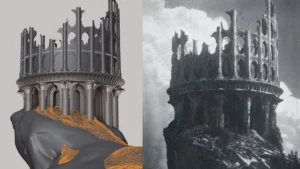
Executives from both enterprises emphasize that the technology is intended to function as a productivity accelerant. According to Hannah Elsakr, Adobe’s Vice President for GenAI New Business Ventures, the integration serves to amplify artistic vision and elevate guest engagement by freeing human creators from repetitive, time-intensive production tasks. Disney Imagineering Research & Development has already begun testing the infrastructure via its Theme Park Design Toolkit, deploying sketch-to-image workflows that convert preliminary hand-drawn concepts into fully rendered two-dimensional concept art within minutes instead of weeks.
Background Context and Previous Industry Hurdles
This high-profile alliance arrives at a critical juncture for Disney’s broader artificial intelligence strategy, which has experienced notable friction in recent years. The company’s past exploratory efforts to incorporate AI technologies into its vast commercial ecosystem met with mixed results and occasional public backlash. Early internal experiments in visual effects pipelines drew sharp criticism from online fan communities and industry professionals alike.
Furthermore, Disney previously pursued high-profile collaborations with external foundational model developers, most notably entering into a short-lived partnership with OpenAI. However, that arrangement dissolved abruptly after OpenAI abruptly discontinued its Sora video generation model just three months into the pilot phase. In the wake of those setbacks, Disney pivoted toward licensing agreements, such as a controversial pact permitting TikTok content creators to utilize select Disney intellectual property within short-form video formats.
By pivoting from external foundation models to a controlled, enterprise-level partnership with Adobe, Disney aims to insulate itself against the legal, brand-safety, and copyright challenges that have plagued the broader generative AI sector. Because the custom models reside within a private ecosystem built on proprietary assets, Disney retains strict control over copyright provenance, brand integrity, and data security—critical factors for a media empire whose business model relies heavily on the protection of iconic characters and trademarks.
Economic Pressures and Labor Implications
Despite assurances from both companies that the initiative will remain strictly "artist-led," the partnership has inevitably reignited anxieties regarding employment stability within the creative sector. The announcement coincides with a turbulent economic period for The Walt Disney Company. Under the leadership of CEO Josh D’Amaro, Disney has implemented multiple waves of corporate restructuring and workforce reductions throughout 2026, aimed at achieving a targeted 20 percent reduction in annual operational costs across various corporate divisions.
The confirmation of job cuts among Pixar artists earlier in the year has left creative unions and industry professionals deeply skeptical of corporate efficiency drives centered around artificial intelligence. Critics point out that tools capable of compressing multi-month concept design cycles into mere hours are frequently leveraged by corporate leadership to downsize creative teams, enabling fewer personnel to manage exponentially larger workloads. While Adobe and Disney maintain that the technology is engineered to empower artists rather than displace them, the economic realities of ongoing studio cost-cutting measures suggest that labor displacement will remain a central point of contention as the integration moves forward.
Strategic Implications for Adobe and the Enterprise AI Market
For Adobe, securing Disney as a flagship enterprise customer serves as an invaluable proof-of-concept. While Adobe’s Firefly software family has established a strong foothold among individual creators and mid-sized agencies, the company historically faced questions regarding its ability to compete directly against major tech conglomerates—such as Microsoft, Google, and Amazon—in the race for foundational AI dominance.
By pivoting toward a business-to-business model focused on secure, brand-tailored corporate infrastructure, Adobe is carving out a distinct market position. Industry analysts note that if the Disney partnership successfully streamlines complex studio pipelines without compromising artistic quality or intellectual property security, it could establish a blueprint for enterprise AI adoption across the entire media and entertainment landscape.
Success with Disney could solidify Adobe’s transition from a traditional desktop software vendor into foundational enterprise infrastructure—comparable to the ubiquitous industry roles occupied by Microsoft in corporate productivity, Amazon Web Services in cloud computing, or Unreal Engine in interactive gaming. As Adobe MAX 2026 continues in Miami, all eyes in the tech and creative sectors will be focused on whether this high-stakes alliance can successfully balance corporate efficiency with the preservation of human artistry.
Related posts: