Apple Claris Harbor Turns Apple Silicon Macs into Powerful Private AI Servers

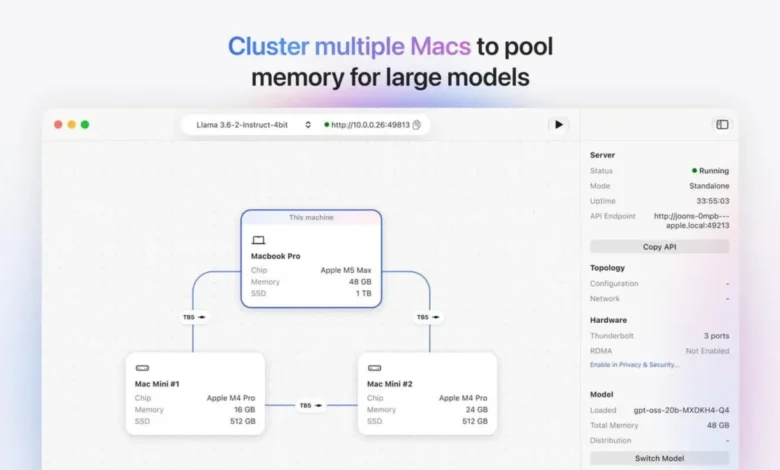
Apple’s Claris subsidiary has unveiled a strategic initiative to democratize high-performance artificial intelligence through the introduction of a new software application dubbed Harbor. Currently in an early access testing phase, Harbor is designed to transform standard Apple silicon Macs into localized, private AI inference servers, effectively bypassing the need for cloud-based infrastructure. By leveraging the unique architectural advantages of the M-series chips and the high-speed data transfer capabilities of Thunderbolt 5, Claris aims to bridge the gap between high-end enterprise hardware and user-friendly software interfaces.
The Technical Foundation of Harbor
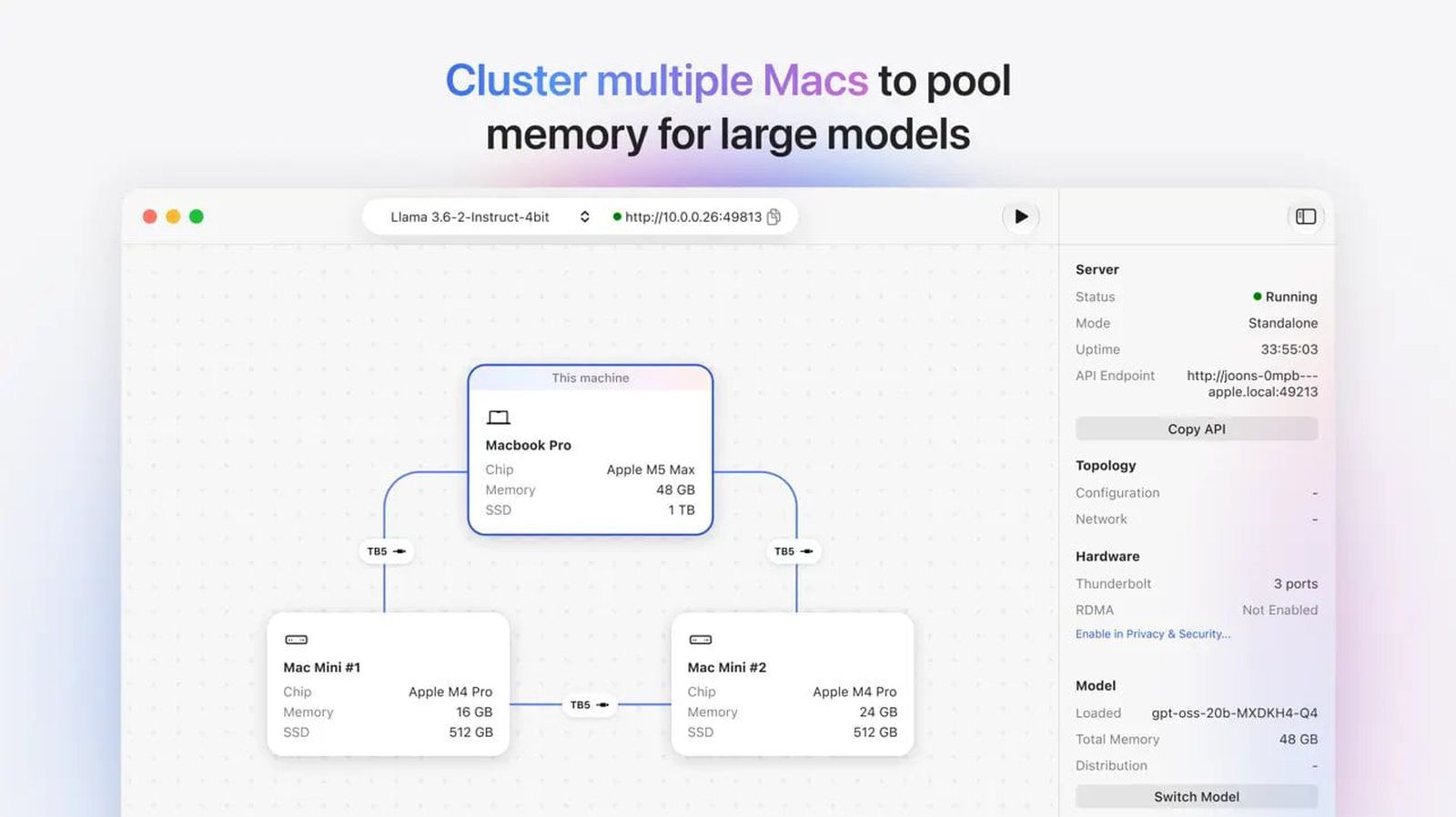
The core utility of Harbor lies in its ability to cluster multiple Mac computers into a unified computing resource. While the application is fully functional on a standalone Apple silicon Mac, its primary value proposition is the ability to connect several devices via Thunderbolt 5 cables. This configuration allows the machines to pool their unified memory—a critical requirement for running large-scale language models (LLMs) that would otherwise exceed the memory capacity of a single consumer device.
This clustering capability is bolstered by significant under-the-hood improvements introduced in macOS Tahoe 26.2. Specifically, Apple has implemented Remote Direct Memory Access (RDMA) over Thunderbolt 5. This technology allows for direct memory access between the connected computers without burdening the operating system’s primary CPU tasks, drastically reducing latency and increasing throughput. By effectively creating a "Mac-based supercomputer" for AI, users can run advanced open-weight models locally, ensuring that sensitive data remains entirely on the user’s hardware.
Streamlining the AI Workflow
A significant barrier to entry for local AI deployment has historically been the technical complexity associated with configuration, command-line interfaces, and infrastructure management. Harbor is explicitly designed to dismantle these barriers. According to documentation provided by Claris, the application automates the detection of connected devices. Once a user plugs in a second or third Thunderbolt 5-enabled Mac, Harbor automatically identifies the hardware and integrates it into a cluster without requiring manual network configuration or specialized IT knowledge.
Furthermore, the application features an integrated interface for managing AI models. Users can browse, download, and deploy various open-weight models directly within the application, effectively removing the "setup friction" that typically characterizes open-source AI tools. By automating the backend orchestration, Claris is positioning Harbor as a tool for developers, data scientists, and small business owners who require the power of local AI without the overhead of managing a server rack or a cloud subscription.
Context and Development Chronology
The emergence of Harbor follows a period of rapid development within Apple’s broader software ecosystem. While Apple has long been a leader in consumer hardware, the push into localized, private AI inference represents a shift toward addressing the specific needs of professional and enterprise markets.
The project gained public attention when an App Store listing for Harbor appeared briefly before being taken down, signaling that the software is nearing a more stable, potentially public release. The current phase involves a closed, early-access group, with the sign-up process requiring prospective users to provide company details. This focus on corporate identity suggests that while Harbor utilizes consumer-grade hardware, its intended market may lean toward professional creative suites, local data analysis firms, and organizations with strict data sovereignty requirements.
Competitive Landscape and Market Positioning
The landscape for local AI inference is currently populated by a mix of open-source projects and independent software developers. Tools such as Exo have gained traction for their ability to cluster Macs for distributed inference, and LM Studio has become the industry standard for users looking for a graphical user interface (GUI) to run models on a single machine.
Harbor enters this space as a hybrid solution. It seeks to offer the simplicity of a polished, Apple-native GUI similar to LM Studio, while providing the robust clustering capabilities of a professional-grade tool like Exo. By integrating these features into the Claris ecosystem—a division of Apple with a deep history in database management and business software—the company is signaling that it views local AI as a core component of the future professional workflow.
Strategic Implications for Data Privacy
One of the most profound implications of Harbor is its emphasis on data privacy. In an era where AI development is increasingly dominated by cloud-based providers, the ability to keep data local has become a premium asset. For businesses dealing with proprietary code, medical records, or sensitive intellectual property, the "nothing reaches the cloud" architecture of Harbor provides a significant security advantage.
By keeping the inference process on-premises, organizations can circumvent the risks associated with data transmission to third-party servers. This aligns with Apple’s broader corporate stance on privacy, which has increasingly focused on processing AI tasks on-device or within the user’s private infrastructure whenever possible.
Technical Limitations and Future Outlook
Despite the innovation, several questions remain regarding the long-term roadmap for the application. As of mid-November 2026, the specific hardware requirements—beyond the necessity of Thunderbolt 5—have not been fully detailed. It is also unclear how Claris intends to monetize the software. While it may serve as an enterprise-grade companion to FileMaker, there is a possibility that it could eventually be offered as a standalone professional tool or a value-add for Apple’s enterprise hardware customers.
Furthermore, the effectiveness of the clustering relies heavily on the bandwidth provided by Thunderbolt 5. While this standard offers a significant leap over previous generations, the performance scaling in real-world scenarios—especially when dealing with massive parameter models—will be a subject of intense scrutiny by the developer community.
Industry Impact and Concluding Analysis
The development of Harbor reflects a broader industry trend toward "Small Language Models" (SLMs) and decentralized AI. As models become more efficient and hardware becomes more powerful, the reliance on massive, centralized server farms may diminish for a wide range of use cases. If Apple successfully simplifies the process of clustering hardware, it could fundamentally change how small businesses and independent researchers approach AI.
By moving the server to the desktop, Claris is not just releasing an app; it is providing a infrastructure layer that could empower a new generation of local AI-driven applications. As Apple continues to iterate on its silicon and macOS software, tools like Harbor will likely serve as the connective tissue between high-performance hardware and the practical, everyday needs of the modern workforce. While the software remains in early access, its existence marks a turning point in the integration of AI into the local Apple ecosystem, promising a future where the power of a supercomputer is as accessible as plugging in a cable.