The landscape of generative artificial intelligence and large-scale agentic workflows has reached a significant architectural milestone with the introduction of Tool Retrieval, a new feature now available in preview within the Gemini Interactions API. Developed by teams at Google including Product Manager Lucia Loher and Research Scientist Nora Kassner of Google DeepMind, this capability addresses a fundamental engineering bottleneck that has long plagued developers scaling AI agents: the exponential inflation of input tokens, latency penalties, and accuracy degradation caused by loading expansive libraries of tools directly into the primary prompt context.
As enterprises increasingly deploy AI agents capable of orchestrating complex, multi-system enterprise operations, these digital assistants frequently require access to dozens, or even hundreds, of distinct functions and external integrations. Traditionally, developers had to append the full parameter schemas for every single available tool to every user request. This brute-force approach quickly congested input token windows, introduced severe computational latency, and diluted model focus—often resulting in reduced tool-selection accuracy as the candidate list expanded. Tool Retrieval fundamentally alters this paradigm by allowing an agent to maintain its comprehensive tool inventory on standby, dynamically querying and loading specific parameter schemas precisely when an active task demands them.
Mechanics of On-Demand Schema Loading
The engineering architecture behind Tool Retrieval is designed for seamless integration and minimal friction, eliminating the need for developers to manually build, index, or host external vector databases or retrieval infrastructure. To activate the server-side retrieval system within the Gemini API, developers simply incorporate a specialized tool_search utility into their request configuration and apply a defer_loading: true boolean flag to any function schemas they wish to hold back from the initial prompt context.
Under this framework, the Gemini model retains continuous visibility over the names and high-level descriptions of all deferred tools, ensuring it maintains a comprehensive conceptual map of its available capabilities without cluttering the active context window with verbose parameter details. When a user input triggers a scenario requiring a deferred function, the model automatically initiates an internal search query by name. The API intercepts this request, retrieves the complete parameter schema on the fly, and executes the appropriate function call—all within the span of a single continuous API interaction.
This transparent workflow is fully captured in the resulting execution traces, specifically within the interaction.steps object. Developers can inspect distinct steps such as tool_search_call, tool_search_result, and the subsequent function_call. This granular visibility provides unprecedented transparency for debugging, allowing engineering teams to audit exactly which tools the model considered, evaluated, and invoked during complex reasoning cycles.

Compatibility with Advanced Caching and Remote MCP Servers
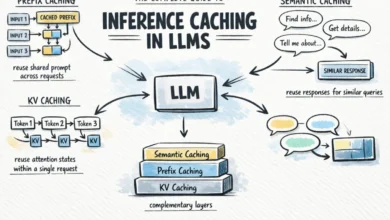
Beyond optimizing token consumption and reducing latency, Tool Retrieval integrates natively with existing advanced features within the Gemini ecosystem, most notably prefix caching. Because deferred schemas are deliberately withheld from the leading edge of the prompt, and dynamically loaded schemas are appended later in the conversation history, the foundational cached prefix remains remarkably stable across multiple conversational turns. This architectural synergy prevents cache invalidation, yielding further cost efficiencies and performance enhancements in high-throughput production environments.
Furthermore, Tool Retrieval extends its utility to remote Model Context Protocol (MCP) servers integrated within the Gemini API. By assigning the defer_loading: true flag to an mcp_server tool configuration, developers can ensure that every individual function exposed by that remote server is loaded exclusively on demand. This capability removes the administrative burden of manually enumerating massive remote tool libraries, enabling fluid integration of sprawling microservices architectures.
Flexible Deployment via Client-Side Retrieval
While server-side execution handles the vast majority of use cases without external infrastructure dependencies, Google has also engineered a robust client-side retrieval alternative. For organizations that maintain proprietary internal tool registries, specialized embedding indices, or strict per-user permission filters, developers can declare the tool_search utility with an explicit "execution": "client" parameter.
In this client-side configuration, the model emits a search query that is intercepted by the host application, which then executes the lookup against its private data store and returns matching function schemas via a standard function_result payload. This paradigm introduces a minor round-trip latency overhead but grants developers absolute programmatic control over tool discovery. Crucially, it also enables dynamic runtime capabilities, allowing applications to expose entirely new tools mid-conversation—such as when a user successfully authenticates a new third-party software integration on the fly.
Economic Implications and Model Availability
From a commercial perspective, Tool Retrieval introduces no separate licensing or auxiliary surcharge; input and output tokens are billed strictly at standard rates corresponding to the specific Gemini model deployed. Enabling the tool_search mechanism adds a minor, fixed block of input tokens, while subsequently loaded schemas are billed as standard input tokens for the duration of the conversation. For expansive tool libraries, the economic savings realized by omitting unselected schemas drastically outweigh the marginal cost of the retrieval mechanism, resulting in a net reduction in operational expenditure for high-capacity deployments.
The feature is fully supported across Gemini 3.6 and subsequent iterations, including the entire suite of Gemini 4 models accessible via the Interactions API. As developer adoption scales during this preview phase, the capability is expected to redefine industry standards for efficient, highly responsive, and context-aware agentic artificial intelligence applications.